Exam
Name___________________________________
SHORT ANSWER. Write the word or phrase that best completes each statement or answers the question.
Answer the question.
1)
A laboratory centrifuge costs $79,000 and has a $5530 salvage value with an 8–year
recovery period. The estimated annual operating cost is $7000 per year. Use the double
declining balance method with switch over to straight line to tabulate the depreciation
schedule at the end of each year.
1)
Answer:
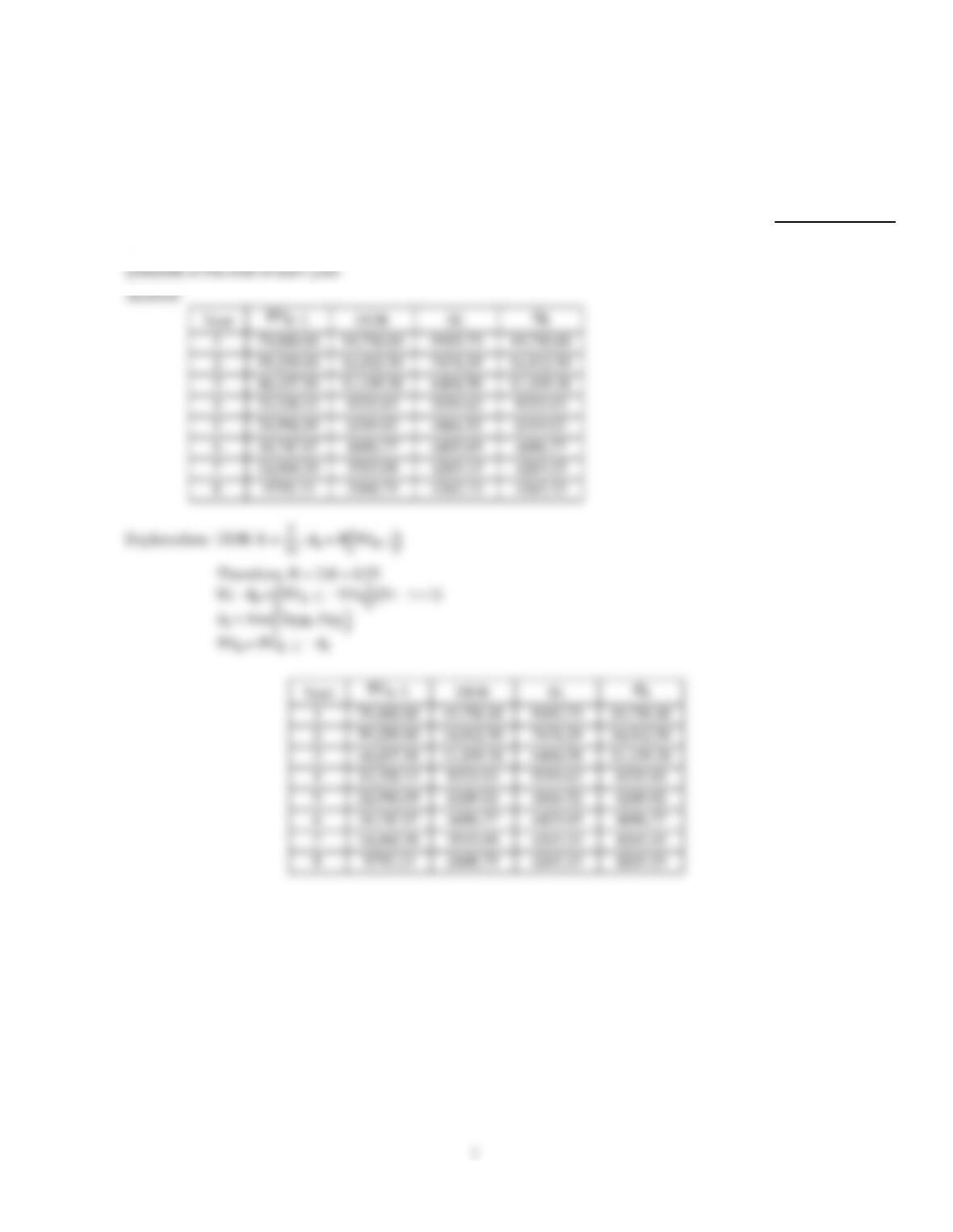
Year BVk–1DDB SL dk
179,000.00 19,750.00 9183.75 19,750.00
259,250.00 14,812.50 7674.29 14,812.50
344,437.50 11,109.38 6484.58 11,109.38
433,328.12 8332.03 5559.62 8332.03
524,996.09 6249.02 4866.52 6249.02
618,747.07 4686.77 4405.69 4686.77
714,060.30 3515.08 4265.15 4265.15
89795.15 2448.79 4265.15 4265.15
Explanation:
DDB: R=2
N, dk=RBVk–1
Therefore, R = 2/8 = 0.25
SL: dk=BVk–1–SVN/(N–t+ 1)
dt=Max DDB, DSL
BVk=BVk–1–dt
Year BVk–1DDB SL dk
179,000.00 19,750.00 9183.75 19,750.00
259,250.00 14,812.50 7674.29 14,812.50
344,437.50 11,109.38 6484.58 11,109.38
433,328.12 8332.03 5559.62 8332.03
524,996.09 6249.02 4866.52 6249.02
618,747.07 4686.77 4405.69 4686.77
714,060.30 3515.08 4265.15 4265.15
89795.15 2448.79 4265.15 4265.15
1
2)
A manufacturer of hardboard and fiber cement sidings and panels purchased new
equipment for its new product line for $20,000. A declining balance depreciation at a rate
of 1.5 times the straight line rate with a 5–year recovery period and an estimated salvage
value of $8000 was used to write off the capital investment. The company expects to
realize net revenue of $57,000 each year for the next 5 years. However, due to the sudden
change in business direction, the company decided to sell the equipment after 2 years of
operation for $21,000. Assuming an effective tax of 40% and an after–tax MARR of 12%
per year, calculate the future worth of the after–tax cash flow at the end of year 2.
2)
Answer:
FW (12%) =$68,304.00
Explanation:
For declining balance method, R=1.5
N; dk=B(1 –R)k–1(R); and BVk=B(1 –R)k
R = 1.5/5 = 0.3
BV2=20,000 (1 – 0.3)2=9800.00
MV =21,000.
Therefore, Depreciation recapture = MV – BV =11,200.00
BTCF = – Capital Investment + GI – Expense
TI = GI – Expense – Depreciation + Depreciation recapture + capital gain
Taxes = TI (t)
ATCF = BTCF – Taxes
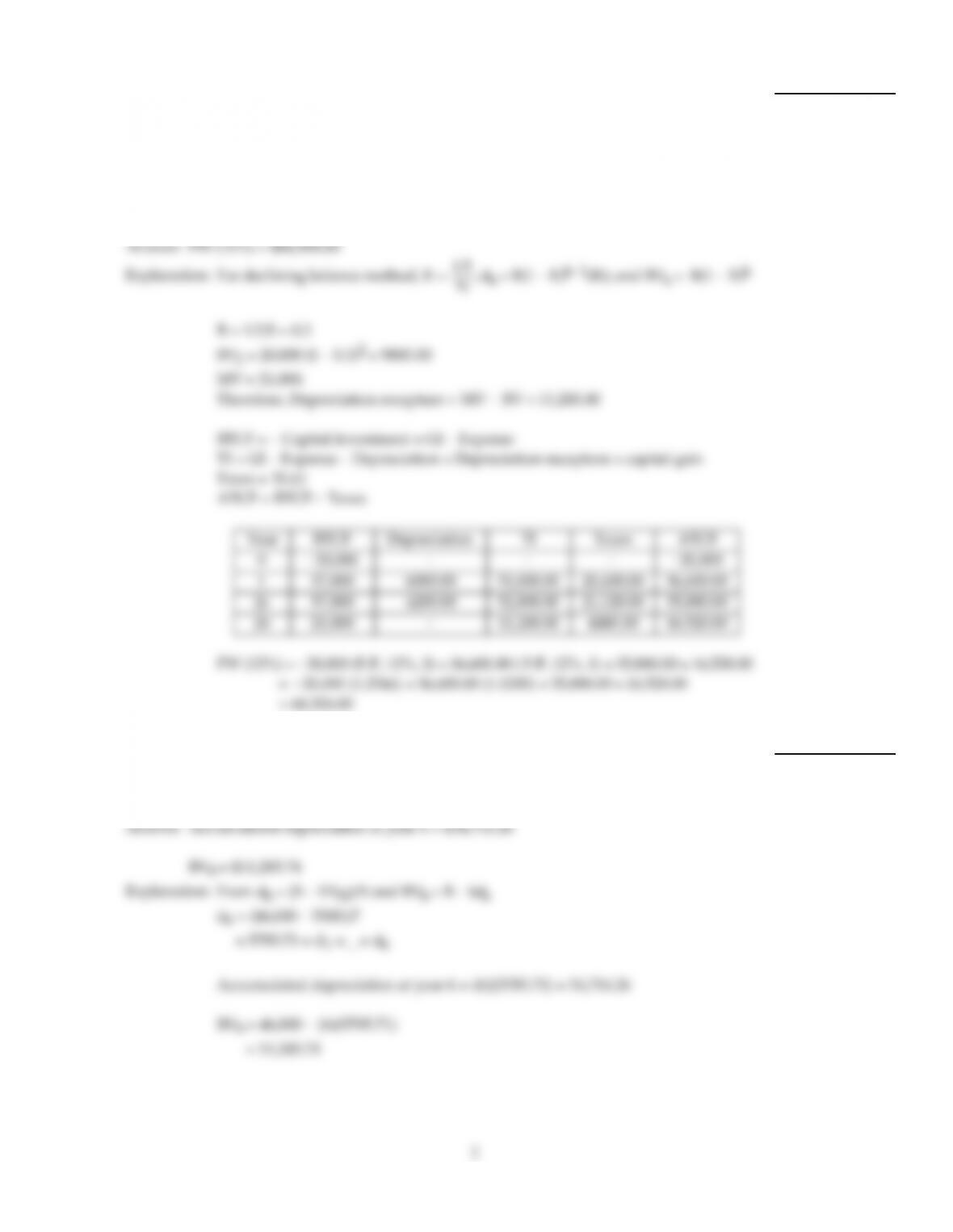
Year BTCF Depreciation TI Taxes ATCF
0–20,000 – – – – 20,000
157,000 6000.00 51,000.00 20,400.00 36,600.00
2a 57,000 4200.00 52,800.00 21,120.00 35,880.00
2b 21,000 –11,200.00 4480.00 16,520.00
FW (12%) = – 20,000 (F/P, 12%, 2) +36,600.00 ( F/P, 12%, 1) +35,880.00 +16,520.00
= – 20,000 (1.2544) +36,600.00 (1.1200) +35,880.00 +16,520.00
=68,304.00
3)
A viscosity sensing instrument costs $46,000 and has a $5500 salvage value with a 7–year
recovery period. The estimated annual operating cost is $3000 per year. Use classical
straight line depreciation to calculate the cumulative depreciation and a book value at the
end of year 6.
3)
Answer:
Accumulated depreciation at year 6=$34,714.26
BV6=$11,285.74
Explanation:
From dk= (B–SVN)/N and BVk=B–kdk
d6= (46,000 –5500)/7
=5785.71 =d1=…...=dk
Accumulated depreciation at year 6= (6)(5785.71) =34,714.26
BV6=46,000 – (6)(5785.71)
=11,285.74
2
4)
A construction company has an effective income tax rate of 39%. The company must
purchase one of the following two cement mixers for its new project. The after–tax MARR
is 10% per year. Select a cement mixer on the basis of after–tax present worth analysis
using MACRS with a 5–year recovery period.
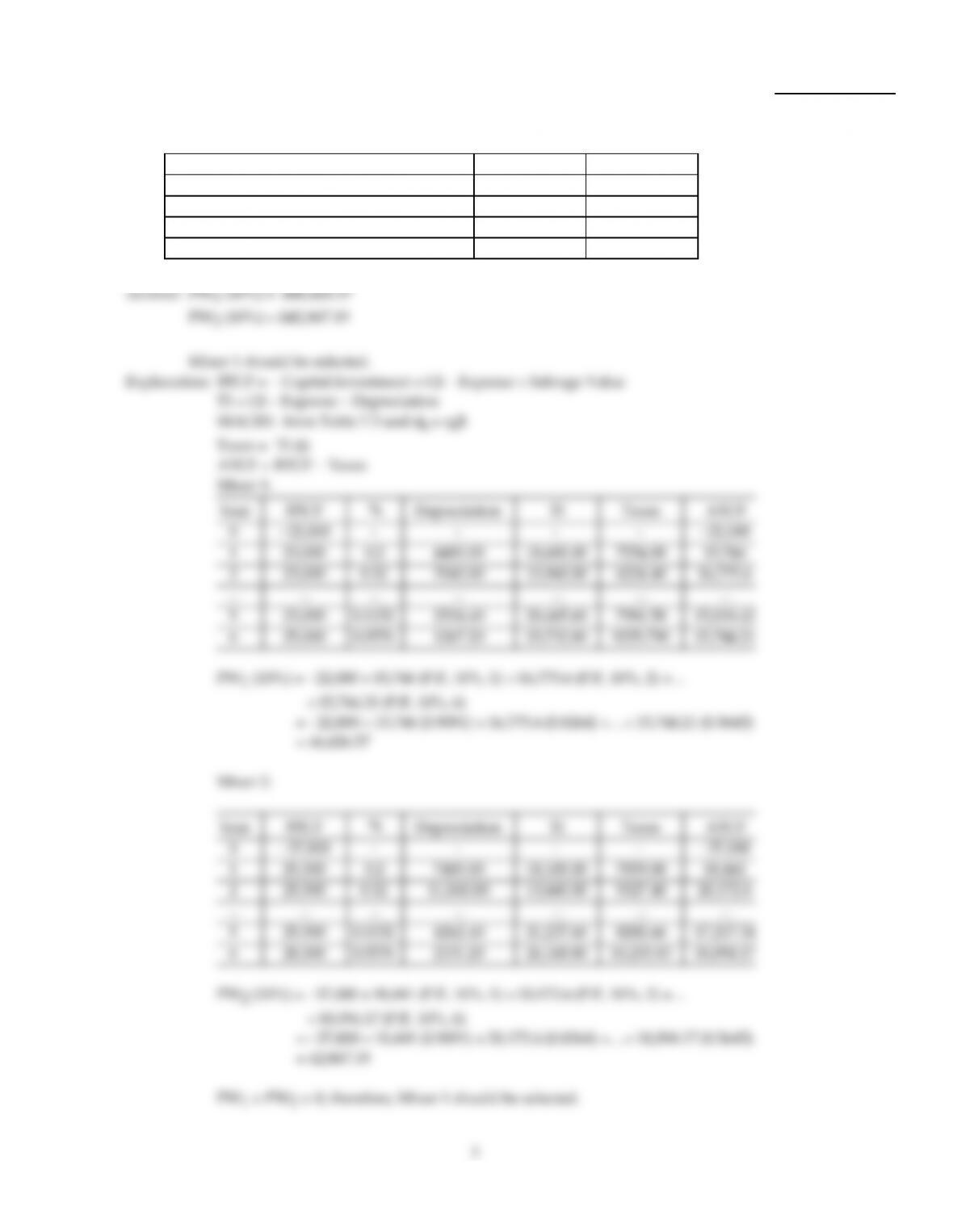
Machine Mixer 1 Mixer 2
First costs $22,000 $37,000
Annual benefits $23,000 $25,500
Market Value at the end of the useful life $2000 $2800
Life, years 6 6
4)
Answer:
PW1 (10%) =$46,426.57
PW2 (10%) =$42,867.19
Mixer 1 should be selected.
Explanation:
BTCF = – Capital Investment + GI – Expense + Salvage Value
TI = GI – Expense – Depreciation
MACRS: from Table 7.3 and dk=rkB
Taxes = TI (t)
ATCF = BTCF – Taxes
Mixer 1:
Year BTCF rkDepreciation TI Taxes ATCF
0–22,000 – – – – – 22,000
123,000 0.2 4400.00 18,600.00 7254.00 15,746
223,000 0.32 7040.00 15,960.00 6224.40 16,775.6
… … … … … … …
523,000 0.1152 2534.40 20,465.60 7981.58 15,018.42
625,000 0.0576 1267.20 23,732.80 9255.790 15,744.21
PW1 (10%) = – 22,000 +15,746 (P/F, 10%, 1) +16,775.6 (P/F, 10%, 2) +…
+15,744.21 (P/F, 10%, 6)
= – 22,000 +15,746 (0.9091) +16,775.6 (0.8264) +…+15,744.21 (0.5645)
=46,426.57
Mixer 2:
Year BTCF rkDepreciation TI Taxes ATCF
0–37,000 – – – – – 37,000
125,500 0.2 7400.00 18,100.00 7059.00 18,441
225,500 0.32 11,840.00 13,660.00 5327.40 20,172.6
… … … … … … …
525,500 0.1152 4262.40 21,237.60 8282.66 17,217.34
628,300 0.0576 2131.20 26,168.80 10,205.83 18,094.17
PW2 (10%) = – 37,000 +18,441 (P/F, 10%, 1) +20,172.6 (P/F, 10%, 2) +…
+18,094.17 (P/F, 10%, 6)
= – 37,000 +18,441 (0.9091) +20,172.6 (0.8264) +…+18,094.17 (0.5645)
=42,867.19
PW1>PW2> 0; therefore, Mixer 1 should be selected.
3

5)
An uninterruptible power system used in a small production facility at Acme
Manufacturing has a basis of $56,000 and is expected to have $5750 salvage value after
125,000 hours of use. Calculate the depreciation rate per hour of use and the book value
after 77,000 hours of operation.
5)
Answer:
Depreciation per unit of production =$0.40 per hour
BV =$25,200.00
Explanation:
Depreciation per unit of production = (56,000 –5750)/125,000 =0.40 per hour
After 77,000 hours, BV =56,000 – (0.40)(77,000) =25,200.00
6)
A manufacturer of printed circuit boards is considering purchasing a new surface mount
technology component placement system. Two machines are under consideration and the
following information is prepared for the economic evaluation. If the company’s after–tax
MARR of 12% per year and MACRS with a 7–year recovery period is used, determine
which alternative is preferred on the basis of their after–tax annual worth. Assume an
effective tax of 35% per year.
achine Q R
First costs $380,000 $395,0
Net annual revenue $150,000 in year 1, increasing by $500 per
year thereafter
$152,5
Market value at the end of the useful life $4000 0
Life, years 810
6)
Answer:
AWQ(12%) =$40,392.67
AWR(12%) =$45,882.31
Alternative R is preferred.
4
Explanation:
BTCF = – Capital Investment + GI – Expense
MACRS: from Table 7.3 and dk=rkB
BV8= 0; therefore, Depreciation recapture =4000
TI = GI – Expense – Depreciation + Depreciation recapture
Taxes = TI (t)
ATCF = BTCF – Taxes
Machine Q:
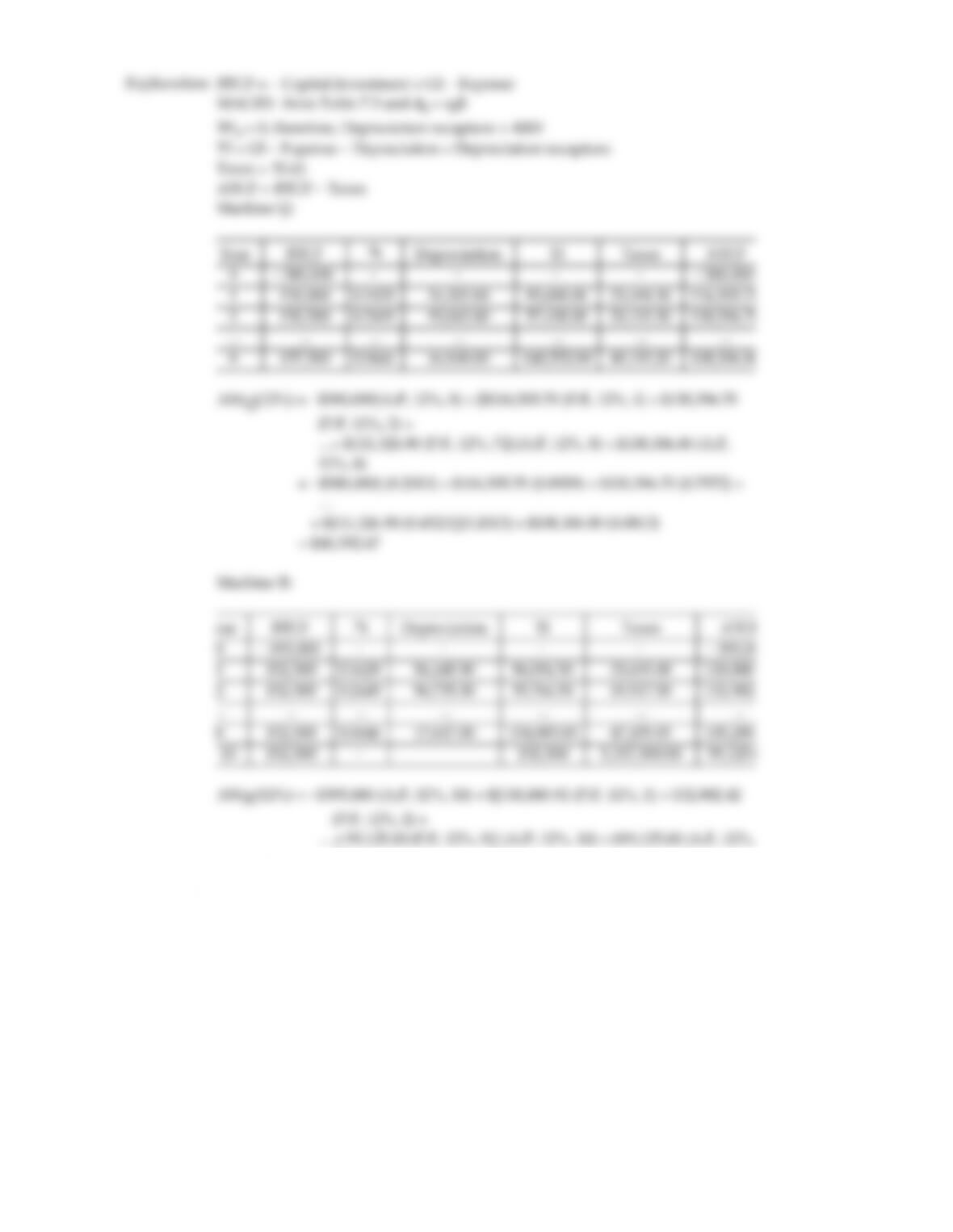
Year BTCF rkDepreciation TI Taxes ATCF
0–380,000 – – – – – 380,000
1150,000 0.1429 54,302.00 95,698.00 33,494.30 116,505.70
2150,500 0.2449 93,062.00 57,438.00 20,103.30 130,396.70
… … … … … … …
8157,500 0.0446 16,948.00 140,552.00 49,193.20 108,306.80
AWQ(12%) = – $380,000(A/P, 12%, 8) + [$116,505.70 (P/F, 12%, 1) +$130,396.70
(P/F, 12%, 2) +
…+$111,326.90 (P/F, 12%, 7)] (A/P, 12%, 8) +$108,306.80 (A/F,
12%, 8)
= – $380,000( (0.2013) +$116,505.70 (0.8929) +$130,396.70 (0.7972) +
…
+$111,326.90 (0.4523)](0.2013) +$108,306.80 (0.0813)
=$40,392.67
Machine R:
Year BTCF rkDepreciation TI Taxes ATCF
0–395,000 – – – – – 395,000
1152,500 0.1429 56,445.50 96,054.50 33,619.08 118,880.92
2152,500 0.2449 96,735.50 55,764.50 19,517.58 132,982.42
… … … … … … …
8152,500 0.0446 17,617.00 134,883.00 47,209.05 105,290.95
9–10 152,500 –152,500 5,337,500.00 99,125.00
AWR(12%) = – $395,000 (A/P, 12%, 10) + $[118,880.92 (P/F, 12%, 1) +132,982.42
(P/F, 12%, 2) +
…+99,125.00 (P/F, 12%, 9)] (A/P, 12%, 10) +$99,125.00 (A/F, 12%,
10)
= – $395,000 (0.1770) + $[118,880.92 (0.8929) +132,982.42 (0.7972) +…
+99,125.00 (0.3606)] (0.1770) +$99,125.00 (0.0570)
=$45,882.31
AWR>AWQ> 0; therefore, alternative R should be selected.
5
7)
A coil winding and unwinding machine that costs $32,000 has a life of 9 years with a $4000
salvage value. Use classical straight line depreciation to determine the book value after 7
years.
7)
Answer:
BV7=$10,222.23
Explanation:
From dk= (B–SVN)/N and BVk=B–kdk
d7= (32,000 –4000)/9
=3111.11
BV7=32,000 – (7)(3111.11)
=10,222.23
8)
Mountaineer Transportation, Inc. had the following information at the end of the year. For
an effective federal tax of 38% and state income tax of 7.5% per year, determine the
company’s BTCF, ATCF, and NOPAT for the year.
Total Revenues $550,000
Operating Expenses $130,000
Depreciation $111,000
8)
Answer:
BTCF =$420,000.00
ATCF =$288,211.50
NOPAT =$177,211.50
Explanation:
BTCF = GI – Expense
=550,000 –130,000 =420,000.00
TI = GI – Expense – Depreciation
=550,000 –130,000 –111,000
=309,000.00
Effective tax rate (t) = state rate + federal rate (1–state rate)
=0.075 + (0.38)(1 –0.075)
=0.4265
Taxes = TI (t) = (309,000.00)(0.4265)
=131,788.50
ATCF = BTCF – Taxes
=420,000.00 –131,788.50
=288,211.50
NOPAT = TI – Taxes
=309,000.00 –131,788.50
=177,211.50
9)
A machine used in the manufacture of fabricated metal products at Crimson Tide Inc., with
a useful life of 12 years, is to be depreciated by the MACRS method for tax depreciation
purposes. The machine has a first cost of $23,000 with a $3000 salvage value. The
company’s controller wants to understand the effects of the difference in the annual
depreciation charge for SL and MACRS with GDS recovery period. Using a half–year
convention for both methods, determine the differences in the book value if the machine is
sold at the end of year 5.
9)
Answer:
SL: BV5=$15,499.99
MACRS: BV5=$6158.25
The difference =$9341.74
Explanation:
For SL, dk= (B–SVN)/N and BVk= B –kdk
d5= (23,000 –3000)/12 =1666.67
BV5=23,000–(4.5)(1666.67) =15,499.99
For MACRS, from Table 7.2, a recovery period of 7 years should be used.
BVk= B –k
i=1
di
BV5=23,000 – (0.1429 + 0.2449 + 0.1749 + 0.1249 + 0.0893/2)(23,000)
=6158.25
The difference =15,499.99 –6158.25
=9341.74
10)
ADD Systems Corp. reported a gross income of $590,000, and depreciation and expenses
total $225,000 for the year. If the state income tax is 6% per year, determine the average
federal tax rate and overall effective tax rate.
10)
Answer:
Average federal tax rate =34.00%
Effective tax rate =37.96%
Explanation:
TI = GI – Expense – Depreciation
=590,000 –225,000
=365,000.00
From Table 7.5, $335,000 < TI < $10,000,000
Income tax = 113,900 + (0.34)(365,000.00 – 335,000)
=124,100.00
Average federal tax rate =124,100.00/365,000.00
=0.34
Effective tax rate = state rate + federal rate (1–state rate)
=0.06 + (0.34)(1 –0.06)
=0.3796 or 37.96%
11)
A private metropolitan mass transit system operator wants to add a new trolleybus to its
fleet. The following information is prepared for the economic evaluation. Either trolley is
to be used for 8 years and sold for the estimated salvage value. The before–tax MARR is
12.31% per year and the effective tax rate is 35%. Using SL depreciation, select a machine
on the basis of after–tax annual worth analysis.
Alternative T1 T2
First costs $490,000 $475,000
Annual benefits $110,000 $93,000
11)
7
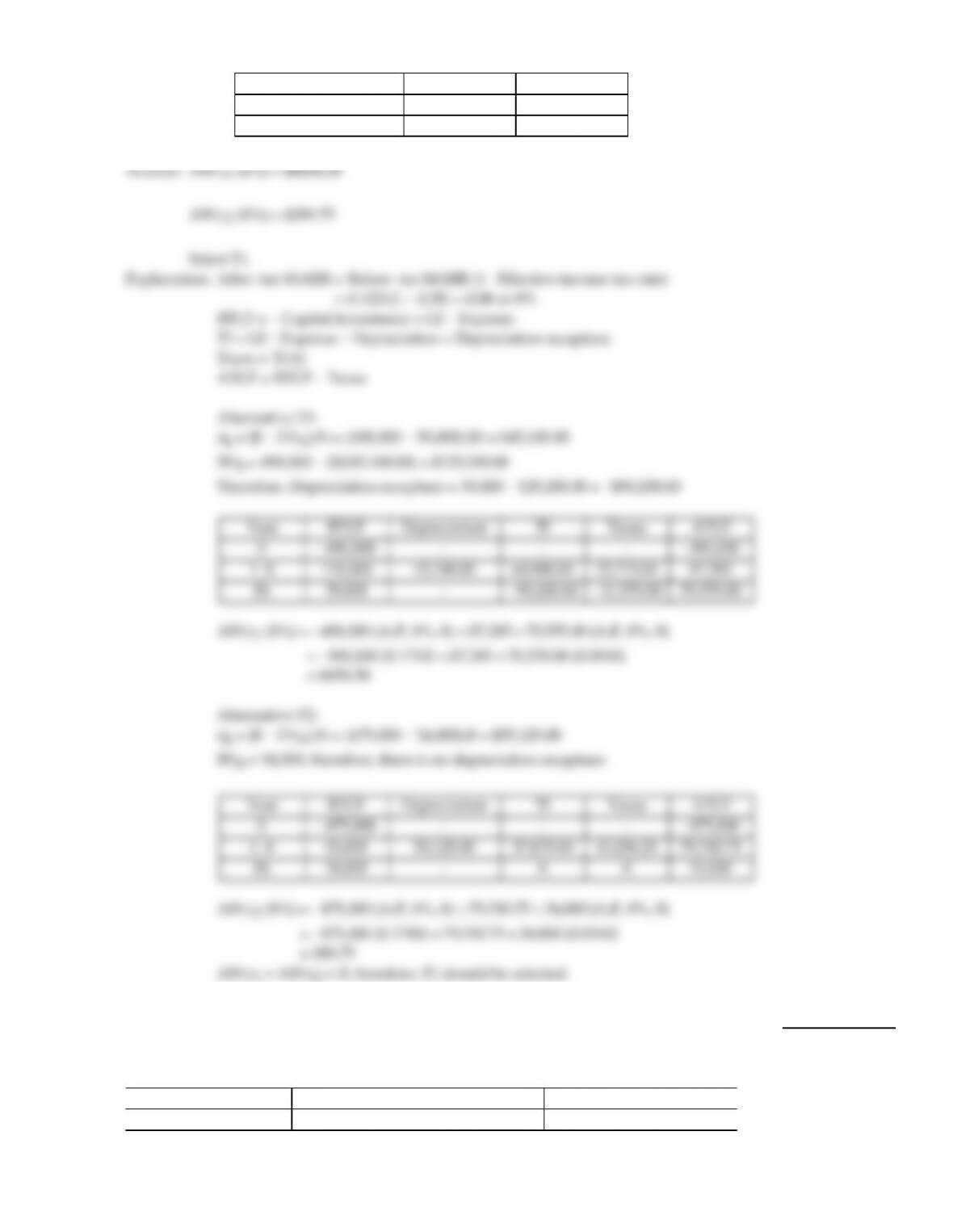
Annual benefits $110,000 $93,000
Salvage value $39,000 $34,000
Useful life, years 10 8
Answer:
AWT1 (8%) =$8658.58
AWT2 (8%) =$289.75
Select T1.
Explanation:
After–tax MARR = Before–tax MARR (1– Effective income tax rate)
=0.1231(1 –0.35) =0.08 or 8%
BTCF = – Capital Investment + GI – Expense
TI = GI – Expense – Depreciation + Depreciation recapture
Taxes = TI (t)
ATCF = BTCF – Taxes
Alternative T1:
dk=(B –SVN)/N= (490,000 –39,000)/10 =$45,100.00
BV8=490,000 – (8)(45,100.00) =$129,200.00
Therefore, Depreciation recapture =39,000 –129,200.00 = – $90,200.00
Year BTCF Depreciation TI Taxes ATCF
0–490,000 – – – – 490,000
1–8110,000 45,100.00 64,900.00 22,715.00 87,285
8b 39,000 – – 90,200.00 –31,570.00 70,570.00
AWT1 (8%) = – 490,000 (A/P, 8%, 8) +87,285 +70,570.00 (A/F, 8%, 8)
= – 490,000 (0.1740) +87,285 +70,570.00 (0.0940)
=8658.58
Alternative T2:
dk=(B –SVN)/N= (475,000 –34,000)/8 =$55,125.00
BV8=34,000; therefore, there is no depreciation recapture.
Year BTCF Depreciation TI Taxes ATCF
0–475,000 – – – – 475,000
1–893,000 55,125.00 37,875.00 13,256.25 79,743.75
8b 34,000 –0 0 34,000
AWT2 (8%) = – 475,000 (A/P, 8%, 8) +79,743.75 +34,000 (A/F, 8%, 8)
= – 475,000 (0.1740) +79,743.75 +34,000 (0.0940)
=289.75
AWT1 >AWT2 > 0; therefore, T1 should be selected.
12)
A company purchased modular office furniture for its two new office branches, A and B.
MACRS with a 7–year recovery period was used to write off the investment. The following
information was prepared for the economic evaluation.
Alternative A B
First costs $35,000 $44,500
nnual maintenance costs $1500 in year 1 and increasing by $12,000
12)
8
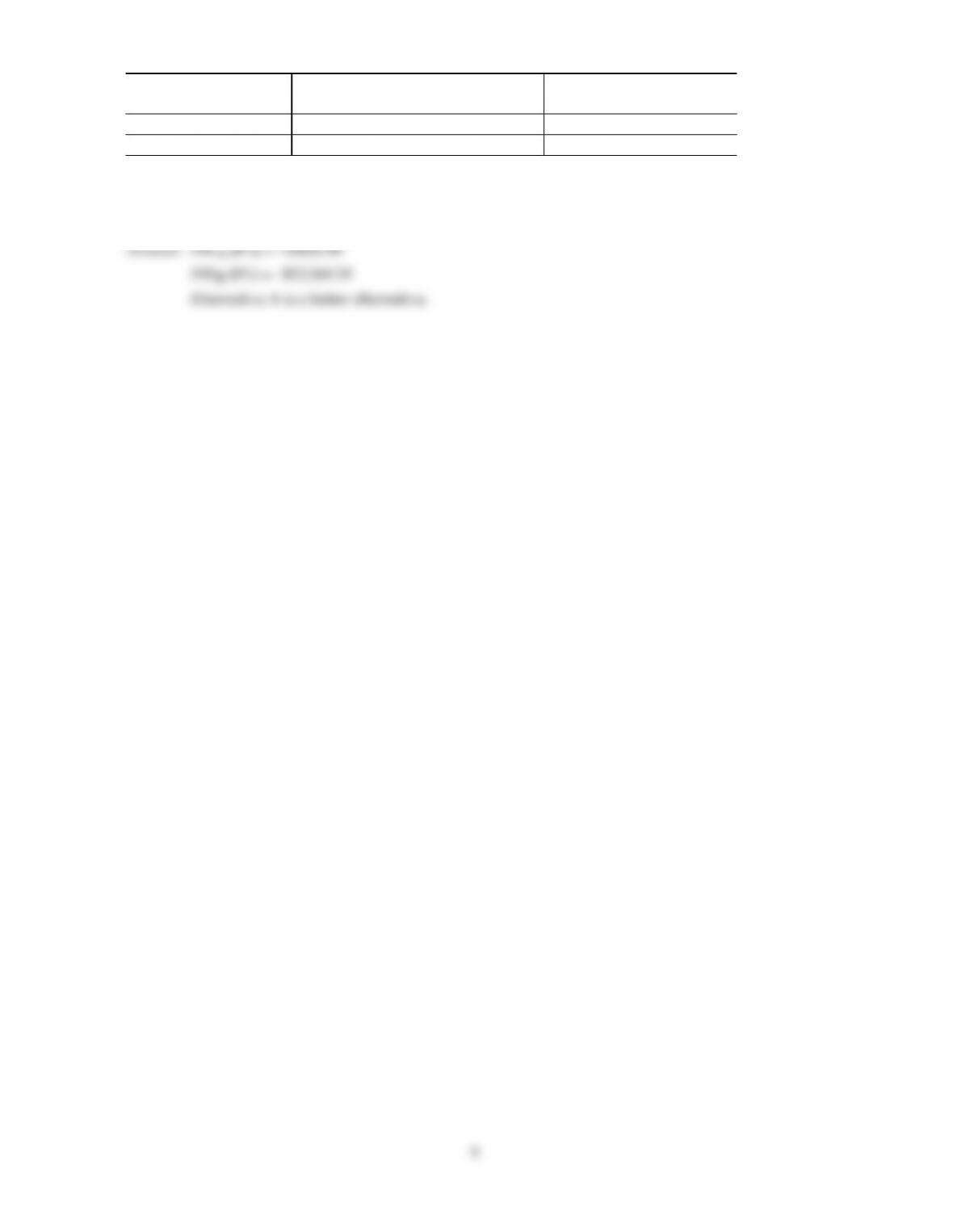
nnual maintenance costs $1500 in year 1 and increasing by
$150 each year thereafter
$12,000
alvage value $3100 –
Life, years 8 8
However, the company expects to close branch A and sell the furniture at the end of year 5
for $20,000. Determine which is the better alternative based on an after–tax annual worth
analysis with an effective tax of 40% and an after–tax MARR of 8% per year.
Answer:
AWA (8%) = – $5032.99
AWB (8%) = – $12,569.59
Alternative A is a better alternative.
9
Explanation:
BTCF = – Capital Investment + GI – Expense
TI = GI – Expense – Depreciation + Depreciation recapture
Taxes = TI (t)
ATCF = BTCF – Taxes
BVk= B –k
i–1
di
Alternative A:
BV5A =35,000 – (0.1429+0.2449+0.1749+0.1249+0.0893/2)(35,000) =9371.25
Year BTCF Depreciation TI Taxes ATCF
0–35,000 – – – – 35,000
1–1500 5001.50 –6501.50 –2600.60 1100.60
2–1650 8571.50 –10,221.50 –4088.60 2438.60
… … … … … …
5a –2100 1562.75 –3662.75 –1465.10 –634.90
5b 20,000 10,628.75 4251.50 15,748.50
AWA(8%) = [–35,000 +1100.60 (P/F, 8%, 1) +2438.60 (P/F, 8%, 2) +1368.60 (P/F,
8%, 3) +
578.60 (P/F, 8%, 4)] (A/P, 8%, 5) + [–634.90 +15,748.50] (A/F, 8%,
5)
= [–35,000+ [1100.60 (0.9259) +2438.60 (0.8573) + … +578.60 (0.7350)]
(0.2505) +
[–634.90 +15,748.50] (0.1705)
= – 5032.99
Alternative B:
BV8B = 0 and MV8= 0
Year BTCF rkDepreciation TI Taxes ATCF
0–44,500 – – – – – 44,500
1–12,000 0.1429 6359.05 –18,359.05 –7343.62 –4656.38
2–12,000 0.2449 10,898.05 –22,898.05 –9159.22 –2840.78
… … … … … … …
8–12,000 0.0446 1984.70 –13,984.70 –5593.88 –6406.12
AWB(8%) = [–44,500 – 4656.38 (P/F, 8%, 1) – 2840.78 (P/F, 8%, 2) + … – 6406.12
(P/F, 8%, 8)]
(A/P, 8%, 8)
= [–44,500 – 4656.38 (0.9259) – 2840.78 (0.8573) + … – 6406.12
(0.5403)] (0.174)
= – 12,569.59
AWA(8%) >AWB(8%); therefore, Alternative A is a better alternative.
10