Exam
Name___________________________________
SHORT ANSWER. Write the word or phrase that best completes each statement or answers the question.
Answer the question.
1)
A major bakery–cafe chain is evaluating whether they should consolidate its two offices
into one location when the two leases expire. In addition, the company also needs to
decide if they want to purchase or lease the new location. The estimated costs for these
three alternatives are as follows:
Alternative Continue Leasing
Separate
Offices
Lease
Combined
Office
Purchase
Combined
Office
Initial costs – – $270,000
Annual lease $53,550 $63,000 –
Annual maintenance costs – – $6000
Lease period 412 –
Market value at the end of
year 12
– – $216,000
Which alternative should be selected based on the annual worth method? Use a MARR of
11% and a study period of 12 year(s).
1)
Answer:
AW(Separate Lease) = – 53,550
AW(Combined Lease) = – 63,000
AW(Purchase) = – $38,076.00
The alternative with the least negative annual worth should be selected.
Explanation:
AW(Separate Lease) = – 53,550
AW(Combined Lease) = – 63,000
AW(Purchase) = – 270,000(A/P, 11%, 12) –6000 +216,000(A/F, 11%, 12)
= – 270,000(0.154) –6000 +216,000(0.044)
= – 38,076.00
Select the alternative with the least negative annual worth.
2)
A thermoplastic film manufacturer is trying to decide between four types of
thermoforming molding processes to be added to its molding operation. The estimated
costs and revenue are shown below. Compare them on the basis of rate of return and
determine which process should be selected if the company’s MARR is 6% per year.
Alternative Vacuum
forming
Pressure
forming
Drape
forming
Free
blowing
itial costs $31,000 $51,000 $43,000 $45,000
Annual expenses $3300 $3000 $3200 $3800
Annual revenue $7300 $11,000 $9700 $10,800
lvage value $3100 $5100 $4300 $4500
Life, years 8 8 8 8
IRR (%) 2.66 6.87 6.03 6.68
2)
1
Answer:
IRR (V) =2.66% <6%; Discard vacuum forming.
Incremental IRR (F–D) = 19.43% >6%; Discard drape forming.
Incremental IRR (Z–M) = 8.30% >6%; Discard free blowing.
Pressure forming should be selected.
Explanation:
Rank V, D, F and P
IRR (V) =2.66% <6%; therefore, vacuum forming is discarded.
PW (F–D) = 0 = – 45,000 +43,000 + (10,800 –3800 –9700 +3200)(P/A, 6%, 8) + (
4500 –4300)
(P/F, 6%, 8)
= – 2,000 + 500 (P/A, i%, 8) + 200 (P/F, i%, 8)
Solve for i by interpolation and incremental IRR = 19.43% >6%; therefore,
discard drape forming.
Or PW (F–D) = – 2,000 + 500 (P/A, 6%, 8) + 200 (P/F, 6%, 8)
= – 2,000 + 500(6.2098) + 200(P/F, 6%, 8)
= – 2,000 + 500(6.2098) + 200(0.6274)
=1230.38 > 0
PW(F–D, 6%) > 0; therefore, discard drape forming.
PW (P–F) = 0 = – 51,000 +45,000 + (11,000 –3000 –10,800 +3800)(P/A, 6%, 8) + (
5100–4500)
(P/F, 6%, 8)
= – 6,000 + 1,000 (P/A, i%, 8) + 600 (P/F, i%, 8)
Solve for i by interpolation and incremental IRR = 8.30% >6%; therefore,
discard free blowing.
Or PW (P–F) = – 6,000 + 1,000 (P/A, 6%, 8) + 600 (P/F, 6%, 8)
= – 6,000 + 1,000(6.2098) + 600(P/F, 6%, 8)
= – 6,000 + 1,000(6.2098) + 600(0.6274)
=586.24 > 0
PW(P–F, 6%) > 0; therefore, discard free blowing.
Select pressure forming.
2
3)
Consider the three mutually exclusive alternatives below. At the end of their useful lives,
alternatives X and Z will be replaced with identical replacements so that a 10–year service
requirement is met. If the MARR is 3% per year, which alternative (if any) should be
chosen?
Alternative X Y Z
Capital Investment $300,000 $425,000 $500,000
Annual savings $68,750 $108,750 $188,750
Salvage value $90,000 $125,000 $140,000
Life, years 10 20 5
3)
Answer:
AW(X) =$41,438.00
AW(Y) =$84,840.00
AW(Z) =$105,926.00
Select the alternative with the largest positive annual worth.
Explanation:
AW(X) = – 300,000(A/P, 3%, 10) +68,750 +90,000(A/F, 3%, 10)
= – 300,000(0.1172) +68,750 +90,000(0.0872)
=41,438.00
AW(Y) = – 425,000(A/P, 3%, 20) +108,750 +125,000(A/F, 3%, 20)
= – 425,000(0.0672) +108,750 +125,000(0.0372)
=84,840.00
AW(Z) = – 500,000(A/P, 3%, 5) +188,750 +140,000(A/F, 3%, 5)
= – 500,000(0.2184) +188,750 +140,000(0.1884)
=105,926.00
Select the alternative with the largest positive annual worth.
3
4)
Cassandra sets up a savings plan for her retirement. She plans to make a quarterly
payment of $3250 into a savings account that earns 11% per year, compounded quarterly.
After 3 years, she will have an option to continue making $3250 quarterly payments or to
switch to an annual savings plan that earns higher interest of 11.25% per year and requires
annual payments of $13,000. If she plans to retire 13 years from now, which option will
offer more money in the savings plan at that time?
4)
Answer:
FW(quarterly payment) =$231,621.33
FW(annual payment) =$220,021.10
Continuing to make quarterly payment offers more money at the time of retirement.
Explanation:
Effective interest rate =0.11/4 =0.0275 or 2.75% per quarter
FW(quarterly payment) =3250(F/A, 2.75%, 40)
=3250(71.2681)
=231,621.33
FW (annual payment) =13,000(F/A, 11.25%, 10)
=13,000(16.9247)
=220,021.10
FW (quarterly payment) > FW(annual payment); therefore, continuing to make
quarterly payments offers more money at the time of retirement.
5)
In response to the new federal regulation to provide the public with safe and wholesome
seafood, an Alaska seafood processor is considering two new sanitation control systems to
help monitor its seafood processing operations. System X has a useful life of 20 years and
requires an installed cost of $33,000 and annual maintenance cost of $7000. Some of the
equipment can be sold at $2200 at the end its useful life. System Y has a useful life of 10
years. The system will cost $16,500 to install and will involve an annual maintenance fee
of $8500. At the end of year 10, system Y can be upgraded for $23,100 to have the same
capability and will last another 10 years. However, the upgraded system will require an
annual maintenance fee of $8700. The salvage value for the system Y is negligible. Which
system should be selected based on the present worth method? Assume the company uses
a MARR of 5% per year.
5)
Answer:
PW(A) = – $119,406.22
PW(B) = – $137,556.60
Therefore, system X should be selected.
Explanation:
PW(X) = – 33,000 –7000(P/A, 5%, 20) +2200(P/F, 5%, 20)
= – 33,000 –7000(12.4622) +2200(0.3769)
= – 119,406.22
PW (Y) = – 16,500 –8500(P/A, 5%, 10) –23,100(P/F, 5%, 10) –8700(P/A, 5%,
10)(P/F, 5%, 10)
= – 16,500 –8500(7.7217) –23,100(0.6139) –8700(7.7217)(0.6139)
= – 137,556.60
PW(X) > PW(Y); therefore, system X should be selected.
4
6)
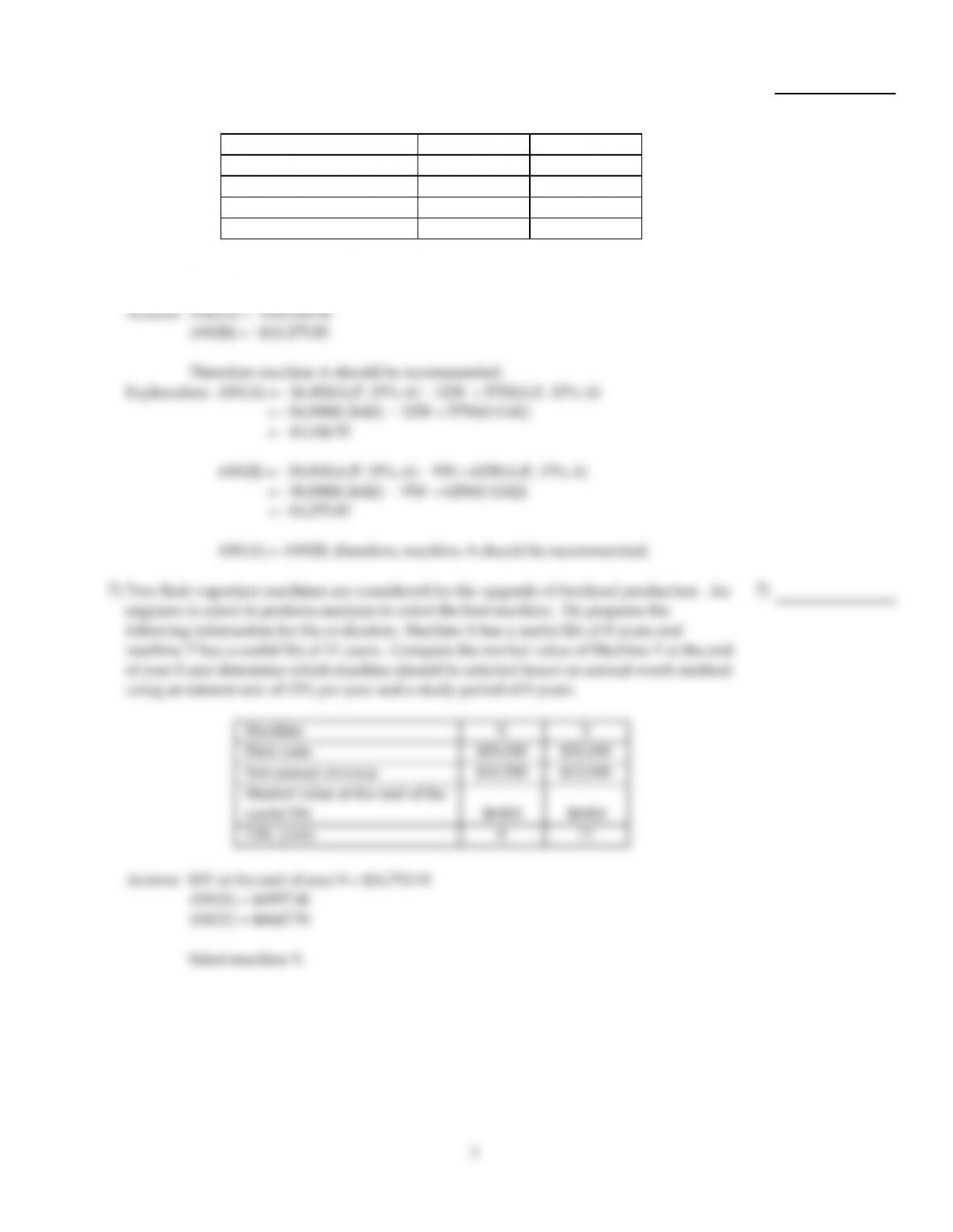
A dentist is deciding between two X–ray machines for his new office. Estimated costs for
each machine are the following:
Machine A B
Installed cost $36,000 $38,000
Annual maintenance cost $1250 $950
Market value at year 6$5750 $6250
Life, years 6 6
Which machine should be recommended based on the annual worth method? Use a
MARR of 15% and a study period of 6 years.
6)
Answer:
AW(A) = – $10,104.55
AW(B) = – $10,275.85
Therefore machine A should be recommended.
Explanation:
AW(A) = – 36,000(A/P, 15%, 6) –1250 +5750(A/F, 15%, 6)
= – 36,000(0.2642) –1250 +5750(0.1142)
= – 10,104.55
AW(B) = – 38,000(A/P, 15%, 6) –950 +6250(A/F, 15%, 6)
= – 38,000(0.2642) –950 +6250(0.1142)
= – 10,275.85
AW(A) > AW(B) ;therefore, machine A should be recommended.
7)
Two flash vaporizer machines are considered for the upgrade of biodiesel production. An
engineer is asked to perform analyses to select the best machine. He prepares the
following information for the evaluation. Machine X has a useful life of 8 years and
machine Y has a useful life of 11 years. Compute the market value of Machine Y at the end
of year 8 and determine which machine should be selected based on annual worth method
using an interest rate of 13% per year and a study period of 8 years.
Machine X Y
First costs $29,000 $32,000
Net annual revenue $10,500 $12,000
Market value at the end of the
useful life $6900 $6000
Life, years 811
7)
Answer:
MV at the end of year 8=$16,792.91
AW(X) =$4997.36
AW(Y) =$6647.76

Explanation:
Compute the PW at the end of year 8 of the remaining CR amounts of Y.
PW (CR) = [32,000(A/P, 13%, 11) –6000(A/F, 13%, 11)](P/A, 13%, 3)
= [32,000(0.1758) –6000(0.0458)](2.3612)
=12,634.31
Compute the PW at the end of year 8 of the original MV at the end of useful
life.
PW (MV) =6000(P/F, 13%, 3) =6000(0.6931)
=4158.60
Thus, MV at the end of year 8= PW(CR)+ PW(MV)
= [(5625.60) – (6000*0.0458)] * 2.3612 + (4158.60)
=16,792.91
AW (X) = – 29,000(A/P, 13%, 8) +10,500 +6900(A/F, 13%, 8)
= – 29,000(0.2084) +10,500 +6900(0.0784)
=4997.36
AW(Y) = – 32,000(A/P, 13%, 8) +12,000 +16,792.91(A/F, 13%, 8)
= – 32,000(0.2084) +12,000 +16,792.91(0.0784)
=6647.76
AW(Y) > AW(X); therefore, select machine Y.
6
8)
VB Flantronics Inc. is a company that designs, makes, and sells computer and home
entertainment sound systems, along with a line of headphones and microphones for
personal digital media. The company is trying to decide whether it should purchase or
lease a building for its manufacturing and research–and–development operation in China.
If the building is leased, a payment will have to be made at the beginning of each year.
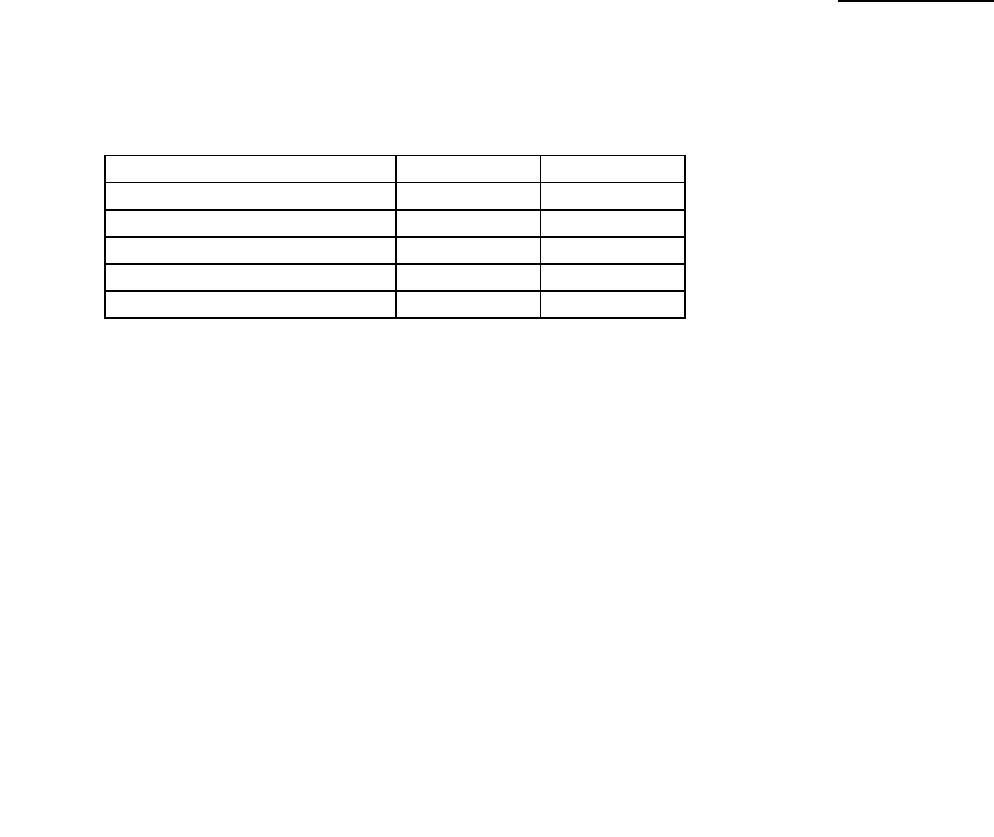
The estimated costs are the following:
Alternative Purchase Lease
Initial Cost $320,000 –
Lease –$40,000
Annual Operating Costs $8500 $7000
Salvage Value $80,000 –
Life, years 7 1
Which alternative should be recommended based on the present worth method? Use a
MARR of 9%.
8)
Answer:
PW(Purchase) = – $319,020.50
PW(Lease) = – $254,669.80
Therefore, the facility should be leased.
Explanation:
PW(Purchase) = – 320,000 –8500(P/A, 9%, 7) +80,000(P/F, 9%, 7)
= – 320,000 –8500(5.033) +80,000(0.547)
= – 319,020.50
A lease payment is made at the beginning of the year, whereas annual
operating expense is paid at the end of the year.
PW(Lease) = (–40,000)(P/A, 9%, 7)(F/P, 9%, 1) – (7000)(P/A, 9%, 7)
= – 40,000(5.033)(1.09) – (7000)(5.033)
= – 254,669.80
PW (Lease) > PW(Purchase); therefore, the facility should be leased.
7

9)
Two grandparents are considering purchasing a baby bond for their first grandson. They
are deciding between two bonds with the same face value of $42,000. Both bonds are
offered at the same price of $37,000. Bond A has interest of 2.5% per year, payable
quarterly, and matures in 6 years. Bond B, issued 2 years ago, has interest of 2.75% per
year, payable semiannually, and a 8–years maturity date. If the current market rate is 3%
per year, compounded quarterly, which bond should be purchased?
9)
Answer:
PW(A) =$40,849.49
PW(B) =$41,381.95
Bond B should be purchased.
Explanation:
From VN=C(P/F, i%, N) + rZ(P/A, i%, N)
Bond A i=0.03/4=0.01 or 0.75% per quarter
r= (2.5%)/4 = (0.625%)
N =6*4 periods remaining in the life of the bond.
PW(A) =42,000(P/F, 0.75%, 24) +262.5(P/A, 0.75%, 24)
=42,000(0.8358) +262.5(21.8891)
=40,849.49
Bond B i=(1 +r/M)M– 1 =(1 +0.015/2)2–1
=0.0001 or 1.51% per semiannually
r= (2.75%)/2 = (1.375%)
N =6*2 periods remaining in the life of the bond.
PW(B) =42,000(P/F, 1.51%, 12) +577.50(P/A, 1.51%, 12)
=42,000(0.8354) +577.50(10.9007)
=41,381.95
PW(B) >PW(A) and PW(B) >37,000; therefore, bond B should be purchased.
8
10)
A manufacturing company is deciding between three maintenance plans for a new waste
management system. Plan A needs a single prepayment of $59,000 at the beginning of the
year and the contract needs to be renewed every 3 years. Plan B is a two–year contract and
requires a payment of $19,470 at the end of year 1 and another payment of $20,060 at the
end of year 2. Plan C provides a three–year services with two payments of $29,500 made at
the end of years 1 and 3. Which maintenance plan should be selected based on the present
worth method? Assume the company uses a MARR of 11% and a study period of 6 years.
10)
Answer:
PW(A) = – $102,140.80
PW(B) = – $83,550.73
PW(C) = – $83,349.30
Therefore, plan C should be selected.
Explanation:
Compare alternatives over a study period of 6 years.
PW(A) = – 59,000 –59,000(P/F, 11%, 3)
= – 59,000 –59,000(0.7312)
= – 102,140.80
PW (B) = – 19,470(P/F, 11%, 1) –20,060(P/F, 11%, 2) –19,470(P/F, 11%, 3) –
20,060(P/F, 11%, 4)
–19,470(P/F, 11%, 5) –20,060(P/F, 11%, 6)
= – 19,470(0.9009) –20,060(0.8116) –19,470(0.7312) –20,060(0.6587)
–19,470(0.5935) –20,060(0.5346)
= – 83,550.73
PW(C) = – 29,500(P/F, 11%, 1) –29,500(P/F, 11%, 3)–29,500(P/F, 11%, 4) –
29,500(P/F, 11%, 6)
= – 29,500(0.9009) –29,500(0.7312) –29,500(0.6587) –29,500(0.5346)
= – 83,349.30
PW(A) < PW (B) < PW (C); therefore, plan C should be selected.
11)
A medical mobility equipment manufacturer is considering two alternatives as part of an
upgrade of its power wheelchairs assembly. Alternative A has an installed cost of $10,000,
net annual revenue of $6000, and a useful life of 3 years. Alternative B has an installed cost
of $20,000, net annual revenue of $6350 and a useful life of 6 years. At the end of year 3,
alternative A would be replaced with another alternative A having the same installed cost
and net annual revenues. If the MARR is 8% per year, which alternative (if any) should be
selected based on the present worth method? Assume negligible salvage value.
11)
Answer:
PW(A) =$9799.40
PW(B) =$9355.42
Therefore, alternative A should be selected.
Explanation:
PW(A) = – 10,000 –10,000(P/F, 8%, 3) +6000(P/A, 8%, 6)
= – 10,000 –10,000(0.7938) +6000(4.6229)
=9799.40
PW (B) = – 20,000 +6350 (P/A, 8%, 6)
= – 20,000 +6350(4.6229)
=9355.42
12)
Two advanced thermal insulating and anti–condensation protection alternatives have been
proposed for new Antarctica marine vessels subject to the harsh marine environment. One
alternative must be selected. Estimated savings from reduced total installation and
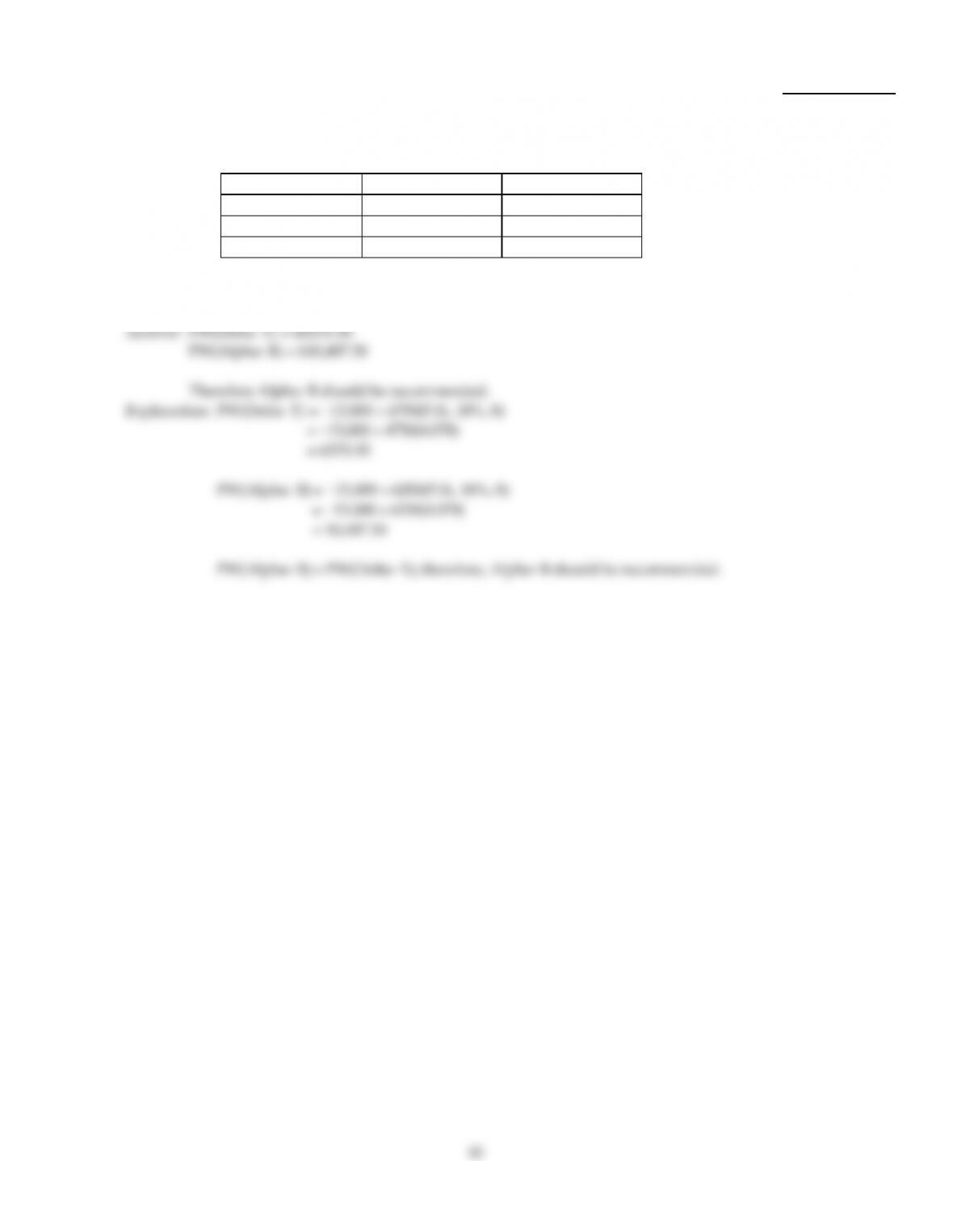
maintenance costs over conventional insulation are the following:
Alternative Delta–TAlpha–B
Installed cost $13,000 $15,000
Annual savings $4750 $6250
Life, years 8 8
Which alternative should be recommended based on the present worth method? Use a
MARR of 18 percent and a study period of 8 years. Assume negligible salvage values.
12)
Answer:
PW(Delta–T) = $6370.50
PW(Alpha–B) =$10,487.50
Therefore Alpha–B should be recommended.
Explanation:
PW(Delta–T) = – 13,000 +4750(P/A, 18%, 8)
= – 13,000 +4750(4.078)
=6370.50
PW(Alpha–B) = – 15,000 +6250(P/A, 18%, 8)
= – 15,000 +6250(4.078)
=10,487.50
PW(Alpha–B) > PW(Delta–T); therefore, Alpha–B should be recommended.
10