30) The shareholder can cast all votes for a single candidate or split them among various
candidates through
A) proxy ights.
B) cumulative voting.
C) call provisions.
D) majority voting.
Question Status: Previous edition
Objective: 10.1 Identify the basic characteristics and features of common stock and use the
discounted cash low model to value common shares.
Keywords: common stock
Principles: Principle 3: Cash Flows Are the Source of Value
31) You are considering the purchase of common stock that just paid a dividend of $6.50
per share. Security analysts agree with top management in projecting steady growth of
12% in dividends and earnings over the foreseeable future. Your required rate of return for
stocks of this type is 18%. How much should you expect to pay for this stock?
A) $86
B) $94
C) $108
D) $121
E) $242
Question Status: Previous edition
Objective: 10.1 Identify the basic characteristics and features of common stock and use the
discounted cash low model to value common shares.
Keywords: common stock
Principles: Principle 3: Cash Flows Are the Source of Value
11
32) You are considering the purchase of Wahoo, Inc. The irm just paid a dividend of $4.20
per share. The stock is selling for $115 per share. Security analysts agree with top
management in projecting steady growth of 12% in dividends and earnings over the
foreseeable future. Your required rate of return for stocks of this type is 17.5%. If you were
to purchase and hold the stock for three years, what would the expected dividends be
worth today?
A) $12.60
B) $9.21
C) $17.12
D) $15.55
E) $11.46
Question Status: Previous edition
Objective: 10.1 Identify the basic characteristics and features of common stock and use the
discounted cash low model to value common shares.
Keywords: common stock
Principles: Principle 3: Cash Flows Are the Source of Value
33) A share of common stock just paid a dividend of $3.25 per share. The expected long-run
growth rate for this stock is 18%. If investors require a rate of return of 24%, what should
the price of the stock be?
A) $57.51
B) $62.25
C) $71.86
D) $63.92
Question Status: Revised
Objective: 10.1 Identify the basic characteristics and features of common stock and use the
discounted cash low model to value common shares.
Keywords: common stock
Principles: Principle 3: Cash Flows Are the Source of Value
34) Common stockholders expect greater returns than bondholders because
A) they have no legal right to receive dividends.
B) they bear greater risk.
C) in the event of liquidation, they are only entitled to receive any cash that is left after all
creditors are paid.
D) all of the above.
Question Status: Previous edition
Objective: 10.1 Identify the basic characteristics and features of common stock and use the
discounted cash low model to value common shares.
Keywords: common stock
Principles: Principle 3: Cash Flows Are the Source of Value
12
35) WSU Inc. is a young company that does not yet pay a dividend. You believe that the
company will begin to pay dividends 5 years from now, and that the company will then be
worth $50 per share. If your required rate of return on this risky stock is 20%, what is the
stock worth today?
A) $40
B) $10
C) $20.09
D) $0.00
Question Status: Previous edition
Objective: 10.1 Identify the basic characteristics and features of common stock and use the
discounted cash low model to value common shares.
Keywords: common stock
Principles: Principle 3: Cash Flows Are the Source of Value
36) Common stockholders are essentially creditors of the irm.
Question Status: Previous edition
Objective: 10.1 Identify the basic characteristics and features of common stock and use the
discounted cash low model to value common shares.
Keywords: common stock
Principles: Principle 3: Cash Flows Are the Source of Value
37) Common stock represents a claim on residual income.
Question Status: Previous edition
Objective: 10.1 Identify the basic characteristics and features of common stock and use the
discounted cash low model to value common shares.
Keywords: common stock
Principles: Principle 3: Cash Flows Are the Source of Value
38) The growth rate of future earnings is determined by return on equity and the proit-
retention rate.
Question Status: Previous edition
Objective: 10.1 Identify the basic characteristics and features of common stock and use the
discounted cash low model to value common shares.
Keywords: common stock
Principles: Principle 3: Cash Flows Are the Source of Value
13
39) The stockholder’s expected rate of return consists of a dividend yield and interest.
Question Status: Previous edition
Objective: 10.1 Identify the basic characteristics and features of common stock and use the
discounted cash low model to value common shares.
Keywords: common stock
Principles: Principle 3: Cash Flows Are the Source of Value
40) When bankruptcy occurs, the claims of the common shareholders may go unsatisied.
Question Status: Previous edition
Objective: 10.1 Identify the basic characteristics and features of common stock and use the
discounted cash low model to value common shares.
Keywords: common stock
Principles: Principle 3: Cash Flows Are the Source of Value
41) Cumulative voting gives each share of stock a number of votes equal to the number of
directors being elected to the board.
Question Status: Previous edition
Objective: 10.1 Identify the basic characteristics and features of common stock and use the
discounted cash low model to value common shares.
Keywords: common stock
Principles: Principle 3: Cash Flows Are the Source of Value
42) The expected rate of return implied by a given market price equals the required rate of
return for investors at the margin.
Question Status: Previous edition
Objective: 10.1 Identify the basic characteristics and features of common stock and use the
discounted cash low model to value common shares.
Keywords: common stock
Principles: Principle 3: Cash Flows Are the Source of Value
43) Stock valuation is more precise than bond valuation as stock cash lows are more
certain.
Question Status: Previous edition
Objective: 10.1 Identify the basic characteristics and features of common stock and use the
discounted cash low model to value common shares.
Keywords: common stock
Principles: Principle 3: Cash Flows Are the Source of Value
44) The stock valuation model D1/(Rc – g) requires Rc > G.
Question Status: Previous edition
Objective: 10.1 Identify the basic characteristics and features of common stock and use the
discounted cash low model to value common shares.
14
Keywords: common stock
Principles: Principle 3: Cash Flows Are the Source of Value
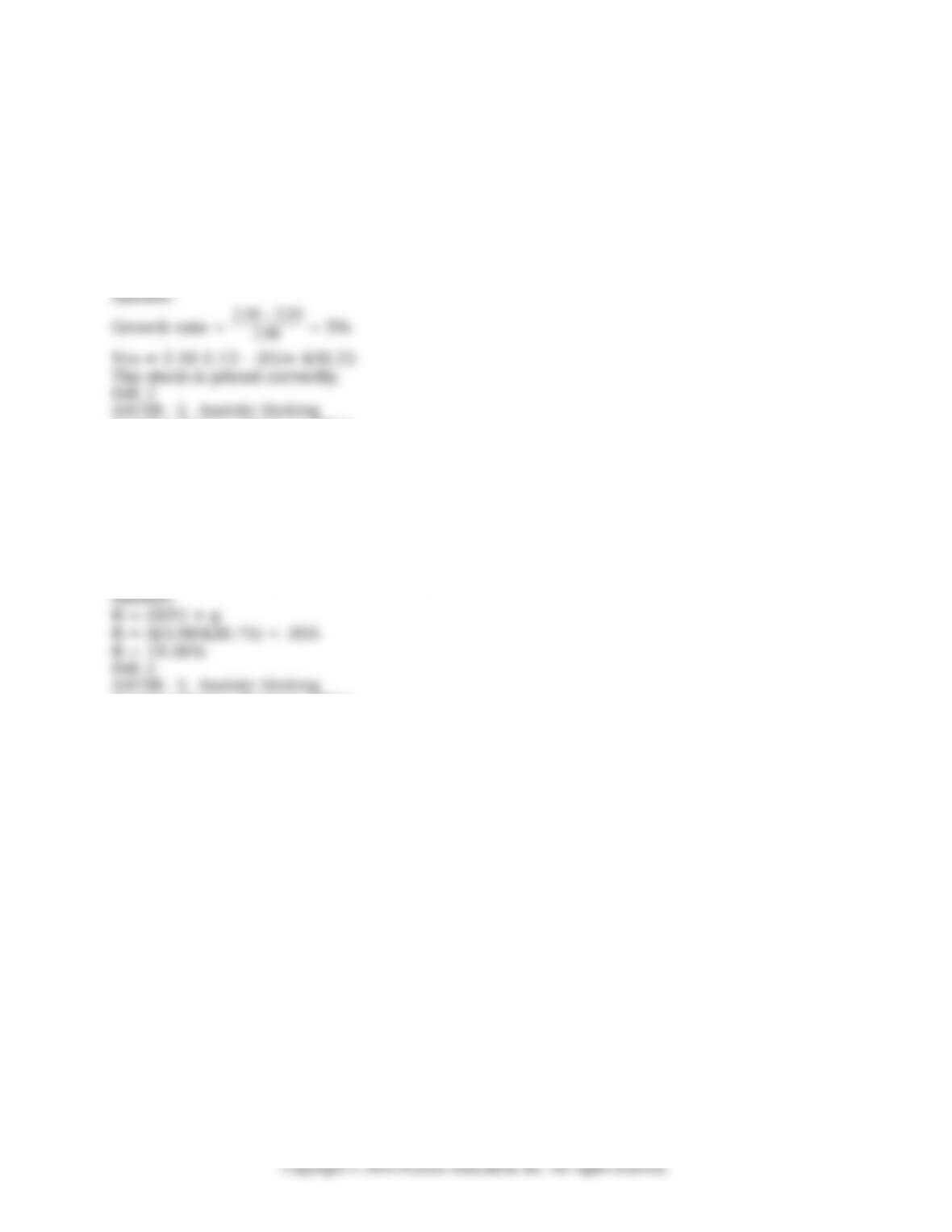
45) Is the following common stock priced correctly? If no, what is the correct price?
Price = $26.25
Required rate of return = 13%
Dividend year 0 = $2.00
Dividend year 1 = $2.10
Question Status: Previous edition
Objective: 10.1 Identify the basic characteristics and features of common stock and use the
discounted cash low model to value common shares.
Keywords: common stock
Principles: Principle 3: Cash Flows Are the Source of Value
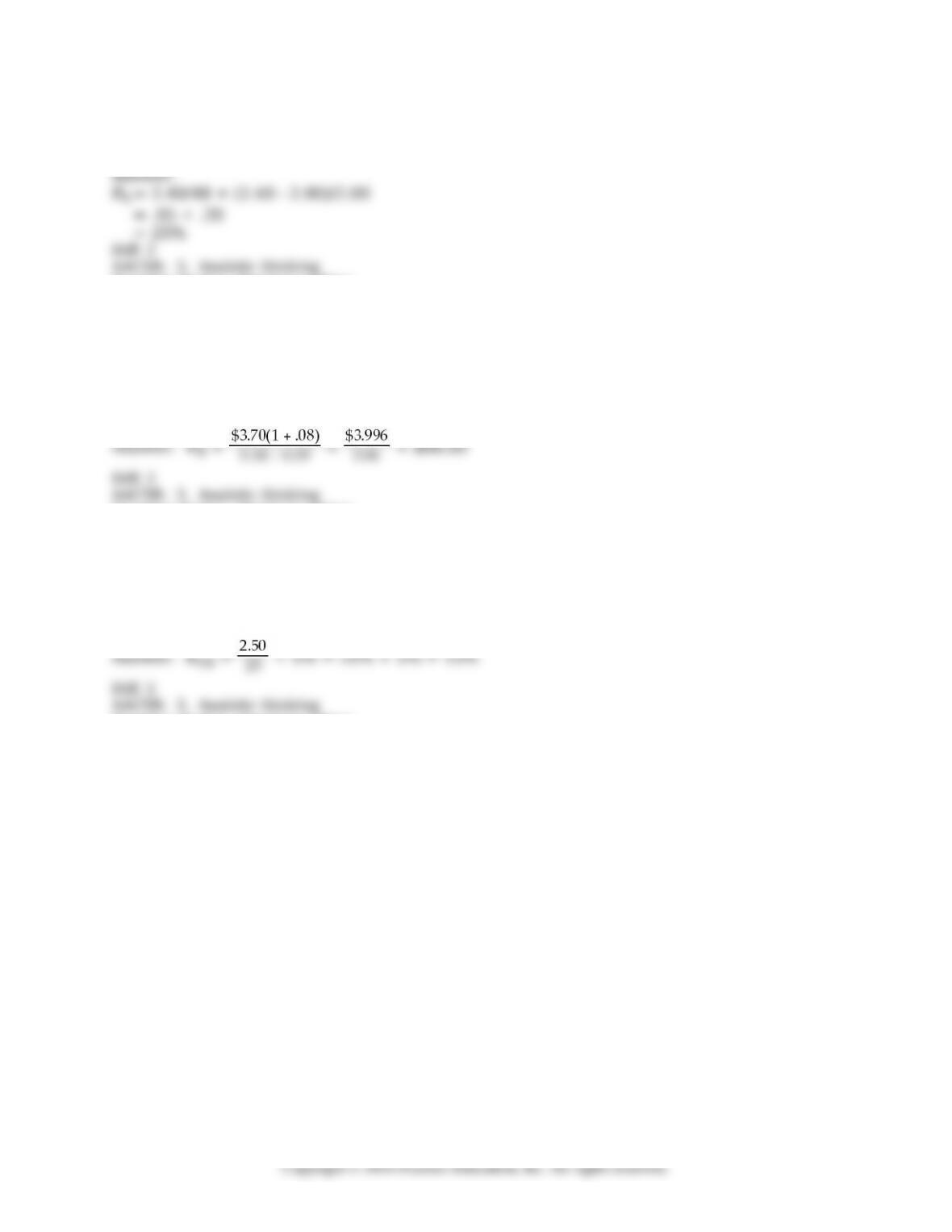
46) The common stock of Cranberry, Inc. is selling for $26.75 on the open market. A
dividend of $3.68 is expected to be distributed, and the growth rate of this company is
estimated to be 5.5%. If Richard Dean, an average investor, is considering purchasing this
stock at the market price, what is his expected rate of return?
Question Status: Previous edition
Objective: 10.1 Identify the basic characteristics and features of common stock and use the
discounted cash low model to value common shares.
Keywords: common stock
Principles: Principle 3: Cash Flows Are the Source of Value
15
47) Tannerly Worldwide’s common stock is currently selling for $48 a share. If the expected
dividend at the end of the year is $2.40 and last year’s dividend was $2.00, what is the rate
of return implicit in the current stock price?
Question Status: Previous edition
Objective: 10.1 Identify the basic characteristics and features of common stock and use the
discounted cash low model to value common shares.
Keywords: common stock
Principles: Principle 3: Cash Flows Are the Source of Value
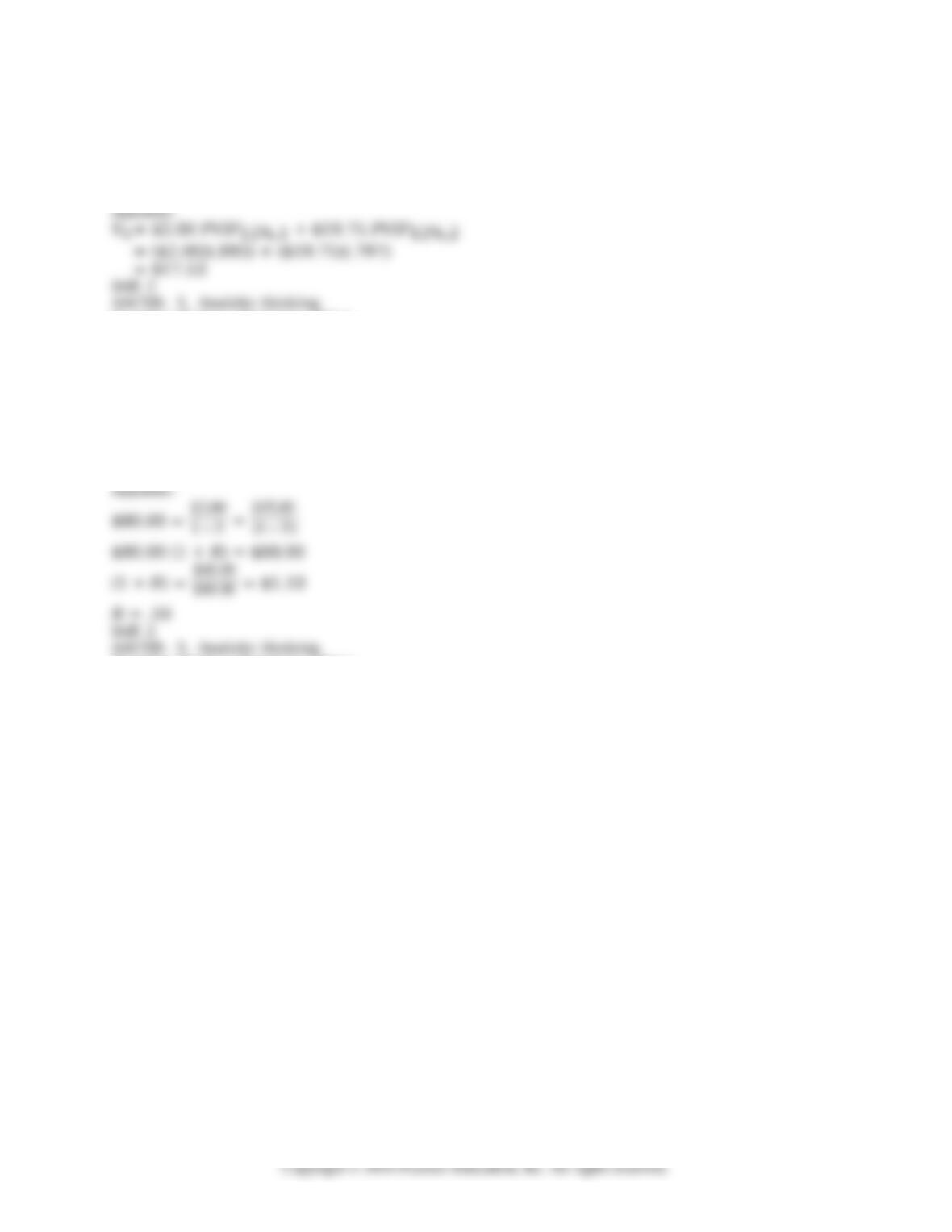
48) Draper Company’s common stock paid a dividend last year of $3.70. You believe that
the long-term growth in the dividends of the irm will be 8% per year. If your required
return for Draper is 14%, how much are you willing to pay for the stock?
Question Status: Previous edition
Objective: 10.1 Identify the basic characteristics and features of common stock and use the
discounted cash low model to value common shares.
Keywords: common stock
Principles: Principle 3: Cash Flows Are the Source of Value
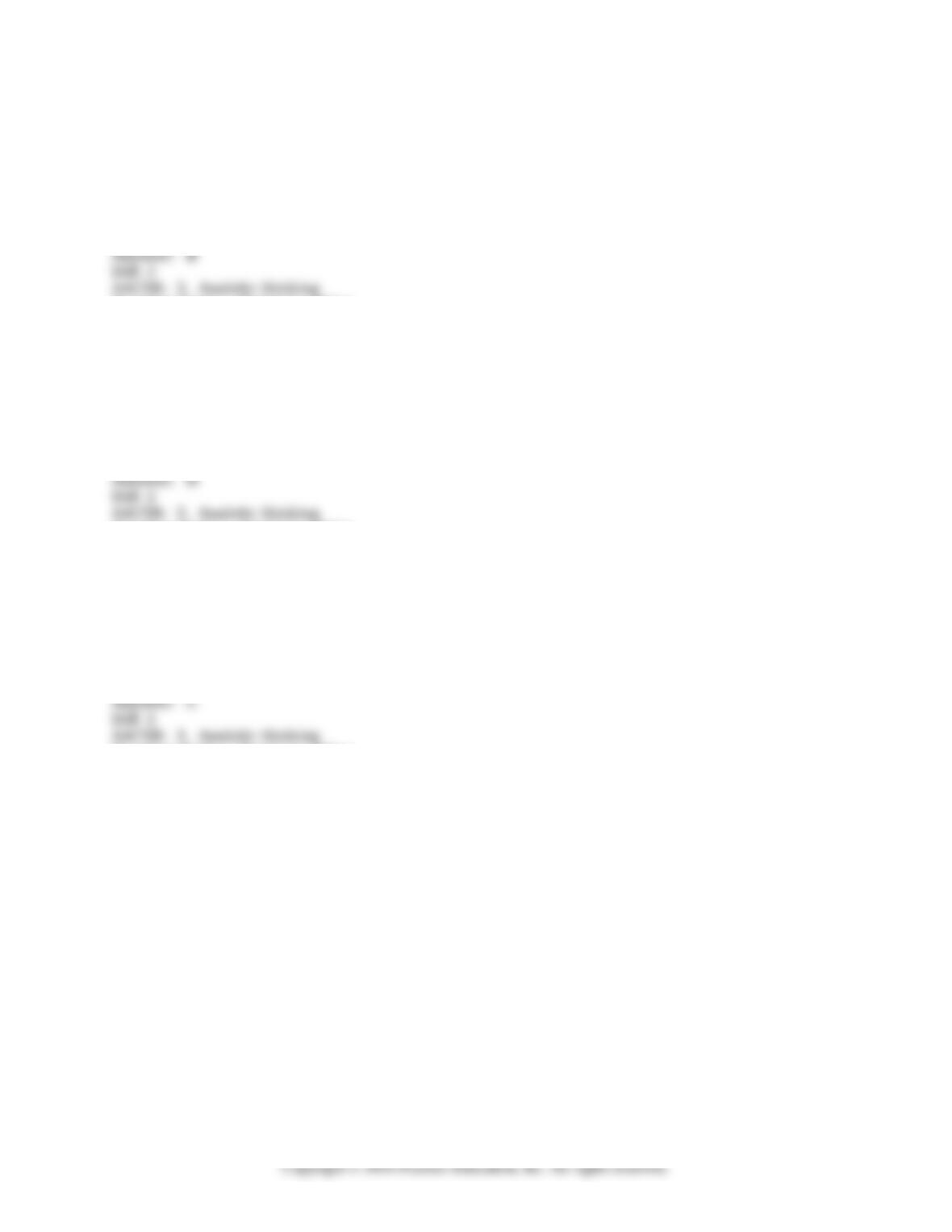
49) Determine the rate of return on a $25 common stock that pays a dividend of $2.50 in
year 1 and grows at a rate of 5%.
Question Status: Previous edition
Objective: 10.1 Identify the basic characteristics and features of common stock and use the
discounted cash low model to value common shares.
Keywords: common stock
Principles: Principle 3: Cash Flows Are the Source of Value
16
50) You are considering the purchase of AMDEX Company stock. You anticipate that the
company will pay dividends of $2.00 per share next year and $2.25 per share the following
year. You believe that you can sell the stock for $17.50 per share two years from now. If
your required rate of return is 12%, what is the maximum price that you would pay for a
share of AMDEX Company stock?
Question Status: Previous edition
Objective: 10.1 Identify the basic characteristics and features of common stock and use the
discounted cash low model to value common shares.
Keywords: common stock
Principles: Principle 3: Cash Flows Are the Source of Value
51) You can purchase one share of Sumter Company common stock for $80 today. You
expect the price of the common stock to increase to $85 per share in one year. The
company pays an annual dividend of $3.00 per share. What is your expected rate of return
for Sumter stock?
Question Status: Previous edition
Objective: 10.1 Identify the basic characteristics and features of common stock and use the
discounted cash low model to value common shares.
Keywords: common stock
Principles: Principle 3: Cash Flows Are the Source of Value
17
10.2 The Comparables Approach to Valuing Common Stock
1) If a stock has a much higher than normal P/E ratio, investors probably expect
A) slow growth in earnings.
B) rapid growth in earnings.
C) large increases in the price of the stock.
D) a declining stock price.
Question Status: Previous edition
Objective: 10.2 Use the price-to-earnings ratio to value common stock.
Keywords: price/earnings ratio
Principles: Principle 3: Cash Flows Are the Source of Value
2) Which of the following factors will inluence a irm’s P/E ratio?
A) The investors’ required rate of return
B) Firm investment opportunities
C) General market conditions
D) All of the above
Question Status: Previous edition
Objective: 10.2 Use the price-to-earnings ratio to value common stock.
Keywords: price/earnings ratio
Principles: Principle 3: Cash Flows Are the Source of Value
3) The P/E ratio is calculated by dividing
A) the current stock price by stockholders’ equity.
B) total assets by net income.
C) the current stock price by earnings per share.
D) the current stock price by operating cash low per share.
Question Status: Previous edition
Objective: 10.2 Use the price-to-earnings ratio to value common stock.
Keywords: price/earnings ratio
Principles: Principle 3: Cash Flows Are the Source of Value
18
4) The GAP’s most recent earnings per share were $1.75. Analysts forecast next year’s
earnings per share at $1.88. If the appropriate P/E ratio is 15, a share of GAP stock should
be valued at
A) $28.20.
B) $26.25.
C) $27.23.
D) $8.57.
Question Status: Previous edition
Objective: 10.2 Use the price-to-earnings ratio to value common stock.
Keywords: price/earnings ratio
Principles: Principle 3: Cash Flows Are the Source of Value
5) The retail analyst at Morgan-Sachs values stock of the GAP at $38.00 per share. They
are using the average industry “forward” P/E ratio of 17. Their forecasted earnings per
share for next year is
A) $0.54.
B) $1.50.
C) $2.24.
D) There is not enough information calculate earnings per share.
Question Status: Revised
Objective: 10.2 Use the price-to-earnings ratio to value common stock.
Keywords: price/earnings ratio
Principles: Principle 3: Cash Flows Are the Source of Value
6) Home Depot stock is currently selling for $75 per share. Next year’s dividend is
expected to be $1.56; next year’s earnings per share are expected to be $4.16. Home
Depot’s P/E ratio is
A) .055.
B) 18.
C) 2.14.
D) 48.
Question Status: Revised
Objective: 10.2 Use the price-to-earnings ratio to value common stock.
Keywords: price/earnings ratio
Principles: Principle 3: Cash Flows Are the Source of Value
19
7) McDonald’s stock currently sells for $103. It’s expected earnings per share are $5.50.
The average P/E ratio for the industry is 24. If investors expected the same growth rate and
risk for McDonald’s as for an average irm in the same industry, it’s stock price would
A) stay about the same.
B) rise.
C) fall.
D) there is not enough information.
Question Status: Revised
Objective: 10.2 Use the price-to-earnings ratio to value common stock.
Keywords: price/earnings ratio
Principles: Principle 3: Cash Flows Are the Source of Value
8) If the ROE on a new investment is less than the irm’s required rate of return
A) the investment increases the irm’s value.
B) the investment leaves the irm’s value unchanged.
C) the efect on the irm’s value is unpredictable.
D) the investment reduces the irm’s value.
Question Status: Previous edition
Objective: 10.2 Use the price-to-earnings ratio to value common stock.
Keywords: price/earnings ratio
Principles: Principle 3: Cash Flows Are the Source of Value
9) Zorba’s is a small chain of restaurants whose stock is not publicly traded. The average
P/E ratio for similar restaurant chains is 16.5; the P/E ratio for the S&P 500 Index is 15.2.
This year’s earnings were $1.21 per share and next year’s earnings are forecasted at $1.46
per share. A reasonable price for a share of Zorba’s stock is
A) $24.09.
B) $19.96.
C) $20.23.
D) $16.50.
Question Status: Revised
Objective: 10.2 Use the price-to-earnings ratio to value common stock.
Keywords: price/earnings ratio
Principles: Principle 3: Cash Flows Are the Source of Value
20