
Deer Drive Census
Northeastern State University-Ecology
Rachel Rachel
Participation:
I contributed in the deer drive at Sequoyah State Park on February 11, 2016
as a driver.
Importance of counting deer at SSP:
Calculating the density of deer is a way to keep track of the population of
deer in the park. The population of deer has to be under control at Sequoyah State
Park. If the deer population becomes overwhelming this could lead to the deer
having little food supply and leading to a sickly life for the majority of deer. The park
management and visitors will witness a lot of deer but they would all be smaller and
unhealthy looking. If the deer were under populated in the park then people would
not be able to witness any deer in the park. The vegetation in the park would be
highly effected by over population and under population of deer. The importance of
counting deer helps assist park management to control and intervene in the
population control if needed.
How were the density calculation obtained:
All the participants were gathered at the north end of the Sequoyah State
Park. A few participants were designated to be counters and the rest were drivers.
The drivers were taken to the opposite side of the woods and spread out at equal
distances. The drivers than walked through the woods in a straight line with each
other and made as much noise as possible. This procedure was supposed to scare
the deer and drive them towards the counters on the other side of the woods. If the
drivers witnessed any deer they would count them and when the counters
witnessed deer they were accounted for.
The results obtained from the method:
The population of deer in that specific amount of area covered could be
obtained. Then taking that data one could calculate approximately the population
density of the entire park. The results were that twenty-eight deer were accounted
for in 0.62 kilometers. These results could be calculated to approximate that
forty-five deer are in each squared kilometer of the entire park. The results for the
deer drive were recorded and we are able to compare these results from all the past
deer drive censuses. One could than compare the population of deer over the years
and possibly make decisions to try and predict the future results.
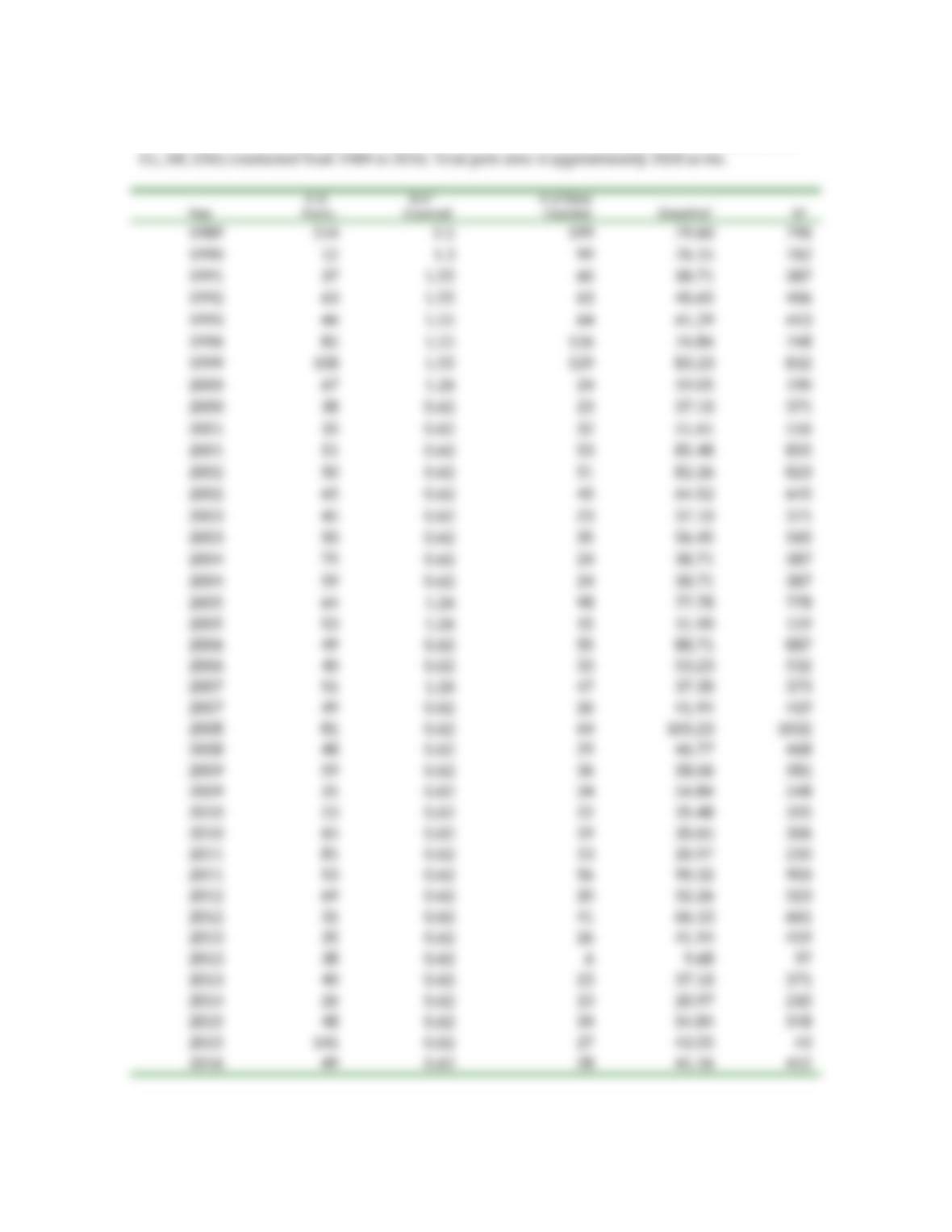
Table 1. Raw data from spring drive censuses of white-tailed deer in Sequoyah State Park (Cherokee
1,985.00 1,990.00 1,995.00 2,000.00 2,005.00 2,010.00 2,015.00 2,020.00
0.00
20.00
40.00
60.00
80.00
100.00
120.00
f(x) = – 0.8x + 1660.14
R² = 0.07
Time
(year)
Density
(Deer/Km2)
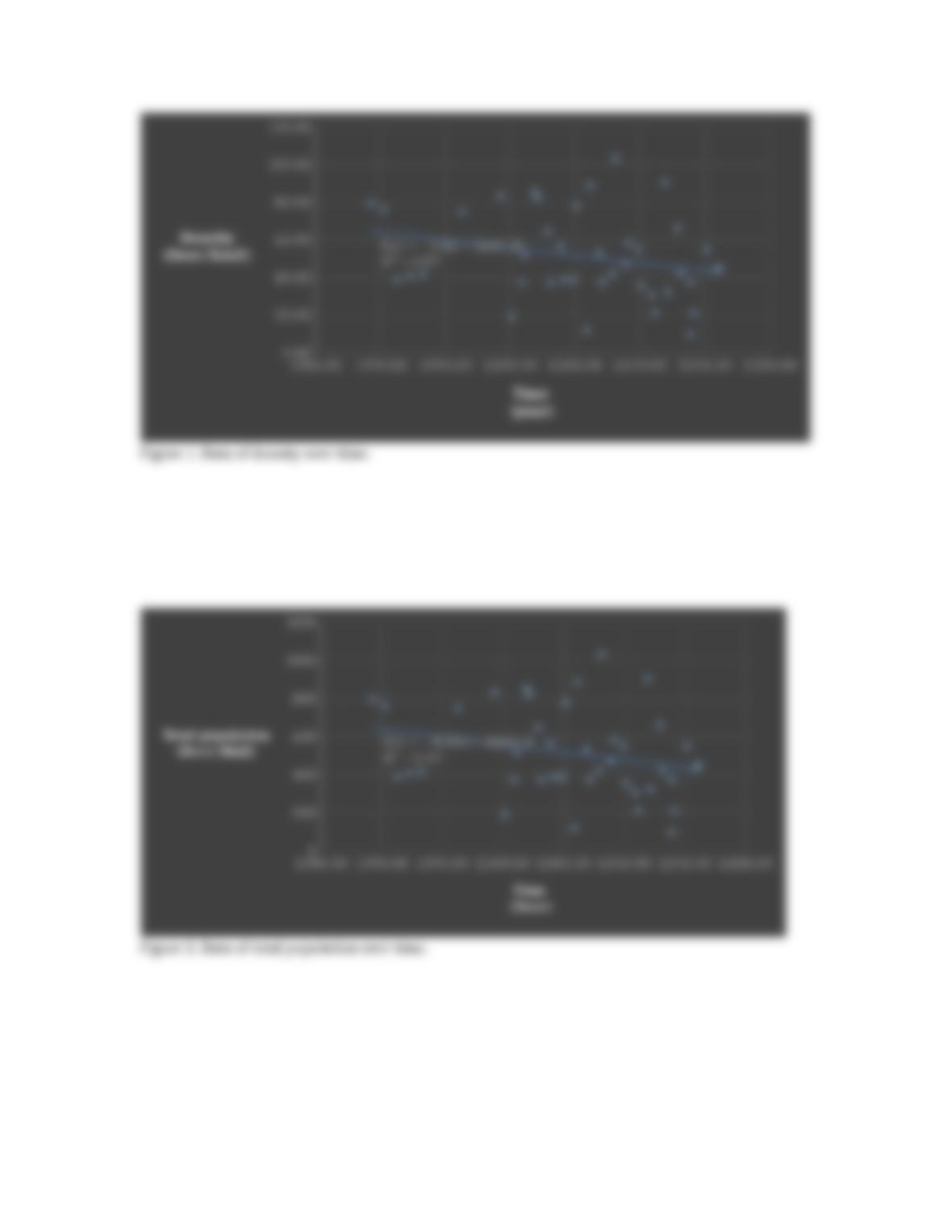
Figure 1. Data of density over time.
1,985.00 1,990.00 1,995.00 2,000.00 2,005.00 2,010.00 2,015.00 2,020.00
0
200
400
600
800
1000
1200
f(x) = – 8.02x + 16601.4
R² = 0.07
Time
(Year)
Total population
(Deer/Hm2)
Figure 2. Data of total population over time.
0 20 40 60 80 100 120 140 160
0.00
20.00
40.00
60.00
80.00
100.00
120.00
f(x) = 0.18x + 41.31
R² = 0.04
# of participants
Density
(Deer/Km2)
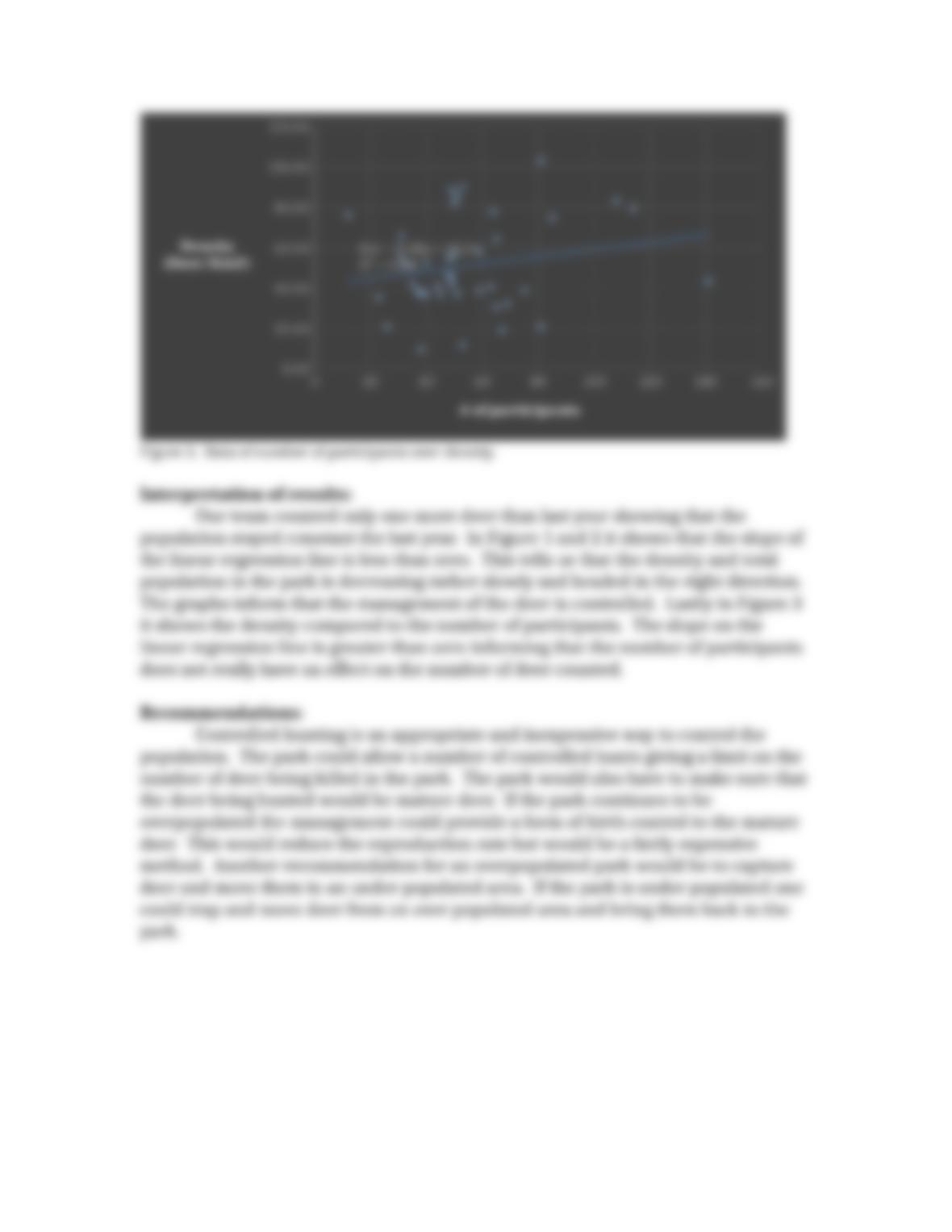
Figure 3. Data of number of participants over density.
Interpretation of results:
Our team counted only one more deer than last year showing that the
population stayed constant the last year. In Figure 1 and 2 it shows that the slope of
the linear regression line is less than zero. This tells us that the density and total
population in the park is decreasing rather slowly and headed in the right direction.
The graphs inform that the management of the deer is controlled. Lastly in Figure 3
it shows the density compared to the number of participants. The slope on the
linear regression line is greater than zero informing that the number of participants
does not really have an effect on the number of deer counted.
Recommendations:
Controlled hunting is an appropriate and inexpensive way to control the
population. The park could allow a number of controlled hunts giving a limit on the
number of deer being killed in the park. The park would also have to make sure that
the deer being hunted would be mature deer. If the park continues to be
overpopulated the management could provide a form of birth control to the mature
deer. This would reduce the reproduction rate but would be a fairly expensive
method. Another recommendation for an overpopulated park would be to capture
deer and move them to an under populated area. If the park is under populated one
could trap and move deer from an over populated area and bring them back to the
park.