Executive Summary
Zara’s unique, integrated supply chain has allowed for significant internal control over product
design and quality, high inventory turns and speedy production and delivery. These elements have
proven to be a big success in Europe, indicated by rapid expansion within European countries and an
annual growth rate of 20-30% in 2000. The issue at hand now is whether the same kind of success can
be replicated in North America and whether their current operations are sustainable, especially in a
North American context.
The US and Canada is a high potential new market and while the New York shops aren’t a
benchmark for the rest of the continent, their success does represent the possibility of strong operations
in similar large cities. Zara should understand the new market and consumer preferences, as these will
likely differ from what is true in Europe. In addition, in order to service a new and large geographic area,
Zara should establish a North American HQ ,production facilities, and distribution network as well as
own and operate their own storefronts. As such, it is recommended for Zara to remain vertically
integrated in North America to maintain control of their products, reduce variability, and operate their
Just-In-Time Model of rapid production, speedy delivery of new items, and zero inventory policy. While
the industry as a whole opts for disintegrated supply chains, Zara’s unique model and ability to meet
customer demand and preferences will likely serve as a key point of differentiation and competitive
advantage.
Introduction
Zara has an unique supply chain which gives them a significant competitive advantage. They
choose to handle 50% of their design, production, and distribution in-house and concentrate production
close to their headquarters in Spain. In addition, Zara’s low-priced fashion, manufacturing and
distribution at high speed, and leading operations technology enables them to produce and supply the
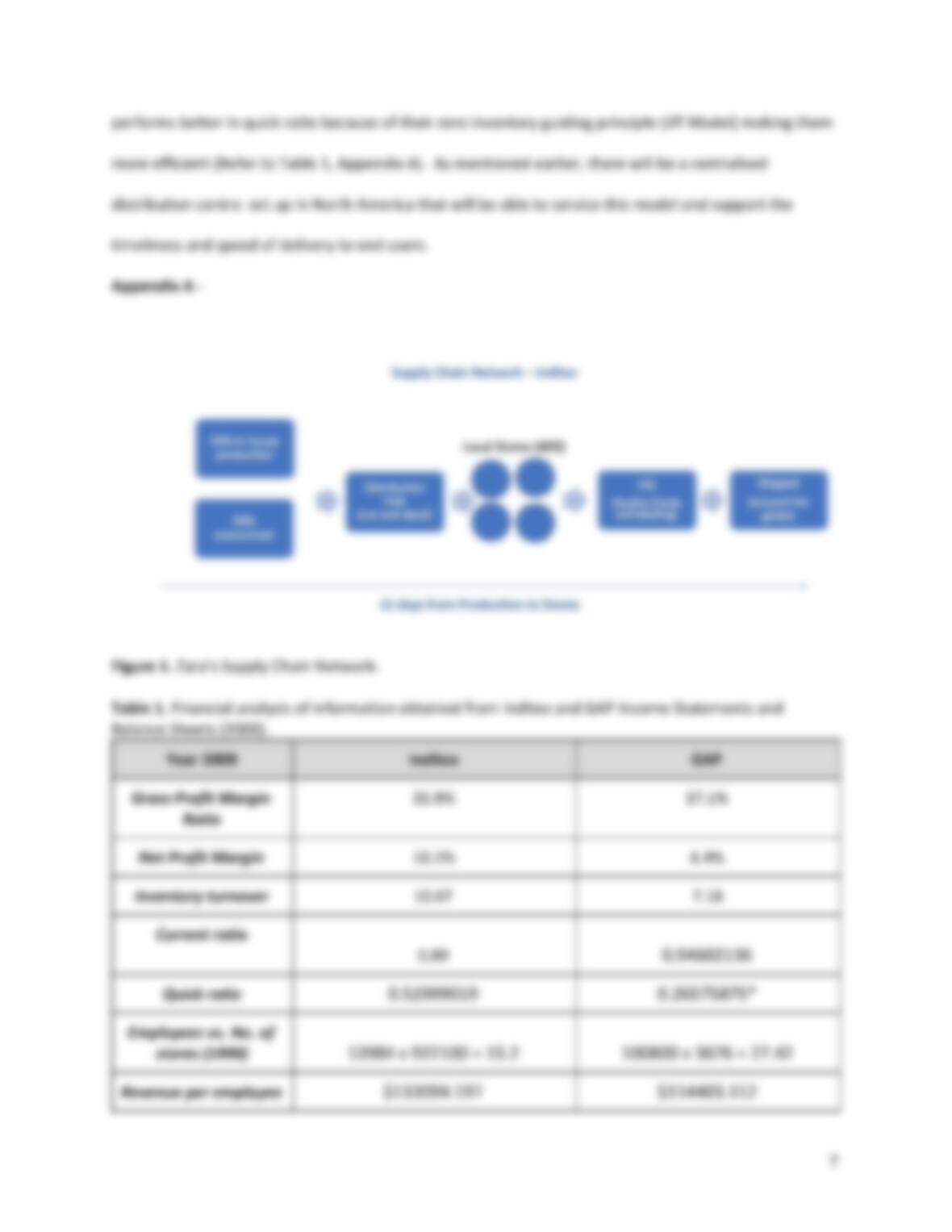
latest fashion trends within just 15 days (see Figure 1. In Appendix).
1
Zara’s Success Story
Zara has developed a successful business model based on short deadlines, small quantities, and
a wide choice of apparel. Their vertical integration of design, just-in-time manufacturing, flexible
structure, low inventory rule, and advanced information technology enables quick responses to
customers’ changing demands. A completely new piece of clothing can be designed, manufactures and
delivered in less than four weeks; changes to garments can be made within two weeks. Upon arrival to
stores, products are ready to sell because labelling and pricing have already occurred. Furthermore, Zara
is unique because they do not spend significantly on marketing. Instead, they choose to meet demand
and preferences of consumers, eliminating the need for aggressive advertising. Zara focuses is on testing
new cities by opening just one store, with no advertising to announce the opening.
In terms of inventory, Zara launches over 10,000 items per year. The creative workload is