WORLD TRADE
ORGANIZATION
WT/DS410/6
20 April 2014
REGULAND – MEASURES TAKEN TO CONTROL THE CONSUME OF ALCOHOL
Report of the Panel
I. FACTUAL ASPECTS
1. On February 24, 2013, Whiskyland requested consultations to this institution, regarding
the matter of the recent regulations adopted by the government of Reguland respecting
alcoholic beverages. The Law No.6869 of 2012 lays down a system of internal taxes
applied to all alcoholic beverages under the argument of reducing alcoholic beverages
consumption and therefore protecting the public health and moral of the people of
Reguland.
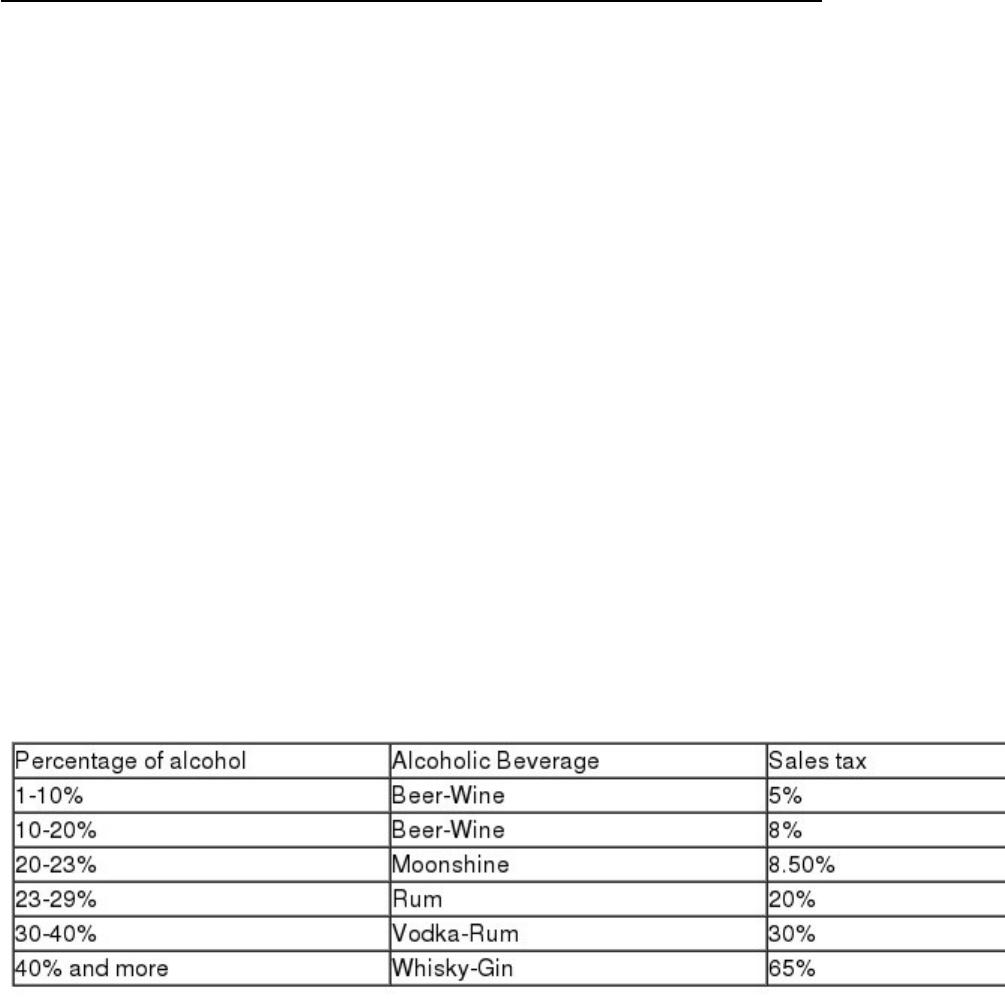
2. Article 2 of the Law No.6869 of 2012 assigns different taxes to the alcoholic beverages
consumed in Reguland, by classifying them according to the percentage of alcohol
contained in them as follows:
“Article 2 – Sales tax: The following table illustrates the percentage of sales tax that must
be levied on the sales of each alcoholic beverage:”
3. In addition to the Law No.6869 of 2012, the Ministry of Health issued Decree No.789 of
2012. According to the Decree, all of the distributers and importers of alcoholic beverages
with alcohol content above 40% in Reguland, must sign a sells and distribution contract
with the government in which the following would be regulated:
a) Amount of products that can be imported to the country.
b) Limit to the amount of merchandise that can be sold on a yearly basis.
4. According to the importers and distributors involved in the signing of the contract, this
measure has become time consuming and costly, apart from the fact they cannot start their
sells each year until the contract has been signed.
5. The government of Reguland has stated that the since the measures have been issued,
the contraband has been reduced in 30%. In contrast, the government of Whiskyland
declared the exportations of alcoholic beverages to Reguland have decreased in a 35%
since the expedition of the Decree No.789 of 2012.
II. CLAIMS OF THE PARTIES
1. Whiskyland claimed that the measures imposed by Reguland violated Articles I, III and
XI of the GATT and therefore considered there is a violation of the Most Favorite Nation
Treatment, of the National Treatment on internal taxation and regulation, and the existence
of quantitative restrictions. Finally, the clamming party sustains there is no justification of
the measures under article XX (b) or (d) for the measures are not looking to protect human
life, nor costumes enforcement or deceptive practices.
2. The accused party claimed there was no violation of Articles I, III and XI of the GATT