In taking the position as the Finance Director at AERO’s Aftermarket Services unit, Mick
Powers stands in front of some major issues around the structure and collaboration within
the company. These issues revolve around missed financial targets, $20m in bad debts
written off and employees in the finance department violating company policy. He is
grappling with the thought of how to drive an integrated financial approach in an intricate
global environment with cultural differences. Mick has options ahead of him which
includes addressing the symptoms, dig in and understand the underlying issues or do
nothing and hope for the underlying issues to correct itself.
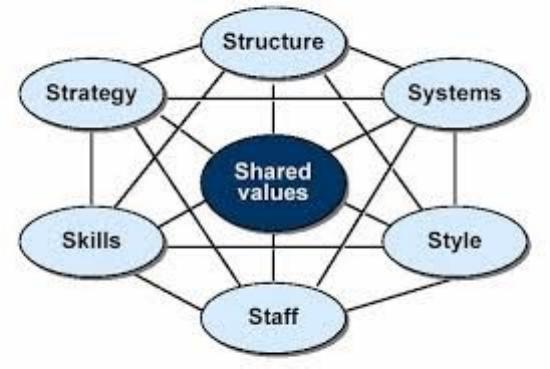
In order to analyze this problem case, we will look at McKinsey’s 7’s. The areas, where
AERO needs most focus on are structure and system.
Strategy
Delivering a solution on time is highly important for AERO’s customers because both
commercial and military aerospace companies don’t want to be grounded for a long time
if they are facing problems. This is why their business is focused on creating a strong
business presence locally. These local divisions have tremendous decision power and
could, therefore, react much faster to their customers needs. AERO’s competitive
advantage lies in their ability to address customer issues quickly, provide a low price and
a reliable service. Their competitive advantage puts them in a structural challenge where
they need to align the strategy of being as close to the customer as possible and having a
global structural approach.
Analysis
Trouble occurred when clarity and accountability were absent. There were cases where
employees violated the company’s policy, and no strict action was taken against them,
which highlights the poor command of senior management on local sites. During German
site inspection, unsatisfied information was provided, for example. Employees
disregarded code of conduct on expected behavior and ways of doing business that leads
to the informal network, finance leaders were looked to business first and finance second.
Finance department staff used to work at local level resulting in inconsistency with the
whole organization financial statements. Even the work done by finance people was
bad/fraudulent accounting that was the result of local hiring process with varying levels
of skills and abilities.
Overall, if we look at the value chain of this company, we need to look at the distinction
between the primary activities and the supporting activities. The Finance and HR
department in each division are supporting the primary operations activities. We see that
these supporting activities do not enhance the product or service and are therefore in need
of another global strategy.
Structure
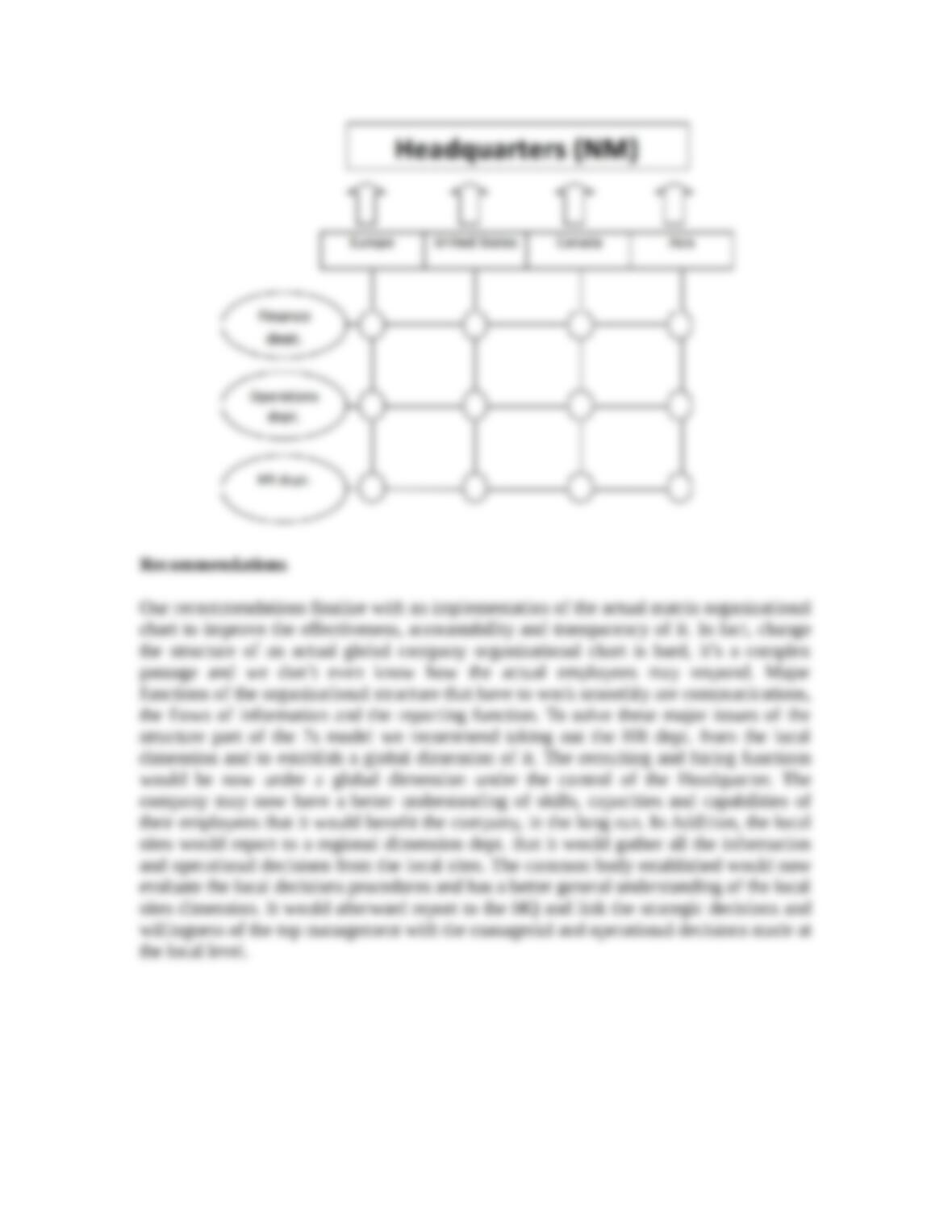
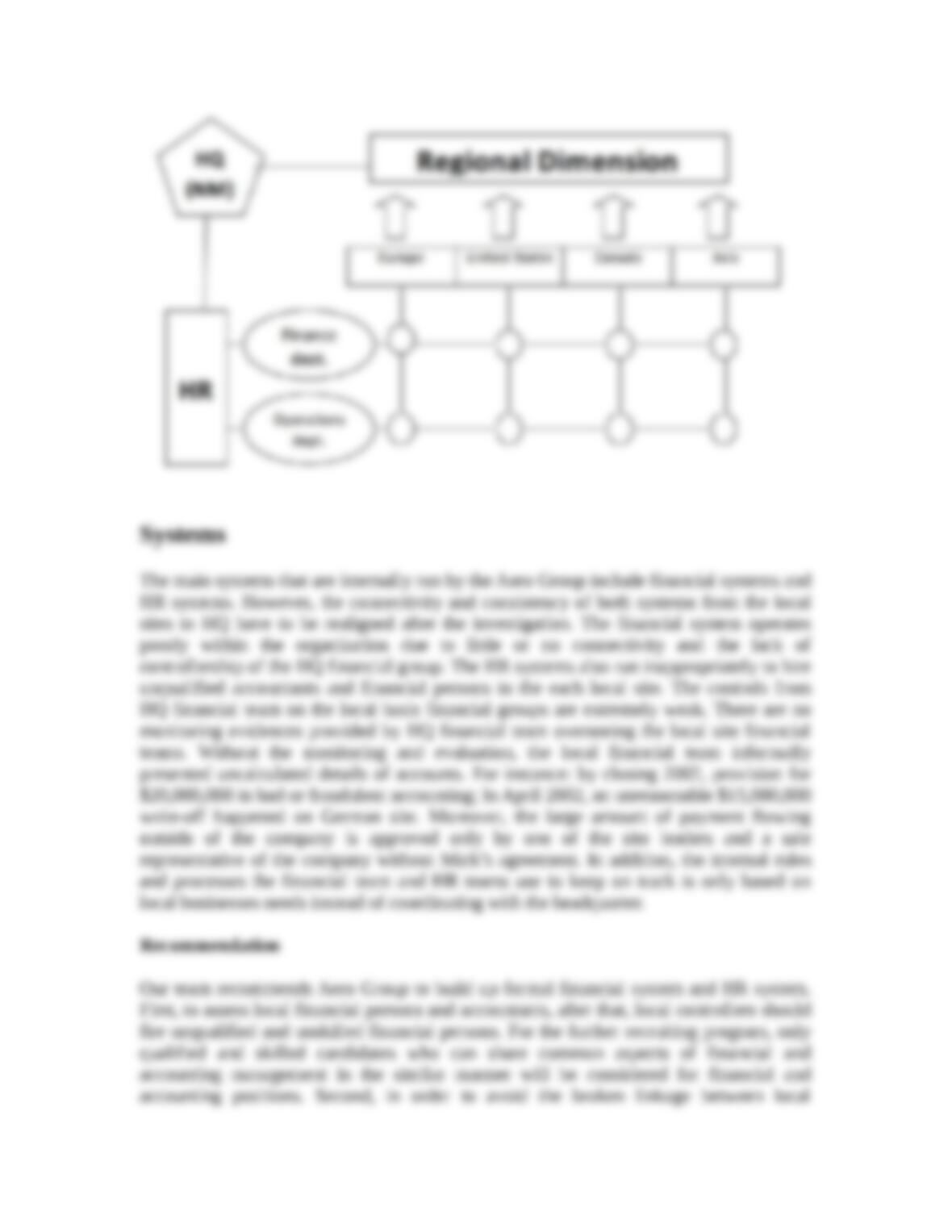
The main issue with the AERO group was minimally functional connections to the
headquarters (HQ’s); this type of a decentralized structure becomes a problem. On one
hand, the HQ’s were tightly managed and controlled while on the other side local and
regional sites were loosely tied to the organization. The controller linkage to the finance
team was a fragmented relationship, and there was no single person who could take
accountability for the work. Goals and objectives of the controllers/finance department