Ayush Pant
Econ Final Paper
Richard Stout
Econ 310
Word Wildlife fund, also known as World Wildlife Fund for Nature, is one of the largest 501
C(3) charitable organization whose mission is to stop the degradation of the environment so that
people could live in amity with nature. In the contemporary world of overexploitation of
resources, WWF reports that we-human beings-are exploiting these in an untenable way that
these resources sum up to be around 30% more than the amount Earth can replenish. This is
seriously affecting the environment because implication of overexploitation is clearly visible
with anomalies like
climate change and global warming. Furthermore, it has severe effects on the biodiversity of the
Earth because every small microorganism, fungi, plants, and animal are interconnected in the
vast ecosystems active on this planet. These organisms provide us with food, water, breathable
air, medicine and many more vital commodities and resources which edifies to be our basic life
support system. WWF’s mission is achieved by six major goals in areas of Forests, Oceans,
Wildlife, Food, Climate & Energy, and Water; but these goals are placed parallelly with three
key drivers of environmental problems: markets, finance, and governance. By analyzing the
current situation of the ecosystem and biodiversity around the globe, WWF reaches out to the
places where help is required and then set up ties locally and globally with actors, local welfare
organization to achieve their ambition, including local communities and multinational
corporations, governments and NGOs, financial institutions and development agencies,
consumers and researchers. WWF does this for a sole reason to make an impact globally, by
partnering with other organizations it can have greater influence in the world, and further go on
to instigate and introduce new approaches and scale up solutions, making a huge leap towards
transformational change at a global scale. Some examples of WWF’s collaborations are with
Domtar: WWF is working in creating responsible forestry and trade as means of advance forest
conservation. Another group of organization they are working with are universities like Stanford
University, University of Minnesota and another biggest conservation organization called The
nature conservancy; working with these organizations WWF is trying to estimate the true value
of services the ecosystem provides. WWF puts a huge emphasis on the importance of healthy
nature for a sound economy and human growth. “Recognizing this intersection of nature and
economy is critical to demonstrating that it is possible – and necessary – for these elements to
thrive together,” were words of David Miller, President, and CEO of WWF Canada. This is
reason WWF does campaigns, projects such as “We Are All Wildlife” which is a campaign
organized by WWF Canada to make public aware of the importance of wildlife and environment.
The WWF is the world’s largest conservation organization with over five million supporters
worldwide, working in more than 100 countries, supporting around 1300 conservation and
environmental projects(Wikipedia stats from 2014). The spread their presence, primarily,
through the means of forming teams and projects in different parts of the world. The
organization also places their employees in foreign locations for a temporary time or until a
project reaches completion. Employees are known to come back or stay for an extended period
if found necessary.
WWF Is qualified to be exempt from tax because it is a charitable based 501(c)3 organization
that is involved in conservative and charitable activities such as advocacy of environmental and
wildlife protection, environmental projects and campaigning. Furthermore, the organization has
had to deal with a lot of criticism from various newspaper and various critiques. There are people
who think WWF is an expensive burden on taxpayers and it uses the funds to destroy free
markets that exist around the world. These criticisms seem justifiable as was WWF caught with
embezzlement of funds in 2012 in Tanzania. In addition, WWF was able to do this by moving
into a business space and being able to persuade the governments into entrusting funds with
them. Although, WWF’s objective is to preserve and protect the nature it’s handling of funds
should be more transparent, scrutinized and regulated in order to protect taxpayers fund from
being misused.
The Problem:
WWF has been blamed for selling its soul to corporations. It has been criticized for working
with industries on multiple occasions and this has allowed room for speculation by other
conservation organizations. Conservative organization working in Germany, such as Rettet den
Regenwald which has seen WWF work, have started blaming WWF for working with the
corporations. WWF has been accused of giving large corporation free passage to do whatever
they want, including exploitation of nature, and in return, WWF gets a hefty donation. However,
the donations WWF receives don’t just sum up to taking money from governments and large
organizations but also from people. “The rainforests are dying,” “Save these endangered Pandas”
are some of the campaigns or advertisement on the internet and other media. By just giving 5
dollars you would be contributing towards saving the world and who wouldn’t want to do that.
But does anyone even ask where their small contribution is going? Probably not. The internet
has opened doors to receive funds, to be factual it is an actual boon to organizations like WWF.
As these companies advertise and campaign aggressively, people are lead to donate, even large
sums, of money because WWF is a well-known conservation fund and they seem to convey that
they’re credible. In Germany itself, WWF has reported members of about 430,000 people
(according to a news report of 2012). And millions of people allocate their savings to support
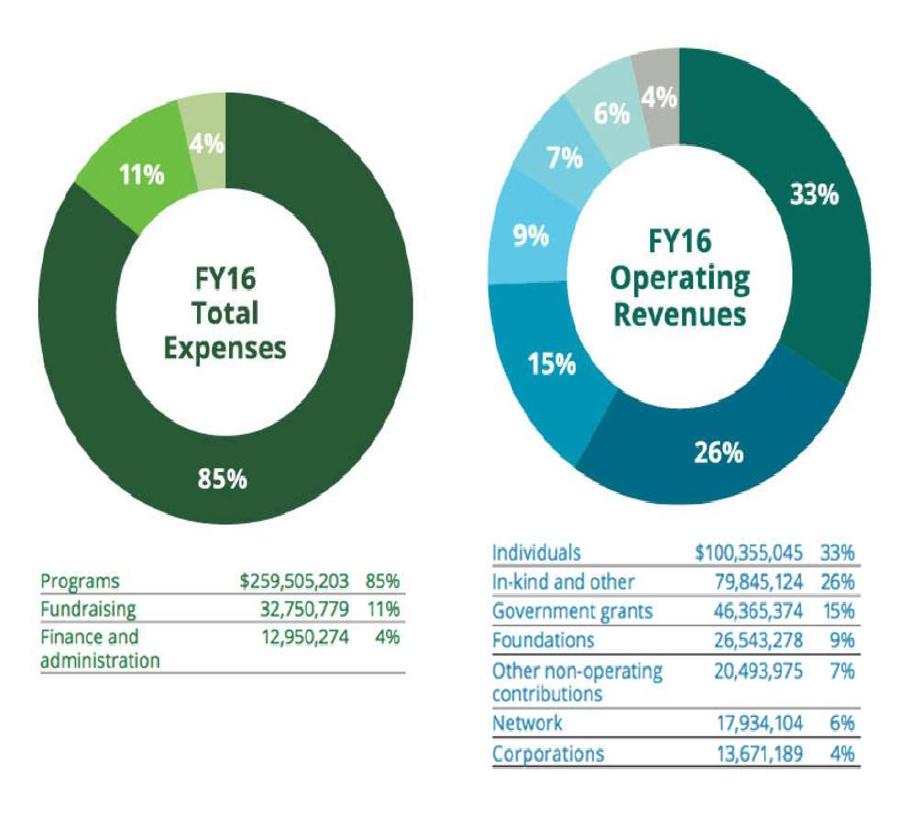
the organization. On the other hand, WWF received $120 million from United States Agency for
International Development (USAID), companies like Apple have given WWF millions of dollars
and this year it did the same by donating 1$ per every apple pay purchase during the Earth day