Women vs. Men’s Reaction to Greetings at the Retail Location
Introduction
There are differences between men and women’s techniques used while
interacting with others. A Burgoon’s book on nonverbal communication stated that
there are certain patterns in women and men’s behavior in social settings or any
encounter with either strangers or friends and relatives. It is stated that women seek
more physical contact, tend to allow closer approaches and even smile more.
According to a research conducted by Beekman back in 1975, men’s smile, for
example, is associated with their expression of emotions and genuine friendliness,
while women use a smile as a simple tool of interaction (Burgoon 275).
The results of the research on these differences inspired the following field
study on how women and men react to the greetings at the store and who tend to
respond more often in particular – male or female customers. The information
provided in this research can be shared with people who are planning to start
working in retail. It is useful for better understanding customer’s behavior patterns.
For example, if a new retail employee wrongfully assumes that people who do not
respond to an initial greeting are not interested in getting help or further
communicate with the sales associate, it may lead to a missed sales opportunity.
On the other hand, an employee who is aware of gender differences in such
situations can use her knowledge to generate more business.

Deeper understanding of such differences will help to establish a better
rapport with a potential buyer, communicate effectively and use more successful
strategies while closing the sale.
Hypothesis
Based on the previously published researches on differences in women and
men’s communication strategies, the hypothesis is that female customers tend to
respond to greetings from a sales associate at the store more often than male
customers.
Definitions
Customer. A person who walks in the store regardless of whether they buy
the products or not. In the situation of several people walking into the store as a
group, each individual is treated as a customer. For example, a group of two people
will be considered as two separate customers for the purpose of the research even
if they plan to purchase one item for the whole group.
Note: an employee of the store provided the information on which customers
are friends of the owner, owner’s partners or the sales associate’s, as well as those
who make regular purchases at the store and therefore are considered to be “the
regulars” and are excluded from the data for the purpose of research. The reason
is, the regular customers might consider being on more friendly terms with the
store’s employees and, as a result, act as the employee’s acquaintances. They

might be more willing to reply to the greetings and initiate conversations with the
employees. Such interactions will alter the research data and lead to false results.
Greeting. A verbal sign of welcome from the sales associate (for example:
“Hello”, “How Are You?”).
Female Customer. The term “female” does not imply the gender assigned at
birth. Gender of the customers is determined by the observant on the basis of their
appearance (e.g. clothing, haircut).
Male Customer. The term “male” does not imply the gender assigned at
birth. Gender of the customers is determined by the observant on the basis of their
appearance (e.g. clothing, haircut).
Customer’s Response. A verbal reaction from the customer to the greeting
from the sales associate. Nodding and/or smiling directly at the sales associate is
considered as a response for this particular research.
No response. An instance when a customer does not react to the verbal
greeting in any way. An absence of verbal response or any reaction, including
smiling or nodding.
Methods of research
The hypothesis is tested using the method of direct observations. The
observer sits in the front left corner of the store, behind the cash register. This
particular place for observation has been chosen in order not to make the customers

feel uncomfortable (in case the think that they are being watched) which may
change their reaction.
The sales associate who greets the customers stands in the same area of the
store, about 10 feet away from the corner where the observer sits. The entrance of
the store is 10 feet away from the sales associate, so every walk-in can hear the
sales associate’s greetings.
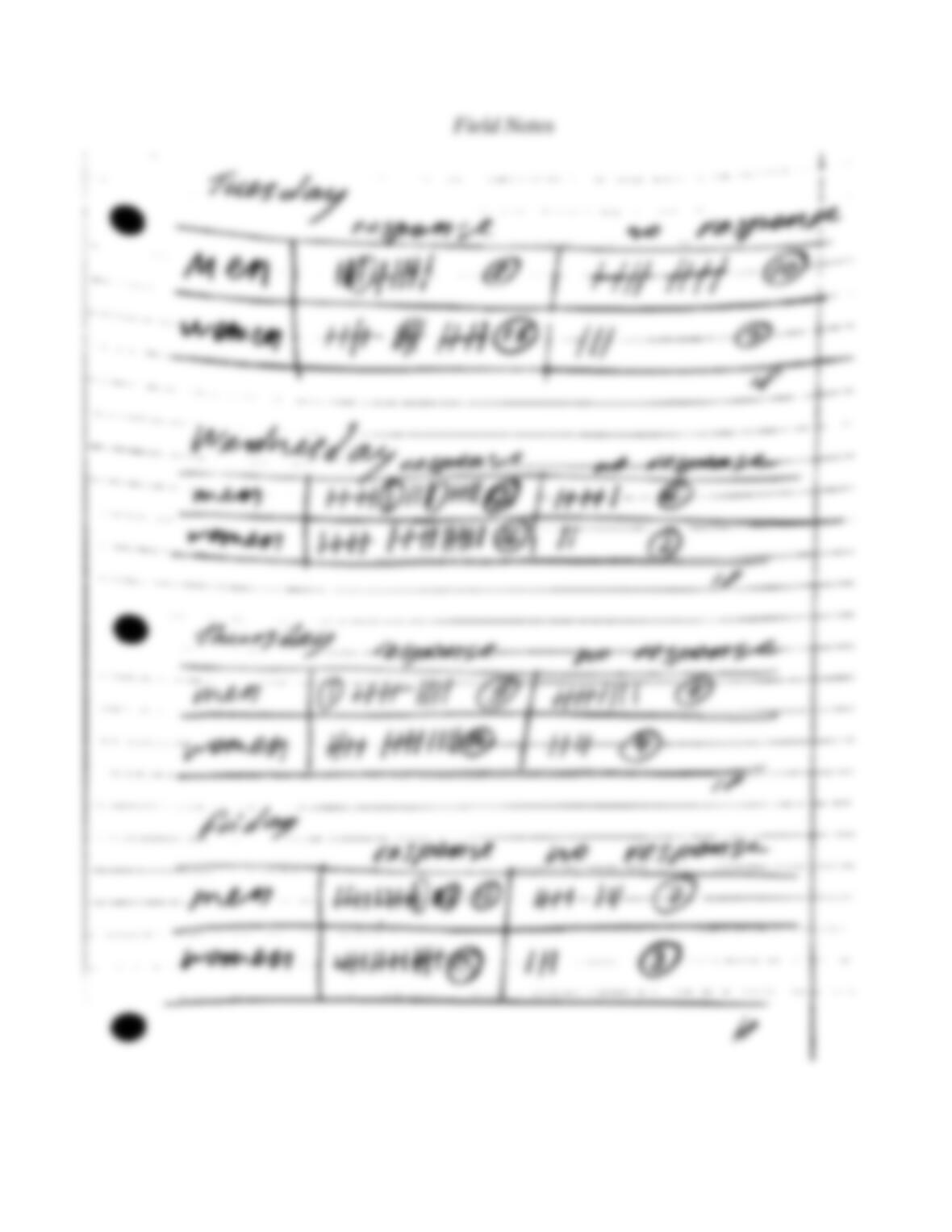
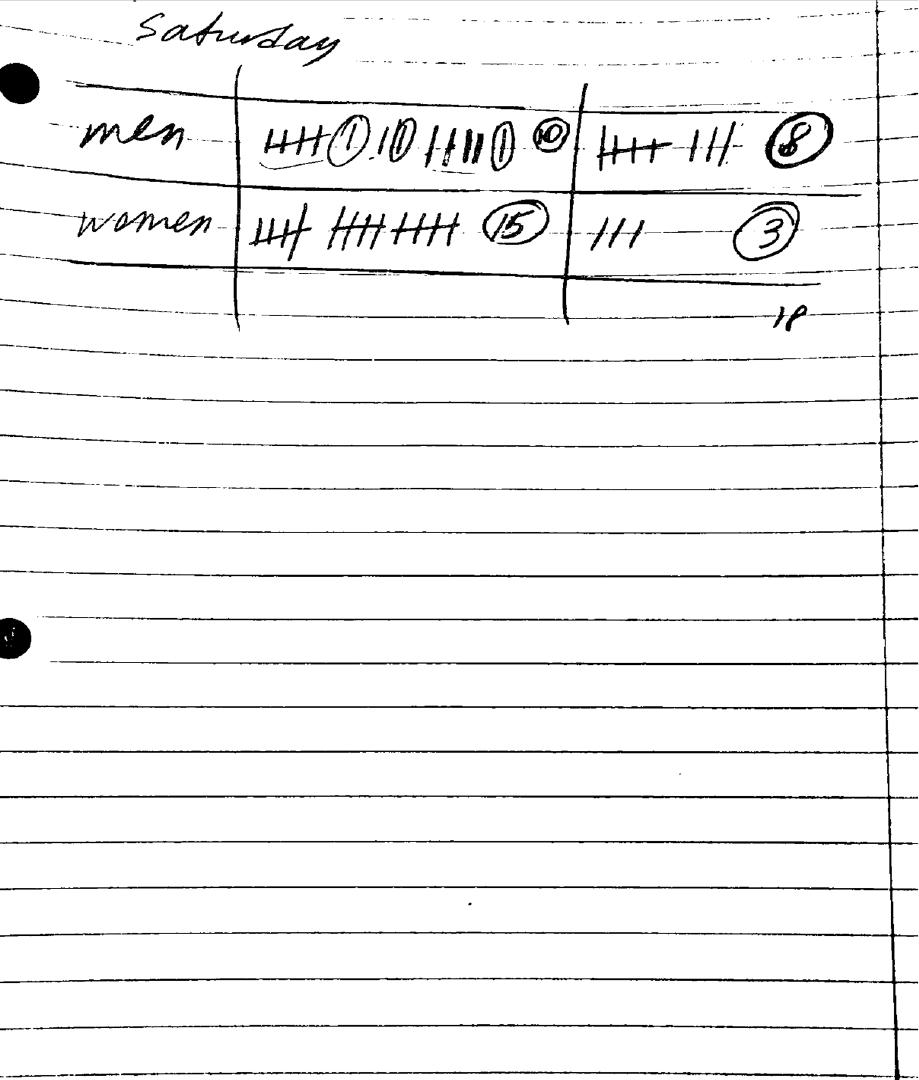
There were five direct one-hour observations over the course of one week
from April 12th, 2016 to April 16th, 2016 (Tuesday through Saturday).
The preliminary 30-minute study took place two weeks before the start of the
research to test the effectiveness of the approach. During the preliminary study, the