The CASE Journal
Wockhardt Limited: will it rise from the ashes?
Vishwanath S.R., Jaskiran Arora, Durga Prasad, Kulbir Singh,
Article information:
To cite this document:
Vishwanath S.R., Jaskiran Arora, Durga Prasad, Kulbir Singh, (2018) “Wockhardt Limited: will it rise from the ashes?”, The
CASE Journal, Vol. 14 Issue: 5, pp.567-592, https://doi.org/10.1108/TCJ-05-2017-0041
Permanent link to this document:
https://doi.org/10.1108/TCJ-05-2017-0041
Downloaded on: 02 May 2019, At: 13:30 (PT)
References: this document contains references to 11 other documents.
To copy this document: permissions@emeraldinsight.com
The fulltext of this document has been downloaded 10 times since 2018*
Users who downloaded this article also downloaded:
(2018),”The University Club”, The CASE Journal, Vol. 14 Iss 6 pp. 694-715 <a href=”https://doi.org/10.1108/
TCJ-10-2017-0098″>https://doi.org/10.1108/TCJ-10-2017-0098</a>
Access to this document was granted through an Emerald subscription provided by emerald-srm:126741 []
For Authors
If you would like to write for this, or any other Emerald publication, then please use our Emerald for Authors service
information about how to choose which publication to write for and submission guidelines are available for all. Please visit
www.emeraldinsight.com/authors for more information.
About Emerald www.emeraldinsight.com
Emerald is a global publisher linking research and practice to the benefit of society. The company manages a portfolio of
more than 290 journals and over 2,350 books and book series volumes, as well as providing an extensive range of online
products and additional customer resources and services.
Emerald is both COUNTER 4 and TRANSFER compliant. The organization is a partner of the Committee on Publication
Ethics (COPE) and also works with Portico and the LOCKSS initiative for digital archive preservation.
*Related content and download information correct at time of download.
Downloaded by Auburn University At 13:30 02 May 2019 (PT)

Wockhardt Limited: will it rise from
the ashes?
Vishwanath S.R., Jaskiran Arora, Durga Prasad and Kulbir Singh
On March 31, 2009, in view of the adverse market conditions, liquidity constraints and debt
burden, the board of directors of Wockhardt Ltd[1], a global pharmaceutical and biotechnology
company from India, agreed to make a reference to corporate debt restructuring cell (CDR cell)
through ICICI Bank, one of the lending banks, for financial restructuring of the company through
the CDR mechanism. Investors were surprised by the sudden development at the company.
“Restructuring of debt, release of working capital and fresh priority debt by banks pending
divestment of non-core assets is a positive step forward and will provide a great impetus to the core
operations of the company,”Wockhardt said in a press release (Dasgupta and Jayakumar, 2009).
In particular, Mr Korakiwala, the Chairman of the company, was faced with the task of
determining a possible solution to the debt overhang problem caused by foreign currency
convertibles. His options included issue of new securities aimed at paying down debt, sale of one
or more businesses and finally, a full liquidation.
Company background
Wockhardt was India’s leading research-based global healthcare enterprise with businesses in
the fields of pharmaceuticals, biotechnology and super specialty hospitals. Wockhardt was a
multinational company with a workforce of 8,600 employees belonging to 14 nationalities. It had
three 3 centers and 12 manufacturing plants, with businesses ranging from manufacturing and
marketing of pharmaceutical and biopharmaceutical formulations, active pharmaceutical
ingredients and vaccines. Headquartered in Mumbai, India, Wockhardt had full-fledged
operations in the USA, the UK, Ireland and France. It also had a marketing presence in several
emerging markets such as Russia, Brazil and Mexico. Through Wockhardt Hospitals Ltd, it
operated a chain of super specialty hospitals.
Wockhardt was founded by Habil Korakiwala in the 1960s. The company was incorporated as a
limited liability, public company in 1999[2]. Wockhardt was one of the earliest domestic entrants
in the biopharmaceuticals sector. The company marketed a portfolio of three products and their
analogs in India, which included Hep B vaccine Biovac, Wepox and Wosulin. Wockhardt’s
businesses ranged from R&D to manufacturing and marketing. Traditional biopharmaceutical
companies faced challenges arising from patent expiration, generic competition and poor
development pipeline. Contract manufacturing offered a way to rationalize costs, cut assets and
streamline manufacturing processes. On a contract basis, the company manufactured
Exenatide for Amlyin Pharmaceuticals. It also had contracts with Pfizer, Cephalon, Johnson &
Johnson, Astra Zeneca and several other leading pharmaceutical companies.
The total biotechnology market was estimated at $75b. A total of $10b worth of biological drugs
were expected to go off patent by 2010, and an additional $10b by 2015[3]. However, the market
for biopharmaceuticals was challenging with strong entry barriers. The cost and technical
challenges in manufacturing biopharmaceuticals were a lot higher than those involved in traditional
pharmaceutical generics. A study by the industry indicated that developing a biosimilar could cost
between $10 and 40m, against a development cost of under $5m in the case of pharmaceutical
generics (Jacoby and Iyer, 2015). Success in this business was determined by funding options
Disclaimer. This case is written
solely for educational purposes
and is not intended to represent
successful or unsuccessful
managerial decision making. The
authors may have disguised
names; financial, and other
recognizable information to protect
confidentiality.
Vishwanath S.R. is Professor at
the School of Management and
Entrepreneurship, Shiv Nadar
University, Greater Noida,
India.
Jaskiran Arora is Professor at
the School of Management,
BML Munjal University,
Gurugram, India.
Durga Prasad is based at the
Department of Finance, T.A.
Pai Management Institute,
Manipal, India.
Kulbir Singh is Associate
Professor at the Department of
Finance, Institute of
Management Technology,
Nagpur, India.
DOI 10.1108/TCJ-05-2017-0041 VOL. 14 NO. 5 2018, pp. 567-592, © Emerald Publishing Limited, ISSN 1544-9106
j
THE CASE JOURNAL
j
PA G E 5 6 7
Downloaded by Auburn University At 13:30 02 May 2019 (PT)
related to clinical trials and regulatory submissions, speed with which a company took its products
to the market and distribution strategies. The company’s strategy was to expand globally by
leveraging on its domestic market experience in products and delivery systems.
The global insulin market was estimated at over $4b, and another $6b was contributed by insulin
analogs. Of the global insulin market, $750m was accounted for by the rest of the world (RoW, i.e.
ex-USA, EU and Japan). It is this market that industry observers felt that Wockhardt could
address over the medium term. In FY07, the company received 45 regulatory approvals for
recombinant insulin from RoW, taking the total approvals to 73. Wockhardt was expanding its
geographical reach in new markets. These included Mexico, Brazil, Colombia and Venezuela. The
company was also targeting expansion of its product basket by including Glargine (long-lasting
insulin) and Lispro ( fast-acting insulin), though these opportunities would materialize only over the
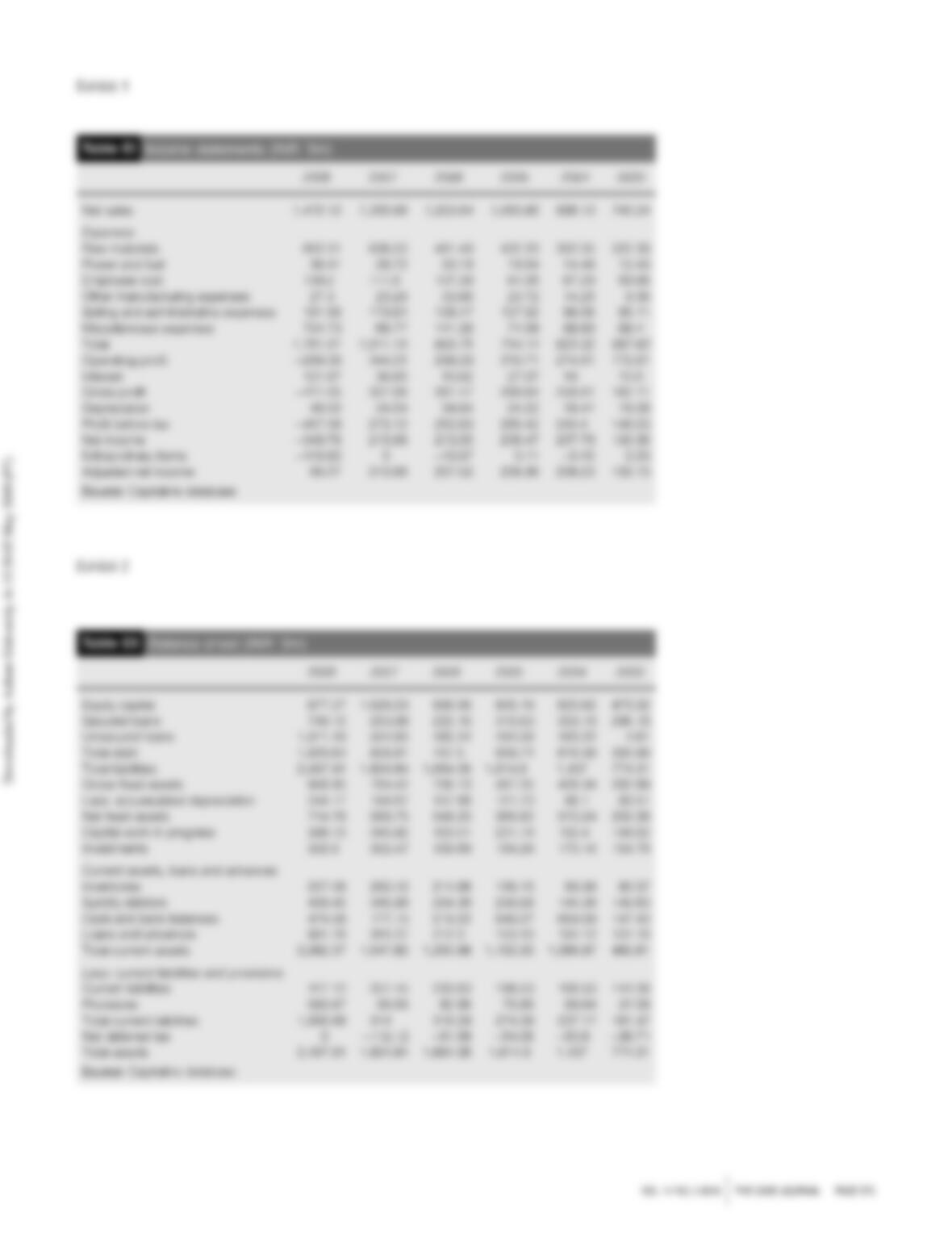
long term. Exhibits 1 through 5 present financial and data for, and board composition of
Wockhardt and Exhibit 6 presents key ratios and indicators for its competition[4].
Operating history and acquisitions
With an objective of reaching $1b sales by 2009, Wockhardt had been an active acquirer
throughout the 2000s. Starting with the Wallis Laboratory of the UK, Wockhardt grew through a
series of acquisitions in the UK, Germany, the USA and France. Wockhardt’s global expansion
strategy had been primarily funded through secured loans and (convertible) public debt. The
company’s recent overseas acquisitions over the past three years –Pinewood, Ireland (October
2006 for $150m); Negma Laboratories, France (May 2007 for $265m) and Morton Grove, the
USA (October 2007 for $37m) –had a cumulative cost of $450m[5].
Pinewood had a portfolio of over 200 prescriptions and OTC products licensed in various
markets globally. The company had a presence in various therapeutic categories including
antibiotics, analgesics, dermatology and rheumatology. The company also marketed and
distributed branded generics in Ireland and supplied a wide range of services and
pharmaceuticals to hospitals. In hospital services, Pinewood was a leading supplier of renal
healthcare products including dialysis monitors, dialyzers, bloodlines, vascular access devices,
pharmaceutical and dietary supplements. The company enjoyed a 60 percent market share in the
renal business in Ireland. At the time of acquisition, Pinewood had reported net sales of EUR54m
(or $70m) for the year ended June 2006, and an EBITDA margin of over 20 percent. In 2007, the
company reported a 15 percent growth in sales (EUR62mn; INR3.6b) and a 3 percent expansion
in operating margins. Pinewood reported a net profit of INR526m for 2007. Analysts expected
Pinewood to grow between 5 and 8 percent during 2008–2010.
On May 3, 2007 Wockhardt Ltd announced the acquisition of Negma Laboratories, the fourth
largest independent, integrated pharmaceutical group in France in an all-cash deal worth $265m.
At the time of acquisition, Negma had reported annual net sales of $150m. Negma owned fully
integrated manufacturing capabilities spanning APIs to formulations (liquids, gels, vials, capsules
and powders) and the company’s therapeutic presence spanned osteoarthritis/rheumatology,
hypertension and the phlebotonic segment. The company’s portfolio comprised of three key
patented products –ART 50 (sales of $100m and growing at a rate of 7–8 percent p.a.; enjoyed
patent protection up to 2016), Nebilox (revenues of $25m, growing at a rate of 100 percent p.a.)
and Uripas (sales of $20m). The company had high SG&A expenses, which resulted in low
operating margins. Given that the company manufactured and marketed patented drugs,
EBITDA margins of 18 percent (at the time of acquisition), seemed low. Wockhardt saw an
opportunity to improve margins. Analysts expected the company to grow sales at 8–10 percent
(in EUR). The acquisition transaction was valued at 1.8 times sales and 9.7 times the EBITDA.
With this acquisition, the company became the largest Indian pharmaceutical company in Europe
with more than 1,500 employees based in the continent.
The company’s Chairman Habil Khorakiwala said (Business Standard, 2007):
France-based Negma is a unique acquisition for Wockhardt. It is a research based pharmaceutical
company with 172 patents. The acquisition will allow Wockhardt to extend this patented portfolio to
other European markets where Wockhardt enjoys a strong presence. Further, it will provide us the right
PAGE 568
j
THE CASE JOURNAL
j
VOL. 14 NO. 5 2018
Downloaded by Auburn University At 13:30 02 May 2019 (PT)
entry vehicle to enter the French generics market valued at $2 billion, leveraging Wockhardt’srobustEU
portfolio and impressive pipeline. With this acquisition, Wockhardt will enjoy a pan-European presence,
covering all the key markets of Europe –namely Germany, UK, Ireland and now France.
With the Negma acquisition, the company’s European business would account for
more than 60 percent of the company’s total revenues. Wockhardt had a portfolio of
130 products in the European market. In the next one year, it expected to launch 24 more
products in Europe:
“We have a proven track record of successful value-creation post acquisitions. We expect to
demonstrate the same integration momentum with Negma as with our other acquisitions,”said
Khorakiwala (One India, 2007).
Pinewood and Negma were together expected to have revenues of INR12.1b in FY 2009. Morton
Grove was a liquid generic and specialty dermatology company in the USA with a manufacturing
facility in Chicago. The company marketed a basket of 31 generics in the US market, of which 13
products occupied the No. 1 position in the applicable reference group. However, with annual
sales of $52m it was relatively small. It also had a pipeline of 16 products under development,
including some niche therapies (a nasal spray platform addressing a $1.2bn opportunity).
Analysts expected Morton Grove to report a top-line of INR2.7b, followed by a
12–17 percent growth over the following two years. Martin Grove was expected to have
revenues of INR3,164m and the RoW operations to have INR15,329m in 2009; sales from
domestic formulations were expected to be INR9,340m.
Wockhardt had also expanded in the domestic market by acquiring Dumex India from Royal Numico
NV in June 2006. Dumex brought with it two strong nutrition brands –Protinex and Farex. Protinex
was the market leader and the largest prescribed brand in its category, and was growing at a rate of
20 percent in volumes, while Farex was the third largest selling infant nutrition formula in the cereals
category. At the time of acquisition, the two brands together reported sales of INR600m. The Dumex
portfolio aptly complemented Wockhardt’s own infant nutrition basket which consisted of brands