WILCOXON SIGNED RANK
TEST Procedure:
•Applicable in the case of
two dependent or related
samples which aimed to
detect significant
differences between the
two groups.
•Requires the data to be
in continuous case but
the assumption of
normality is not being
considered.
•Alternative of the t-test
for the two dependent or
correlated samples.
Concept:
1. For each pair of
observation, determine the
differences (di’s).
2. Rank these di’s without
respect to sign.
3. Affix to each rank their
corresponding sign.
4. Determine
n,
the number
of nonzero di’s.
5. Determine the sum of all
positive and negative ranks.
6. Find the critical/tabulated
value.
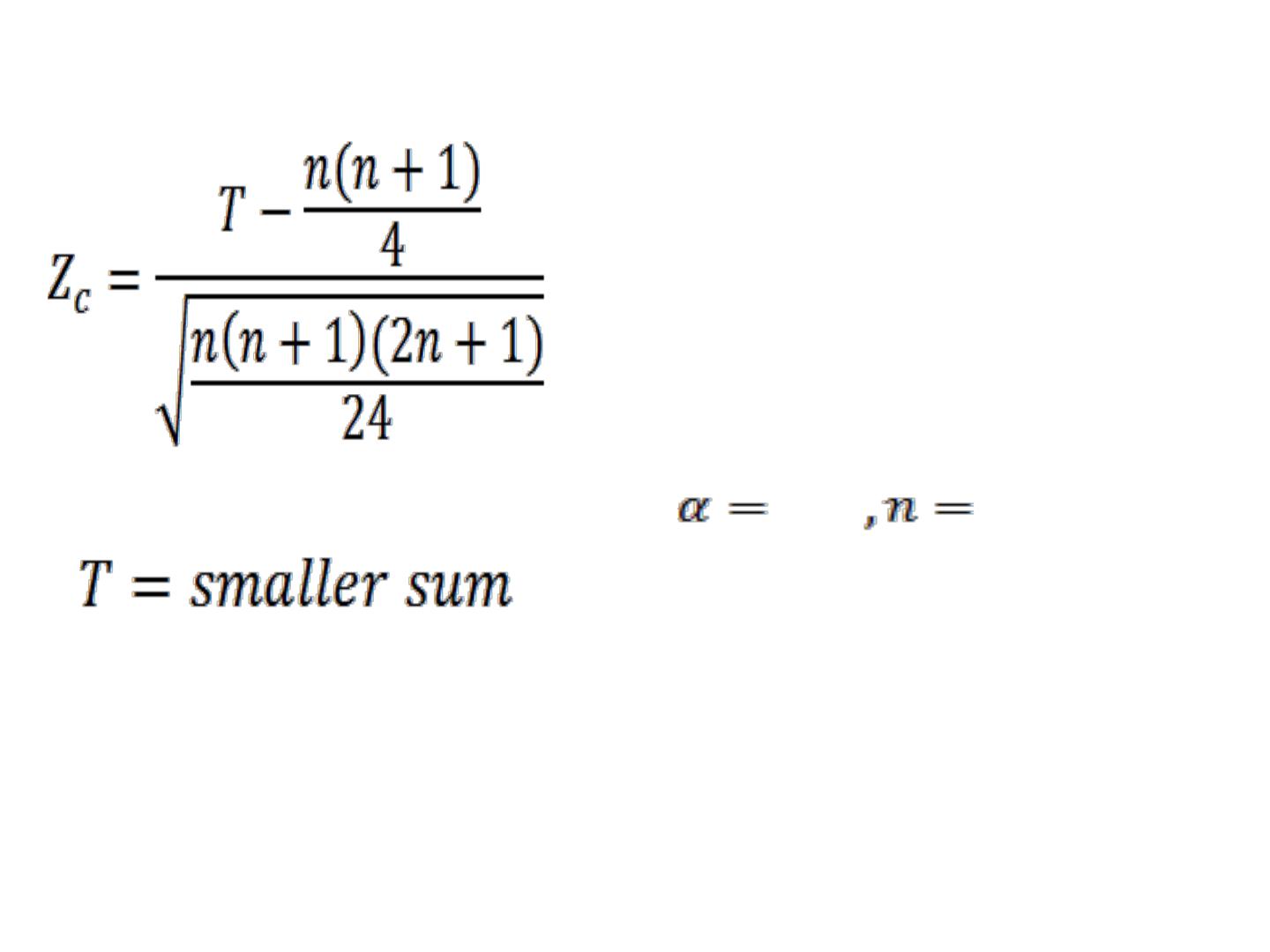
For
n
≥ 15: Hypothesis Testing Steps:
1. Ho: There is no significant
difference between the two
groups
Ha: There is a significant
difference between the two
groups
2.
3. TS : WSRT
4. DR: Reject the Ho if T≤T critical
value; otherwise fail to reject
5. Computation
6. Decision/Conclusion:

Sample Problem:
1. A researcher wishes to determine if there is systematic
difference between the readings of the two digital
weighing scales. The following data were obtained:
Use 0.05 level of significance to test whether there is no significant
difference between the readings of the two scales.
Sample
1 2 3 4 5 6 7 8
Scale A
50
82.5
53.8
85.4
75.4
63.5
35.8
25.3
Scale B
49.9
82.7
53.8
85.3
75.4
63.7
35.7
24.9
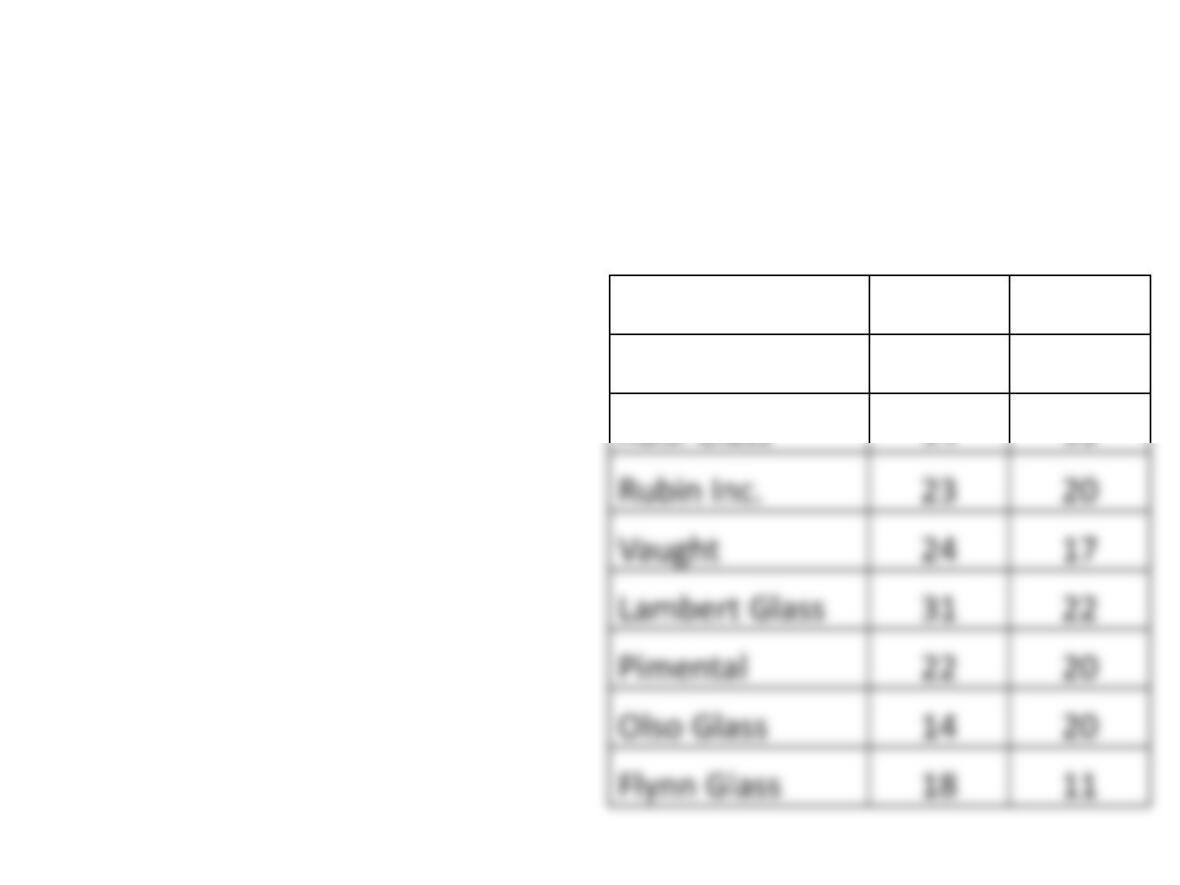
2. The Gagliano Research Institute for Business is
comparing the research and development (R&D) as a
percent of income for a sample of glass
manufacturing firms for 2000 and 2001. At the 0.05
significance level, has the R&D expense declined?
Company
2000 2001
Savoth
Glass 20 16