Why Did Stock Markets Rebound
From Covid in Record Time? Here
Are Five Reasons
Forces behind fastest-ever swoon and recovery include economic hopes,
tech dominance and a boom in risky trades
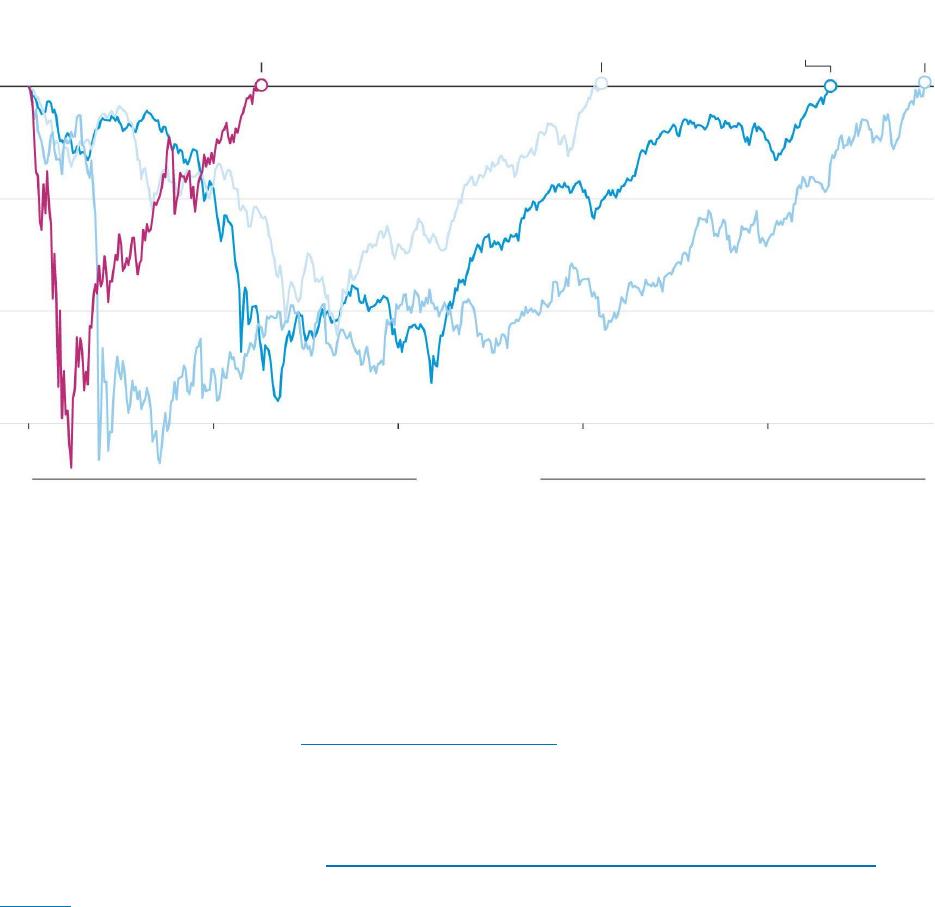
S&P 500 fastest recoveries following a bear market, from record high to new record
By
Gunjan Banerji
Sept. 15, 2020 11:11 am ET
The Dow Jones Industrial Average’s wild round trip is nearly complete.
The venerable stock index, despite a recent hiccup, has nearly recovered all the
losses suffered during the coronavirus pandemic, an epic journey during one of the
most catastrophic economic collapses in U.S. history.
The Dow and the benchmark S&P500 plunged about 35% within six weeks this
spring—the fastest-ever fall from record levels into a bear market—as the economy

shut down and the virus spread across the country. Since then, U.S. stocks have been
on a winning streak that is unprecedented in the modern era of financial markets.
The Dow is near Feb. 12’s all-time high, while the S&P 500 recently staged its most
robust five-month rally in more than 80 years.
The S&P 500’s journey from record high to a bear market—defined as a drop of
20% or more—to a new record took just 126 trading days, the fastest-ever such
climb. In previous downturns going back to 1928, it took an average of more than
1,500 sessions for the index to return to record levels, equivalent to about six years.
This year’s wild ride is even more striking against the backdrop of the recession and
pandemic gripping the U.S. Millions of Americans remain unemployed, corporate
profits have collapsed at the steepest rate in a decade and the pandemic hasn’t been
contained.
Despite a two-week rout fueled by shares of big technology companies, U.S. stocks
sharply rebounded to start the week.
“I don’t think there’s any analog in history that looks like this,” said Benjamin
Bowler, head of equity derivatives research at Bank of America Corp.
Here’s what’s driving the historic rally:
1. Stimulus from the Fed and Congress
A key factor differentiating this crisis is the response of the Federal Reserve and U.S.
government, which was speedier and mightier than ever before. The Fed cut interest
rates to near-zero and outlined plans to lend billions of dollars across markets. The
U.S. government sent more than 150 million stimulus checks to Americans and
backed around half a trillion dollars in loans to small businesses.
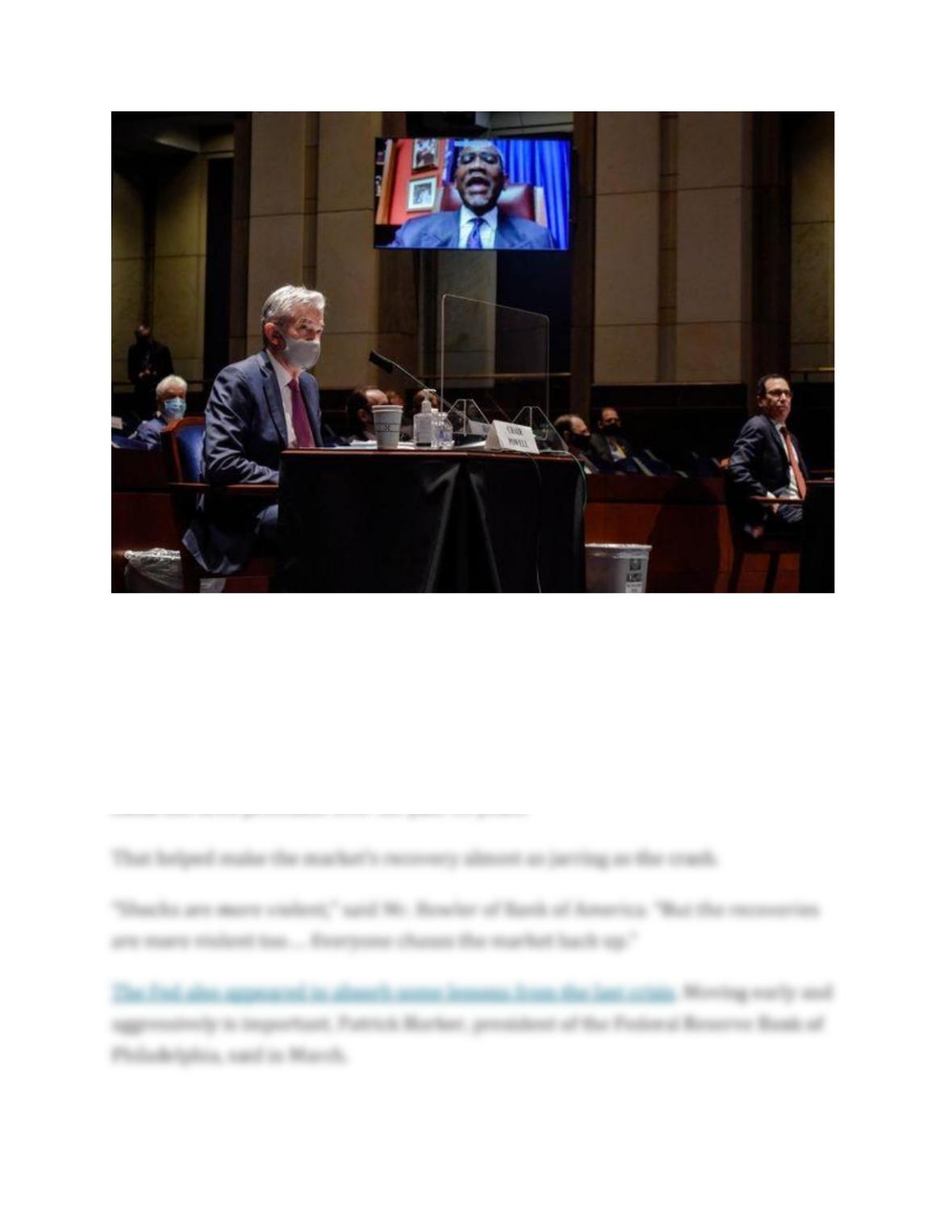
The federal government’s response, including from Fed Chairman Jerome Powell, above
left, and Treasury Secretary Steven Mnuchin, right, was swift and expansive.
PHOTO: BILL O’LEARY//THE WASHINGTON POST/ASSOCIATED PRESS
The response, alongside lessons learned from the financial crisis of 2008, helped
spark the stock market’s rebound. Many investors say history has taught them it
isn’t wise to bet against the Fed. Wading into the market during swoons big and