Case
What Went Wrong in the Audit
of Tri-Pack Films Limited?
Omair Haroon1, Waqar Ali1 and Atifa A. Dar1
Abstract
This case looks into an instance of an audit failure in the context of a Pakistani listed company, Tri-Pack,
whose financial statements for the year 2014 showed a material misstatement (which reduced 2013
profits after tax by around 88%). This led to an investigation by the regulator (Securities and Exchange
Commission of Pakistan) into the audits across 2012–2013, culminating into a stern warning being
issued to the engagement leader (partner) for having failed to exercise an attitude of professional scep-
ticism, failed to perform the audit to obtain reasonable assurance around Tri-Pack’s financial statements
being free from material misstatement either due to errors or fraud and failed to bring out material
facts about the affairs of the company and make a report to the shareholders thereof1.
The case hones in on the audit dynamics and defence presented by the audit firm (A.F. Ferguson &
Co. Chartered Accountants) for the year 2013, to assess the shortcomings in the conduct of the audit
of Tri-Pack’s financial statements for that year’s end. It stimulates the work of an audit quality head who
reviewed Tri-Pack’s audit file in order to ascertain whether the objectives of the audit were met and
what lessons can be drawn to leverage towards future audit engagements.
Keywords
Audit, restatements, audit quality, audit risk assessment
Discussion Questions
1. Are the clean audit opinions in the audit reports for the years ending 2012–2014 appropriate?
2. What purpose does materiality serve in an audit? By evaluating materiality (and its forms) based
on 2013 financial statements discuss how material/significant are the individual line items per the
restatement schedule in Exhibit 2?
3. In hindsight what primary audit assertions should have been identified by the auditors in their
2013 audit for the restated items (Exhibit 2), and for any other information in the case?
Asian Journal of Management Cases
1–16
© 2020 Lahore University of
Management Sciences
Reprints and permissions:
in.sagepub.com/journals-permissions-india
DOI: 10.1177/0972820119892719
journals.sagepub.com/home/ajc
1 Suleman Dawood School of Business, Lahore University of Management Sciences, Lahore, Pakistan.
Corresponding author:
Waqar Ali, Suleman Dawood School of Business, Lahore University of Management Sciences, Lahore, Punjab 54792, Pakistan.
E-mail: waqar_ali@lums.edu.pk

2 Asian Journal of Management Cases
4. How strong was the risk assessment (at both the pre-audit and planning stages) performed by the
auditors for the 2013 year’s audit?
5. Critically review the work done on each of the following:
a. Cost of Sales
b. Import Liability
c. Journal Entries
6. Based on the above review, how justified is the perspective of the auditors, and what are the key
takeaways from Tri-Pack’s audit that should be incorporated in future audits by A.F. Ferguson
& Co.?
Muhammad Waqar Ali2, the global head of audit quality at PricewaterhouseCoopers (PwC), was flying
over to one of the member firm offices (A.F. Ferguson & Co.) in Pakistan. The global audit quality
department had selected an audit file for Ali to review in response to material restatements (pertaining to
the year ended 31 December 2013) reported by the audited entity, Tri-Pack Films Limited, in the audited
financial statements for 2014. Defending a clean opinion in their 2013 audit report, the partner invoked
ISA 200, detailing how inherent limitations to the conduct of an audit did not allow for the restatements
to have been reasonably identified. In the coming week, Ali wished to decipher what actually caused the
failure3 of the audit of the 2013 annual accounts, and had to submit a review detailing whether sufficient
and appropriate evidence was gathered, and any guidelines for future audits performed by the overseas
office.
Tri-Pack Films Limited and Its Auditors
Tri-Pack Films Limited (Tri-Pack) was a public limited company (formed in 1993) and was a joint venture
between Packages Limited and the Japanese Mitsubishi Corporation. It specialized in the production of
Biaxially Orientated Polypropylene (BOPP) films in Pakistan. The films were consumed as a packaging
material and bear resilient and versatile properties that allowed expedient printing and sealability. In
order to produce high-quality films, Tri-pack used high-end machines procured from suppliers such
as Mitsubishi Corporation—Japan, Windmöller & Hölscher—Germany, General Vacuum and Galileo
Vacuum—England, Bruckner—Germany and Bonfanti—Italy. In 2013 Tri-Pack witnessed the highest
production of BOPP films through commissioning of BOPP Line-4 for PKR 5.4 billion and a substantial
rise in its sales level, and also expanded its presence in the international market.4
Tri-Pack’s internal audit function was outsourced to KPMG Pakistan (KPMG Taseer Hadi & Co.).
The Board Audit Committee periodically reviewed the appropriateness of this function. The Head of
Internal Audit functionally reported to the Audit Committee. The Internal Audit function carried out
reviews on the financial, operational and compliance controls and reports on findings to the Board Audit
Committee, the Chief Executive and the management.
Tri-Pack’s external auditors were A.F. Ferguson & Co. Chartered Accountants. A.F. Ferguson & Co.
was a member firm of the PricewaterhouseCoopers (PwC) network. PwC was one of the world’s largest
professional services organizations. A.F. Ferguson & Co. had ready access to the technical expertise
available in the global PwC network and also participated in their training programmes. The firm’s work
standards were subject to extensive reviews on a regular basis by PwC and also by the Quality Control
Review Committee of The Institute of Chartered Accountants of Pakistan.

Haroon et al. 3
A.F. Ferguson & Co. had been serving as the external auditors of Tri-Pack for a number of years, as
inferred from Tri-Pack’s annual reports (2009 to date5), each of which mentioned A.F. Ferguson & Co.
as Tri-Pack’s ‘Auditors and Tax Advisor’. Moreover, these reports consistently mentioned the following
decision by the Audit Committee to reappoint A.F. Ferguson & Co.:
The present auditors M/s A.F. Ferguson & Co., Chartered Accountants are retiring and being eligible, offer
themselves for reappointment. The Board of Directors on the recommendation of the Audit Committee
proposes the appointment of M/s A.F. Ferguson & Co., Chartered Accountants as the auditors until the next
annual general meeting at a fee to be mutually agreed.
A.F. Ferguson issued clean audit reports for each of the years ended 2012, 2013 and 2014 to members
of Tri-Pack.
Legacy Issues at Tri-Pack
1. In 2012, there was an instance of fraud. The former CFO and financial controller of Tri-Pack
(who resigned) was found guilty of cash fraud conducted through the company’s bank accounts.
This cash misappropriation benefited the former CFO/controller personally and did not pertain to
financial reporting. The internal auditors informed A.F. Ferguson & Co. of this incident.
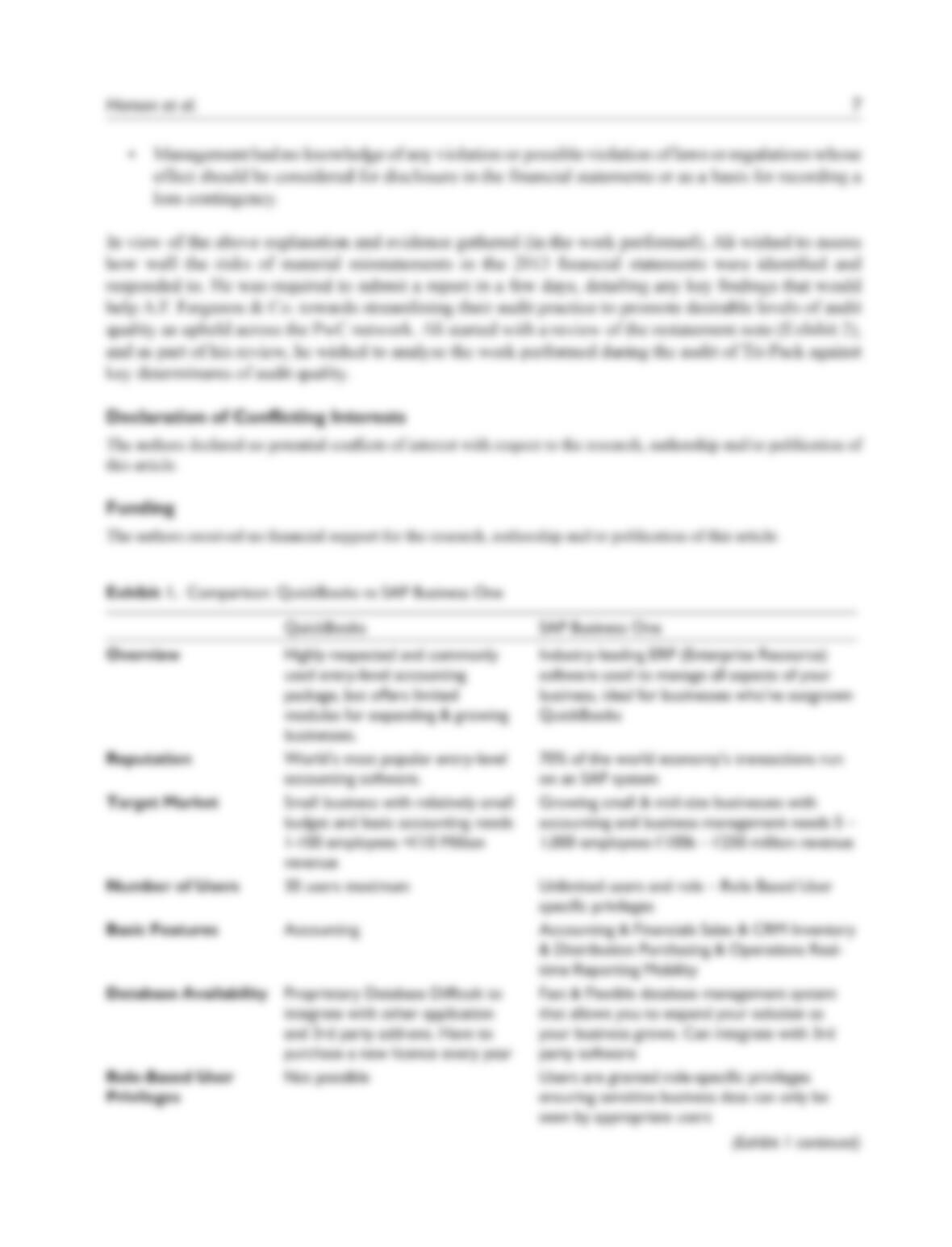
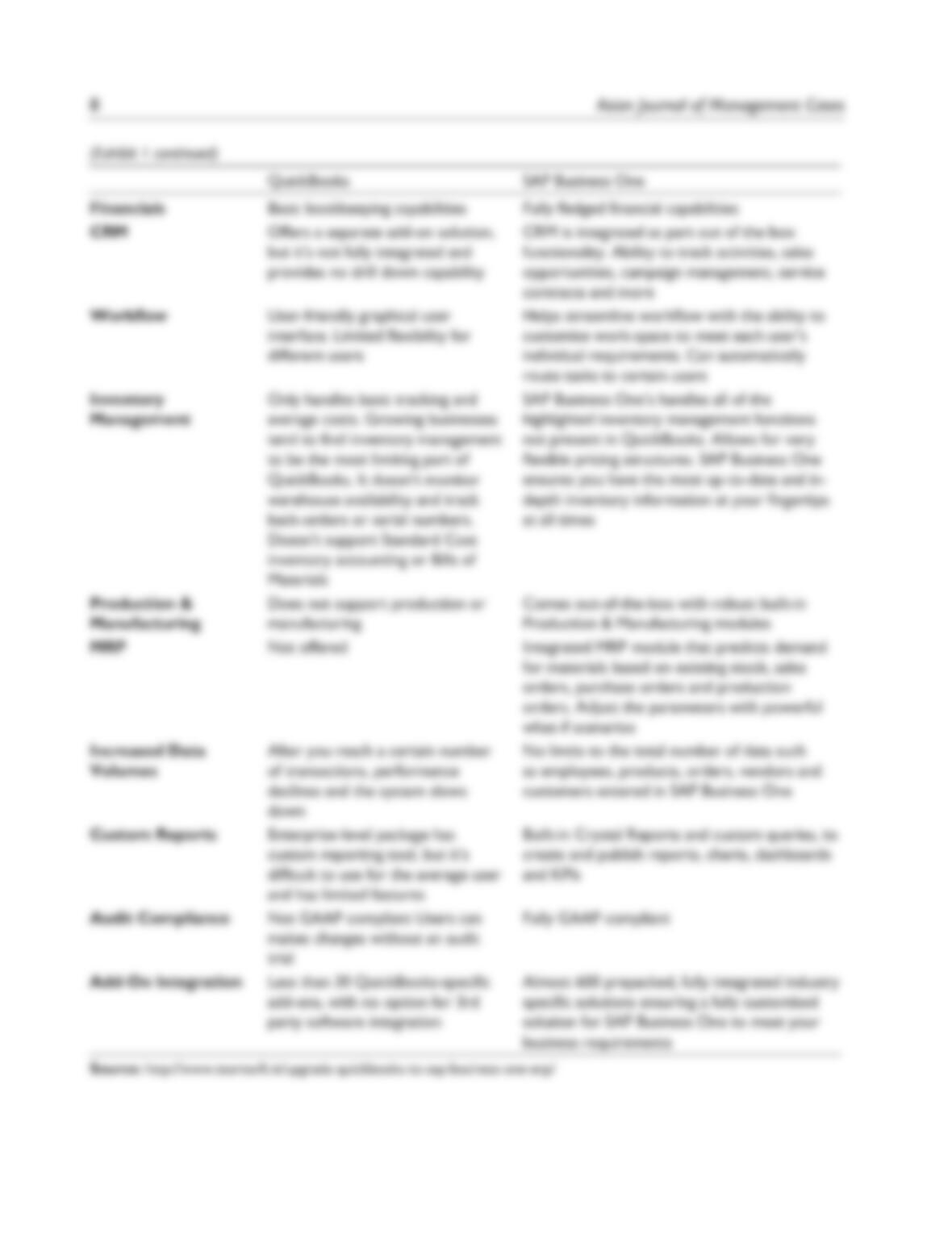
2. Tri-Pack used Quickbooks (an accounting software package by Intuit Inc.) until 2009, after
which it migrated to SAP Business One (an enterprise resource planning system). Such a transi-
tion was a reasonably significant upgrade from a rather rudimentary book-keeping system as
Quickbooks which was reported to have been suffering from errors in the year 20096. A detailed
comparison of the two IT systems has been included in Exhibit 1. For Tri-Pack the migration
from Quickbooks to SAP straddled across multiple years, such that it remained incomplete till
2014, thus, Quickbooks was running parallel to SAP for these years. A.F. Ferguson & Co.’s team
was well-acquainted with the fact that the transition was incomplete, the two systems were run-
ning parallel to each other and various entries were being passed through SAP without proper
documentation in place.
Restatements in the Year 2014
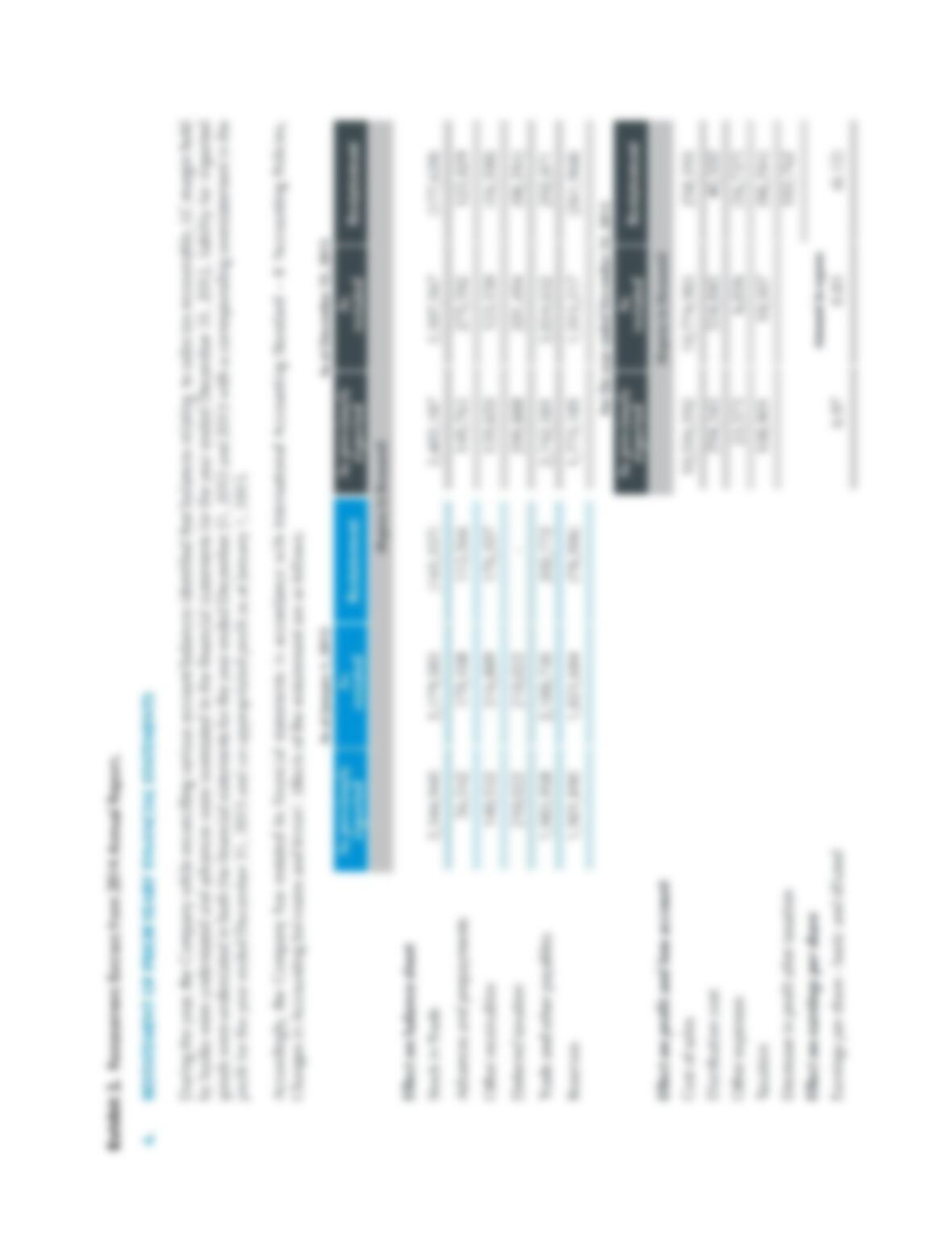
Tri-Pack’s 2014 year-end accounts reflected restatements (Exhibit 2) pertaining to the penultimate year
(ended 31 December 2012) and the previous year (ended 31 December 2013). The overall impact of the
restatements on the 2013 profit after tax (PAT) was a decrease of PKR 183,762 million, corresponding to
a PKR 6.12 drop in Earnings per Share (EPS), resulting in circa 88 per cent decline in both performance
indicators. The under (/over)-statements detailed in Exhibit 2 had a material impact on Tri-Pack’s
financial statements for the years ended 2012 and 2013 (Exhibit 3 contains 2013 Balance Sheet and
Income Statement). Due to the restatements, the 2013 audit file was selected as part of an audit quality
review. The global audit quality department concluded that the auditor had failed to obtain reasonable
assurance that the underlying accounts were free from material misstatement either due to fraud or error,
issuing instructions to A.F. Ferguson & Co. (their overseas member firm) to clarify their stance, and
provide their 2013 audit work for review.

4 Asian Journal of Management Cases
A.F. Ferguson & Co.’s Perspective
To this, the firm responded by detailing its overall position on the inability to discover the misstatements
as part of its audit. It also provided details of work done on the relevant financial statement line items
(FSLIs) to substantiate its claim that sufficient and appropriate evidence was gathered, hence, there was
no indication of failure to conduct the audit in accordance with the International Standards of Auditing.
An extract from the response by A.F. Ferguson & Co. follows:
1. Your conclusion is based solely on the basis of examination of the 2014 financial statements in
which the restatement was made. ISA 200, Paragraph A52 states:
Because of the inherent limitations of an audit, there is an unavoidable risk that some material misstate-
ments of the financial statements may not be detected, even though the audit is properly planned and
performed in accordance with ISAs. Accordingly, the subsequent discovery of a material misstatement
of the financial statements resulting from fraud or error does not by itself indicate a failure to conduct an
audit in accordance with ISAs7.
2. As per provisions of ISAs, the happening of restatement in itself does not establish that the audi-
tor of the financial statements to which the restatement relates was not properly conducted. We
believe that it is imperative to determine whether the audit was properly conducted in accordance
with the ISAs applicable in Pakistan.
3. The issue represents a matter in the nature of fraud or error in the preparation of the financial
statements for the years ended 30 June 2012 and 2013 by the management, and as auditors of
those years, we had no knowledge of that matter.
4. ISA 240 ‘the auditor’s responsibilities relating to fraud in an audit of financial statements’ pro-
vides specific guidelines on the limitations on auditor’s responsibilities in such cases. Further, as
per ISA 200, the potential effects of inherent limitations are particularly significant in case of
mismanagement resulting from fraud. Furthermore, the risk of the auditor not detecting a mate-
rial misstatement resulting from management fraud is greater than for employee fraud as man-
agement is in a position to directly or indirectly manipulate accounting records, present fraudulent
financial information or override control procedures designed to prevent similar frauds by other
employees.
5. Audit procedures performed during the audit of financial statements of the Company for the year
2012 and year 2013 are provided. These included calculating the materiality level, understan-
ding the company’s environment, reviewing minutes of Board of Directors and its committees,
assessing and planning fraud risk, performing risk assessment procedures, understanding man-
agement’s assessment of the risk of material misstatement, understanding the control environ-
ment, communicating audit committee findings and tailoring the audit programme accordingly.
6. We carried out our audit in accordance with the requirements of ISAs and to the best of our infor-
mation and according to the explanations given to us.
(…details of audit procedures on FSLIs omitted as presented further below…)
7. The restatement made in the 2014 accounts was a result of certain unsubstantiated entries re-
corded in the company’s general ledger which were otherwise not required to be made. Therefore,
you are requested to review the ISA 240 (paragraphs 6 and 7 as quoted) which contain distinctive
guidelines on the limitation on auditor’s responsibilities in such cases. The unidentified misstate-
ments are not a result of a willful act.
Haroon et al. 5
Having reviewed the above defence, Ali wished to evaluate Tri-Pack’s audit file to assess the evidence
that supported A.F. Ferguson & Co.’s 2013 clean audit opinion.
The following sections give a bird’s eye view of the relevant work (risk assessment notes and audit of
specific FSLIs) that A.F. Ferguson & Co. team’s Aura8 file contained for the year 2013.
Pre-Audit Activities and Audit Planning
•The A&C9 software (employed by firms across the PwC network) was used to promote consis-
tency in engagement acceptance and continuance procedures. Within A&C, the engagement team
is required to answer a series of questions about the entity. The answers to these questions and
interrelationships between the responses produced an A&C score and risk conditions. In the case
of Tri-Pack’s audit, the A&C questionnaire was completed, resulting in a score (19—lowest risk
score) that did not represent high-risk engagement risk.
•No other engagement was performed by the engagement partner, for the company.
•The engagement partner and other engagement team discussed the susceptibility of the Company’s
financial statements to material misstatements and the applicable financial reporting framework.
•Evaluation of fraud risk factors was performed in view of the PwC Guide. Various fraud risk
factors were evaluated, however, there was no information from risk assessment procedures or
additional activities that indicated a presence of one or more fraud risk factors. As there was no
suspicion of fraud, hence, additional audit procedures were not applied.