International Journal of Hospitality Management 91 (2020) 102683
Available online 9 September 2020
0278-4319/© 2020 Elsevier Ltd. All rights reserved.
Research Paper
What factors determining customer continuingly using food delivery apps
during 2019 novel coronavirus pandemic period?
Yuyang Zhao *, Fernando Bacao
NOVA Information Management School (NOVA IMS), Universidade Nova de Lisboa, Campus de Campolide, 1070-312, Lisboa, Portugal
ARTICLE INFO
Keywords:
Food delivery app
Continuance intention
COVID-2019
UTAUT
ECM
TTF
ABSTRACT
Food delivery apps (FDAs) as an emerging online-to-offline mobile technology, have been widely adopted by
catering businesses and customers. Especially, as they have provided two-way beneficial catering delivery ser-
vices in rescuing catering enterprises and satisfying customers’ technological and mental exceptions under the
COVID-19 global pandemic condition. This study proposes a comprehensive model integrating UTAUT, ECM and
TTF with the trust factor and examines 532 valid FDA users’ continuance intention of using FDAs during the
COVID-19 pandemic period in China. The statistical results and discussions show that satisfaction is the most
significant factor, and perceived task-technology fit, trust, performance expectancy, social influence and
confirmation have direct or indirect positive impacts on users’ continuance usage intention of FDAs during the
COVID-19 pandemic period. In addition, relevant researches and stakeholders should consider the specific
characteristic of technology being associated with users’ technological and mental perceptions for better un-
derstanding and explaining users’ continuance intention.
1. Introduction
Mobile devices have been widely adopted, and their use has sharply
increased worldwide. According to a report from the Global Association
of Mobile Operators, global mobile phone users exceeded 5.1 billion in
2020, among them, over 1.2 billion users are accounted for in China
(GSMA, 2020). Meanwhile, various mobile services are significantly
developed and implemented in different industries. Food delivery apps
(FDAs) as online-to-offline mobile services have recently gained popu-
larity offering two-way benefits for catering enterprises and customers
by providing convenient and efficient online order and offline delivery
services. Statista Reports (2019) illustrated that FDAs revenue in China
(38.4 billion US dollar (USD)) generated more than one-third of global
FDAs revenue (95.4 billion USD) in 2018. Moreover, global FDAs rev-
enue increased to 107.4 billion USD in 2019 (Statista Reports, 2019),
and are expected to exceed 164.5 billion USD by 2024, expanding at a
CAGR of 11.4 % during 2019–2024 (Imarc, 2020).
Meanwhile, the 2019 novel coronavirus (COVID-2019) erupted as a
serious global pandemic from the end of 2019 and reached the whole of
China in February 2020, then progressively expanded worldwide (Tang
et al., 2020). According to a report from the World Health Organization
(WHO), until 21 May 2020, there were a total of 4,904,413 globally
confirmed cases of COVID-19 infections and 323,412 deaths (WHO,
2020a). During the COVID-19 crisis, wearing a mask in public, social
distancing, self-isolating and other self-protection actions have been
highly recommended by the WHO (2020b) to avoid direct and indirect
contacts among people to reduce the risk of COVID-19 transmission
(Wilder-Smith and Freedman, 2020; Tang et al., 2020). Moreover,
because fewer customers intend to use public services, the traditional
catering industry has suffered dramatically during the COVID-19
pandemic. According to the data of iiMedia Research (2020), in China,
the revenue of the catering industry was 419.4 billion yuan (59.2 billion
USD) during January to February 2020, which decreased 43.1 % year on
year. 95.0 % of the interviewed catering businesses’ revenue of the
stores decreased significantly during COVID-19 epidemic period (iiMe-
dia Research, 2020).
On the other hand, despite the negative influence of COVID-19
significantly affecting the supply and demand of the catering industry,
it has changed the consumption habits of residents and accelerated the
transformation of catering enterprises from traditional in-store service
to online-to-offline service for surviving in the pandemic situation and
maintaining sustainable development. According to a report from Mei-
tuan research institute (2020), there were 71.7 % of 15,263 participants
using FDAs from the end of February to beginning of March 2020, and
* Corresponding author.
E-mail addresses: d2015046@novaims.unl.pt (Y. Zhao), bacao@novaims.unl.pt (F. Bacao).
Contents lists available at ScienceDirect
International Journal of Hospitality Management
journal homepage: www.elsevier.com/locate/ijhm
https://doi.org/10.1016/j.ijhm.2020.102683
Received 24 May 2020; Received in revised form 11 August 2020; Accepted 3 September 2020
International Journal of Hospitality Management 91 (2020) 102683
2
41.6 % residents preferred using online-to-offline delivery services to
purchase daily supplies during the COVID-19 pandemic period in China.
Likewise, iiMedia Research (2020) illustrated that 78 % of responded
Chinese traditional catering enterprises transferred their business to
third-party FDAs (Ele.me, Meituan Waimai and Baidu Waimai).
Compared to before the COVID-19 pandemic outbreak, the catering
enterprises registered on FDAs have dramatically increased 63.1 % in
China, and 70 % of the surveyed restaurants will continue to operate and
increase investment in FDAs after the COVID-19 epidemic. Moreover,
according to the business registration data from Tianyancha (2020),
there were 106,000 new enterprise registrations related to food delivery
services from January to May 2020, up 766 % from the same period in
2019. The estimated scale of the Chinese online food delivery market
will exceed 91.8 billion USD in 2020 (iiMedia Research, 2020). There-
fore, during the COVID-19 pandemic, “internet +restaurant” mode of
FDA not only met the requirements of catering enterprises but also
satisfied customers’ demands on convenient and efficient food supplies
and personal safety concerns (Liu and Wang, 2016).
Accordingly, factors motivating users to use FDAs continuously
under the COVID-19 pandemic situation are essential for relevant
stakeholders to understand customers’ requirements and expectations.
In terms of FDA adoption, customers consider performance expectancy
as the main determinator to adopt a relevant service (Yeo et al., 2017;
Roh and Park, 2019). Moreover, easiness and quality of service, con-
venience, social influence and satisfaction are also considerable ante-
cedents of intention to adopt FDAs (Yeo et al., 2017; Cho et al., 2019;
Correa et al., 2019; Ray et al., 2019; Roh and Park, 2019). Meanwhile, in
terms of continuance usage of information technology, performance
expectancy, effort expectance, social influence and satisfaction are
important for formulating users’ continuance usage intention (Gao et al.,
2015; Yuan et al., 2016; Alghamdi et al., 2018; Chopdar and Sivakumar,
2019; Marinkovi´
c et al., 2020). Furthermore, in order to evaluate factors
affecting users’ continuance intention of using information technology,
Chong (2013) extended the Expectancy Confirmation Model (ECM), and
Marinkovi´
c et al. (2020) modified the Unified Theory of Use and
Acceptance of Technology model (UTAUT), they found that trust also
has a significant impact on users’ continuance usage intention.
Meanwhile, Yuan et al. (2016) combined ECM with the Technology
Acceptance Model (TAM) and the Task-Technology Fit model to explain
that users’ continuance usage intention is determined by perceived
task-technology fit and confirmation. However, few prior investigations
have focused on factors affecting FDAs’ continuance usage, especially
under pandemic condition. Consequently, the purposes of this study are
to fulfil the gap of factors determining users’ intention to use FDAs
during the COVID-19 period continuously and support FDA relevant
stakeholders to understand customers’ perceptions and behaviours for
efficiently developing business strategies better. Therefore, this paper
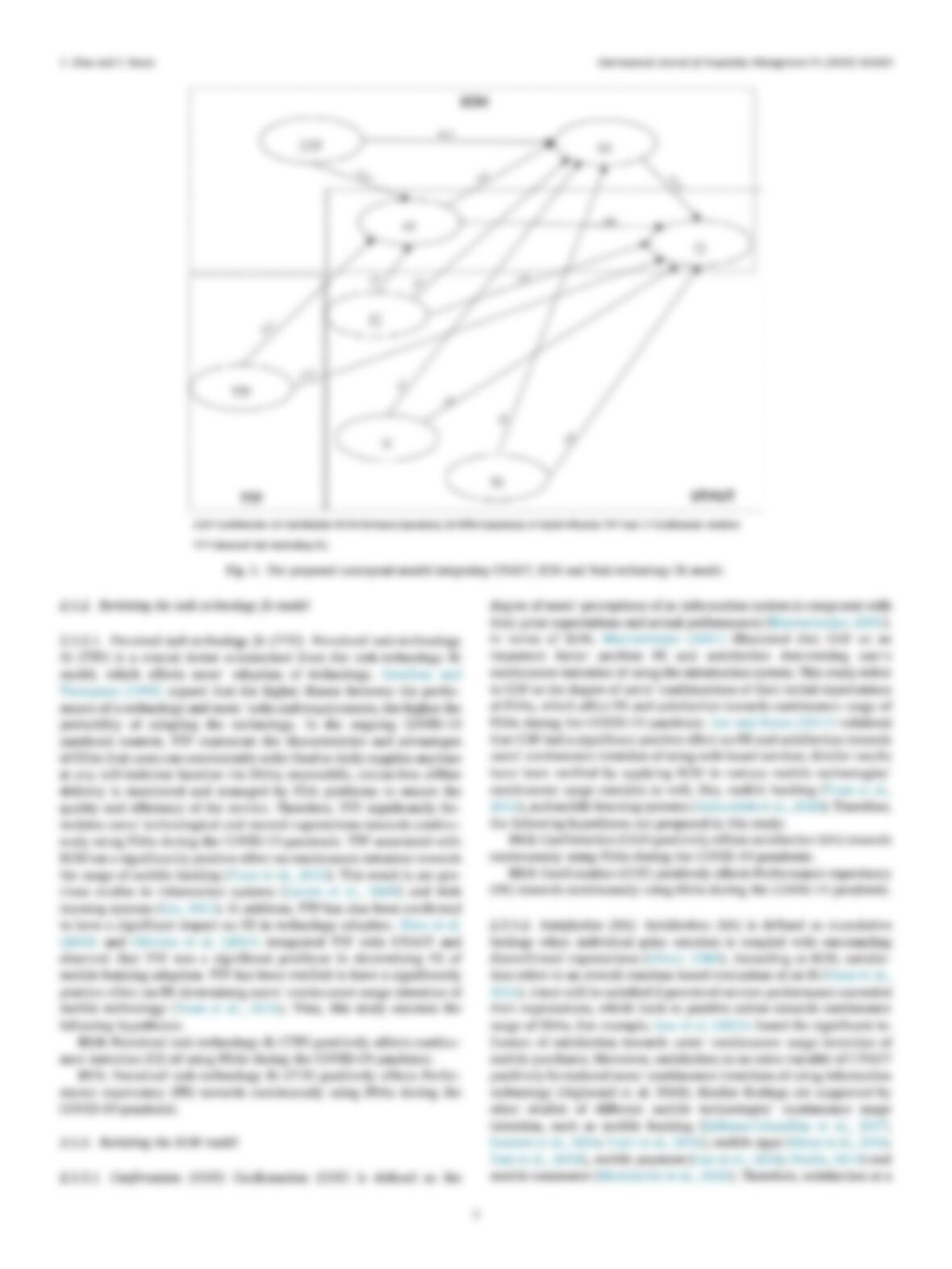
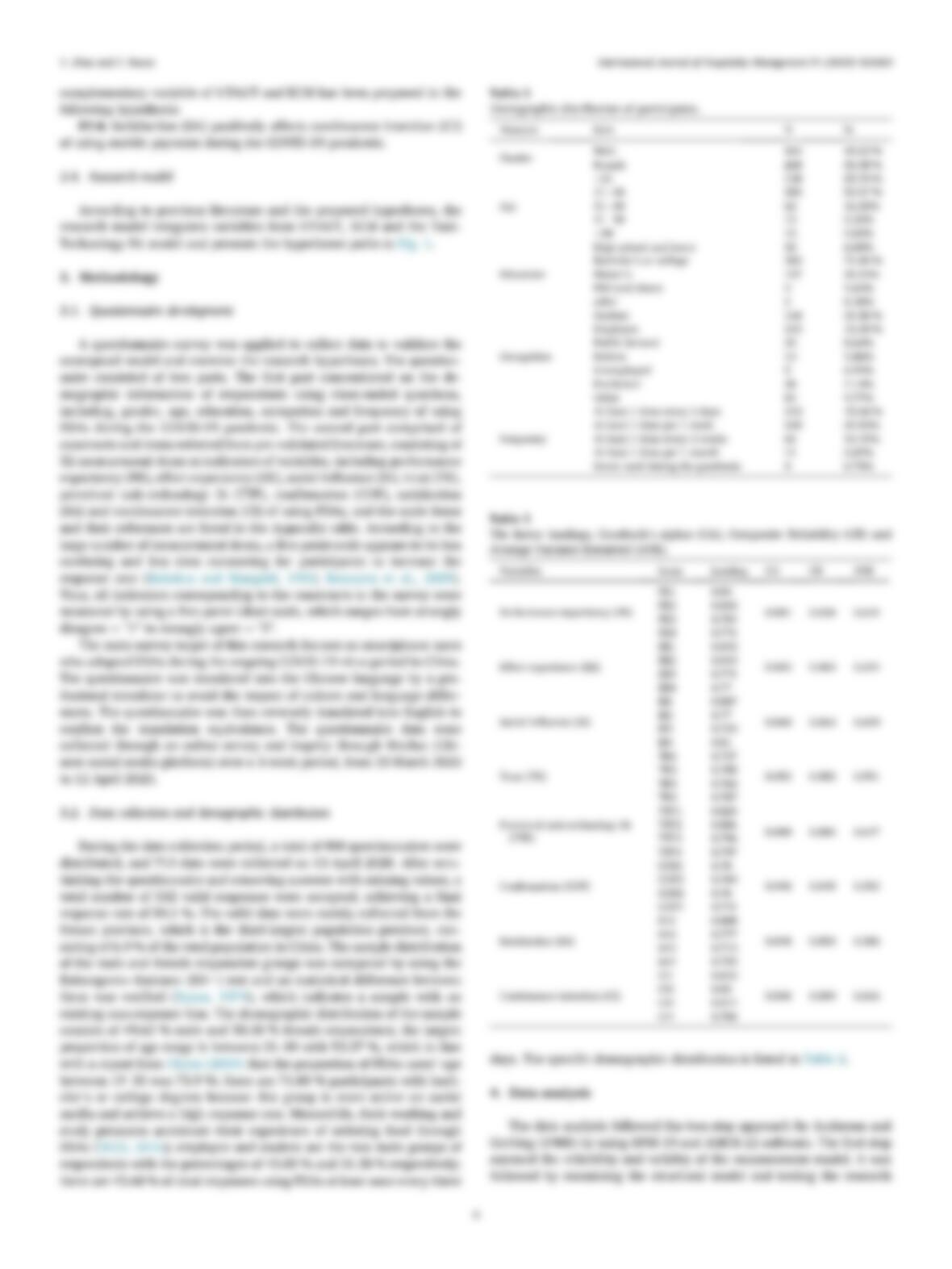
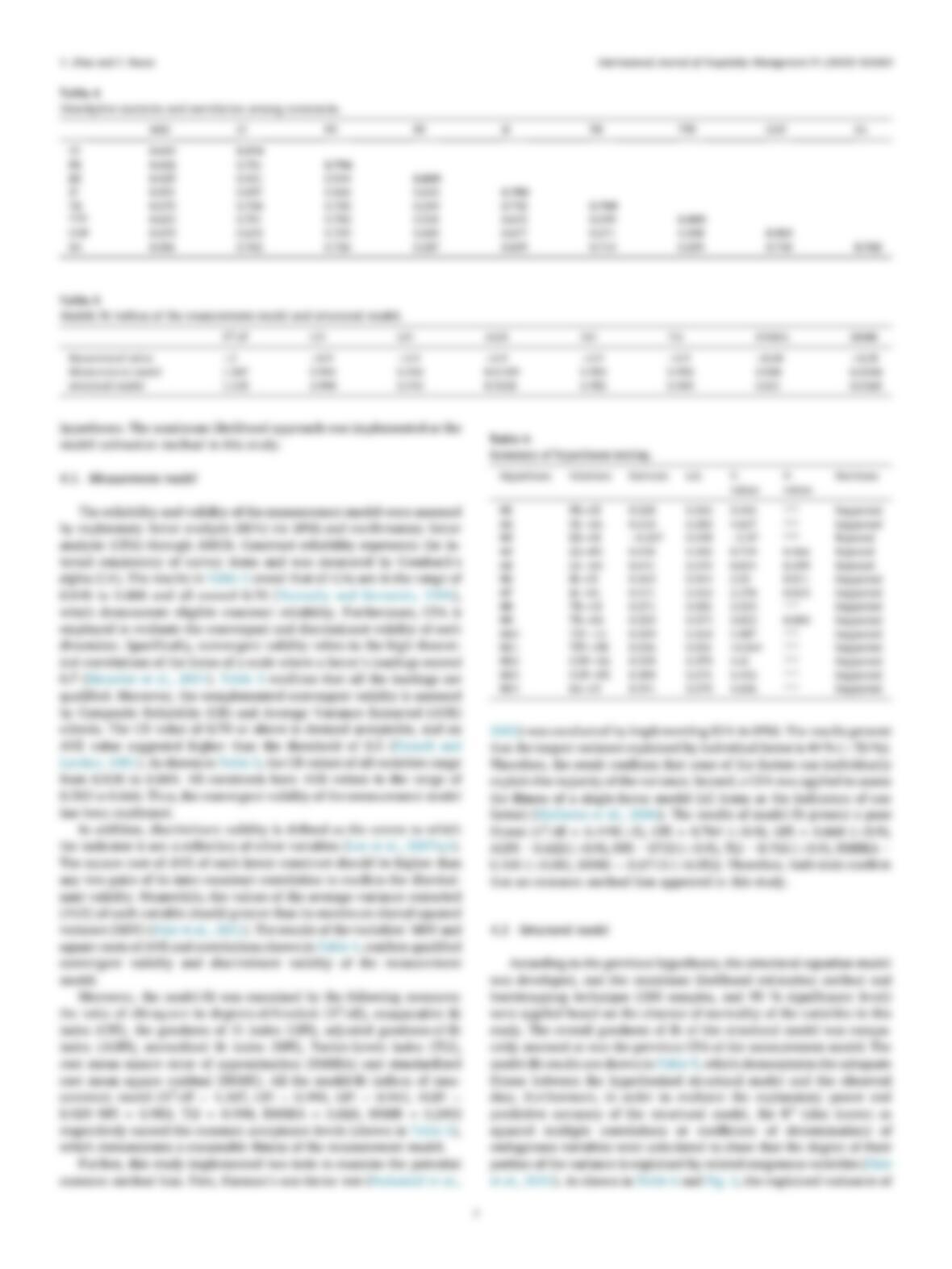
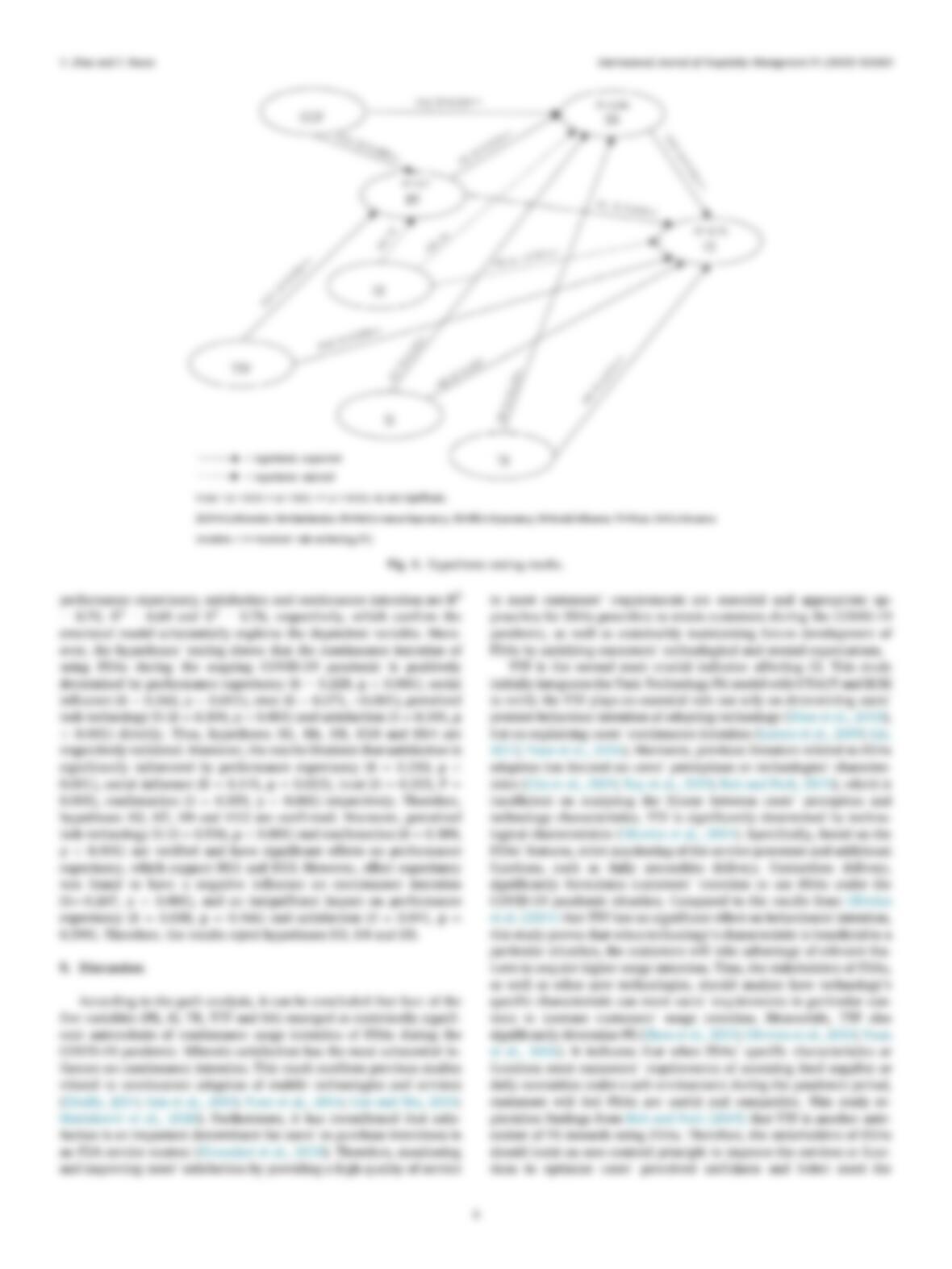
attempts to establish a comprehensive model integrating variables from
ECM, UTAUT and the Task-Technology Fit model, including perfor-
mance expectancy, effort expectancy, social influence, trust, perceived
task-technology fit, confirmation and satisfaction, to investigate the
factors affecting users’ continuance usage intention of FDAs during the
COVID-19 pandemic.
2. Theoretical background and hypotheses development
2.1. Food delivery apps (FDAs)
FDAs, as an emerging online-to-offline mobile technology, provide a
channel between catering enterprises and customers by integrating on-
line order and offline delivery services. FDAs can be categorised into two
patterns (Ray et al., 2019). First, the restaurants themselves, such as
KFC, Domino’s and Pizzahut etc. Second, the third-party intermediary
platforms, such as, Uber Eats, Zomato, Ele.me Meituan Waimai and
Baidu Waimai, which are more popular and have been widely adopted in
China (Roh and Park, 2019). Moreover, in order to adapt and overcome
the COVID-19 pandemic situation, the contactless delivery process is
applied in China, which delivers food to the gates of customers without
direct contact. Meanwhile, FDAs also involve daily supplies delivery
service for customers. These additional services establish multi-way
benefits in efficiently maintaining social distancing during the
COVID-19 pandemic, enriching service range and reducing the
spatio-temporal interval of sales and consumptions processes (Liu and
Wang, 2016). Therefore, the quality of FDA services significantly im-
pacts on users’ perceptions. Several previous studies have focused on
various factors affecting users’ intentions to adopt FDAs. Yeo et al.
(2017) emphasised post-usage usefulness and perceived convenience
motivation as significantly affecting customer’s behavioural intentions
to adopt online food delivery services. Moreover, Roh and Park (2019)
modified TAM with the moral obligation moderator and found that
usefulness, compatibility, subjective norm, are significant determiners
in the intention of online food delivery service adoption. He et al. (2018)
illustrated that satisfaction is associated with food quality and service
efficiency, which significantly affects online food delivery service
adoption. Meanwhile, Elvandari et al. (2018) found that order confor-
mity, quality of delivery, food quality and costs are the most significant
attributes affecting the intention of using online food delivery services.
Furthermore, Ray et al. (2019) implemented the uses and gratifications
theory and validated that customer experience, ease-of-use and tech-
nological characteristic had significant impacts on behavioural intention
to use FDAs. Likewise, Cho et al. (2019) associated multi-dimensional
perceived values with attitude to investigate continuance intention of
FDAs. They presented that trustworthiness has the most significant
positive effect on perceived value towards formulating users’ attitudes
to continue using FDAs.
Therefore, according to previous relevant researches and character-
istics of FDAs associated with the current situation of the COVID-19
outbreak, this study focuses on technological and mental factors
affecting customers’ continuance intentions of using FDAs in China by
integrating variables from UTAUT, ECM and the Task-Technology Fit
model, including performance expectancy (Mun et al., 2017; Yeo et al.,
2017; Roh and Park, 2019), effort expectancy (Ray et al., 2019), social
influence (Roh and Park, 2019) from UTAUT, satisfaction (He et al.,
2018) and confirmation (Yeo et al., 2017) from ECM, perceived tech-
nology task fit (Elvandari et al., 2018) from the Task-Technology Fit
model and trust (Cho et al., 2019). Furthermore, the following parts
introduce the theoretical foundations that contribute to the con-
ceptualisation of the research model.
2.2. Theoretical foundations
2.2.1. Unied theory of use and acceptance of technology (UTAUT)
UTAUT, as a reflection of social cognition theory, is an extension of
the technology acceptance model developed by Venkatesh et al. (2003)
for predicting users’ behavioural intention to use new technology sys-
tems. Specifically, the UTAUT model has been modified with other
variables and widely implemented on mobile technology adoption. For
example, Khalilzadeh et al. (2017) modified UTAUT to verify that trust
is associated with security and risk, and significantly affects customers’
intentions to use mobile payment technology. Min et al. (2008) com-
bined UTAUT with satisfaction to analyse mobile commerce adoption in
China. Moreover, UTAUT has also been integrated with other models for
investigating mobile technology adoption. For example, Zhou et al.
(2010) integrated the Task-Technology Fit model with UTAUT and
found that performance expectancy, task-technology fit, social influ-
ence, and facilitating conditions had significant effects on mobile
banking adoption in China. Afterwards, Oliveira et al. (2014) integrated
UTAUT with the Task-Technology Fit model and the Initial Trust Model
(ITM) and validated that initial trust, performance expectancy, tech-
nology characteristics, and task-technology fit are important predictors
to formulate users’ intention to adopt mobile banking. Furthermore,
several studies implemented UTAUT to investigate users’ continuance
Y. Zhao and F. Bacao

International Journal of Hospitality Management 91 (2020) 102683
3
intention of mobile technology (Chopdar and Sivakumar, 2019; Mar-
inkovi´
c et al., 2020). Therefore, UTAUT as an advanced technology
adoption model can be applied by associating additional variables or
integrating with other models to explain the factors determining users’
continuance intention of using FDAs during the COVID-19 pandemic
efficiently.
2.2.2. Expectancy conrmation model (ECM)
ECM was proposed by Bhattacherjee (2001) and is rooted in the
expectation–confirmation theory (ECT) (Oliver, 1980). It consists of
three dimensions, including performance expectancy, confirmation and
satisfaction for evaluating continuance usage intention of information
systems. ECM has been widely implemented in various continuance
adoptions of mobile technology. Such as Hung et al. (2012) who
modified ECM with the trust factor and proved that consumers’ satis-
faction and trust had a significant impact on continuance usage inten-
tion of mobile shopping. Chong (2013) extended ECM with perceived
ease of use, perceived enjoyment, trust and perceived cost to analyse
Chinese consumers’ satisfaction and continuance usage intentions of
m-commerce.
Moreover, ECM can also be integrated with other adoption models to
investigate the continuance usage intention of a technology. Such as,
ECM integrating with TAM explains consumers’ continuance usage in-
tentions of various mobile technologies, m-shopping (Shang and Wu,
2017). Mobile Learning System (Alshurideh et al., 2020). Likewise, Yuan
et al. (2016) integrated ECM, TAM and the Task-Technology Fit model
to explain the significant effects of satisfaction, perceived usefulness,
perceived task-technology fit and perceived risk on users’ continuance
usage intentions of mobile banking.
2.2.3. Task-Technology t model
Task-Technology Fit model was proposed by Goodhue and Thomp-
son (1995) as the degree of fitness between tasks and technology to
assist in the performance of individual daily tasks and the utilisation of
technology. On the technology adoption aspect, technology character-
istics and functions determine the performance of individual tasks and
meet individual requirements (Goodhue and Thompson, 1995). Specif-
ically, in this study, customers’ continuance intention of using FDAs
during the COVID-19 crisis period is determined on features of FDAs
(fast, convenient and contactless food supply services), which fit users’
efficient food supply requirements and maintain social distancing de-
mand under the pandemic condition. Moreover, the Task-Technology Fit
model has been implemented by various previous studies to analyse
users’ behavioural intentions of adopting mobile technology in different
contexts, such as mobile commerce in the insurance industry (Lee et al.,
2007a,b), mobile information systems (Junglas et al., 2008). Mean-
while, the Task-Technology Fit model has also been integrated with
other models to explain technology adoption better. For example, the
Task-Technology Fit model combines with UTAUT to analyse mobile
banking adoption (Zhou et al., 2010); the Task-Technology Fit model
integrates with the DeLone & McLean model to explain mobile banking
adoption (Tam and Oliveira, 2016). Moreover, Yuan et al. (2016)
incorporated the Task-Technology Fit model with ECM and TAM to
measure the factors affecting the continuance usage of mobile banking.
2.2.4. Discussion of theoretical frameworks
According to previous descriptions, the UTAUT model focuses on
predicting users’ initial adoption of a new information technology from
users’ technological expectations rather than mental expectations,
which weakly explain users’ mental perceptions determining continu-
ance usage intention (Venkatesh et al., 2011). Accordingly, based on the
summary of previous studies related to continuance intention of using
information technology (shown in Table 1.), this study integrates the
trust, confirmation and satisfaction variables as mental perceptions with
technological perceptions to analyse users’ continuance intention of
using FDAs during the COVID-19 pandemic. Specifically, trust is
considered as users’ general belief of technology, measured against
perceived risk and uncertainty, and positively reflects perceived security
when adopting new technology (Khalilzadeh et al., 2017; Shao et al.,
2018). Moreover, confirmation and satisfaction extracted from ECM can
efficiently describe users’ expectations on continuously using informa-
tion technology (Yuan et al., 2016; Almazroa and Gulliver, 2018).
Moreover, compared to UTAUT, the Task-Technology Fit model focuses
more on the relationships among task and technology characteristics,
utilisation and performance impact (Yuan et al., 2016). Particularly, the
contactless feature and convenience of FDAs significantly contribute to
users perceived technological and mental benefits of using FDAs under
COVID-19 pandemic conditions. Therefore, UTAUT, ECM and the
Table 1
Summary of studies related to continuance intention of using information
technology.
Relevant studies Theoretical frameworks Variables
Hung et al., 2012 ECM •Perceived usefulness
•Confirmation
•Satisfaction
Yuan et al., 2016 ECM
the Task-Technology
Fit model
TAM
•Perceived technology-
task fit
•Perceived ease of use
•Perceived usefulness
•Confirmation
•Perceived risk
•Satisfaction
Alghamdi et al., 2018 UTT
ECM
•Performance
expectancy
•Effort expectancy
•Social influence
•Facilitating conditions
•Satisfaction
•Confirmation
•Technology readiness
•Uncertainty Avoidance
Li´
ebana-Cabanillas et al.,
2018
UTAUT
DOI
•Satisfaction
•Service quality
•Effort expectancy
•Perceived risk
•Convenience
•Social value
Alshurideh et al., 2020 ECM
TAM
•Perceived ease of use
•Perceived usefulness
•Social influence
•Confirmation
•Satisfaction
•Continuance intention
Marinkovi´
c et al., 2020 UTAUT •Performance
expectancy
•Effort expectancy
•Social influence
•Satisfaction
•Perceived trust
•Perceived
compatibility
•Customer involvement
•Epistemic value
•Comparative value
Tam et al., 2020 ECM
UTAUT2
•Confirmation
•Satisfaction
•Performance
expectancy
•Effort expectancy
•Social influence
•Facilitating conditions
•Hedonic motivation
•Price value
•Habit
Wang et al., 2020 UTAUT2
TAM
•Performance
expectancy
•Effort expectancy
•Hedonic motivation
•Social influence
•Attitude
Y. Zhao and F. Bacao
International Journal of Hospitality Management 91 (2020) 102683
Task-Technology Fit model have good complementarities to evaluate
the factors affecting users’ continuance intention of using FDAs during
the COVID-19 pandemic.
2.3. Development of hypotheses
2.3.1. Revisiting the UTAUT model
2.3.1.1. Performance expectancy (PE). According to UTAUT, perfor-
mance expectancy (PE) is defined as the degree to which the user be-
lieves that using a particular technology will facilitate his or her
performance in a certain activity (Venkatesh et al., 2003). PE is a sig-
nificant predictor to determine a user’s intention to adopt new tech-
nology. Concretely related to this study, users perceived the higher
utility from FDAs, and the greater intention to continue using them
(Mun et al., 2017; Yeo et al., 2017; Roh and Park, 2019). Meanwhile,
previous researches have validated that PE has a significantly positive
effect on user’s continuance usage of various mobile technologies, such
as mobile internet (Zhou, 2011a), mobile instant messaging and social
networking apps (Lai and Shi, 2015), mobile banking (Yuan et al., 2016)
and mobile shopping applications (Chopdar and Sivakumar, 2019).
Moreover, PE also has a significant effect on consumers’ satisfaction
towards affecting the continuance intention of using mobile technology
(Tam et al., 2018). In terms of UTAUT, studies by Marinkovi´
c et al.
(2020) and Chong (2013) verified that PE is a significant predictor
affecting the satisfaction of users’ continuance usage of mobile com-
merce. Furthermore, the ECM posits that PE significantly influences the
satisfaction and continuance intention of using mobile technology (Yuan
et al., 2016; Susanto et al., 2016). Accordingly, PE is considered as a
significant variable of UTAUT and ECM positively affecting users’
continuance intention and satisfaction. Therefore, the following hy-
potheses are proposed:
H1: Performance expectancy (PE) positively affects continuance
H3: Effort expectancy (EE) positively affects the continuance inten-
tion (CI) of using FDAs during the COVID-19 pandemic.
H4: Effort expectancy (EE) positively affects performance expectancy
(PE) towards continuously using FDAs during the COVID-19 pandemic.
H5: Effort expectancy (EE) positively affects satisfaction (SA) to-
wards continuously using FDAs during the COVID-19 pandemic.
2.3.1.3. Social inuence (SI). According to UTAUT, social influence (SI)
is defined as the degree that users gain willingness from others’ (e.g.
families, friends and colleagues) encouragement that they should use a
certain technology (Venkatesh et al., 2003). Related to this study, SI has
been validated as significantly determining users’ intention to use an
online-to-offline delivery service (Roh and Park, 2019). Moreover, from
the continuance intention of using a mobile technology aspect, SI as an
important variable in UTAUT has a significant impact on users’ in-
tentions to continue using mobile technologies (Lai and Shi, 2015). This
angle has been supported in various aspects, such as mobile social
network sites (Zhou and Li, 2014), shopping apps (Chopdar and Siva-
kumar, 2019) and mobile payment systems (Zhu et al., 2017).
Furthermore, SI not only directly determines users’ continuance inten-
tion, but also indirectly formulates users’ intention to continuously use
mobile technology by affecting their satisfaction (Hsiao et al., 2016).
Marinkovi´
c et al. (2020) revised UTAUT to confirm that SI has a sig-
nificant effect on users’ satisfaction towards continuance intention of
using mobile technology. Therefore, the following hypotheses are pro-
posed in this study:
H6: Social influence (SI) positively affects continuance intention (CI)
of using FDAs during the COVID-19 pandemic.
H7: Social influence (SI) positively affects satisfaction (SA) towards
continuously using FDAs during the COVID-19 pandemic.
2.3.1.4. Trust (TR). Trust (TR) is defined as a state of individual faith
regarding intentions, and prospective actions will follow the appropriate
behaviour of integrity and ability (Gefen, 2000; Grazioli and Jarvenpaa,
Y. Zhao and F. Bacao