Chapter 3
Recording transactions
©2018 John Wiley & Sons Australia Ltd

Learning objectives
After studying this presentation, you should be able to:
3.1 identify the nature of, purpose of and evidence for transactions
3.2 describe the accounting cycle used to record, classify and
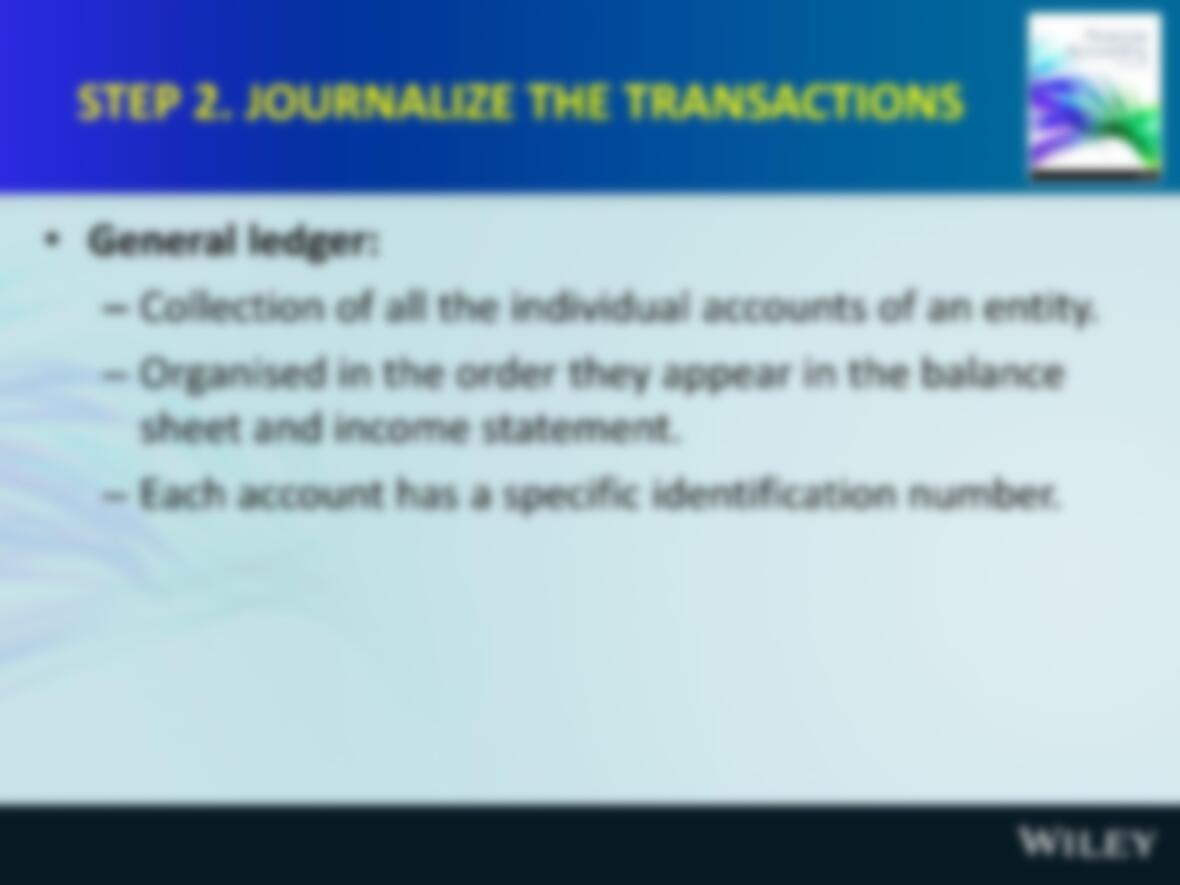
summarise transactions, including the of ledger accounts and the general
ledger
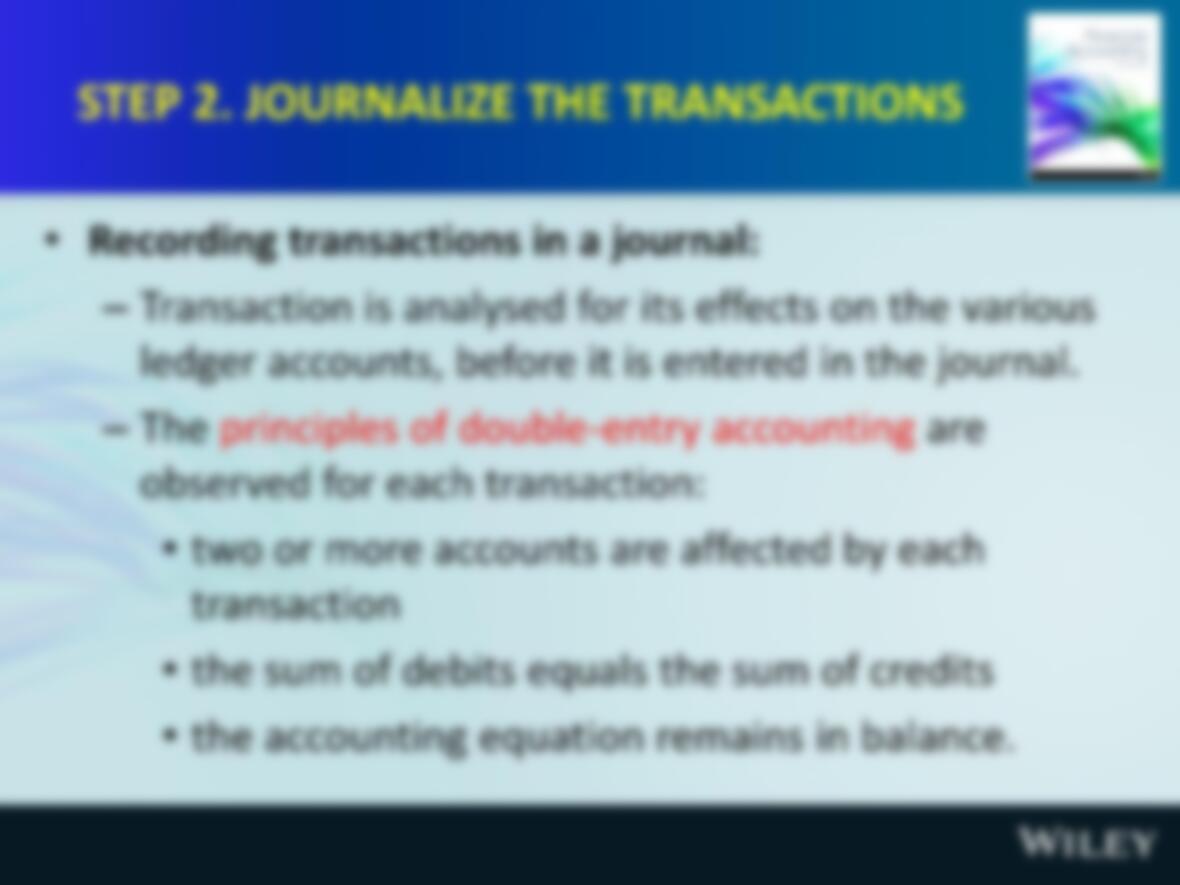
3.3 outline the rules of debit and credit used in double-entry
accounting and how to apply these rules in analysing transactions
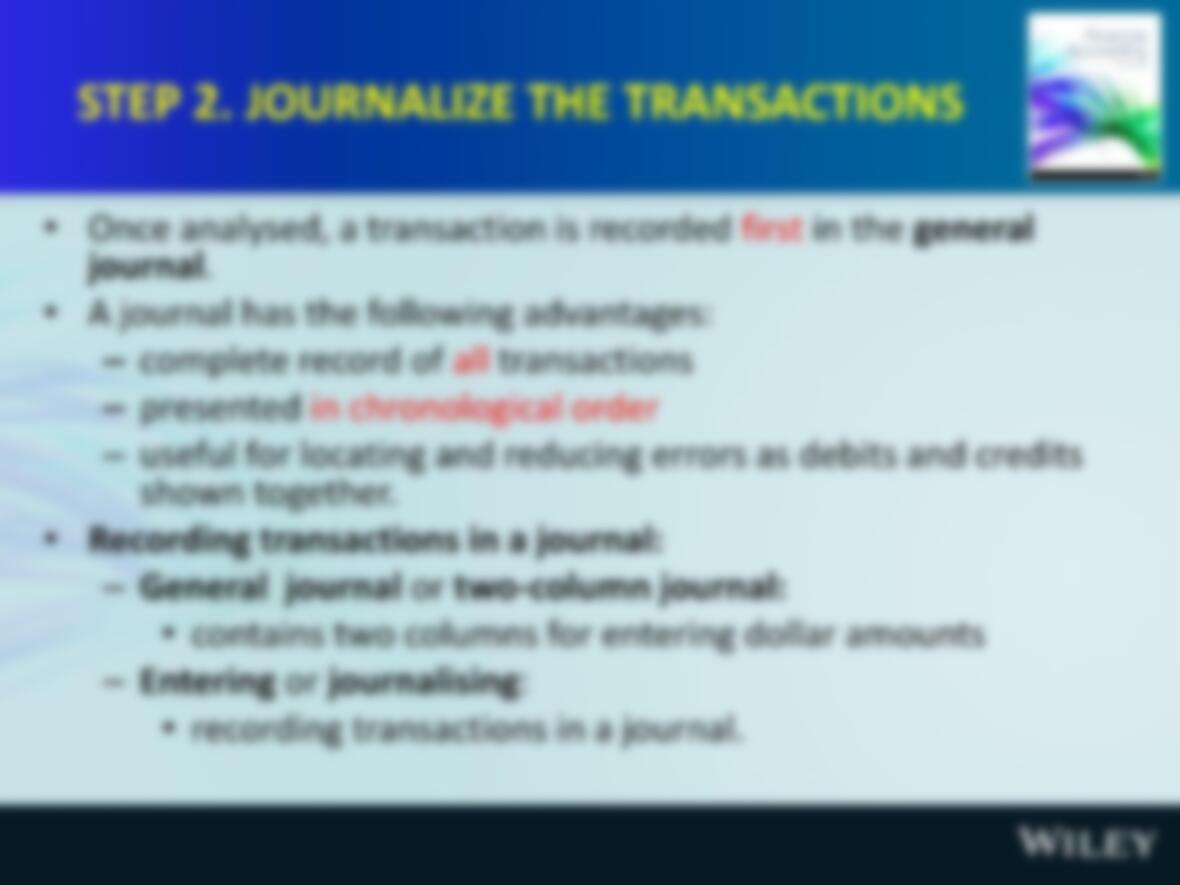
3.4 explain the purpose and format of the general journal, record
transactions in the general journal and transfer the information to the
general ledger
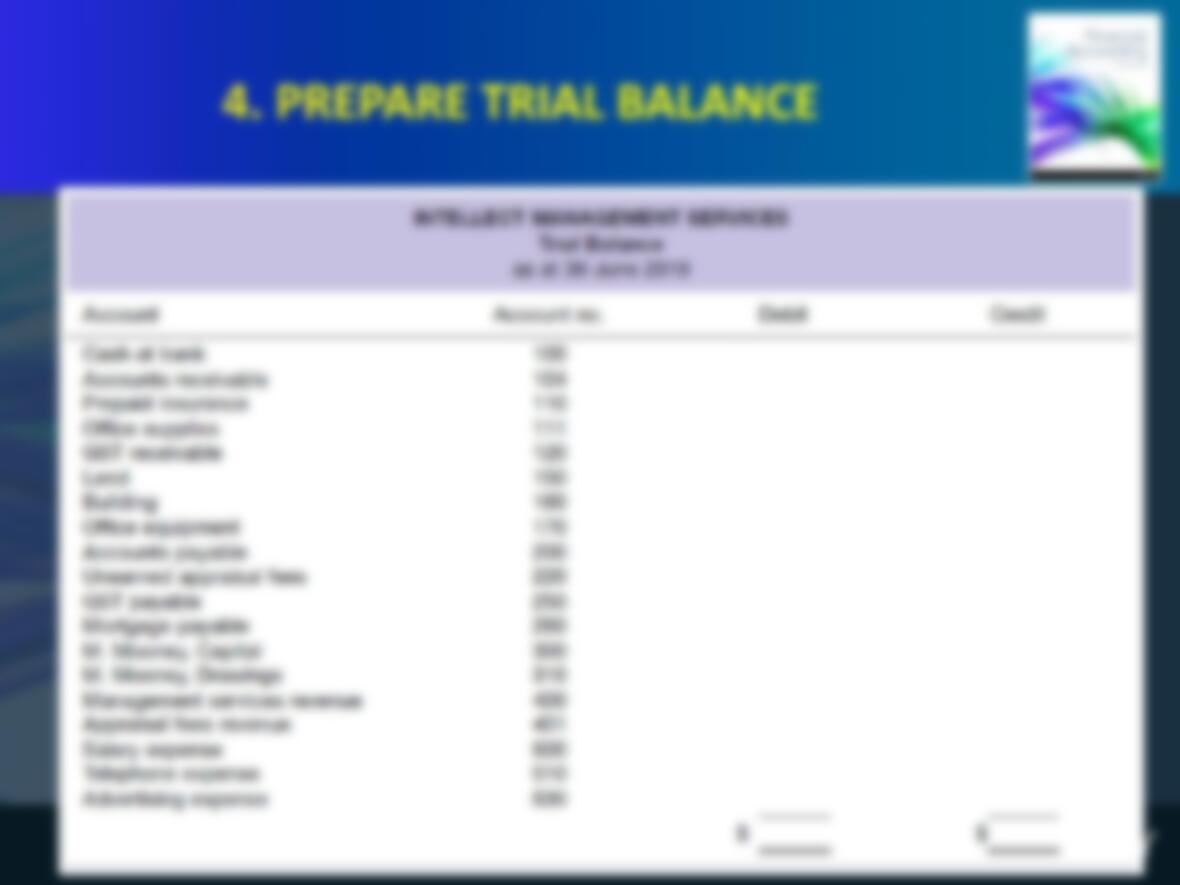
3.5 discuss the purpose of the trial balance and how to prepare one.

Transactions
•Types of transactions:
–External transactions:
•involve an outside party
•exchange of economic resources and/or obligations:
–sale of inventory
–purchase of supplies.
–Internal transactions:
•transformation of economic resources:
–use of office supplies.
–Non-transactional events:
•not usually recorded, but may be in the future:
–receiving an order from a customer.

•Transactions of a business entity:
–An entity which are expected to provide future
economic benefits to the entity.
–The initial source of assets for any business is an
investment by the owner.
–Cash is useful as a medium of exchange or as a
measure of value, but it is essentially a
non‐productive asset.
Transactions

•Source documents:
–Prepared for every external transaction.
–Support entries in accounting records.
–Important element in control system.
–Common source documents include:
•tax invoice (specific requirements as per ATO)
•purchase order
•cash register tape
•credit card slip
•cheque butts.
Transactions
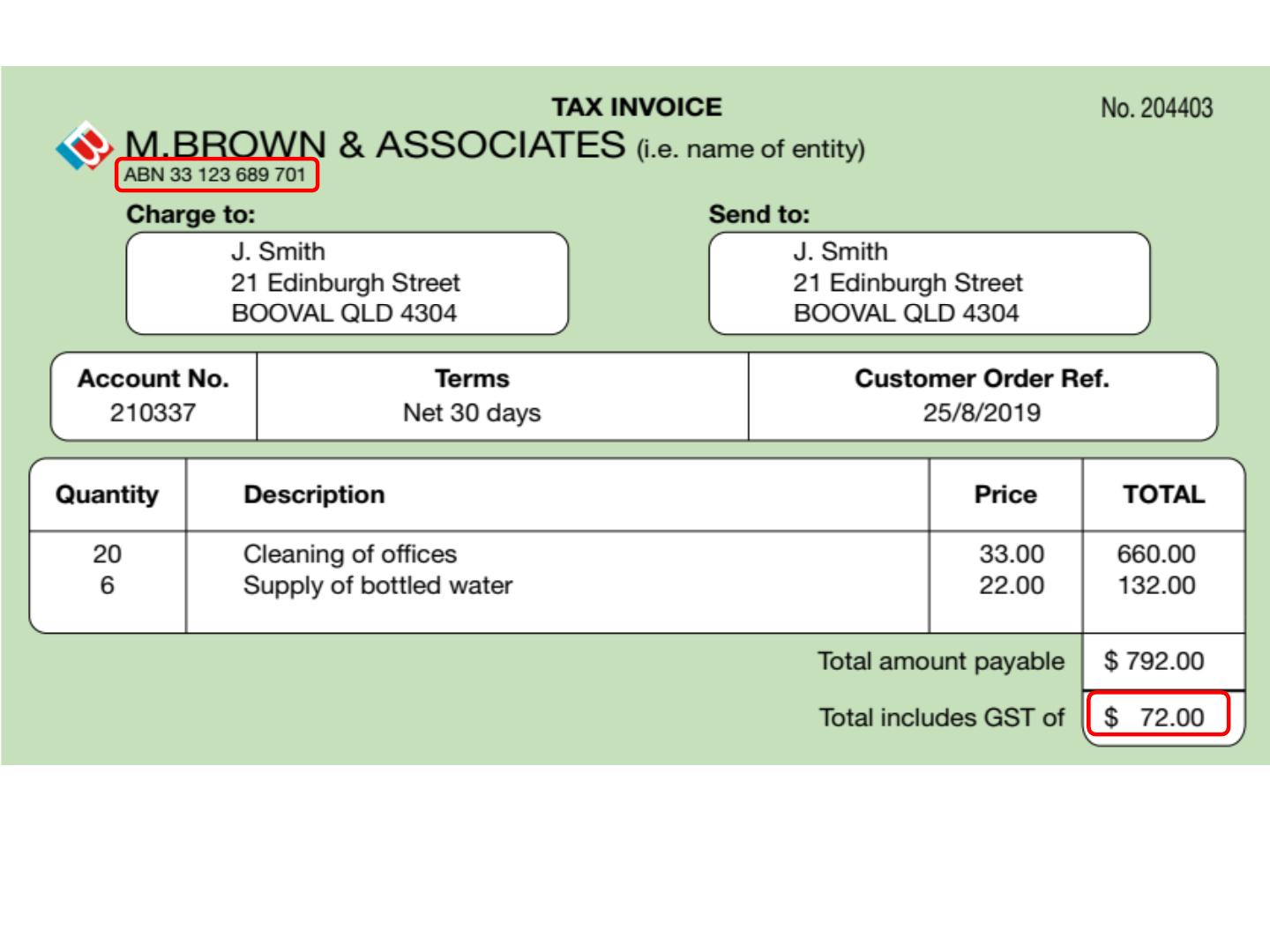
SOURCE DOCUMENTS
Australian Business Number
Goods & Services Tax
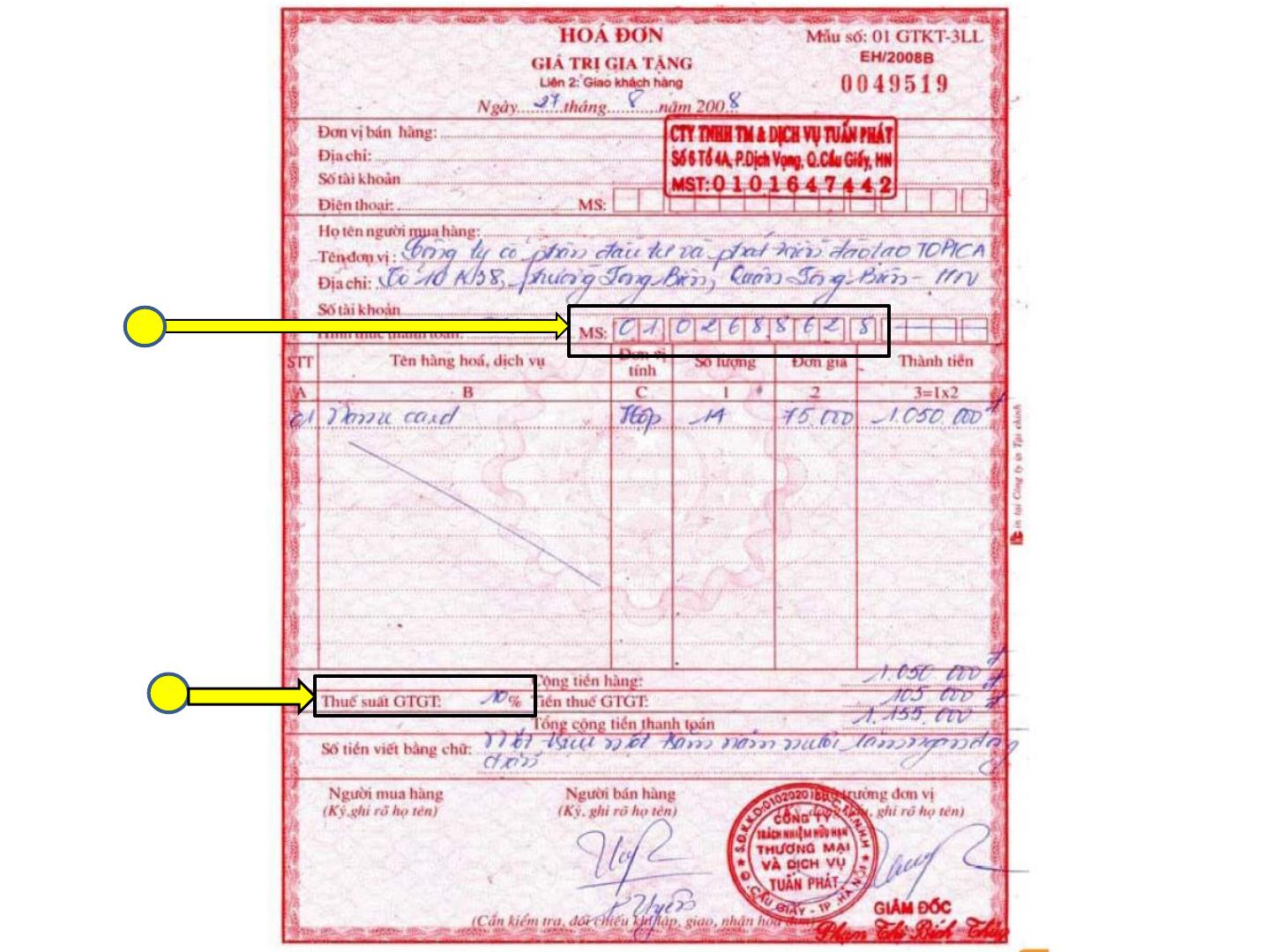
1
2
Tax number
VAT (10%)
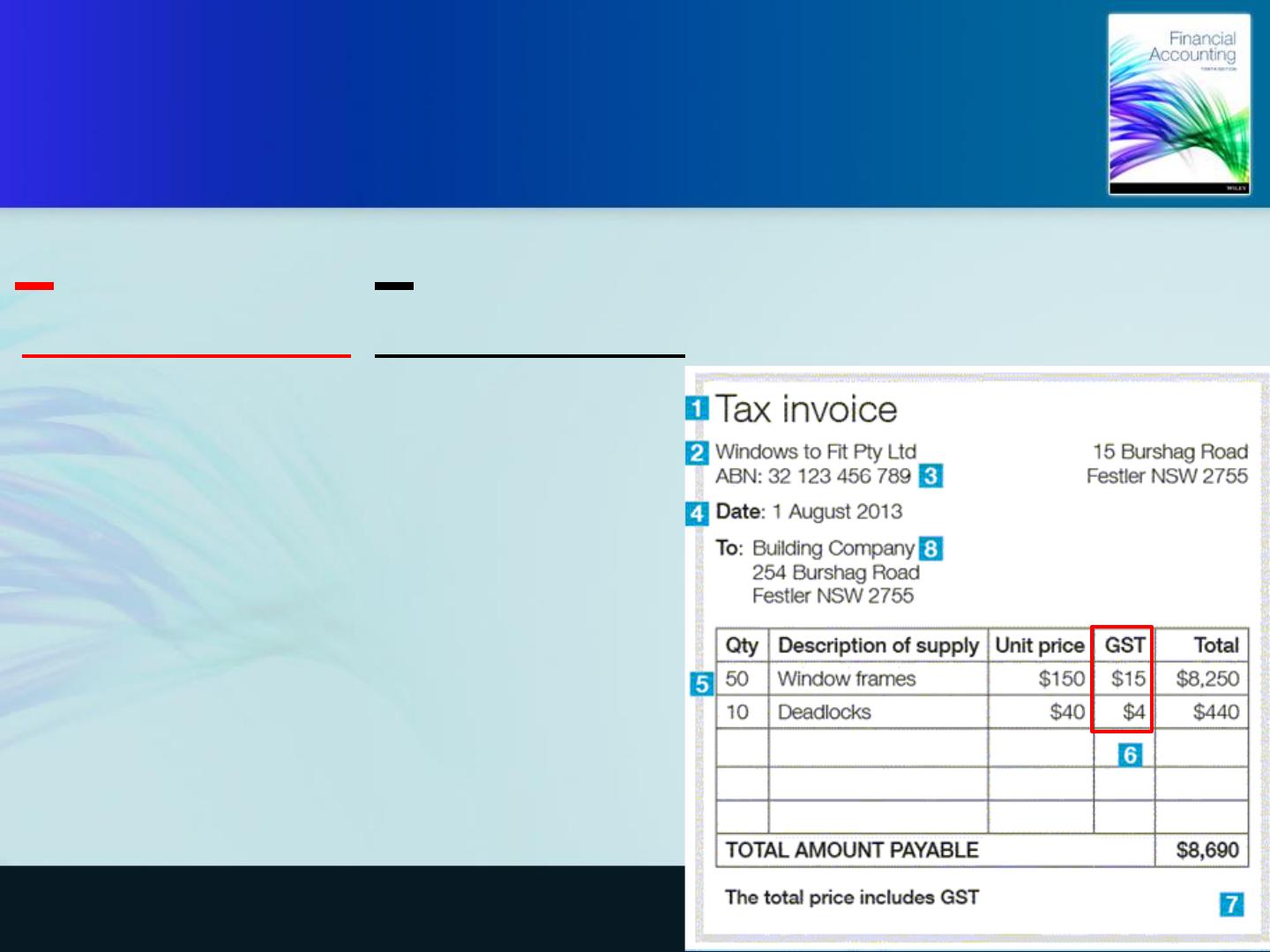
*GST Receivable & GST Payable
GST Collections: when an entity sells goods/services
GST Outlays: when an entity buys goods/services
Net GST (In order to avoid duplication the GST)
GST Payable
GST Receivable
GST Payable /
GST Receivable
(at the end of each reporting period)

•Accounting periods:
–Periodic progress of the entity is divided into time
periods of equal length.
•Interim statements:
–Statements prepared for external users before the
end of the annual period.
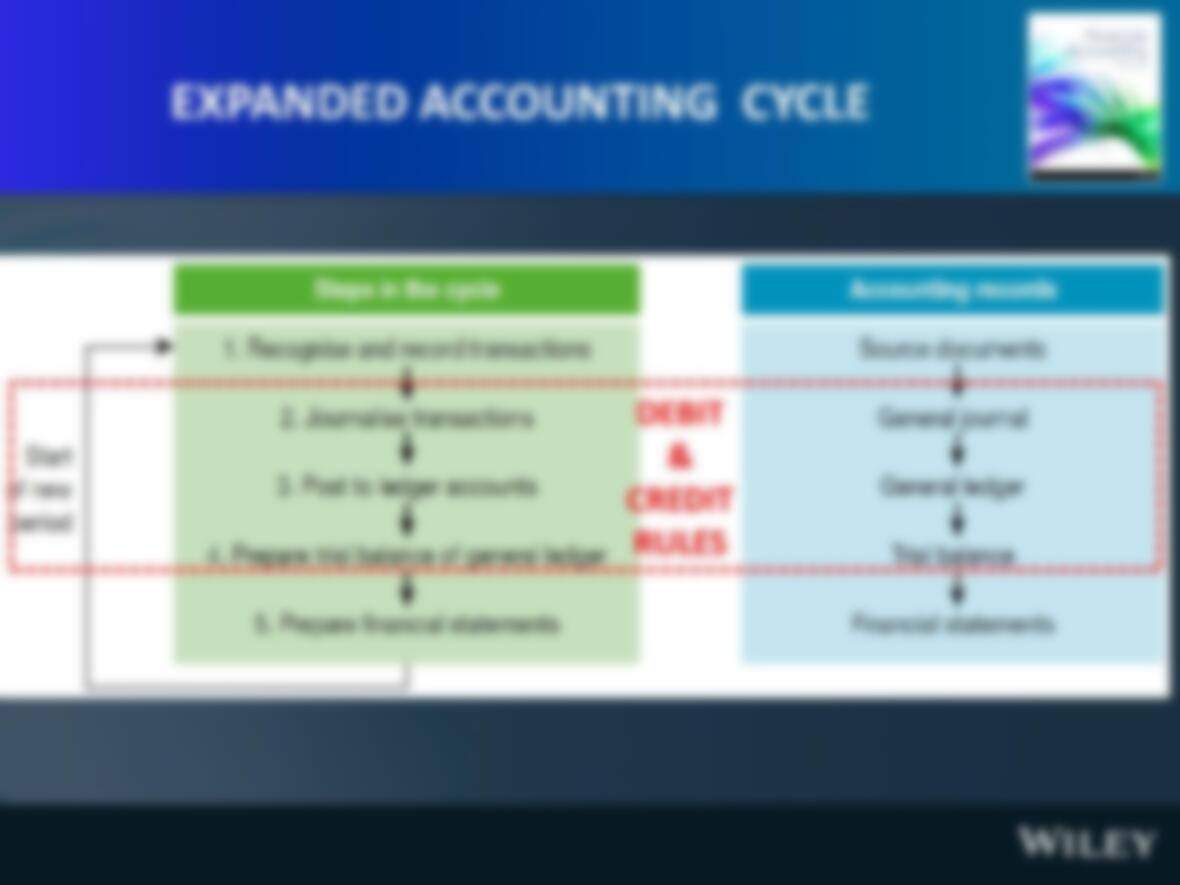
•The accounting cycle:
–The steps and procedures, culminating in the
preparation of financial statements.
The accounting cycle
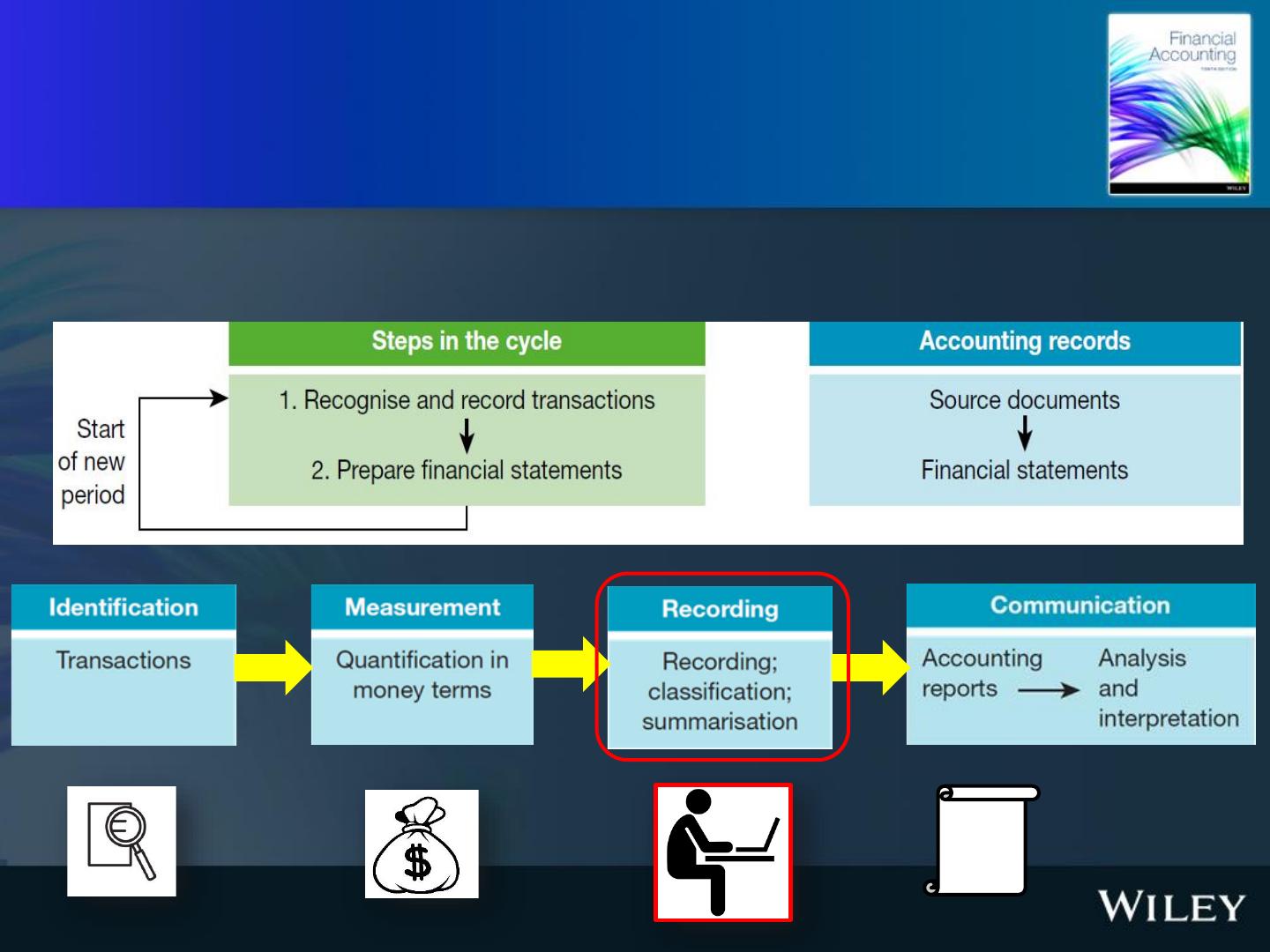
The accounting cycle
•The basic accounting cycle:

•An account is established for each type of:
–asset
–liability
–equity
–income
–expense.
•Number and exact individual accounts varies
depending on the nature and complexity of the entity’s
operations.
The accounting cycle
–ACCOUNTS COMMONLY USED
–ASSET ACCOUNTS:
•Cash at bank
•Accounts receivable: amounts that customers owe an entity (from
providing goods or services on credit)
•Other receivables & debtors (not from providing goods or services
on credit)
The accounting cycle
–ACCOUNTS: BALANCE SHEET