Sia et al./Web Strategies to Promote Internet Shopping
RESEARCH ARTICLE
WEB STRATEGIES TO PROMOTE INTERNET SHOPPING:
IS CULTURAL-CUSTOMIZATION NEEDED?1
By: Choon Ling Sia
City University of Hong Kong
83 Tat Chee Avenue
Kowloon, Hong Kong
CHINA
iscl@cityu.edu.hk
Kai H. Lim
City University of Hong Kong
83 Tat Chee Avenue
Kowloon, Hong Kong
CHINA
iskl@cityu.edu.hk
Kwok Leung
City University of Hong Kong
83 Tat Chee Avenue
Kowloon, Hong Kong
CHINA
mgkleung@cityu.edu.hk
Matthew K. O. Lee
City University of Hong Kong
83 Tat Chee Avenue
Kowloon, Hong Kong
CHINA
fbmatlee@cityu.edu.hk
Wayne Wei Huang
College of Business
Ohio University
Athens, OH 45701
U.S.A.
huangw@ohio.edu
1Carol Saunders was the accepting senior editor for this paper. France
Belanger served as the associate editor.
Izak Benbasat
Sauder School of BUsiness
University of British Columbia
Vancouver, BC V6T 1Z2
CANADA
izak.benbasat@sauder.ubc.ca
Abstract
Building consumer trust is important for new or unknown
Internet businesses seeking to extend their customer reach
globally. This study explores the question: Should website
designers take into account the cultural characteristics of
prospective customers to increase trust, given that different
trust-building web strategies have different cost implications?
In this study, we focused on two theoretically grounded
practical web strategies of customer endorsement, which
evokes unit grouping, and portal affiliation, which evokes
reputation categorization, and compared them across two
research sites: Australia (individualistic culture) and Hong
Kong (collectivistic culture). The results of the laboratory
experiment we conducted, on the website of an online book-
store, revealed that the impact of peer customer endorsements
on trust perceptions was stronger for subjects in Hong Kong
than Australia and that portal (Yahoo) affiliation was effective
only in the Australian site. A follow-up study was conducted
as a conceptual replication, and provided additional insights
on the effects of customer endorsement versus firm affiliation
on trust-building. Together, these findings highlight the need
to consider cultural differences when identifying the mix of
web strategies to employ in Internet store websites.
Keywords: Cross-cultural study, Internet shopping, trust,
web strategies
MIS Quarterly Vol. 33 No. 3, pp. 491-512/September 2009 491

Sia et al./Web Strategies to Promote Internet Shopping
Introduction
With the globalization of businesses and the advent of the
Internet, many firms have set up websites for each country/
city in which they have a local presence, featuring the respec-
tive local language and contents, but typically with uniform
website designs and features. To build trust in Internet stores,
particularly if they are new or relatively unknown, numerous
web strategies/design features have been proposed in the
practitioner literature (e.g., Cheskin Research and Studio
Archetype/Sapient 1999). Trust is a critical concern of Inter-
net consumption behaviors (Brynjolfsson and Smith 2000;
Keen 1997; Sin 2003; Van Slyke et al. 2004), and has
repeatedly been shown to enhance Internet shopping inten-
tions and behaviors (e.g., Jarvenpaa et al. 2000; Lim et al.
2006).
Much of the extant literature on Internet trust has adopted a
universalist approach by assuming that trust (particularly its
antecedents) is built uniformly across different national cul-
tures (e.g., Jarvenpaa et al. 2000; Lim et al. 2006). Although
traditional marketing scholars (e.g., Aaker and Maheswaran
1997; de Mooij and Hofstede 2002; Straughan and Albers-
Miller 2001) and Internet practitioners (e.g., A. C. Nielsen
2005) have recognized the importance of culture in
influencing consumer behaviors, still, typically similar
constructs and relationships are investigated in Internet
shopping research regardless of culture. However, scholars
have begun to question whether this is appropriate; for
example, Gefen and Heart (2006) argued that trust could be
formed differently in different cultures. Research also
suggests that inherent differences in how people of different
cultures build trust could influence the relative effectiveness
of trust-building strategies in Internet shopping (Lim et al.
2004). Hence, there exists a gap in the literature: although
online trust has been extensively researched, building online
trust across cultures has not. Thus, our pioneering study
investigates the important yet still unanswered question:
Should similar trust building strategies be adopted in studying
the impact of trust building on Internet shopping regardless of
national cultures, or is a contingent approach customized to
specific cultures more effective?
Two web strategies, whose effectiveness in building initial
trust could be heavily influenced by culture, are reputable
website affiliation and customer endorsement. Reputable
website affiliation refers to a website without an established
reputation associating itself with another reputable third party
website, such as Yahoo, and is one of the most commonly
used web strategies to build online trust (Cheskin Research
and Studio Archetype/Sapient 1999; Stewart 2003). Repu-
table website affiliation is used in many new U.S.-based
Internet stores such as Buydig.com (Yahoo affiliation) and
millionbuy.com (Yahoo affiliation) and some Asian-based
web-stores such as Yesasia.com (Yahoo affiliation). Yet, in
a ranking of peers versus organizations in Hong Kong, local
peers (both recognizable and non-recognizable) are trusted
significantly more than reputable organizations (Yahoo.com
and Amazon.com) (Lim et al. 2006). Thus, it is not evident
whether a trust-building web strategy using a third-party web-
site would be effective in collectivistic cultures (e.g., in Asia),
which tend to have more favorable attitudes toward in-group
(e.g., local peers, family members, friends, etc), than out-
groups entities (e.g., foreigners, foreign organizations, etc.).
Another web strategy that is less commonly used by Internet
stores is customer endorsements (Cheskin Research and
Studio Archetype/Sapient 1999), despite being ubiquitously
used in brick-and-mortar firms (Bearden and Etzel 1982;
Blythe 1997). It involves using existing customers to provide
positive recommendations to potential ones (e.g.,
Chinaetravel.com, COL.com.hk). Still, it is not clear if a web
strategy based solely on positive feedback or comments
would work in an online environment, due to the tendency
among Internet users to be suspicious of such comments.
Further, in a collectivistic culture, local peers are trusted
significantly more than foreigners of the same age-group (Lim
et al. 2006). Thus, cultural differences could affect the way
people view such positive feedback when provided by
customers perceived to be socially close peers (in-group
members). These two web strategies are selected because
they are good exemplars of two of the three initial trust
building mechanisms (reputation categorization and unit
grouping) noted in McKnight et al. (1998). The third mecha-
nism of institutional assurance is controlled for in the
research. The research question investigated in this study is:
What is the impact of national culture on the effectiveness of
the two trust building web strategies of portal affiliation and
peer customer endorsements in building trust and enhancing
purchasing intentions and behaviors?
In this early attempt to study the impact of trust-building web
strategies across cultures, we focused on individualism–
collectivism since it is the most significant cultural dimension
(Triandis 2001). How people respond differently to in-groups
versus out-groups is a key factor differentiating individualists
from collectivists. The two strategies, portal (Yahoo) affilia-
tion and peer customer endorsement, could invoke an in-
group/out-group categorization among subjects based on
individualism–collectivism trait differences of people in two
different cultures (Australia and Hong Kong). Hence, this
permits us to investigate how in-group versus out-group
categorizations underlying different web strategies could
affect trust building in different cultures. Portal affiliation
492 MIS Quarterly Vol. 33 No. 3/September 2009

Sia et al./Web Strategies to Promote Internet Shopping
involves a U.S.-based portal (an entity external to the research
sites of Australia and Hong Kong), versus local peer customer
endorsements. This is one of the first attempts to investigate,
through a laboratory study, whether trust is built similarly in
different cultures through a uniform set of web strategies, or
built differently through specific web strategies, with cogni-
tive and behavioral consequences. It extends beyond studying
the macro-level relationship between culture and Internet
shopping (e.g., Choi and Geistfeld 2004; Park and Jun 2003)
by probing more deeply into the impact of culture on specific
practical trust-building web strategies that could evoke
different culturally based responses. Our results enable web-
site designers to make informed decisions about the cultural
impact of each specific trust building web strategy to achieve
global presence, an important Information System culture
research issue (Leidner and Kayworth 2006).
Theoretical Background
and Research Model
Trusting Beliefs and Intentions
Trust is defined as a consumer’s perception that an Internet
store can be relied upon to engage in generally acceptable
business practices and will deliver the promised products/
services, despite the possibility of exposure to loss during an
Internet shopping transaction (Mayer et al. 1995; McKnight
et al. 2002). This is a widely held view of trust in established
works on Internet shopping (e.g., Gefen et al. 2003; Jarvenpaa
et al. 2000). Trust can be delineated into trusting beliefs and
trusting intentions (Gefen et al. 2008; McKnight et al. 1998).
With trusting beliefs, a potential consumer perceives that the
Internet store can be counted on to adhere to good business
practices in the shopping transaction to deliver the promised
goods/services, even though doing so could involve risks
(Mayer et al. 1995; McKnight et al. 1998). With trusting
intentions, the potential consumer, having formed trusting
beliefs, is willing to be exposed to the risk of loss by
intending to make purchases at the Internet store (McKnight
et al. 1998). Trusting beliefs is the key dependent variable of
interest in this study. The next section presents the research
model, which describes the antecedents of interest and the
nomological net of trusting beliefs.
Research Model
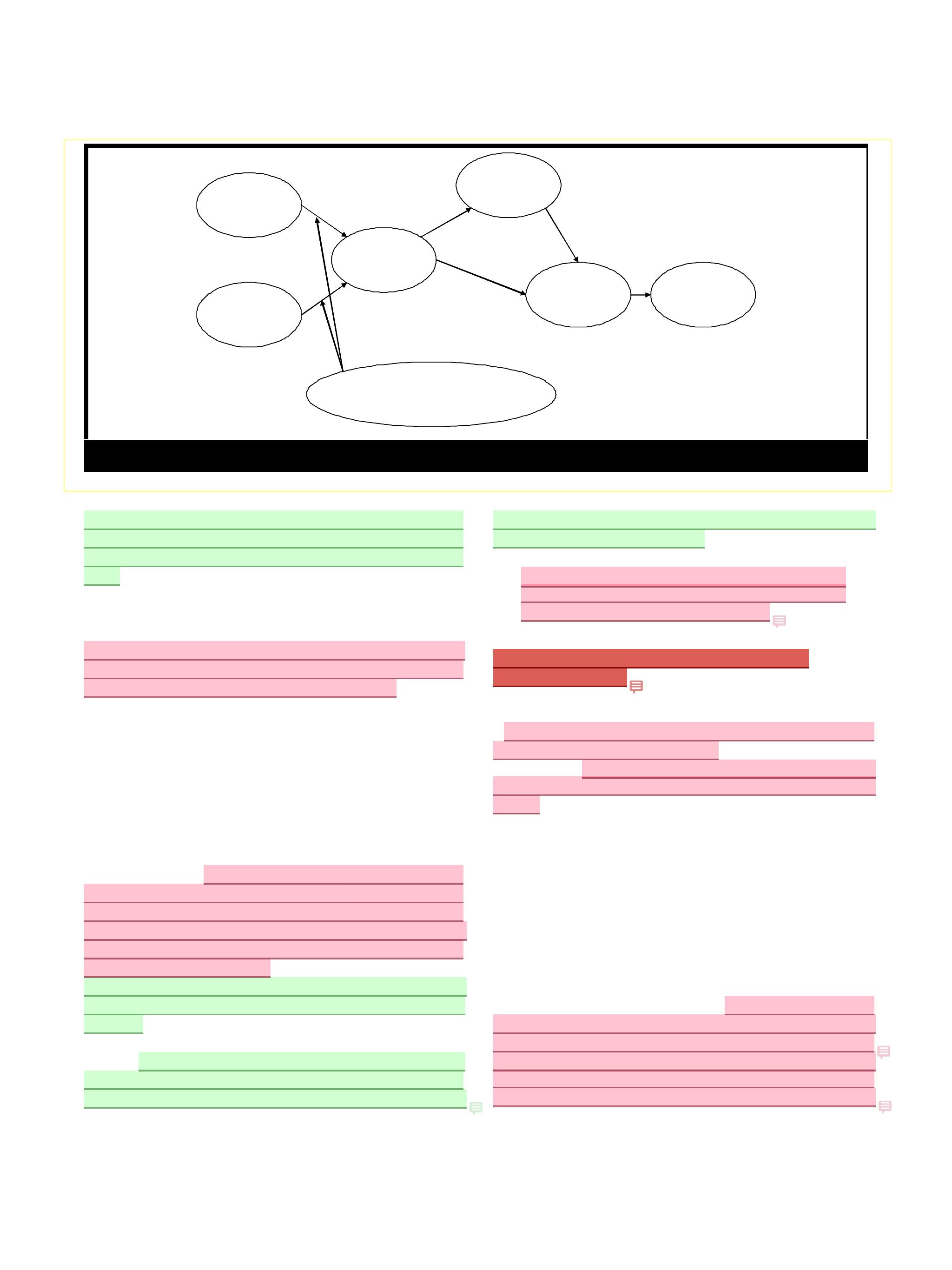
The research model is shown in Figure 1. When interacting
with new or unknown Internet stores, people could engage in
several cognitive processes to build initial trust (Bigley and
Pearce 1998; McKnight et al. 2002; McKnight et al. 1998;
Stewart 2003; Zucker 1986). They include reputation cate-
gorization, unit grouping, and institutional assurances.
Positive reputation categorization occurs when the trustor
associates the trustee (e.g., an Internet store) with a brand of
good reputation (Stewart 2003). Unit grouping is the extent
that the trustee is perceived to share common characteristics
and identity with the trustor. Members of one’s unit group are
viewed more positively, and are considered more trustworthy
than nonmembers (Kramer et al. 1996; Zucker et al. 1996).
When the trustee is an inanimate object (e.g., a firm), trust can
still be formed using unit-grouping through a trust trans-
ference process involving an animate entity (Stewart 2003;
Swan and Nolan 1985) that shares commonalities with the
trustor. Institutional assurances refer to the regulations, guar-
antees by accreditation agencies (e.g., TRUSTe, VeriSign),
and legal recourses available. Thus, web strategies that
employ reputation categorization, unit grouping, or institu-
tional assurances should lead to increase in initial trust
(McKnight et al. 1998). We controlled for institutional
assurances in this study, because one needs an adequate level
of such assurances (e.g., privacy protection, TRUSTe) to be
willing to make online purchases (Cheskin Research and
Studio Archetype/Sapient 1999).
Reputable Website Affiliation Strategy
and Impact of Culture
Reputation-building mechanisms derived from reputation-
categorization cognitive processes could build trusting beliefs
(McKnight et al. 1998). In the absence of direct information
on a trustee’s reputation (e.g., a new online store), trust can be
built through reputable third parties such as Yahoo (Pavlou
and Gefen 2004; Stewart 2003). Specifically, according to
attribution theory (Kelley 1973), a trustor (e.g., potential
shopper) could transfer his/her trust in an associated reputable
entity (e.g., reputed physical store or Internet firm) to the
trustee (e.g., unknown Internet store) (Stewart 2003; Swan
and Nolan 1985).
Lim et al. (2004), conducting a multiple-country analysis,
found that Hofstede’s (2001) cultural dimension of indi-
vidualism–collectivism is a major predictor of Internet
shopping rates. Indeed, individualism–collectivism has been
considered to be the most significant dimension explaining
differences across cultures (Triandis 2001), and referred to as
the “deep structure” underlying differences across cultures
(Greenfield 2000). It is also the central theme in almost 100
studies published annually on cultural differences (Triandis
and Suh 2002).
MIS Quarterly Vol. 33 No. 3/September 2009 493
Sia et al./Web Strategies to Promote Internet Shopping
Figure 1. Research Model
Individualism–collectivism is a country-level measure of the
extent to which the self-concept of people in a country
revolves around that of the individual, or of a member of a
group (Clark 1990; Hofstede 1991). Table 1 summarizes the
characteristics and behaviors of individualists and collectivists
identified in past cultural research.
Portal affiliation involves the display of a reputable third-
party portal logo on the website of an Internet store as a
hyperlink to permit verification of the relationship. Being a
widely recognized and reputable portal carries a certain
amount of assurance about its quality. A reputable portal that
has been popularly used for portal affiliation to build trust is
Yahoo (Cheskin Research and Studio Archetype/Sapient
1999) in websites such as Buydig.com, Millionbuy.com,
Diamondsafe.com, Kidsmartliving.com, Yesasia.com, etc.
Despite being reputable, portals like Yahoo and MSN are
organizations that are likely to be viewed by people outside
the United States as U.S.-based portals, and thus as external,
out-group entities. Collectivists tend to have lesser trust and
positive opinions of out-group members. They also tend to
behave less favorably towards out-group entities, compared
to individualists. Thus, the overall impact of portal (e.g.,
Yahoo) affiliation on trust building is likely to be dampened
somewhat among collectivists. In contrast, individualists tend
to view both in-group and out-group members more equitably,
and are unlikely to view and treat out-group members less
favorably (Doney et al. 1998; Hui et al. 1991; Iyengar et al.
1999; Lee and Ward 1998; Triandis 1972; Triandis and Suh
2002). Thus, although portal (e.g., Yahoo) affiliation is
expected to be effective for building trusting beliefs in both
individualists and collectivists, given the differential treatment
that individualists and collectivists are likely to accord to out-
group entities, it is expected that
H1: The positive impact of portal (Yahoo) affiliation
on trusting beliefs will be stronger in individualistic
cultures than in collectivistic cultures.
Peer Customer Endorsement Strategy and
Impact of Culture
Peer customer endorsement to deliver endorsement messages
is a web strategy that invokes unit grouping, which appeals to
social similarity to build initial trust (McKnight et al. 1998;
Zucker 1986). People tend to exhibit more positive attitudes
and trust toward those who share the same characteristics as
they do (Doney et al. 1998; Kramer et al. 1996; Zucker et al.
1996). When members of peer groups, whom people deem to
be trustworthy, trust a certain entity, other members are likely
to transfer their trust to that entity (Stewart 2003; Swan and
Nolan 1985), particularly if these peers had interacted with
that entity in the past (e.g., as customers). This trust-building
process, through positive buying experiences, could also
apply to the Internet (Ba and Pavlou 2002).
Social psychologists (Prentice et al. 1994) have noted the
existence of specific (common-bond) in-groups and general-
ized (common-identity) in–groups. Specific in–groups are
those with personal ties to and relationships with the indi-
vidual, such as family members, relatives, and friends.
Generalized in-groups, are based on large group memberships
and social categories to which an individual has a symbolic
attachment, such as fellow university students or other local
Portal
Affiliation
Peer Customer
Endorsement
Trusting
Beliefs
Attitude
Intention to
Buy
Actual
Buying
Culture
(Individualist versus Collectivist)
H1
H2
Portal
Affiliation
Peer Customer
Endorsement
Trusting
Beliefs
Attitude
Intention to
Buy
Actual
Buying
Culture
(Individualist versus Collectivist)
H1
H2
494 MIS Quarterly Vol. 33 No. 3/September 2009

Sia et al./Web Strategies to Promote Internet Shopping
Table 1. Characteristics of Individualism and Collectivism
Individualism Collectivism Reference
The needs, values, and goals
of the individual take
precedence over the groups’
(individual focus).
The needs, values, and goals of the group
take precedence over the individual (group
focus).
Gudykunst 1997; Gudykunst et
al. 1992
Collectivists tend to emphasize inter-
dependence and sociability. They tend to
have more positive attitudes towards and
trust people from their in-group (family
members or peers) than those from their
out-group.
Doney et al. 1998; Lee and
Ward 1998
Collectivists are more strongly influenced by
the opinions of referent others, and respond
more positively to social proof arguments
that their peers have also acted similarly
(e.g., “your peers have complied with this
request”) than people from individualistic
cultures.
Cialdini et al. 1999
Individualists tend to view both
in-group and out-group
members more equitably, and
are unlikely to view and treat
out-group members less
favorably than collectivists.
Collectivists behave more favorably toward
in-group members.
Doney et al. 1998; Hui et al.
1991; Iyengar et al. 1999; Lee
and Ward 1998; Triandis 1972;
Triandis and Suh 2002
Collectivists have greater preference for
interacting with in-group members.
Gudykunst et al. 1992;
Oyserman et al. 2002; Wheeler
et al. 1989
Individualists are characterized
by autonomy, self-reliance, and
emotional distance from in-
groups. They emphasize
efficiency and directness.
Grimm et al. 1999; Triandis
2001
Individualists value consistency
and stability of attitudes more
than collectivists.
Iyengar et al. 1999; Triandis
1972; Triandis and Suh 2002
Individualists display greater
willingness to trust out-group
members than collectivists.
Yamagishi 1988; Yamagishi et
al. 1998
Collectivists tend to make group-based
decisions rather than individual decisions.
They tend to place greater importance on,
and react in accordance to, the opinions of
in-group members, such as their peers.
Triandis et al. 1985
At the individual level, people who exhibit predominantly individualistic characteristics are termed idiocentrics, whereas those with collectivistic
characteristics are called allocentrics (Triandis et al. 1985).
MIS Quarterly Vol. 33 No. 3/September 2009 495

Sia et al./Web Strategies to Promote Internet Shopping
youths. The advertising industry has relied heavily on gener-
alized in-group endorsements (Bearden and Etzel 1982;
Blythe 1997).
Peer customer endorsements involving generalized in-group
endorsements could help people, regardless of whether they
are individualists or collectivists, to build trust in Internet
stores, because they could provide valuable advice in the
absence of first-hand experiences. Nevertheless, people in
collectivistic cultures tend to respond even more positively to
endorsements by both specific and generalized in-group peers,
than those in individualistic cultures. This is because they
respond to social proof arguments (that their peers have also
acted similarly) to a greater extent than individualists
(Cialdini et al. 1999). In contrast, people in individualistic
cultures are relatively more autonomous in decision-making,
and are likely to be comparatively less responsive to peer
endorsements than collectivists. Thus,
H2: The positive impact of peer customer endorse-
ment on trusting beliefs will be stronger in collecti-
vistic cultures than in individualistic cultures.
Extending the Nomological Network: Trusting
Beliefs, Attitudes, and Behavior
Trusting beliefs in an Internet store could significantly affect
consumers’ attitudes toward and willingness to engage in
Internet shopping (Hoffman et al. 1999; Keen 1997; Ratna-
singham 1998; Taylor Nelson Sofres 2001). Research has
shown that for many Internet stores (e.g., bookstores, travel
agents, etc.), increased trust leads to a more positive attitude,
positive attitude leads to greater intention to purchase from
the Internet stores (Jarvenpaa et al. 2000), and greater inten-
tion leads to more actual buying behavior (Lim et al. 2006).
Furthermore, a direct causal link between behavioral beliefs
and behavioral intentions was found in several studies on
Internet shopping (Gefen et al. 2003; Koufaris 2002;
McKnight et al. 2002). Thus, while the main focus of this
research is on the impact of culture on trust-building, for
nomological completeness, we extended the research model
to also include the impacts of trusting beliefs on attitudes,
attitudes on buying intentions, trusting beliefs on buying
intentions, and intentions on actual buying behavior in both
cultures (see Figure 1).
Research Methodology
Identical experimental procedures, task, and web technologies
were used in each research site (large universities in Australia
and Hong Kong) to ensure comparability of results.
Experimental Task
The task asked subjects (students) to decide on whether or not
to purchase required course textbooks from an online book-
store, iBook, a realistic activity for them. Subjects were
offered incentives to purchase a textbook, yet faced a certain
amount of risk and uncertainty, to create a realistic online
shopping experience. The benefits included a discount of 5
percent off the university bookstore’s purchase price, the
convenience of classroom delivery, and a lucky draw with a
3 percent chance of winning. The risks included the unknown
reputation of iBook, the need to reveal some personal infor-
mation including, most importantly, one’s bank account
number, and the possibility that iBook may renege on its
promise to deliver the textbooks. The experiments were con-
ducted during the first week of the new semesters. The
research protocol required the administrator (a research asso-
ciate) to introduce iBook as a relatively new online bookstore.
Subjects were explicitly told that the university was not
affiliated with iBook and was not liable for its actions. After
browsing through the website, subjects had to individually
decide whether or not they would purchase the textbooks
(alternative ways to obtain the textbooks included buying
from the university or other bookstores, or buying used copies
from senior students).
Subjects
Subjects were second- and third-year undergraduate IS-major
business school students recruited from each research site.
The research sites comprised a large university in Australia
and another in Hong Kong. Subjects belonged to the age
group that formed a substantial portion of Internet shoppers
(i.e., 18 to 34 years old) (Scarborough Research 2008), and
were likely to exhibit the behaviors of actual Internet
shoppers. To encourage participation, all subjects were paid
the equivalent of one hour of a research student’s pay (about
U.S.$7) for every hour of their time. In all, 166 and 128
subjects were recruited from the Australian and Hong Kong
sites respectively.
Research Design
Hypothesis H1 is tested using Yahoo affiliation, and
Hypothesis H2 is tested using peer endorsement (generalized
in-group peers), both in the context of book buying at iBook
across Australia (individualistic culture) and Hong Kong
(collectivistic culture).
496 MIS Quarterly Vol. 33 No. 3/September 2009
Sia et al./Web Strategies to Promote Internet Shopping
The experiment was a 2 × 2 × 2 factorial design: culture
(individualism: Australia, versus collectivism: Hong Kong),
portal affiliation (Yahoo affiliation versus no Yahoo affilia-
tion) and peer customer endorsement (endorsement versus no
endorsement). Trust building across cultures was investigated
through the theoretical lens of the individualism–collectivism
dimension, which is among Hofstede’s (1991) five dimen-
sions of culture. This is because the practical web strategies
of Yahoo portal affiliation and peer customer endorsement are
associated with out-group versus in-group recommendations,
which could invoke people’s individualistic/collectivistic
tendencies. Australia and Hong Kong were chosen as they
differ widely on the individualism index (Australia: 90; Hong
Kong: 25; difference of 65) (Hoftsede 2001). Each peer
endorsement and portal affiliation treatment in Australia had
between 41 and 42 subjects, while each treatment in Hong
Kong had 32 subjects. Appendices A and B show screen
shots of the condition with both peer customer endorsement
and portal affiliation used in the Australian and Hong Kong
research sites, respectively. To provide a certain level of
institutional assurances (Cheskin Research and Studio Arche-
type/Sapient 1999), security seals of approval (TRUSTe) and
privacy policy statements were controlled by having all
website versions (at both sites) display the same TRUSTe
logo and privacy statement.
There were three independent variables. Individualism–
Collectivism is varied using Australia and Hong Kong sub-
jects. Peer Customer Endorsement is varied by having web-
for an actual purchase made if a subject completed the direct
debit authorization form, “0” otherwise). Items measuring
trusting beliefs, attitude, and buying intention were adapted
to the context of iBook from Jarvenpaa et al. (2000) and Lim
et al. (2006) to ensure content validity. Actual buying
behavior is an objective measure. All items were reflective
indicators of the respective underlying constructs, with the
exception of the trusting beliefs construct that was formative
in nature (i.e., the items form a latent construct and could vary
independently from one another within the construct) (Chin
and Gopal 1995; Cohen et al. 1990; Petter et al. 2007). This
is because the latter included measures that probed the
subjects’ beliefs about iBook concerning benevolence,
integrity, and ability, the three subdimensions of trusting
beliefs (Mayer et al. 1995). All items were measured using a
seven-point Likert scale.
Variables such as age and gender of subjects, Internet
experience, and Internet usage, which could potentially affect
Internet behaviors, were controlled through randomization;
and experience with Internet shopping, which could affect
trusting beliefs (Gefen 2000), was included in the research
model as a control variable.
Experimental Procedures
Each session, held in a computer laboratory, had between 20
and 30 subjects. The experimental procedure consisted of a
preexperimental briefing, the experiment proper, and a