Virtualization
Gamal Kassem, GUC

Introduction to virtualization
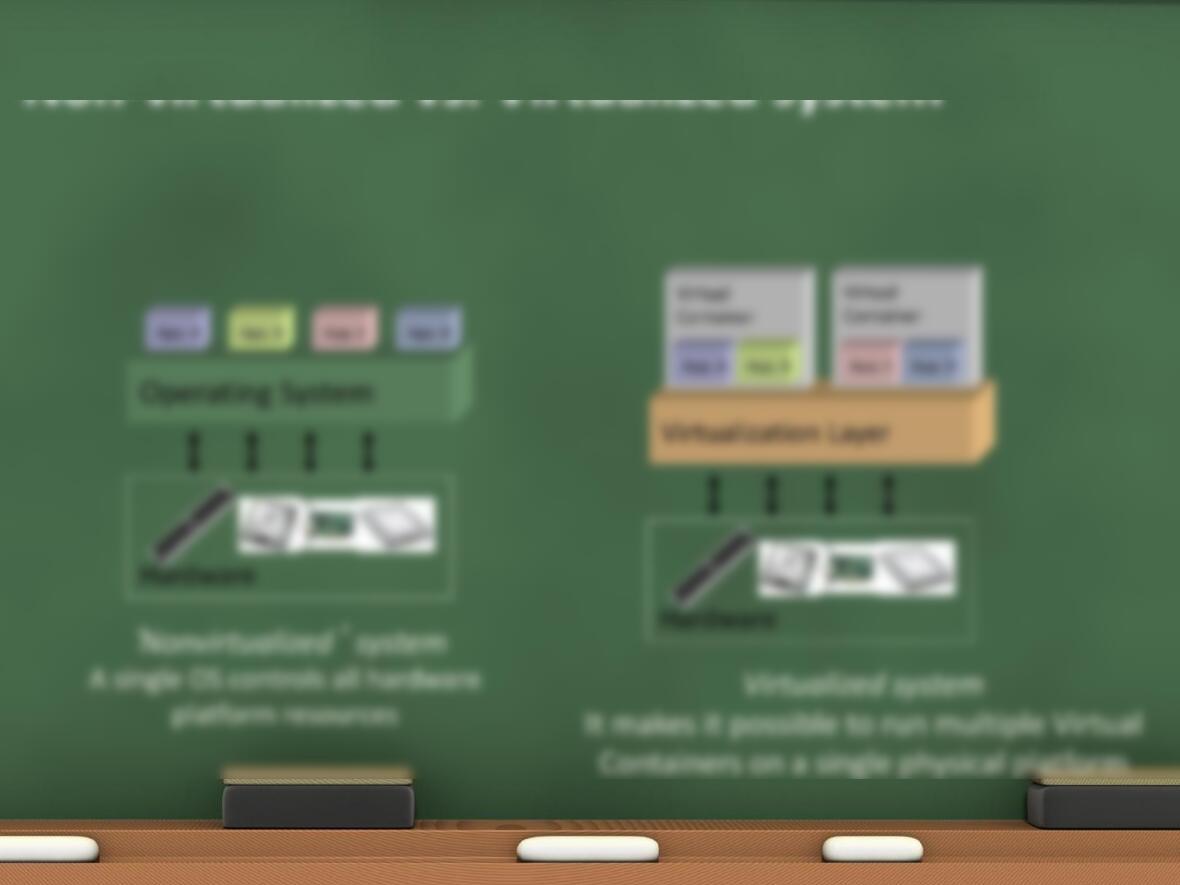
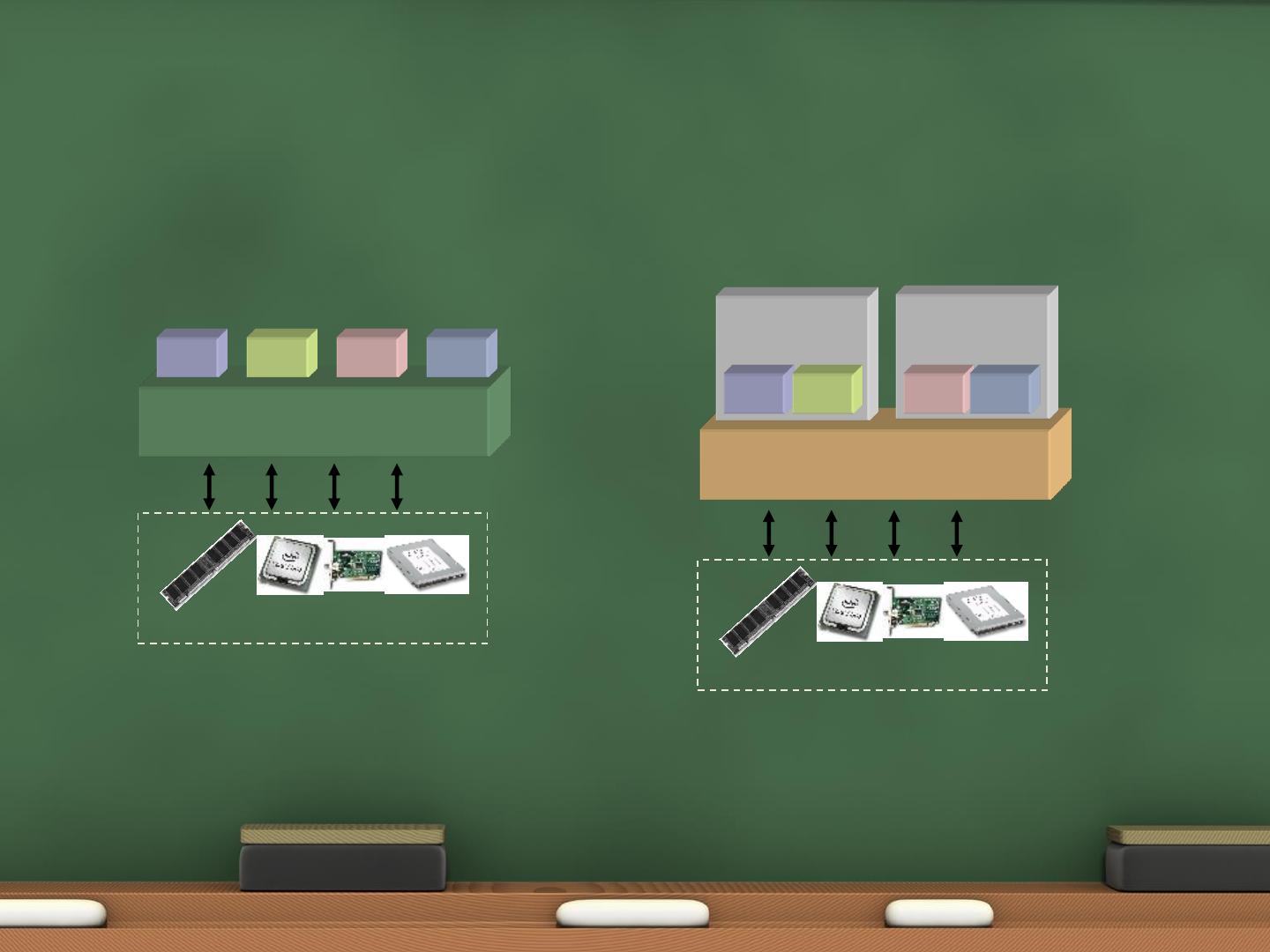
•Virtualization will create a virtual version of a device or
resource, such as a server, storage device, network or even
an operating system where the framework divides the
resource into one or more execution environments.
•Virtualization is part of an overall trend in enterprise IT
that includes autonomic computing, which is a scenario in
which the IT environment will be able to manage itself
based on perceived activity, and utility computing, in
which the processor
’
s power is seen as a utility that
clients can pay for only as needed.
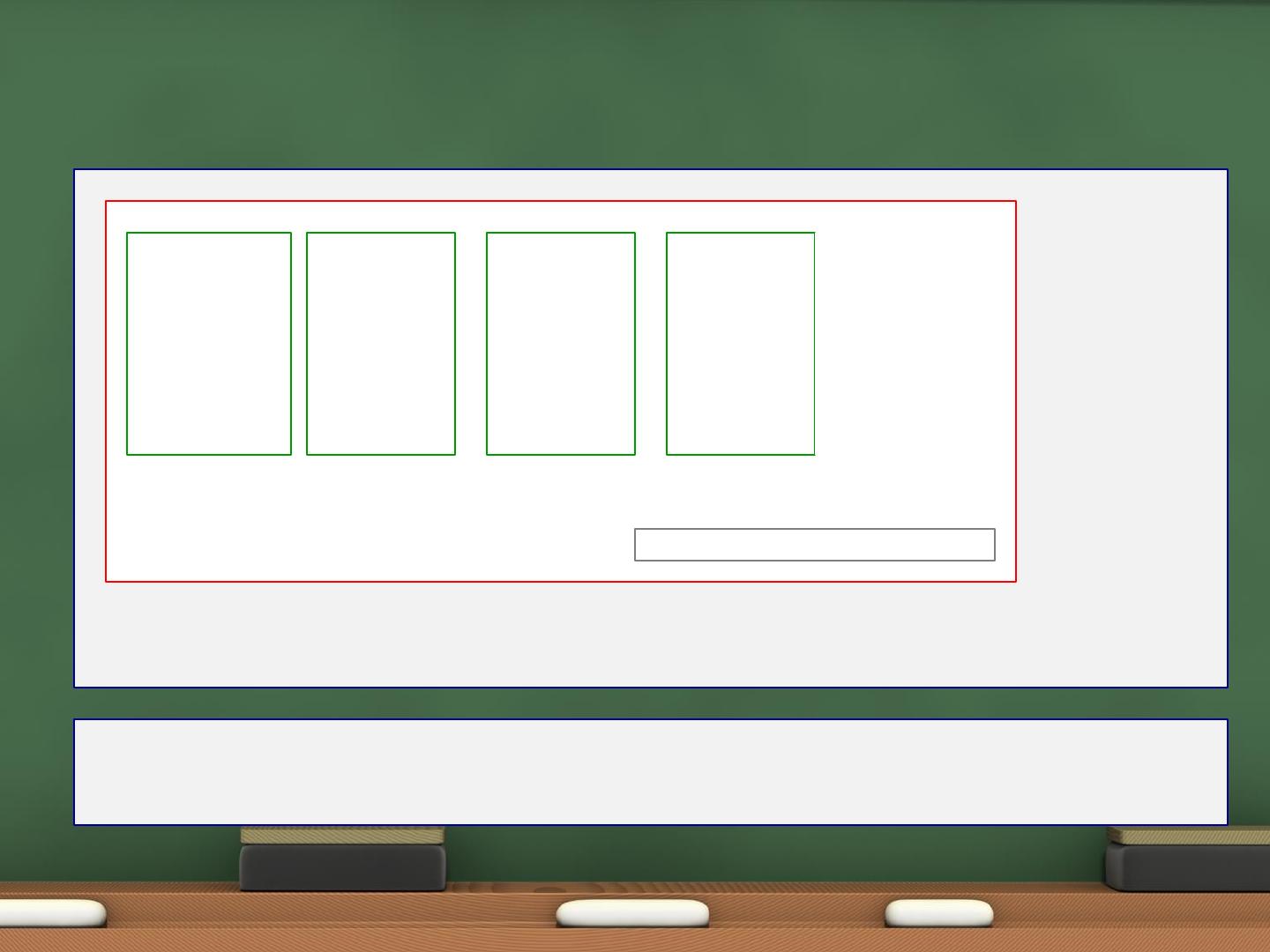
Virtualization Technology
Physical Hardware
Virtualization Hardware
Virtualization Software
VM 1
Windows
8
VM 2
Windows
2000
VM 3
Unix
VM 4
Linux
Other
Applications
Host Operating System

Four trends
•Mainframe computers have offered the ability to host multiple
operating systems for more than 40 years. So, virtualization is
not “NEW”!
•However, four trends have converged in recent years that have
allowed virtualization to migrate from the exclusive domain of
mainframe computers to a front-and-center position in today’s
computing environment. These four trends are:
•Hardware is under utilized
•Data centers are running out of space
•Energy costs are skyrocketing
•System administration cost are increasing

1. Hardware is under utilized
•Moore’s Law demonstrates increasing returns –the amount of
improvement in processor speed grows over time because there
is an exponential increase in capacity for every generation of
processor improvement.
•Many data centers today have machines running at only 10–15%
of the total processing capacity. In other words, 85-90% of the
machine
’
s power is unused.
•In a way, Moore’s Law is no longer relevant to most companies
because they are not able to take advantage of the increased
power available to them.
•By applying virtualization, organizations can improve their
hardware utilization from 10-15% to 70-80%.

2. Data centers are running out of space
•20 years ago the vast majority of business processes were paper
based. Computerized systems were confined to so-called
backroom automation: payroll, accounting, and the like.
•Partly due to Moore’s Law, this has all changed with business
process after business process being captured in software and
automated. The rise of the Internet has exponentially increased
this transformation as well.
•As an example, Boeing’s airplane, the 787 Dreamliner, is being
designed and built using CAD software to design all aspects of the
plane. All communication about the project uses the CAD designs, no









VDI