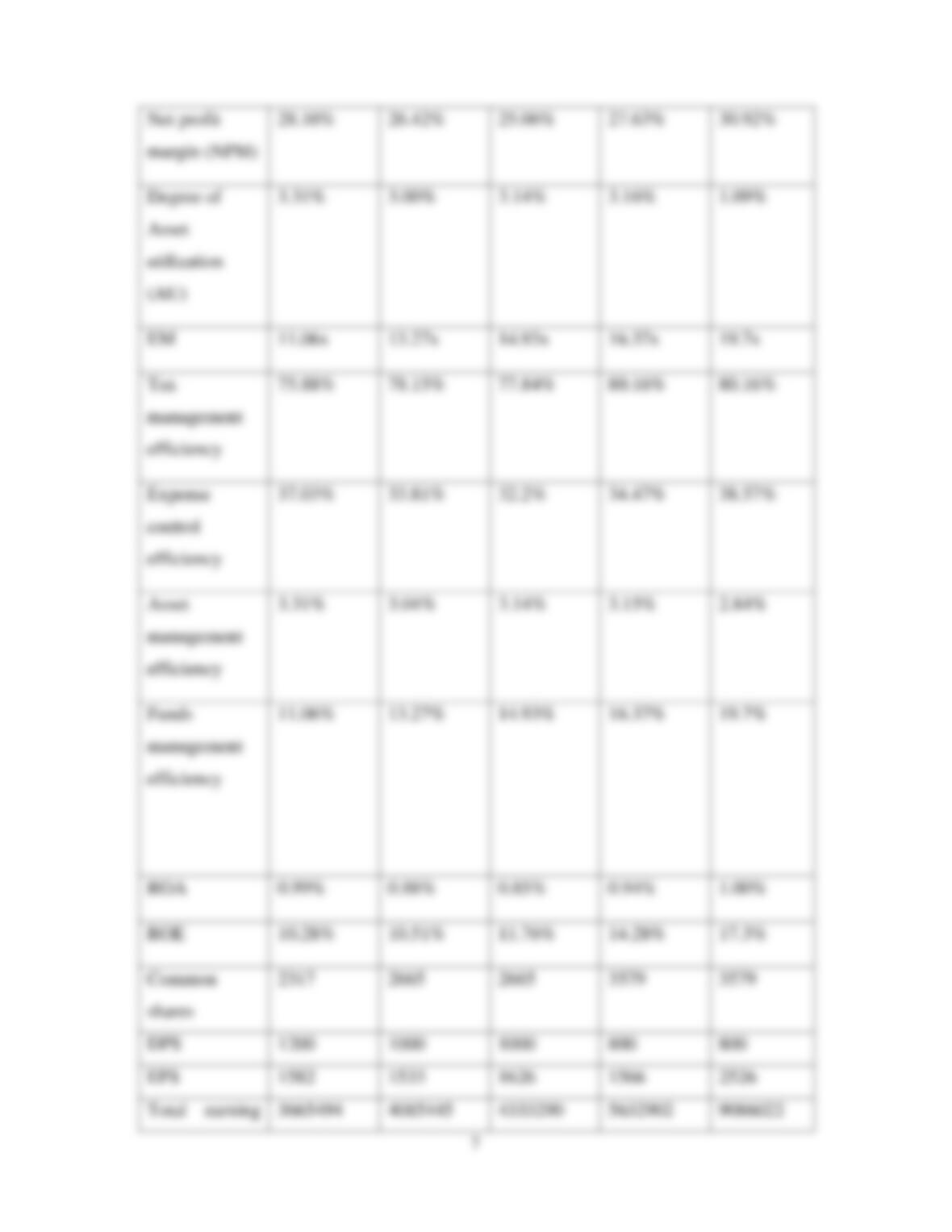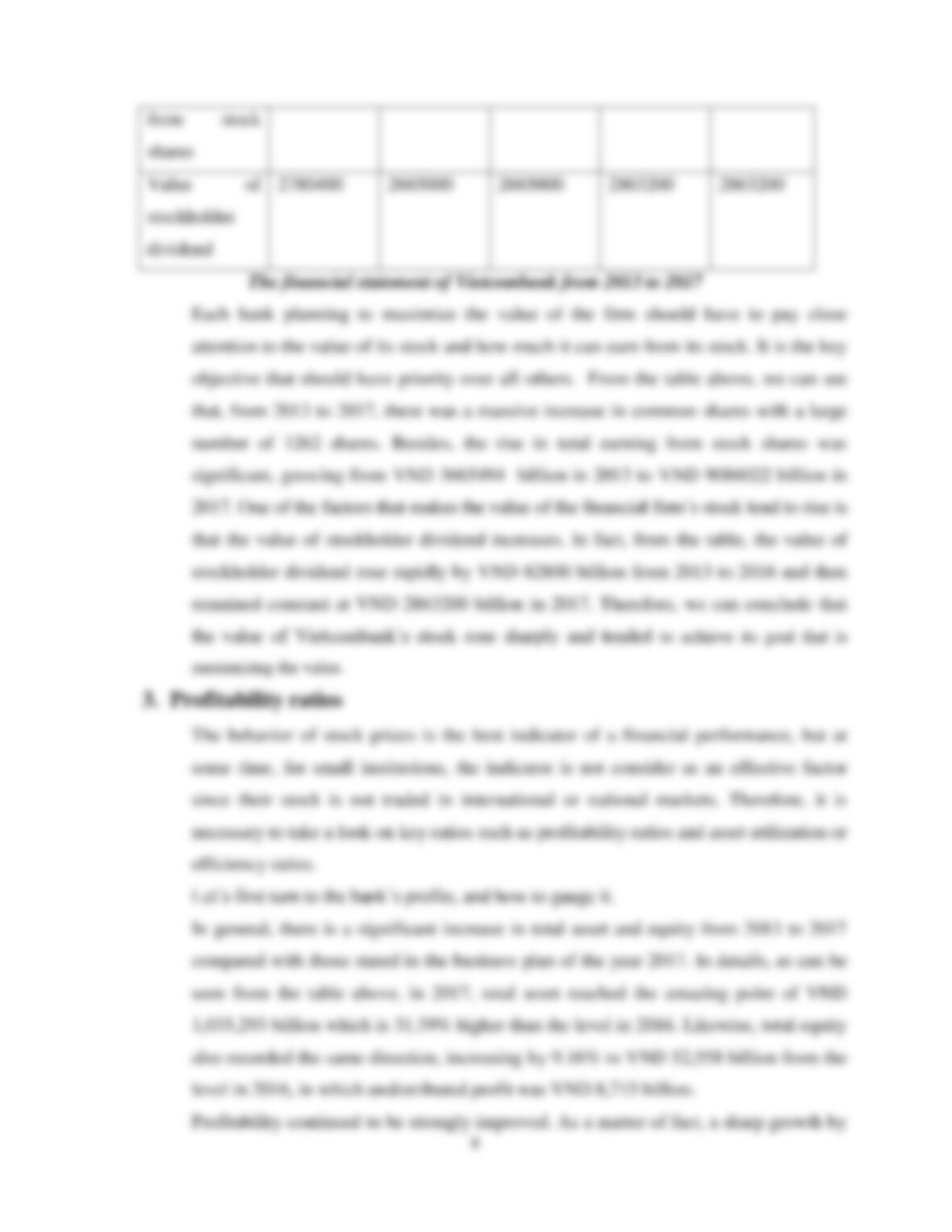
1
HANOI UNIVERSITY
FACULTY OF MANAGEMENT AND TOURISM
VIETCOMBANK IN VIETNAM
Tutor: Dao Thanh Binh
Subject: Bank Management
Class: Tut 2 – FB 16
Date: 2nd December, 2018
Hanoi – 2018

2
PEER EVALUATION FORM
Team
member
ID
Task given (in written form)
Task given
(%)
Mark
perform
Nguyễn Thị
Ánh
1604040015
Task 1: Insurance and other services
Task 2: Asset utilization or efficiency
ratios
Task 3: One of the goals of interest rate:
Hedging
Task 4: Tier 1, 2 Capital
Task 5: Conclusion, Reference
100%
Phạm Thị
Ngọc Diệp
1604040021
Task 1: Non-Financial Services
Task 2: The impact of size on
Performance
Task 3: One of the greatest asset liability
management challenges
Task 4: Tier 1, 2 Capital
Task 5: Individual loans
100%
Dương Thị
Mai Ly
1604040067
Task 1: Financial Services
Task 2: Determining long-range
objectives, Maximizing the value of the
firms.
Task 3: Introduction, Conclusion,
Limitations of duration gap
Task 4: How much capital is really
needed, Regulatory approach to
evaluating capital needs
Task 5: Corporate loans
100%

3
Hoàng Thị
Thanh Thảo
1604040101
Task 1: Introduction, Commercial
banking
Task 2: Maximizing the value of the firm
Task 3: The concept of duration and
Using duration to Hedge against Interest
rate risk
Task 4: Tier 1, 2 Capital
Task 5:Liquidity management
100%
TABLE OF CONTENTS
4
INTRODUCTION………………………………………………………………………………………………………………. 1
DISCUSSION …………………………………………………………………………………………………………………….. 1
I. MAIN SERVICES ……………………………………………………………………………………. 1
1. Financial Services …………………………………………………………………………………………………. 1
1.1. Commercial Banking …………………………………………………………………………………………….. 1
1.2. Investment Baking ………………………………………………………………………………………………… 2
1.3. Other Financial services …………………………………………………………………………………………. 3
1.4. Insurance ……………………………………………………………………………………………………………… 4
2. Non-Financial Services ………………………………………………………………………………………….. 4
II. BANK PERFORMANCE …………………………………………………………………………. 6
1. Determining long-range objectives ……………………………………………………….…………………. 6
2. Maximizing the value of the firm ……………………………………………………………………………. 6
3. Profitability ratios …………………………………………………………………………………………………. 8
4. Asset utilization or efficiency ratios …………………………..………………………………………….. 10
5. The impact of size on Performance ……………………………………………………………………….. 11
III. BANK RISKS …………………………………………………………………………………………. 12
1. One of the greatest asset liability management challenges ……………………………………………………….. 12
1.1 Force determining Interest Rates …………………………………………………………………………… 13
1.2 The measurement of Interest Rates ……………………………………………………………………….. 13
1.3 The components of interest rate …………………………………………………………………………….. 14
1.4 Risk premium……………………………………………………………………………………………………… 14
1.5 Yield curves ……………………………………………………………………………………………………….. 14
1.6 The maturity gap and the yield curve …………………………………………………………………….. 15
2. One of the goals of interest rate Hedging ………………………………………………………………………………. 15
5
3. The concept of duration and Using duration to Hedge against Interest rate risk ………………………….. 16
4. The limitations of duration gap ……………………………………………………………………………………………. 18
IV. BANK CAPITAL ……………………………………………………………………………………. 19
1. How much capital is really needed? ……………………………………………………………………………………… 19
2. Regulatory approach to evaluating capital needs …………………………………………………………………….. 19
3. Tier 1, 2 Capital ………………………………………………………………………………………………….. 20
3.1. Basel I ……………………………………………………………………………………………………………….. 20
3.2. Base II ……………………………………………………………………………………………………………….. 22
V. BANK LOANS ……………………………………………………………………………………….. 23
1. Liquidity management …………………………………………………………………………………………. 23
2. Corporate loans …………………………………………………………………………………………………… 26
2.1. Short- term loans to business firms………………………………………………………………………… 27
2.2. Long-term loans to business firms …………………………………………………………………………………. 27
3. Individual loans ………………………………………………………………………………………………….. 28
CONCLUSION ………………………………………………………………………………………………………………... 29
REFERENCE …………………………………………………………………………………………………………………… 30
1
INTRODUCTION
Joint Stock Commercial Bank for Foreign Trade of Vietnam, commonly referred to as
Vietcombank, was founded on April 1, 1963 and span off from the Foreign Exchange
Bureau of State Bank of Vietnam. Being the first state commercial bank chosen for
pilot privatization by the Government, Vietcombank officially came in to operation on
June 2, 2008 after effectively implementing the equitization plan through Initial Public
Offering. On June 30, 2009, Vietcombank’s stocks (code: VCB) formally listed on the
Ho Chi Minh Stock Exchange (HOSE).
During more than a half-century of growth and advancement in the market, VCB has
contributed significantly to the stability and development of national economy,
maintaining the role of a major foreign trade bank in encouraging efficient domestic
economic growth as well as influencing substantially on regional and global financial
community. As a result, Vietcombank became one of the biggest commercial bank in
Vietnam with more than 15,000 employees, in excess of 500 branches/ transaction
offices/ representative office/ affiliates both in Vietnam and abroad. In details, it
comprises Head Office in Hanoi, 1 representative office in Singapore, 1
representative office in Ho Chi Minh city, 101 branches, over 395 exchange
workplaces all over the country, 3 subsidiaries in Vietnam, 2 subsidiaries in other
countries and 4 joint ventures. Additionally, Vietcombank has also built up an
Autobank framework with over 2,300 ATMs and more than 43,000 merchants
nationwide. Bank’s operations are usually supported by a network of over 1,726
correspondent banks from 158 nations and territories all over the world. (Giới thiệu
chung về Vietcombank)
DISCUSSION
I. MAIN SERVICES
1. Financial Services
1.1. Commercial Banking
In terms of financial services offered, Vietcombank provides customers with different
ones. First of all, it plays a dominant role as a commercial bank. That means it raises
funds primarily by checkable deposits, saving deposits and time deposits. According to
Baoviet securities, 2017, Vietcombank’s total asset was 788.169 billion VND in 2016
with an enormous number of 590.398 billion in customer’s deposits, which and
452.683 billion VND in lending customers, which was expected to reach 678.98 billion
VND and 528.019 billion VND in 2017, respectively. From the data above, it cannot be
denied that Vietcombank was one of the largest commercial banks in Vietnam with a
fast growing speed (Báo cáo về ngân hàng TMCP Ngoại Thương Việt Nam của
BaoViet Securities)
1.2. Investment Baking
Secondly, Vietcombank is seriously considered as an investment banking. As regards
this business, instead of taking deposits and then lending them out, the bank is
referred to a different type of intermediary helping a corporation issue securities with
two steps. The first is to advise the corporate which type of securities will be issued
maybe stocks or bonds. The next step is underwrite the securities issued by purchasing