USER-GENERATED CONTENT
MIS 6204
Introduction:
User-generated content (UGC) may go by many names such as consumer-generated content or
consumer-generated media, but regardless of what you prefer to call it, the creation of content by
end-users of an online system that is made publicly available to other end users is seemingly
ubiquitous in today’s internet-connected world. Blogs, social media, and openly editable
educational websites such as Wikipedia are only a few examples of the abundant outlets
available for end-users to contribute content and provide feedback. Moreover, either through
implicit or explicit incentives, UGC only continues to be growing. While the implementation of
UGC on the web is very broad, one of the most powerful uses of UGC lies in harnessing its
effects on consumer purchasing behavior and applying these effects through online marketing
and e-commerce. Research shows that consumers are more likely to trust other consumers’
opinions over brand advertisements. This leveraging of consumer trust through consumer-
generated advertisements has enormous implications for growing brand equity and long-term
profitability. For these reasons, UGC is a boon to marketing managers, providing them with a
relatively low-cost and highly effective mass-marketing alternative when implemented correctly.
Nevertheless, there are important risks associated with the decision to use UGC as part of a
marketing strategy, and it is the manager’s responsibility to take steps to minimize these risks
and to weigh the potential costs and benefits of a particular UGC decision alternative.
Ultimately, the proper execution of UGC in marketing campaigns can yield impressive
outcomes. In our discussion of UGC, we provide real-world examples of both successful and
unsuccessful UGC-based marketing campaigns, as well as specify some of the risks associated
with UGC. Moreover, we discuss the steps of effective UGC implementation and the future
implications of user generated content.
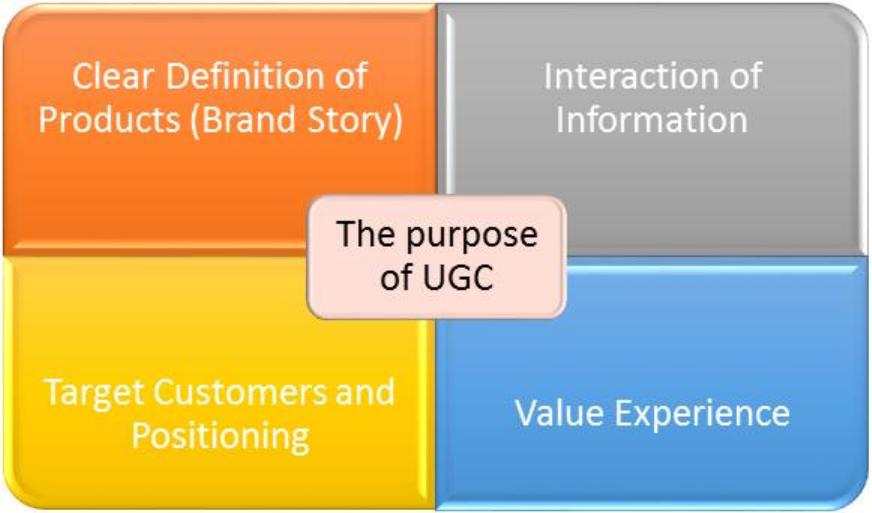
In recent years, online marketing has moved as fast as a light beam. From focusing on
target market, building proper marketing framework, to setting up powerful and professional
tactics, these strategies stand for sustainable, ROI-positive revenue engine for brands. However,
online marketing strategies tend to start with producers or sellers and end up with consumers or
buyers. User Generated Content (UGC) breaks the traditional version of online marketing. In the
background of big data, the manufacture of products and the value of experience come not only
from producers but also consumers. The relationship between firms and the public goes equal,
interactive, and connected. Through UGC, firms guide users to take part in the process of design,
creativity, manufacture, quality control, promotion, and customer service, which form a new
model of management. Meanwhile, firms get feedbacks from UGC to develop implementation,
to upgrade, and to complete evolution. The dynamization and digitization affects the ecosystem
of industry.
In 2011, when Coca Cola brought out their personalized coke bottles, the world and, of course,
Coca Cola lovers, went crazy for those bottles. Dubbed the “Share a Coke” campaign in
Australia, it took off all over the world with bottles named after people in every different
destination. To keep momentum going, Coca Cola invited Australians to vote the most wanted
friends to share Coke, and finally chose the top 15 famous names to be printed on the bottle.
Moreover, they are encouraged to share on Twitter to increase the expose of Coke. In a few
months, the result was amazing: 7% more on the amount of teenager purchase, 5% more on the
willing of drinking Coke, 3% increase on sales amounts, 870% more the shares on Facebook,
380 thousand more customized name bottles, and 76 thousand more shares on name bottles.
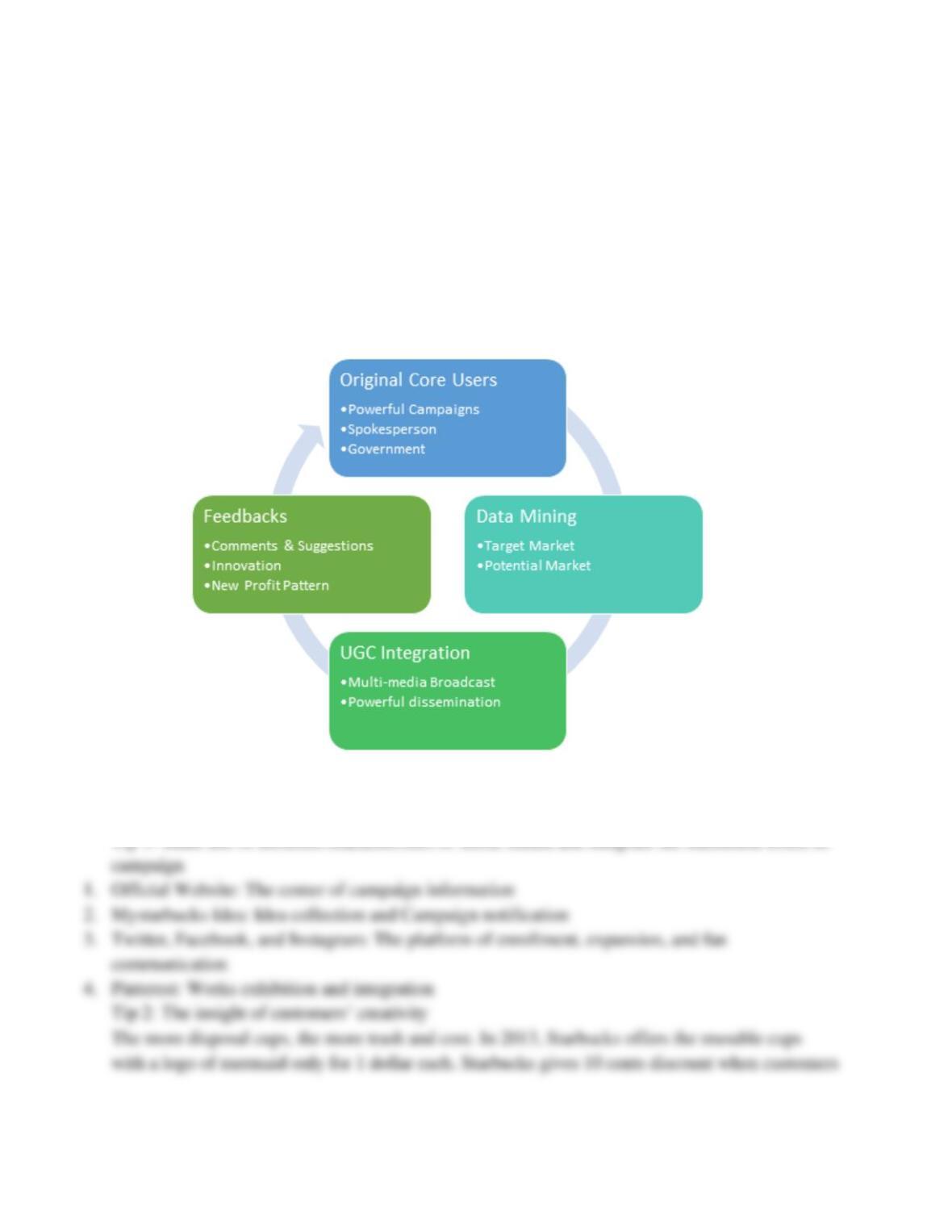
TripAdvisor is a UGC website. Travelers around the world can comment, rate, and evaluate
travel spots, hotels, restaurants, and tour packages to solve information asymmetry between
travelers and travel agents. Those beautiful photos on the hotel booking websites may not react
the real condition and not meet the standard of travelers. Thus, if travelers can post real photos
on their trips, those photos and comments can be more accurate standards to other potential or
future customers. TripAdvisor ran a campaign, called “Don’t just visit” to invite people to record
30-second videos by their own cameras or cellphones to promote travelers using TripAdvisor
website. For instance, “Don’t just visit Chicago, visit TripAdvisor Chicago”.
New Revenue Pattern
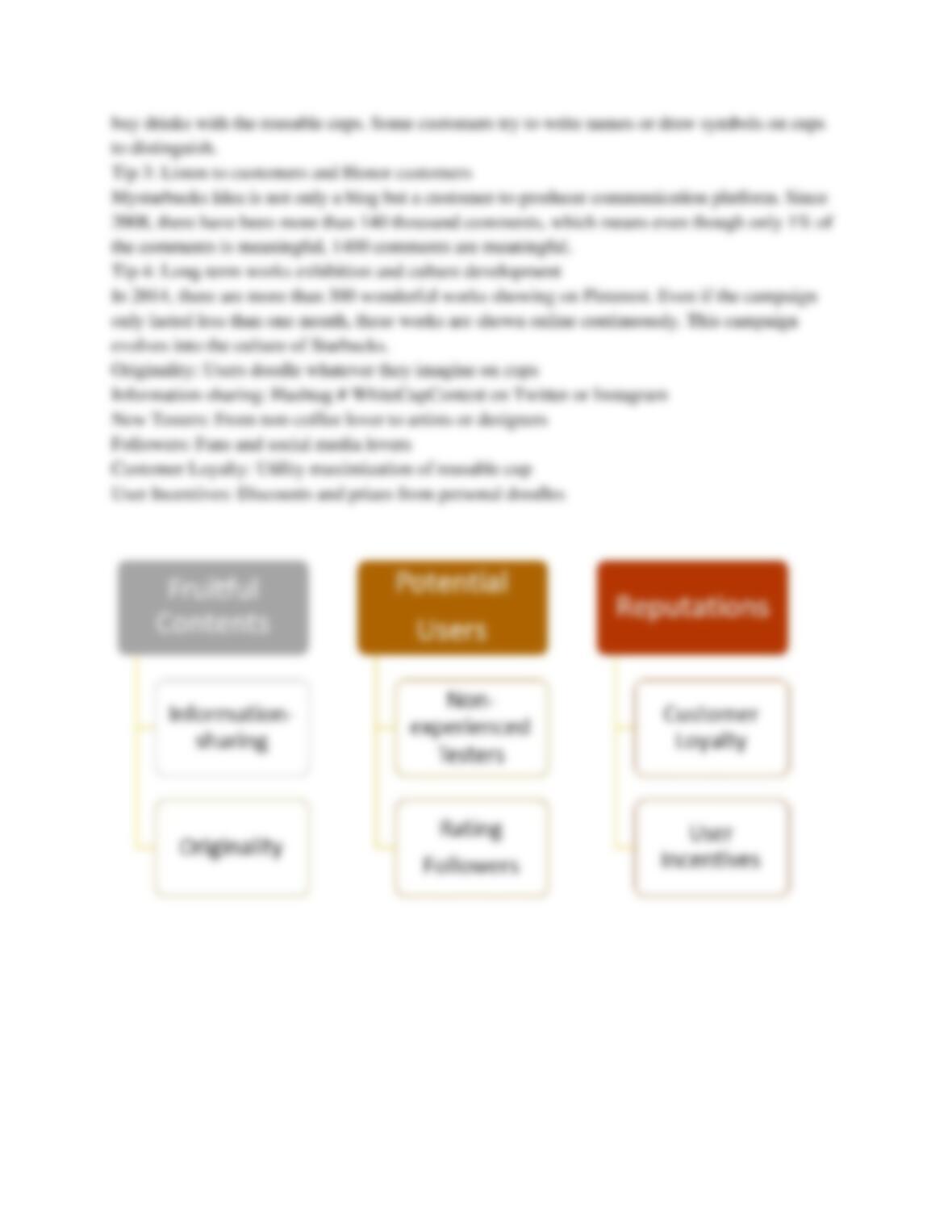
White Cup Contest (Starbucks)