UNSW Business School/ Accounting
ACCT2522 Management Accounting 1
Topic 4: Managing Costs II –
Activity-Based Costing
(“ABC”)

Announcement
On-line Quiz 1:
– Start: Tuesday 8am (Week 4)
– End: Tuesday 11pm (Week 5)

Learning Objectives
1. Explain the problems that may be associated
with traditional/volume-based costing systems.
2. Describe and apply the activity hierarchy of
costs and cost drivers.
3. Describe the views of the ABC model.
4. Use ABC to measure overhead costs and
assign costs to cost objects.
5. Evaluate the appropriateness of ABC.
6. Understand the limitations of ABC.
3

Required Readings
• Langfield-Smith et al. (2018) Chapter 8
including the Appendix
4

1. Product costing and its purposes
Why do we need to cost products?
• Inventory valuations for external reporting
• Decision-making (e.g., pricing and product-mix)
• Planning and control
ACCT2522 considers 2 types of product costing
systems:
1. Traditional or Volume-Based Costing systems
(hereafter to refer as “VBC” systems)
2. Activity-Based Costing
5
Revision
Allocation
Manufacturing
Overhead
6
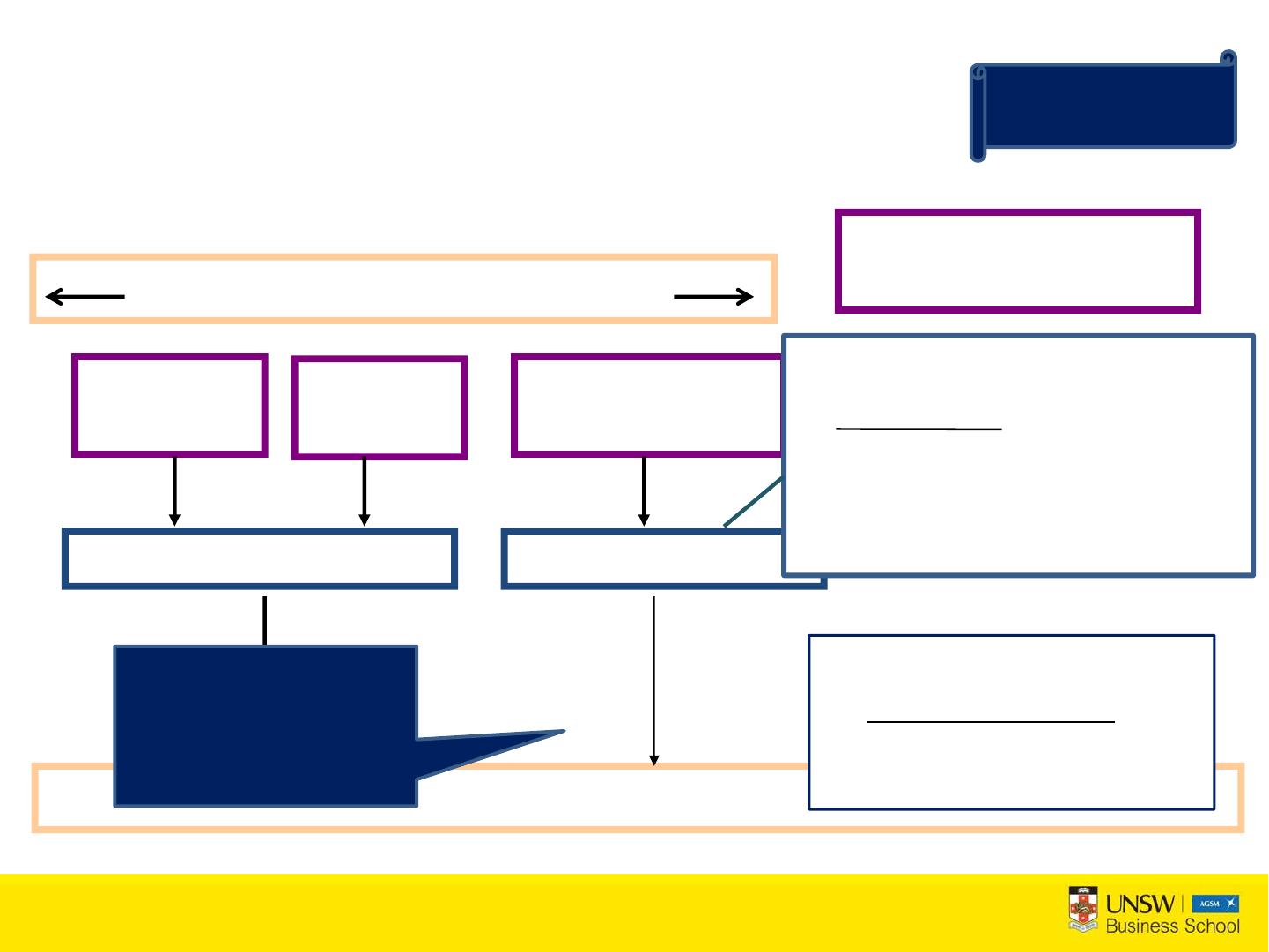
2. Traditional/Volume-Based Costing
System
Manufacturing costs only
Direct
Materials
Product/Service
Directly traced
Direct
Labour
Cost allocation
bases/Cost
drivers
Budgeted
MOH costs
Budgeted
quantity
of cost driver
XActual
quantity
of cost
driver
Volume-based cost
drivers e.g., #DL,
#units produced
Revision
Cost per unit of product
= Total product cost
Number of units
produced.
Non- Manufacturing
OH not assigned!

2. Features of a Volume-based Costing (VBC)
system
• Direct material and direct labour costs are traced to
products
• Manufacturing overhead costs are allocated to products
using a predetermined overhead rate
• Manufacturing overhead rate is calculated using some
measure of production volume
– e.g. Number of products, direct materials, direct labour hours or
direct machine hours
• Non-manufacturing costs are not assigned to products
7
Revision
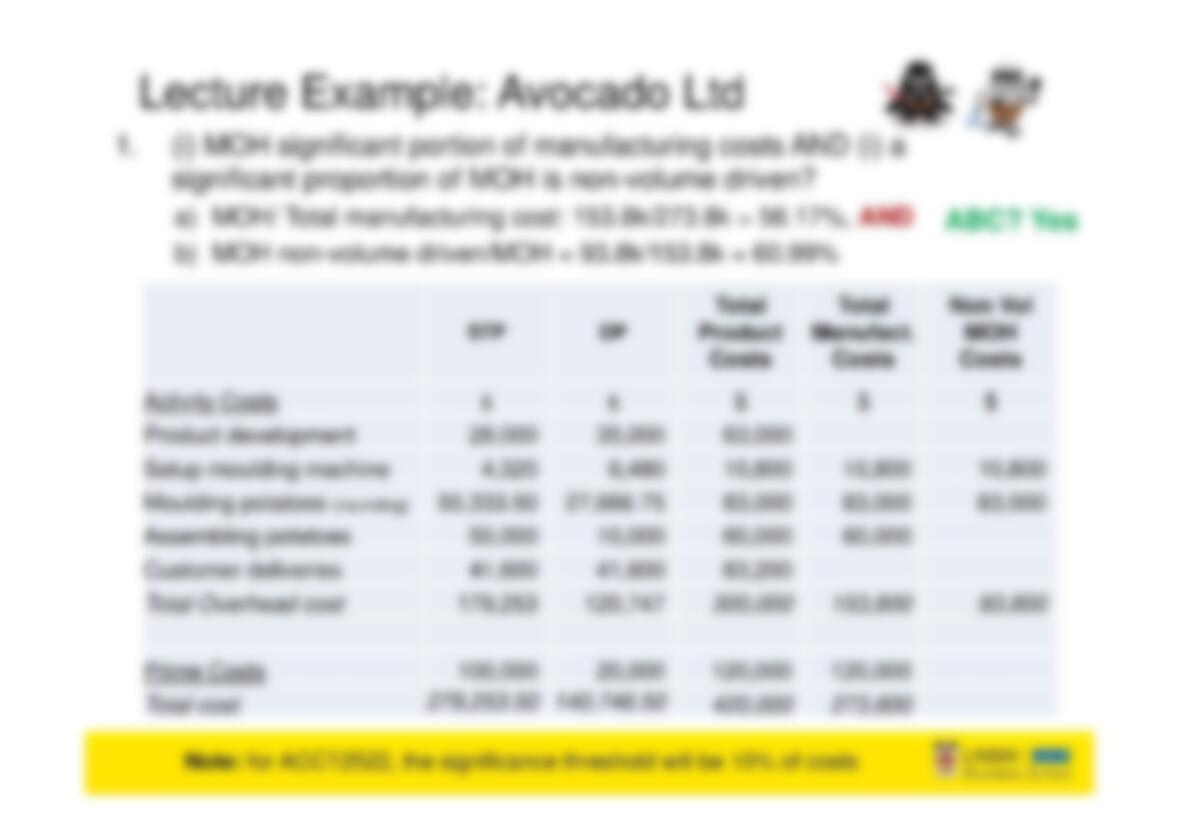
2.1 Indications of Problems with VBC systems
• Proportion of direct labour and direct material costs to
total manufacturing costs decreases
• Non-volume driven MOH costs increases
– Using only unit level cost drivers no longer appropriate
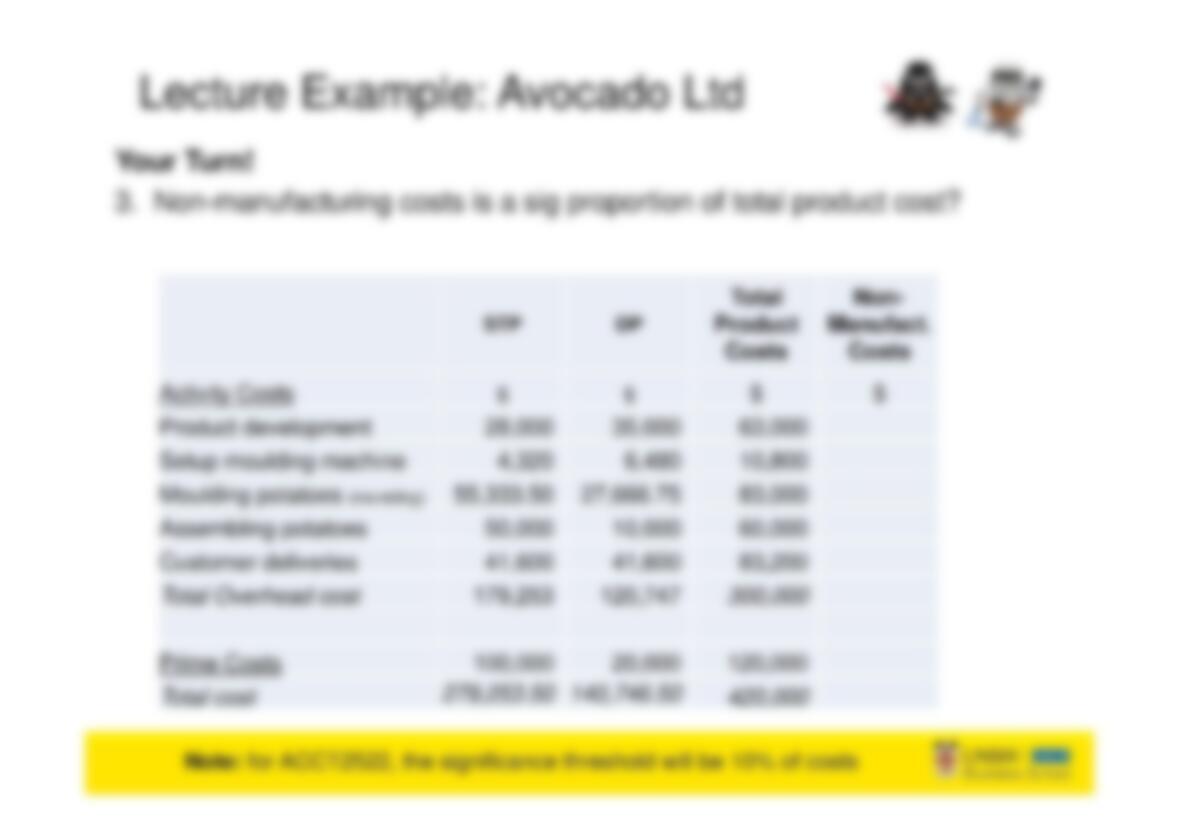
• Non-manufacturing product related costs increases
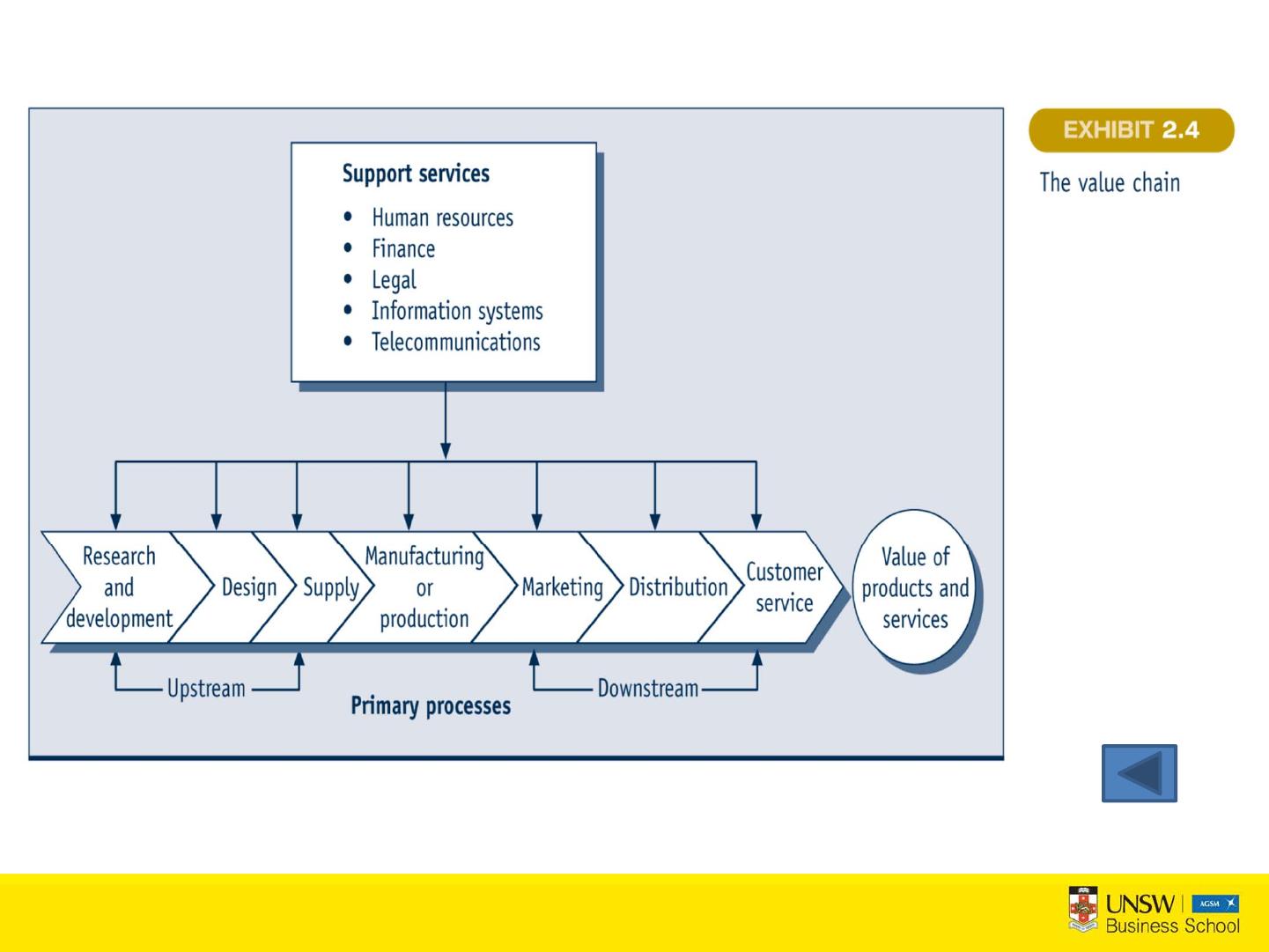
– Increase in upstream and downstream activities
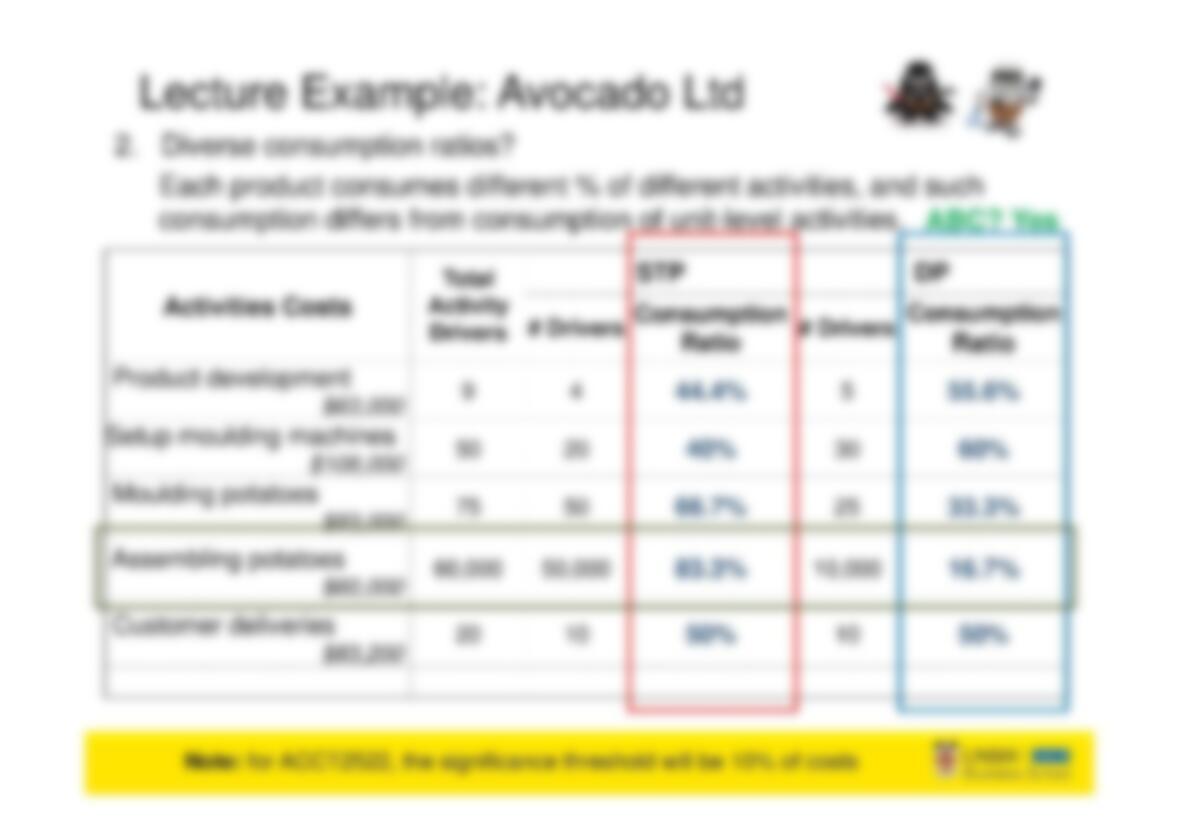
• Product diversity increases
– Increase in non-manufacturing costs
– Products may consume resources differently
oIndicator: consumption ratios (discussed later)
8
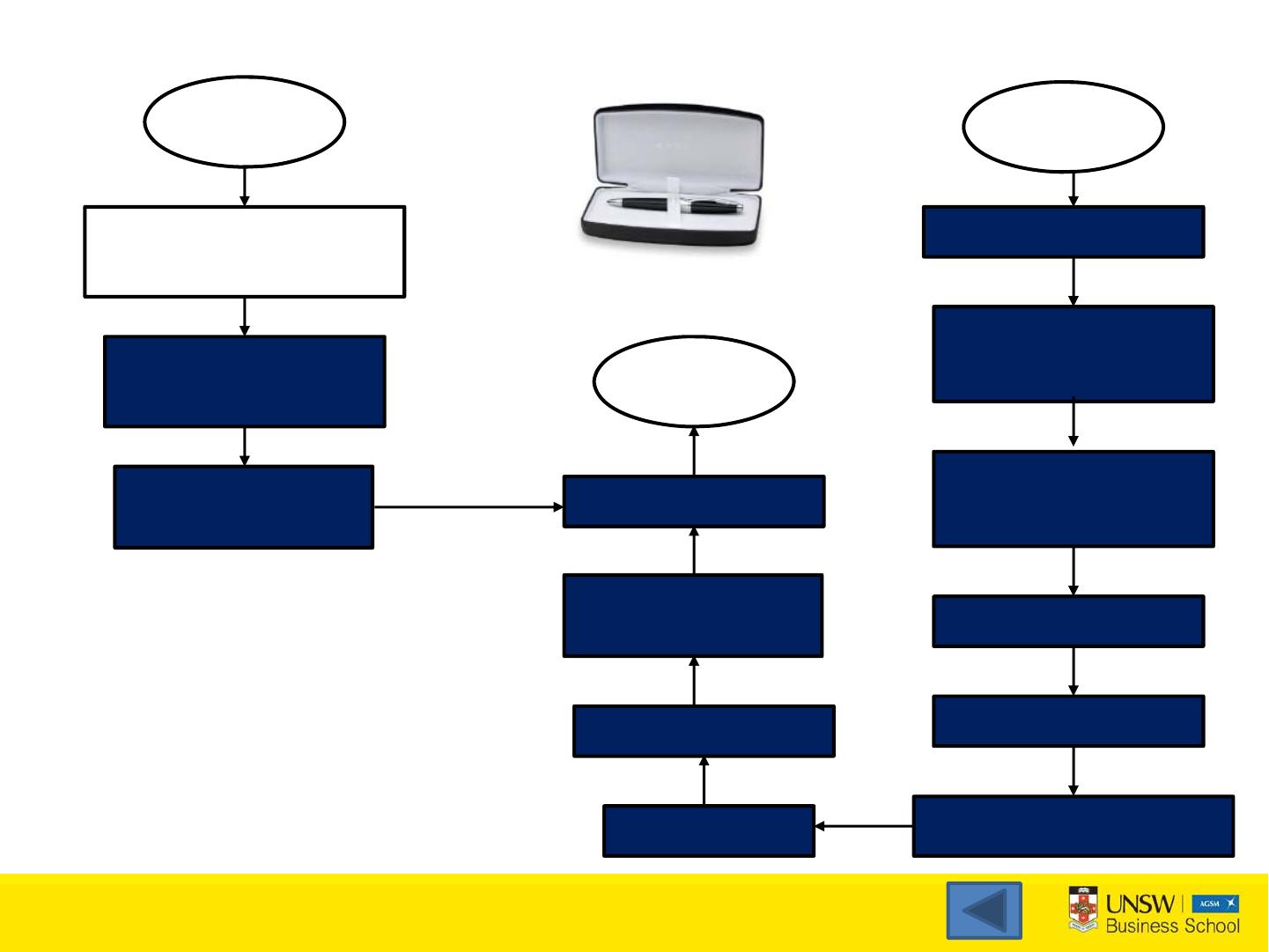
Start
Pouring raw
materials into mixer
Start
Moving to bath
Polishing
Moving to cutting m.
Cutting
Assembling
Mixing and
heating/cooling
Cutting brass
Moving to
moulding m.
Melting discs &
moulding
Cleaning
Moving to
assembly M.
Piping to
assembly M.
End
10
3. Assigning Costs Using Activity-Based
Costing (“ABC”) systems
Features of ABC costing
• A methodology that can be used to:
(i) measure the cost of cost objects (costing view), and
(ii) the performance of activities (activity management view).
• Addresses issues relating to:
– Non-volume driven MOH costs
– Non-manufacturing product-related costs
– Product diversity
11
3.1 Activity hierarchy
•Unit level costs
– Cost relate to activities that are performed for each unit.
•Batch level costs
– Cost relate to activities performed for a group of product units.
•Product level costs