
569
WHY FINANCIAL INSTITUTIONS NEED TO MANAGE
RISK:CHAPTEROVERVIEW
As has been mentioned in previous chapters, a major objective of FI manage-
ment is to increase the FI’s returns for its owners. This often comes, however,
at the cost of increased risk. As discussed in Chapter12, regulators’ evaluation of the
overall safety and soundness of a depository institution (DI) is summarized in the CAMELS
rating assigned to the DI.
1 This chapter provides an overview of the various risks
facing FIs: credit risk, liquidity risk, interest rate risk, market risk, off-balance-sheet
risk, foreign exchange risk, country or sovereign risk, technology risk, operational risk,
and insolvency risk. Table19–1 presents a brief definition of each of these risks. As will
become clear, the effective management of these risks is central to an FI’s performance.
Indeed, it can be argued that the main business of FIs is to manage these risks. As a
result, FI managers must devote significant time to understanding and managing the
various risks to which their FIs are exposed. By the end of this chapter, you will have a
basic understanding of the variety and complexity of the risks facing managers of mod-
ern FIs. In the remaining chapters of the text, we look at the management of the most
important of these risks in more detail.
LG 19-1
1. Where C = capital adequacy, A = asset quality, M = management, E = earnings, L = liquidity, and S = sensitivity
to market risk, and ratings range from 1 (best) to 5 (worst).
OUTLINE
Why Financial Institutions
Need to Manage Risk:
ChapterOverview
Credit Risk
Liquidity Risk
Interest Rate Risk
Market Risk
Off-Balance-Sheet Risk
Foreign Exchange Risk
Country or Sovereign Risk
Technology and Operational Risk
Insolvency Risk
Other Risks and Interaction
among Risks
Types of Risks
Incurred by Financial
Institutions
Risk Management in Financial Institutions
Learning Goals
LG 19-1 Describe the major risks faced by financial institutions.
LG 19-2 Recognize that insolvency risk is a consequence of the other types of risk.
LG 19-3 Understand how the various risks faced by financial institutions are related.
19
chapter
part five
sau61663_ch19_569-587.indd 569sau61663_ch19_569-587.indd 569 6/19/14 3:37 PM6/19/14 3:37 PM
Final PDF to printer

570 Part 5 Risk Management in Financial Institutions
CREDIT RISK
1. Credit Risk —the risk that promised cash flows from loans and securities held by FIs
may not be paid in full.
2. Liquidity Risk —the risk that a sudden and unexpected increase in liability
withdrawals may require an FI to liquidate assets in a very short period of time and
atlowprices.
3. Interest Rate Risk —the risk incurred by an FI when the maturities of its assets and
liabilities are mismatched and interest rates are volatile.
4. Market Risk —the risk incurred in trading assets and liabilities due to changes in
interestrates, exchange rates, and other asset prices.
5. Off-Balance-Sheet Risk —the risk incurred by an FI as the result of its activities related
tocontingent assets and liabilities.
6. Foreign Exchange Risk —the risk that exchange rate changes can affect the value of an
FI’sassets and liabilities denominated in foreign currencies.
7. Country or Sovereign Risk —the risk that repayments by foreign borrowers may be
interrupted because of interference from foreign governments or other political
entities.
8. Technology Risk —the risk incurred by an FI when its technological investments do not
produce anticipated cost savings.
9. Operational Risk —the risk that existing technology or support systems may
malfunction,that fraud that impacts the FI’s activities may occur, and/or that
externalshocks such as hurricanes and floods may occur.
10. Insolvency Risk —the risk that an FI may not have enough capital to offset a sudden
declinein the value of its assets relative to its liabilities.
TABLE 19–1 Risks Faced by Financial Institutions
Credit risk arises because of the possibility that promised cash flows on financial claims
held by FIs, such as loans and bonds, will not be paid in full. Virtually all types of FIs face
this risk. However, in general, FIs that make loans or buy bonds with long maturities are
more exposed than are FIs that make loans or buy bonds with short maturities. This
means, for example, that depository institutions and life insurers are more exposed to
credit risk than are money market mutual funds and property–casualty insurers, since
depository institutions and life insurers tend to hold longer maturity assets in their portfo-
lios than mutual funds and property–casualty insurers. For example, commercial and
investment banks incurred billions of dollars of losses in the mid- and late 2000s as a
result of credit risk on subprime mortgages and mortgage-backed securities. If the princi-
pal on all financial claims held by FIs were paid in full on maturity and interest payments
were made on their promised payment dates, FIs would always receive back the original
principal lent plus an interest return—that is, they would face no credit risk. Should a bor-
rower default, however, both the principal loaned and the interest payments expected to
be received are at risk.
Many financial claims issued by individuals or corporations and held by FIs promise
a limited or fixed upside return (principal and interest payments to the lender) with a high
probability, but they also may result in a large downside risk (loss of loan principal and
promised interest) with a much smaller probability. Some examples of financial claims
issued with these return-risk trade-offs are fixed-coupon bonds issued by corporations and
bank loans. In both cases, an FI holding these claims as assets earns the coupon on the bond
or the interest promised on the loan if no borrower default occurs. In the event of default,
however, the FI earns zero interest on the asset and may well lose all or part of the principal
lent, depending on its ability to lay claim to some of the borrower’s assets through legal
bankruptcy and insolvency proceedings. Accordingly, a key role of FIs involves screening
and monitoring loan applicants to ensure that FI managers fund the most creditworthy
loans (see Chapter20).
credit risk
The risk that the promised
cash flows from loans and
securities held by FIs may
notbe paid in full.
sau61663_ch19_569-587.indd 570sau61663_ch19_569-587.indd 570 6/19/14 3:37 PM6/19/14 3:37 PM
Final PDF to printer
Chapter 19 Types of Risks IncurredbyFinancial Institutions 571
EXAMPLE 19–1 Impact of Credit Risk on an FI’s Equity Value
Consider an FI with the following balance sheet:
Cash $ 20m Deposits $ 90m
Gross loans 80m Equity (net worth) 10m
$ 100m $ 100m
Suppose that the managers of the FI recognize that $5 million of its $80 million in
loans is unlikely to be repaid due to an increase in credit repayment difficulties of its
borrowers. Eventually, the FI’s managers must respond by charging off or writing down
the value of these loans on the FI’s balance sheet. This means that the value of loans
falls from $80m illion to $75million, an economic loss that must be charged off against
the stockholder’s equity capital or net worth (i.e., equity capital falls from $10million to
$5million). Thus, both sides of the balance sheet shrink by the amount of the loss:
Cash $ 20m Deposits $ 90m
Gross loans 80m Equity after charge-off 5m
Less: Loan loss – 5m
Loans after charge-off 75m
$ 95m $ 95m
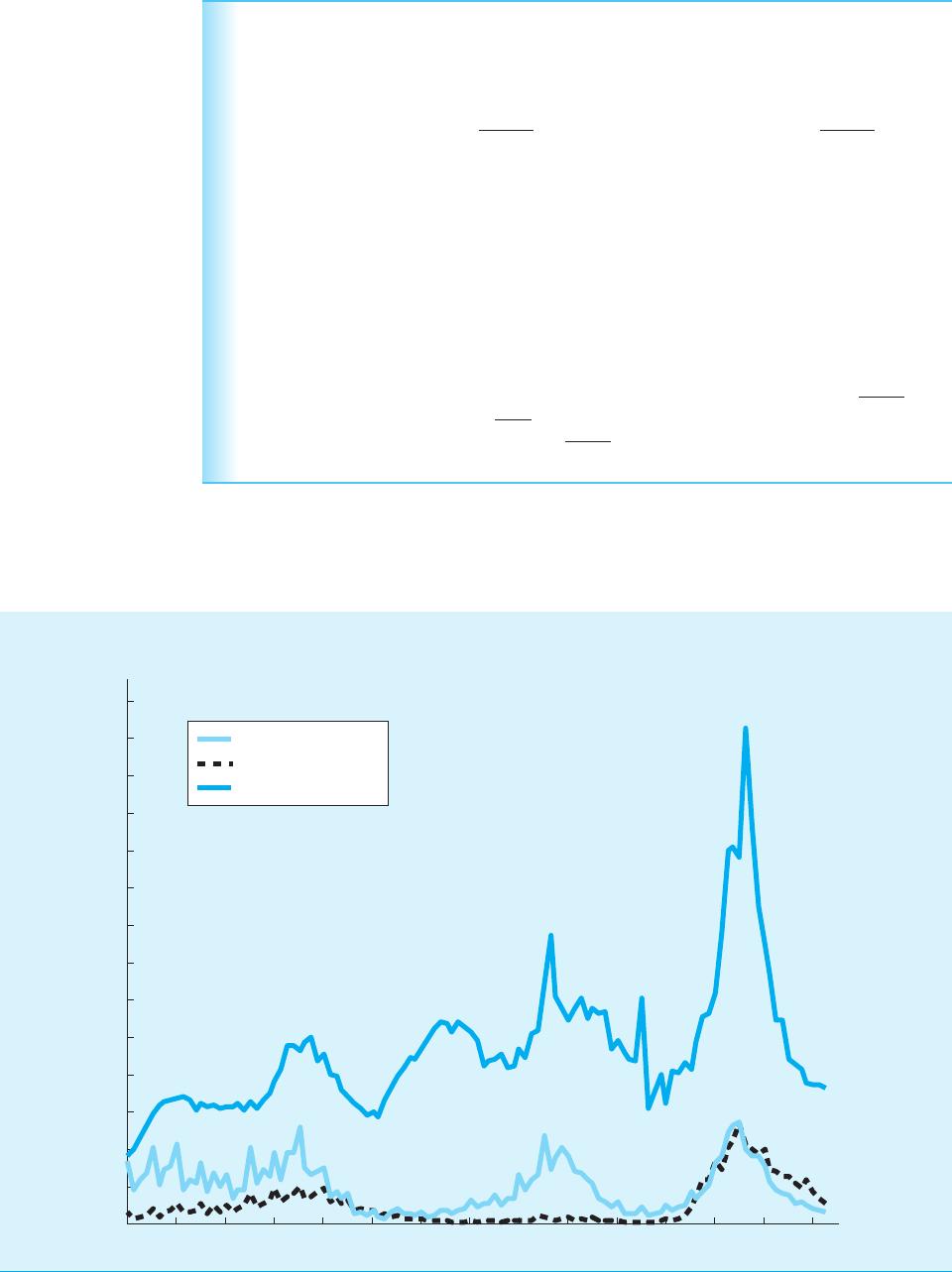
Figure 19–1 Charge-off Rates for Commercial Bank Lending Activities
Net Charge-off
Rate (%)
1984 1986 1988 1990 1992 1994 1996 1998 2000 2002 2004 2006 2008 20122010
6.0
0.0
1. 0
2.0
3.0
4.0
5.0
7. 0
8.0
9.0
10.0
11. 0
12.0
13.0
14.0
Year
C&I Loans
Real Estate Loans
Credit Card Loans
Source: FDIC, Quarterly Banking Profile, various issues. www.fdic.gov
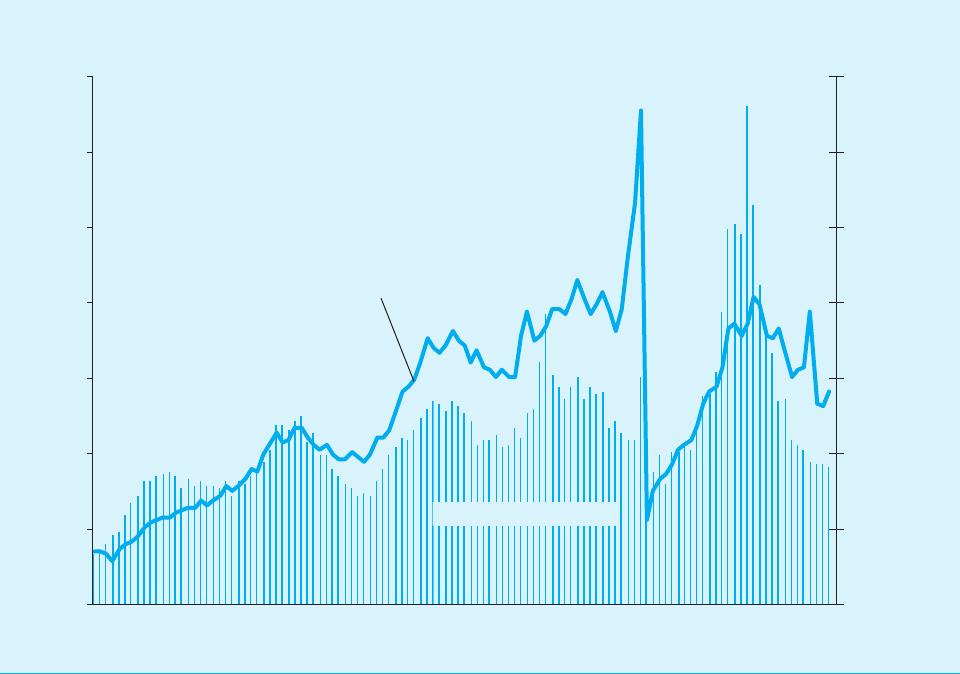
The effects of credit risk are evident in Figures19–1 and 19–2 , which show com-
mercial bank charge-off (or write-off) rates (loans charged off as a percentage of total
sau61663_ch19_569-587.indd 571sau61663_ch19_569-587.indd 571 6/19/14 3:37 PM6/19/14 3:37 PM
Final PDF to printer
572 Part 5 Risk Management in Financial Institutions
loans) for various types of loans between 1984 and 2013. Notice, in particular, the high
rate of charge-offs experienced on credit card loans throughout this period. Indeed, credit
card charge-offs by commercial banks increased persistently from the mid-1980s until
late 1993 and again from 1995 through early 1998. While high relative to real estate and
commercial and industrial (C&I) loan charge-off rates, by 1999, credit card charge-offs
leveled off, and they even declined after 1999. With the downturn in the U.S. economy
and an impending change in bankruptcy laws making it more difficult to declare bank-
ruptcy, credit card charge-offs rose rapidly in 2001 and remained high through 2004.
Note particularly that in October 2005, the Bankruptcy Reform Act was signed into law.
This act makes it more difficult for consumers to declare bankruptcy. As a result, there
was a surge in bankruptcy filings in the summer and early fall of 2005 just before the
new rules went into effect and a huge drop-off in bankruptcy filings just after the enact-
ment of the new rules. The financial crisis of 2008–2009 and the resulting economic
recession produced a huge surge in credit card charge-off rates, which rose to an all-time
high of 13.21percent in March 2010. Despite these losses, credit card loans (including
unused balances) extended by commercial banks continued to grow, from $1.856t rillion
in March 1997 to $4.367trillion in September 2008. As of September 2013, credit card
loans had fallen to $3.261trillion.
Even as losses due to credit risk increase, financial institutions continue to willingly
give loans. This is because the FI charges a rate of interest on a loan that compensates for
Figure 19–2 Credit Card Loss Rates and Personal Bankruptcy Filings
0
100
200
300
400
500
600
700
0
2
4
6
8
10
12
14
1984
1986
1988
1990
1992
1994
1996
1998
2000
2002
2004
2006
2008
2012
2010
Year
Net Charge-off
Rate (%)
Number of Bankruptcy
Filings (thousands)
Net charge-off rate (%)
Number of bankruptcy
filings (thousands)
Source: FDIC, Quarterly Banking Profile, various issues. www.fdic.gov
sau61663_ch19_569-587.indd 572sau61663_ch19_569-587.indd 572 04/08/14 10:59 AM04/08/14 10:59 AM
Final PDF to printer

Chapter 19 Types of Risks IncurredbyFinancial Institutions 573
the risk of the loan. Thus, an important element in the credit risk management process is its
pricing. Further, the potential loss an FI can experience from lending suggests that FIs
need to collect information about borrowers whose assets are in their portfolios and to
monitor those borrowers over time. Thus, managerial (monitoring) efficiency and credit
risk management strategies directly affect the returns and risks of the loan portfolio. More-
over, one of the advantages that FIs have over individual investors is their ability to diver-
sify credit risk exposures from a single asset by exploiting the law of large numbers in their
asset investment portfolios. Diversification across assets, such as loans exposed to credit
risk, reduces the overall credit risk in the asset portfolio and thus increases the probability
of partial or full repayment of principal and/or interest. In particular, diversification reduces
individual firm-specific credit risk , such as the risk specific to holding the bonds or loans
of General Motors, while still leaving the FI exposed to systemic credit risk , such
as factors that simultaneously increase the default risk of all firms in the economy
(e.g., an economic recession).
Chapter20 describes methods to measure the default risk of individual bonds
and loans and investigates methods to measure the risk of portfolios of such
claims. Chapter24 discusses various methods—for example, loan sales and loan
reschedulings—used to manage and control credit risk exposures.
firm-specific credit risk
The risk of default for the
borrowing firm associated with
the specific types of project
risk taken by that firm.
systemic credit risk
The risk of default associated
with general economywide
or macroconditions affecting
allborrowers.
DO YOU UNDERSTAND:
1 . Why credit risk exists for FIs?
2. How diversification affects an FI’s
credit risk exposure?
LIQUIDITY RISK
Liquidity risk arises when an FI’s liability holders, such as depositors or insurance
policyholders, demand immediate cash for the financial claims they hold with an FI or when
liquidity risk
sau61663_ch19_569-587.indd 573sau61663_ch19_569-587.indd 573 04/07/14 3:00 PM04/07/14 3:00 PM
Final PDF to printer
sau61663_ch19_569-587.indd 574sau61663_ch19_569-587.indd 574 6/19/14 3:37 PM6/19/14 3:37 PM
sau61663_ch19_569-587.indd 575sau61663_ch19_569-587.indd 575 6/19/14 3:37 PM6/19/14 3:37 PM

sau61663_ch19_569-587.indd 576sau61663_ch19_569-587.indd 576 6/19/14 3:37 PM6/19/14 3:37 PM

sau61663_ch19_569-587.indd 577sau61663_ch19_569-587.indd 577 6/19/14 3:37 PM6/19/14 3:37 PM

sau61663_ch19_569-587.indd 578sau61663_ch19_569-587.indd 578 6/19/14 3:37 PM6/19/14 3:37 PM

sau61663_ch19_569-587.indd 579sau61663_ch19_569-587.indd 579 6/19/14 3:37 PM6/19/14 3:37 PM
sau61663_ch19_569-587.indd 580sau61663_ch19_569-587.indd 580 6/19/14 3:37 PM6/19/14 3:37 PM
sau61663_ch19_569-587.indd 581sau61663_ch19_569-587.indd 581 6/19/14 3:37 PM6/19/14 3:37 PM

sau61663_ch19_569-587.indd 582sau61663_ch19_569-587.indd 582 6/19/14 3:37 PM6/19/14 3:37 PM

sau61663_ch19_569-587.indd 583sau61663_ch19_569-587.indd 583 6/19/14 3:37 PM6/19/14 3:37 PM

sau61663_ch19_569-587.indd 584sau61663_ch19_569-587.indd 584 6/19/14 3:37 PM6/19/14 3:37 PM

sau61663_ch19_569-587.indd 585sau61663_ch19_569-587.indd 585 04/07/14 3:00 PM04/07/14 3:00 PM

sau61663_ch19_569-587.indd 586sau61663_ch19_569-587.indd 586 6/19/14 3:37 PM6/19/14 3:37 PM

sau61663_ch19_569-587.indd 587sau61663_ch19_569-587.indd 587 6/19/14 3:37 PM6/19/14 3:37 PM
sau61663_ch20_588-615.indd 588sau61663_ch20_588-615.indd 588 6/19/14 3:44 PM6/19/14 3:44 PM