TUTORIAL 1
OVERVIEW OF FINANCIAL SYSTEM
Part 1. Questions for review
1. What is the main function of financial markets
– performs like a channeling funds btw surplus units and deficit units
– promotes economic efficiency by producing efficient allocation of capital
– improves consumer’s well-being (time purchase better)
2. Classify financial markets
– debt vs equity markets
– primary vs secondary markets
– exchange vs OTC markets
– money vs capital markets
3. List and distinguish the differences among financial instruments
Characteristics
Money market
instruments
Capital market
instruments
maturity
short-term <1 yr
long-term >1yr
risk
less risky
riskier
price fluctuation
small
wider
example
-T-bill
– Certificate of deposit
– Commercial paper
– Bill of exchange
– Promising note
– Repurchase
2 types: equity vs debt
instrument
– Corporate bonds,
stocks
– Residential
mortgages
agreement (T-bond is
collateral if borrower
defaults)
– US gov securities
– Bank loans
– Consumer loans
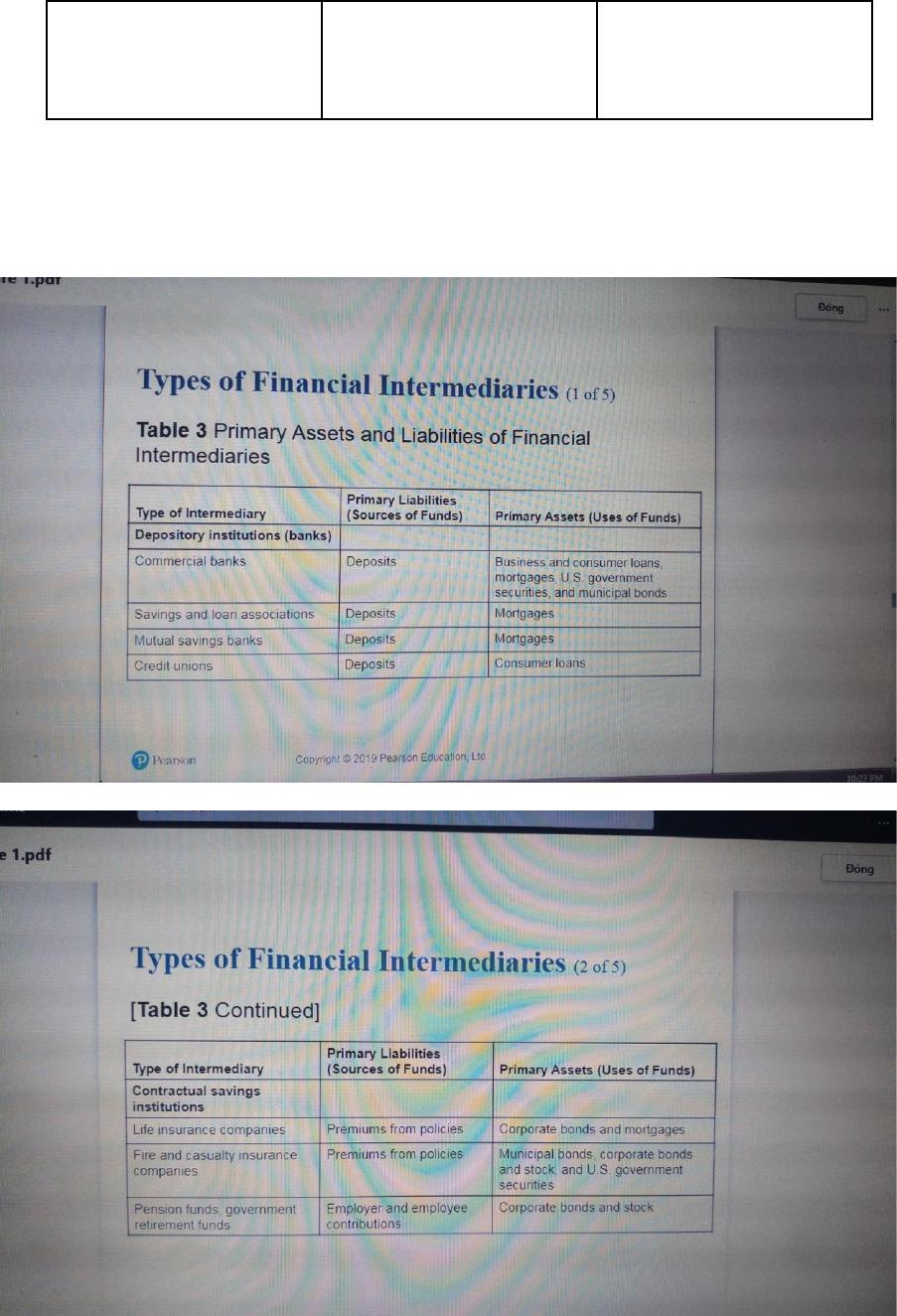
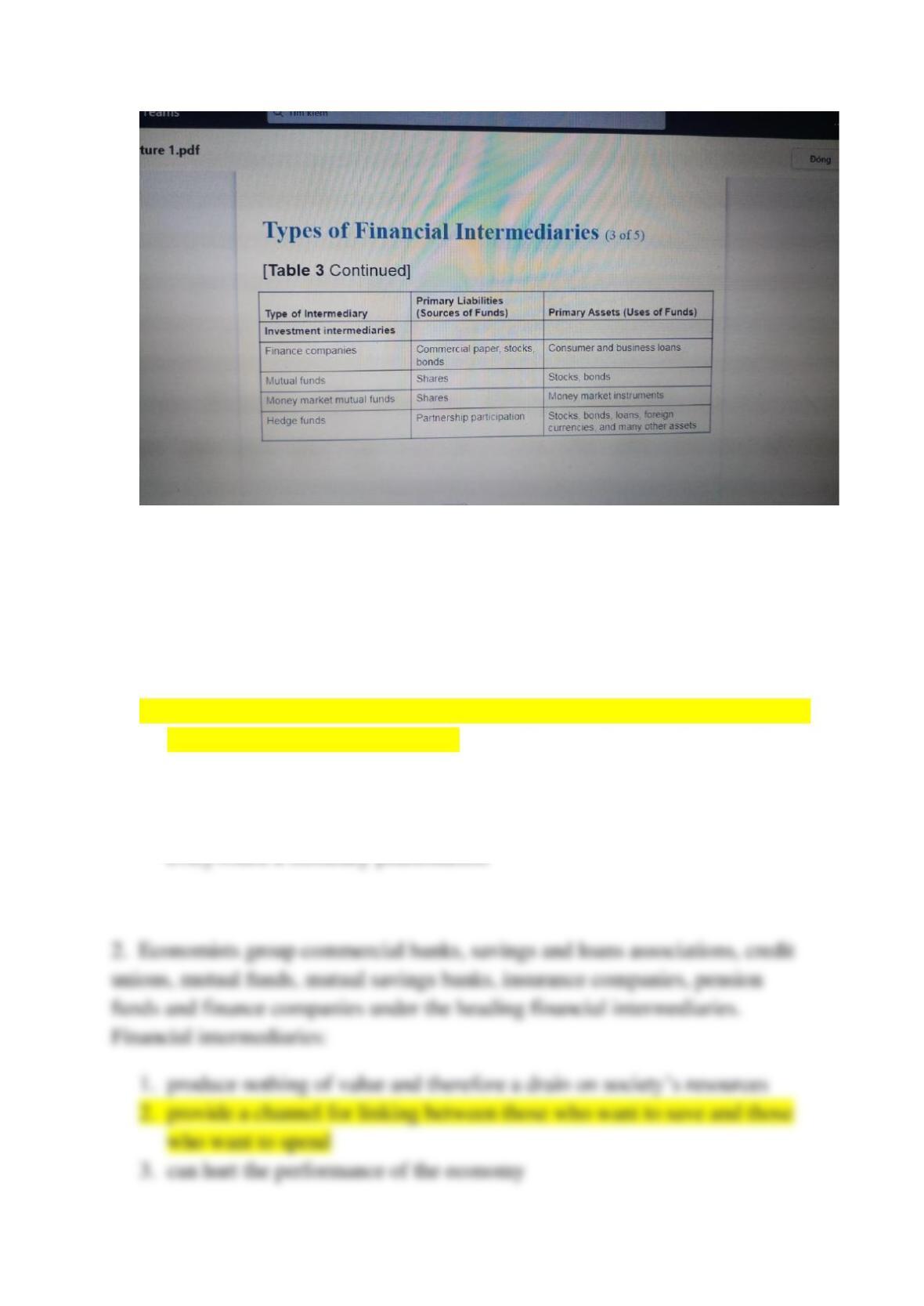
4. Identify the differences among types of financial intermediaries (in terms
of primary liabilities and assets) using Table 3, page 40
Part 1. Multiple-choice questions
1. Evidence from the United States and other foreign countries indicates that
1. Money growth is clearly unrelated to inflation
2. There is a strong positive association between inflation and growth rate of
money over long periods of times
3. Countries with low monetary growth rate tend to experience higher rates
of inflation, all else being constant
4. There is a little support for the assertion that “inflation is always and