CHAPTER 8
Attractions,
Entertainment,
Recreation, and Other
Examine the attractions sphere.
Look at the role of theme parks.
Understand the gaming industry.
䊏
䊏
䊏
Describe public and commercial recreation
facilities.
Recognize shopping as a travel attraction.
䊏
䊏
LEARNING OBJECTIVES
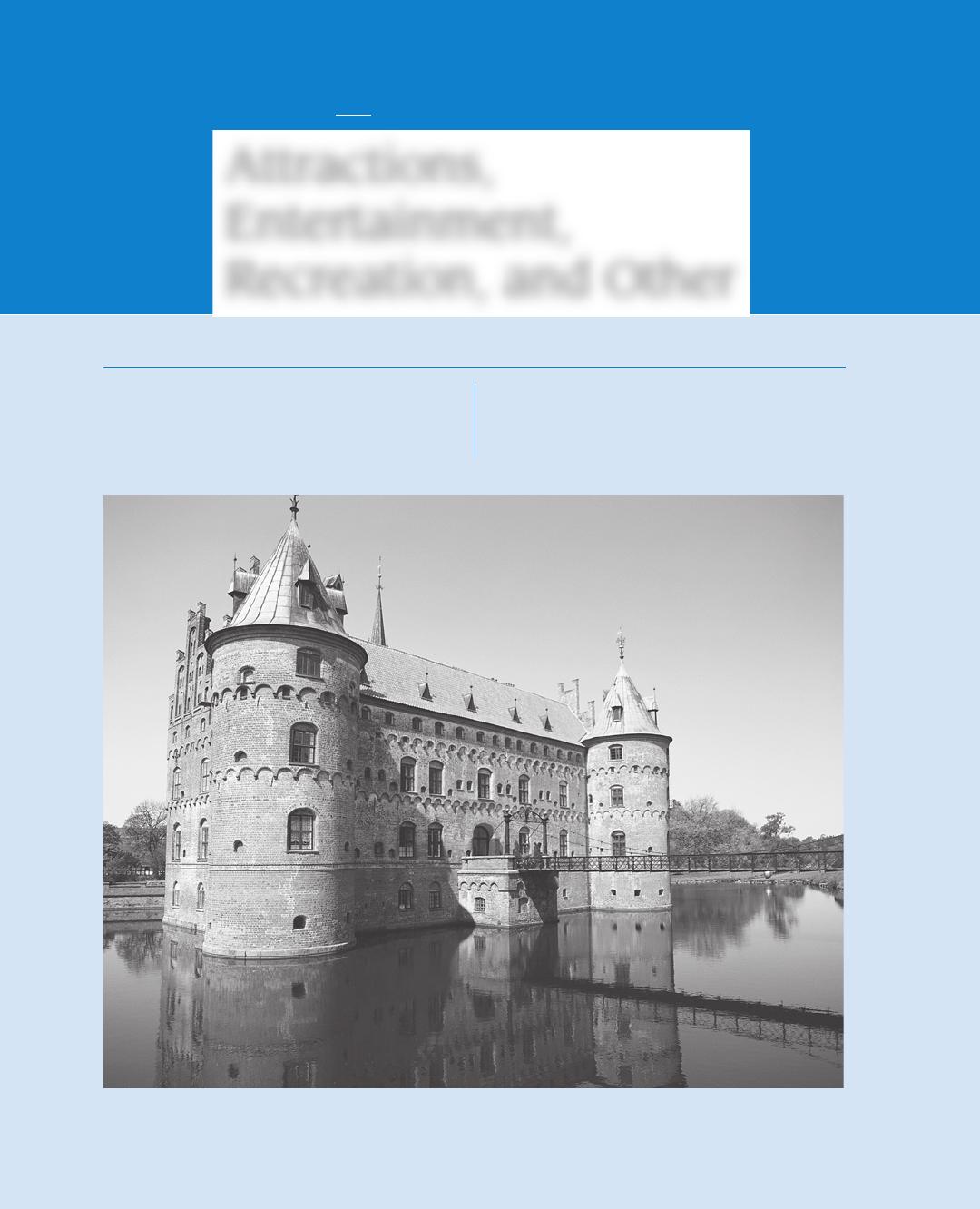
Preserved castles, mansions, and gardens are a popular tourist attraction throughout Europe. Shown here is
Egeskov Castle in Funen, Denmark.
Copyright © Corbis Digital Stock.
c08.indd 212c08.indd 212 7/26/08 10:52:44 AM7/26/08 10:52:44 AM
INTRODUCTION
One can make the argument that attractions are the reason people travel. If so, attrac-
tions are the most important component in the tourism system; and a case could be
made that because of their importance in the tourism system, they should be cov-
ered in Chapter 1 rather than Chapter 8. There is no doubt that attractions are the
main motivators for travel. Without attractions drawing tourists to destinations, there
would be little need for all other tourism services such as transportation, lodging, food,
distribution, and so on. However, as important as attractions are in motivating the
tourist to travel, the attraction frequently receives the smallest portion of the tourist ’ s
expenditure. An example is the ski resort that sells only the lift ticket providing uphill
transportation. This expenditure is the smallest of the travel experience, with the most
expenditures going for air transportation, lodging, and food.
The list of attractions is extensive, and in many cases it is a combination of attrac-
tions that brings the tourist to a destination area. The opportunities for sightseeing,
shopping, entertainment, gaming, culture, and recreation play an important role in
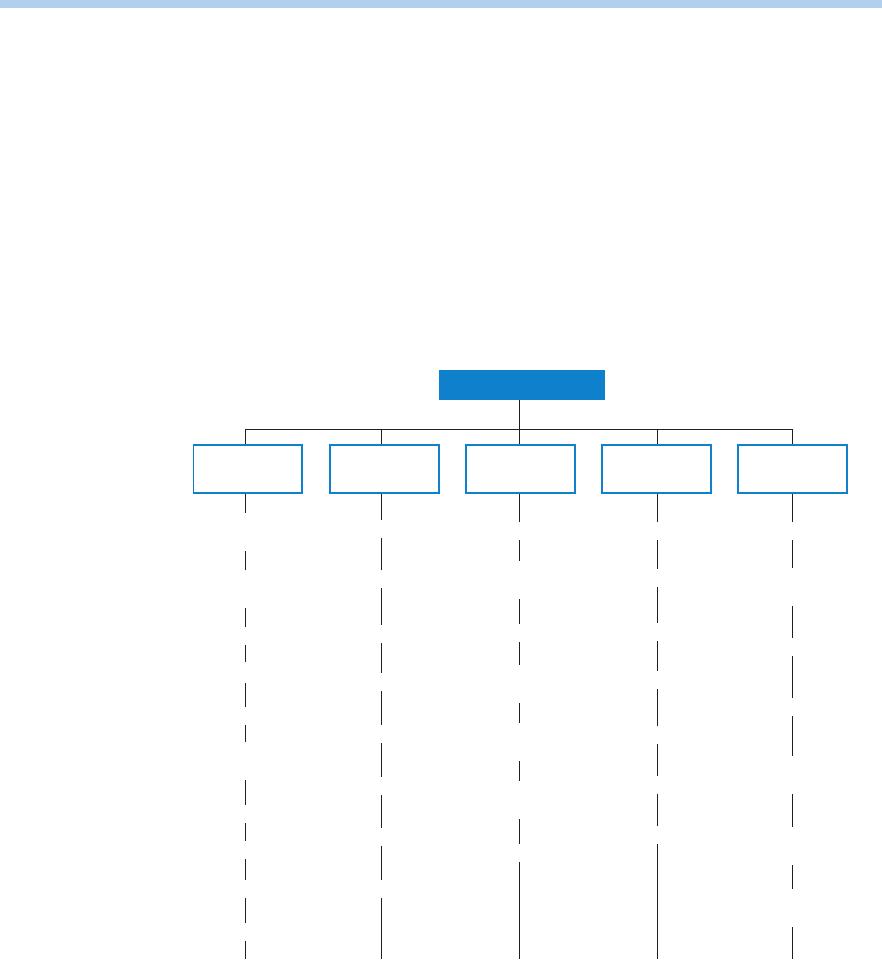
determining the competitiveness of a destination. Figure 8.1 extracts the operating
•
O
P
E
R
A
T
I
N
G
S
E
C
T
O
R
S
O
F
T
H
E
T
O
U
R
I
S
M
I
N
D
U
S
T
R
Y
•
..
.
.
.
.
.
..
.
.
.
.
..
.
.
.
.
..
.
.
.
.
.
..
.
.
.
.
.
.
..
.
.
.
.
.
.
.
.
.
.
.
.
.
.
..
.
.
.
.
.
.
..
.
.
.
.
.
..
.
.
.
.
..
.
.
.
.
..
.
.
.
.
.
..
▼
▼
Travel Trade
Sector
Accommodation
Sector
Transportation
Sector
Entertainment
Sector
Tourism
Services
Events Sector
Attractions Sector
Adventure &
Outdoor Recreation
Food Services
Sector
Figure 8.1 Operating sectors of the tourism industry: attractions, events, adventure, and entertainment.
Introduction 213
c08.indd 213c08.indd 213 7/26/08 10:52:49 AM7/26/08 10:52:49 AM
214 Chapter 8 Attractions, Entertainment, Recreation, and Other
sectors from Figure 1.2 and shows that attractions, events, adventure and outdoor rec-
reation, and entertainment are important supply components.
ATTRACTIONS
Attractions can be classifi ed in a number of ways (see Figure 8.2 ). One of the catego-
ries that fi rst comes to mind is theme or amusement parks. The roots of these attrac-
tions go back to medieval Europe, when pleasure gardens were created. These gardens
were the forerunner of today ’ s parks, featuring rides, fi reworks, dancing, and games.
Today, theme parks are high – profi le attractions made famous by Disney, Universal
Studios, Busch Gardens, and others. They represent multimillion – dollar investments.
Natural attractions are the “ mainsprings ” that drive many people to travel. The
great national parks of the United States and other countries, such as those in Canada,
India, Australia, and Japan, are examples. National forests in the United States attract
millions of recreationists. State parks exist in many areas that have tourist appeal.
Attractions
Cultural
Attractions
Natural
Attractions
Entertainment
Attractions
Events Recreation
Historical
Sites
Architectural
Sites
Architecture
Cuisine
Monuments
Industrial
Sites
Museums
Ethnic
Concerts
Theater
Landscape
Seascape
Parks
Mountains
Flora
Fauna
Coasts
Islands
Megaevents
Community
Events
Festivals
Religious
Events
Sports
Events
Trade
Events
Corporate
Sight-seeing
Golf
Swimming
Tennis
Hiking
Biking
Snow Sports
Theme Parks
Amusement
Parks
Casinos
Cinemas
Shopping
Facilities
Performing
Arts Centers
Sports
Complexes
Figure 8.2 Overview of attractions.
c08.indd 214c08.indd 214 7/26/08 10:52:50 AM7/26/08 10:52:50 AM
The same is true for botanical, zoological, mountain, and seaside parks. Thus, these
natural wonders lure travelers to enjoy the natural beauty, recreation, and inspiration
that they provide.
Heritage attractions (such as historic sites) and prehistoric and archaeological
sites (such as the ancient monuments of Egypt, Greece, Israel, Turkey, Indonesia, India,
Mexico, and Peru) also have appeal for those inspired to learn more about contempo-
rary and long – vanished civilizations.
Recreation attractions maintain and provide access to indoor and outdoor facili-
ties where people can participate in sports and other recreational activities. Examples
include swimming pools, bowling alleys, ice skating rinks, golf courses, ski resorts, hik-
ing trails, bicycle paths, and marinas.
Commercial attractions are retail operations dealing in gifts, handcrafted goods, art,
and souvenirs that attract tourists. Recent surveys show that shopping is the number –
one activity participated in by both domestic and international visitors.
Industrial attractions cannot be overlooked. Wineries and breweries have long
been tourist attractions. Factory tours are growing in number, and manufacturers have
developed elaborate facilities to handle tourists. An example is the Waterford Crystal
Factory in Ireland, which houses a world – class crystal museum.
Great modern cities with their cultural treasures of many sorts provide powerful
attractions to millions of visitors each year. Sightseeing tours are provided in most
cities, giving easy access to the city ’ s attractions. Theaters, museums, special build-
ings, zoos, aquariums, cultural events, festivals, shopping, and dining are some of the
appeals.
Entertainment has become a powerful magnet. Musical entertainment has put
Nashville, Tennessee, and Branson, Missouri, on the map.
The Attractions Industry
The attractions industry consists of fi xed – location amusement parks and attrac-
tions in the United States and other countries. They are primarily private businesses,
although there are a number of publicly operated facilities. Amusement parks and
attractions in the United States generate approximately $11.5 billion in annual rev-
enues. Approximately 500,000 people are employed year round/seasonally by the
industry in the United States, and over 335 million people visited amusement parks
and attractions, according to the International Association of Amusement Parks and
Attractions (IAAPA).
The attractions industry is dominated by Disneyland and Walt Disney World, which
have been two of the most successful attractions ever developed. However, while
theme parks are a major tourist attraction, there are more than ten thousand natural
scenic, historic, cultural, and entertainment attractions that appeal to travelers in the
United States. Attractions include not only theme parks but also the entertainment
park, amusement park, animal park, museum, scenic railway, historic village, preserved
Attractions 215
c08.indd 215c08.indd 215 7/26/08 10:52:51 AM7/26/08 10:52:51 AM
216 Chapter 8 Attractions, Entertainment, Recreation, and Other
mansion, scenic cruise, natural wonder, restaurant, music festival, industry exhibit, cave,
theater, historic farm, scenic overlook, resort complex, historic site, botanical garden,
arboretum, plantation, hall of fame, water show, zoo, sports complex, cultural center,
state park, national park, county park, outdoor theater, Native American reservation,
and transportation exhibit.
Theme Parks
The theme park business has enjoyed spectacular expansion since the opening of
Disneyland in 1955 in Anaheim, California. The opening of Disneyland changed the
local amusement park business considerably because it expanded the concept of
amusement parks from simply rides and carnival barkers to include shows, shops, and
restaurants in theme settings with immaculate cleanliness, promising adventure, his-
tory, science fi ction, and fantasy.
The success of Disneyland brought Walt Disney World, the largest and grandest
theme park in the world, with its Magic Kingdom as the focal point of the resort com-
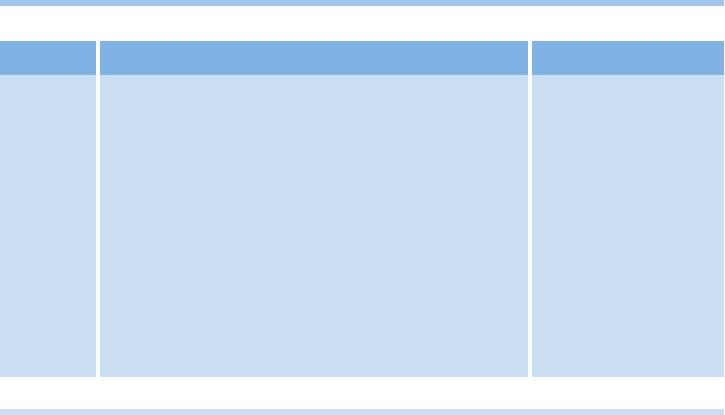
plex. The Magic Kingdom attracts over 16.0 million visitors annually (see Table 8.1 ).
The Orlando site also has a 7500 – acre conservation project for the preservation of
fauna and wildlife of the Everglades; an experimental prototype community of tomor–
row (EPCOT); the Disney World Showcase, where several nations feature exhibits of
their country ’ s attractions and culture; Disney – MGM Studios; and Pleasure Island. On
January 7, 2008 Disney announced that Disney – MGM Studios would change their
name to Disney Hollywood Studios.
TABLE 8.1 Top U.S. Theme Parks
Rank, 2005 Theme Park and Location Attendance (in millions)
1 The Magic Kingdom , Orlando 16.1
2 Disneyland , Anaheim, California 14.5
3 Epcot , Orlando 9.9
4 Disney – MGM Studios , (now Disney Hollywood Studios), Orlando 8.7
5 Disney ’ s Animal Kingdom , Orlando 8.2
6 Universal Studios , Orlando 6.1
7 Disney ’ s California Adventure , Anaheim 5.8
8 Islands of Adventure at Universal , Orlando 5.7
9 Sea World , Orlando 5.6
1 0 Universal Studios , Los Angeles 4.7
Source: Amusement Business.
c08.indd 216c08.indd 216 7/26/08 10:52:52 AM7/26/08 10:52:52 AM
As in the past, the Walt Disney Company ’ s six theme parks hold down the top fi ve
positions in Table 8.1 , accounting for a total of 57.4 million visits. Disney ’ s California
Adventure ranks seventh and recorded another 5.8 million visits. Table 8.2 shows that
Disneyland Paris also leads in European attendance, and shows attendance fi gures for
leading European theme parks. Large theme parks are located around the world. Everland
and Lotte World in South Korea draw 7.5 million and 6.2 million visitors, respectively.
Yokohama Hakkeijima Sea Paradise and Nagashima Spa Land in Japan attract 5.3 million
and 3.8 million visitors annually. Ocean Park in Hong Kong attracts 4.0 million people.
Tokyo Disneyland draws 13.0 million, and Tokyo Disney Sea draws 12.0 million.
As would be expected, the success of the Disney theme parks brought imitators
and large corporations to the business. In addition to those listed in Table 8.1 , other
prominent theme parks in the United States are Sea World in San Antonio, Texas;
Great America, Santa Clara, California; Canada ’ s Wonderland, Toronto, Ontario; Busch
Gardens, Williamsburg, Virginia; and Legoland, Carlsbad, California.
In past years global park attendance fi gures were published in Amusement
Business, which has ceased publication. Now TEA (formerly the Themed Entertainment
Association) in association with Economic Research Associates (ERA) publishes the
TABLE 8.2 Top European Amusement/Theme Park Admissions
Rank, 2005 Park and Location Attendance (in millions)
1 Disneyland Paris 10.2
Marne la Vall é e, France
2 Blackpool Pleasure Beach 6.0
Blackpool, England
3 Tivoli Gardens 4.1
Copenhagen, Denmark
4 Europa – Park 3.9
Rust, Germany
5 Port Adventura 3.4
Salou, Spain
6 De Efteling 3.3
Kaatsheuvel, the Netherlands
7 Liseberg 3.2
G ö teborg, Sweden
8 Gardaland 3.1
Castelnuovo del Garda, Italy
9 Bakken 2.6
Klampenborg, Denmark
1 0 Alton Towers 2.4
Staffordshire, England
Source: Amusement Business.
Attractions 217
c08.indd 217c08.indd 217 7/26/08 10:52:53 AM7/26/08 10:52:53 AM
218 Chapter 8 Attractions, Entertainment, Recreation, and Other
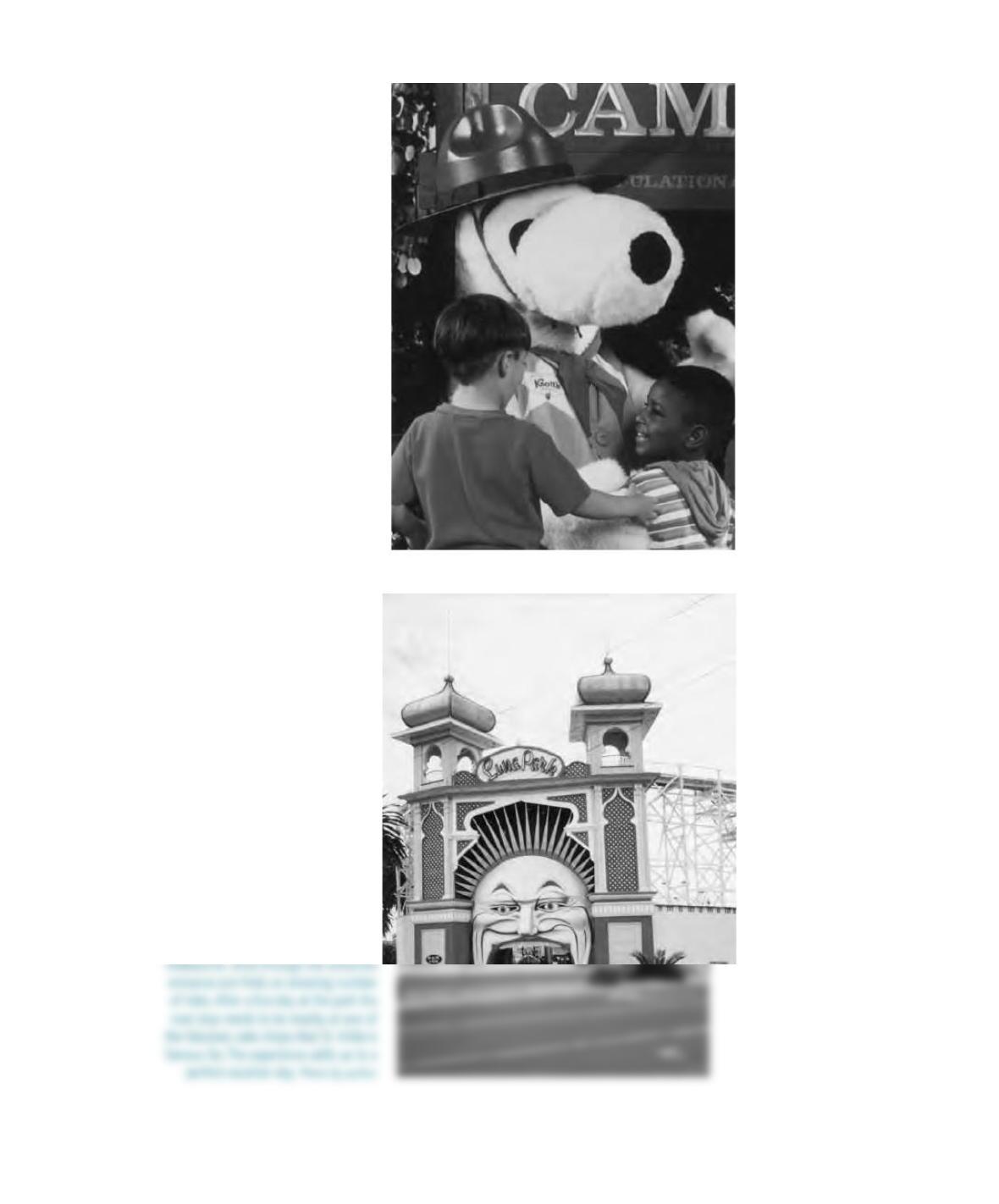
America ’ s fi rst theme park, Knott ’ s Berry
Farm, has 150 acres of rides, live shows,
and family adventures celebrating the lure
and lore of the West. Snoopy is part of
the magic at Knott ’ s. Camp Snoopy is the
offi cial six – acre home of the Peanuts gang.
Photo courtesy of Knott ’ s Berry Farm. Snoopy
® 1958 United Features Syndicate, Inc.
c08.indd 218c08.indd 218 7/26/08 10:52:53 AM7/26/08 10:52:53 AM
c08.indd 219c08.indd 219 7/26/08 10:52:55 AM7/26/08 10:52:55 AM
c08.indd 220c08.indd 220 7/26/08 10:52:56 AM7/26/08 10:52:56 AM

c08.indd 221c08.indd 221 7/26/08 10:53:00 AM7/26/08 10:53:00 AM
c08.indd 222c08.indd 222 7/26/08 10:53:02 AM7/26/08 10:53:02 AM
c08.indd 223c08.indd 223 7/26/08 10:53:03 AM7/26/08 10:53:03 AM
c08.indd 224c08.indd 224 7/26/08 10:53:04 AM7/26/08 10:53:04 AM
c08.indd 225c08.indd 225 7/26/08 10:53:05 AM7/26/08 10:53:05 AM
c08.indd 226c08.indd 226 7/26/08 10:53:07 AM7/26/08 10:53:07 AM
c08.indd 227c08.indd 227 7/26/08 10:53:08 AM7/26/08 10:53:08 AM
c08.indd 228c08.indd 228 7/26/08 10:53:11 AM7/26/08 10:53:11 AM
c08.indd 229c08.indd 229 7/26/08 10:53:11 AM7/26/08 10:53:11 AM
c08.indd 230c08.indd 230 7/26/08 10:53:12 AM7/26/08 10:53:12 AM
c08.indd 231c08.indd 231 7/26/08 10:53:14 AM7/26/08 10:53:14 AM
c08.indd 232c08.indd 232 7/26/08 10:53:14 AM7/26/08 10:53:14 AM
c08.indd 233c08.indd 233 7/26/08 10:53:15 AM7/26/08 10:53:15 AM
c08.indd 234c08.indd 234 7/26/08 10:53:16 AM7/26/08 10:53:16 AM
c08.indd 235c08.indd 235 7/26/08 10:53:16 AM7/26/08 10:53:16 AM
c08.indd 236c08.indd 236 7/26/08 10:53:20 AM7/26/08 10:53:20 AM
c08.indd 237c08.indd 237 7/26/08 10:53:20 AM7/26/08 10:53:20 AM
c08.indd 238c08.indd 238 7/26/08 10:53:21 AM7/26/08 10:53:21 AM
c08.indd 239c08.indd 239 7/26/08 10:53:22 AM7/26/08 10:53:22 AM
c08.indd 240c08.indd 240 7/26/08 10:53:22 AM7/26/08 10:53:22 AM
c08.indd 241c08.indd 241 7/26/08 10:53:23 AM7/26/08 10:53:23 AM
c08.indd 242c08.indd 242 7/26/08 10:53:23 AM7/26/08 10:53:23 AM
c08.indd 243c08.indd 243 7/26/08 10:53:33 AM7/26/08 10:53:33 AM