Retail Branding and Positioning
Part II
1
Case Study: Trader Joe’s
Solution Draft
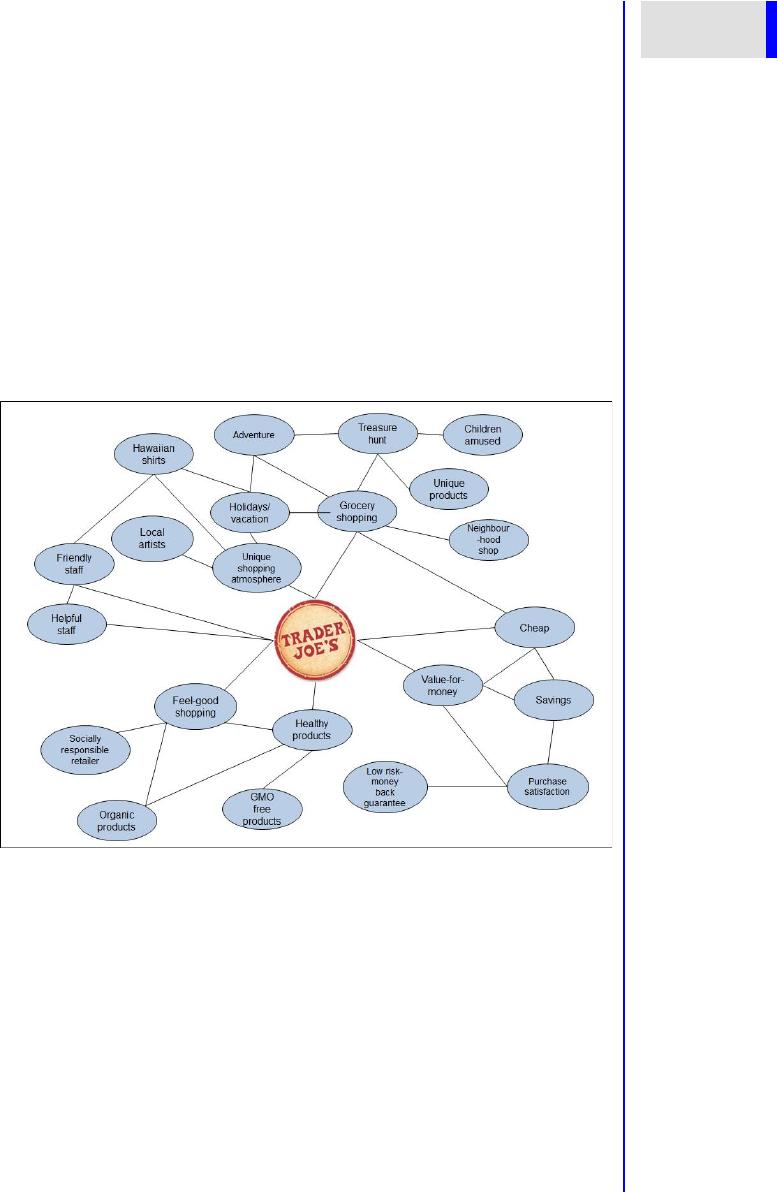
Question 1
According to you what is the consumer’s associative network for Trader
Joe’s ?
Obviously, the students will draw very different associative networks and
everyone can be right. However, they should contain some of the terms and
concepts that are included in this figure:
Question 2
On the one hand Trader Joe’s wants to be perceived as the neighbourhood
specialty grocery store but on the other the company is constantly growing
and opening new locations. Explain the main challenges faced by Trader
Joe’s in maintaining the neighbourhood store image.
Trader Joe’s is faced with a number of challenges. First of them is “how to
maintain the eclectic, friendly vibe that has garnered it legions of faithful
shoppers, while expanding at a brisk pace” (Li 2011).
The retailer is not only increasing the number of store locations but also it is
9
Retail Branding and Positioning
expanding their size, for example in La Crescenta- the store was re-located to
a newly built location in Monrovia, which “boasts more spacious aisles,
higher ceilings and a trim brick-and-glass exterior” (Li 2011). The consumers
have voiced concerns and mixed feelings about the move claiming that the
new site is uncomfortable and that it “lacks the offbeat charm they’ve come
to expect from Trader Joe’s” some said that the new building “doesn’t square
with what Trader Joe’s is in my head” or that they are upset about not having
a homey feel in the store (Li 2011).
Secondly, Trader Joe’s strives for their shops to be perceived as mom-and-pop
(Bellona et al. 2010). Oxford dictionary (2015) defines mom-and-pop stores
as “owned and run by a husband and wife, or by a family”. Kowitt (2010)
explains that creating the mom-and-pop image as you grow is challenging
because the store expands to new markets and opens new locations but at
the same time it must maintain the small-store vibe with the customers.
Therefore, given the increased number of location and increasing size of the
stores, the strategy seems not to be in sync with the image (Bellona et al.
2010). On the one side the consumers understand that there is a need for
corporate expansion but on the other side the company is running a risk of
alienating the consumers, who were loyal to the company for many years