Lab #1
Torsion of Shafts and Shear Modulus
Measurements
Prepared By:
Eduardo Hernandez
Group members: Javier Quirós
CE 335 – Civil Engineering Materials I
Lab Division 001
September 6, 2021
Compression Testing of Wood Eduardo Hernandez
2
Synopsis/Abstract
The purpose of this lab was to enable students to use the MTS testing machine to apply
compressive loads onto wooden block samples in order analyze its compressive strength using the
raw data from the testing results. Additionally, students were required to distinguish the specific
failure on their wooden sample and characterize the strength of the material.
Introduction
Applied compression measurements obtained using the MTS testing machine and data
collected with the Test Works 4 software were used to determine the compressive strength of a
wooden specimen. The strength of a material can’t be directly measured. However, by calculating
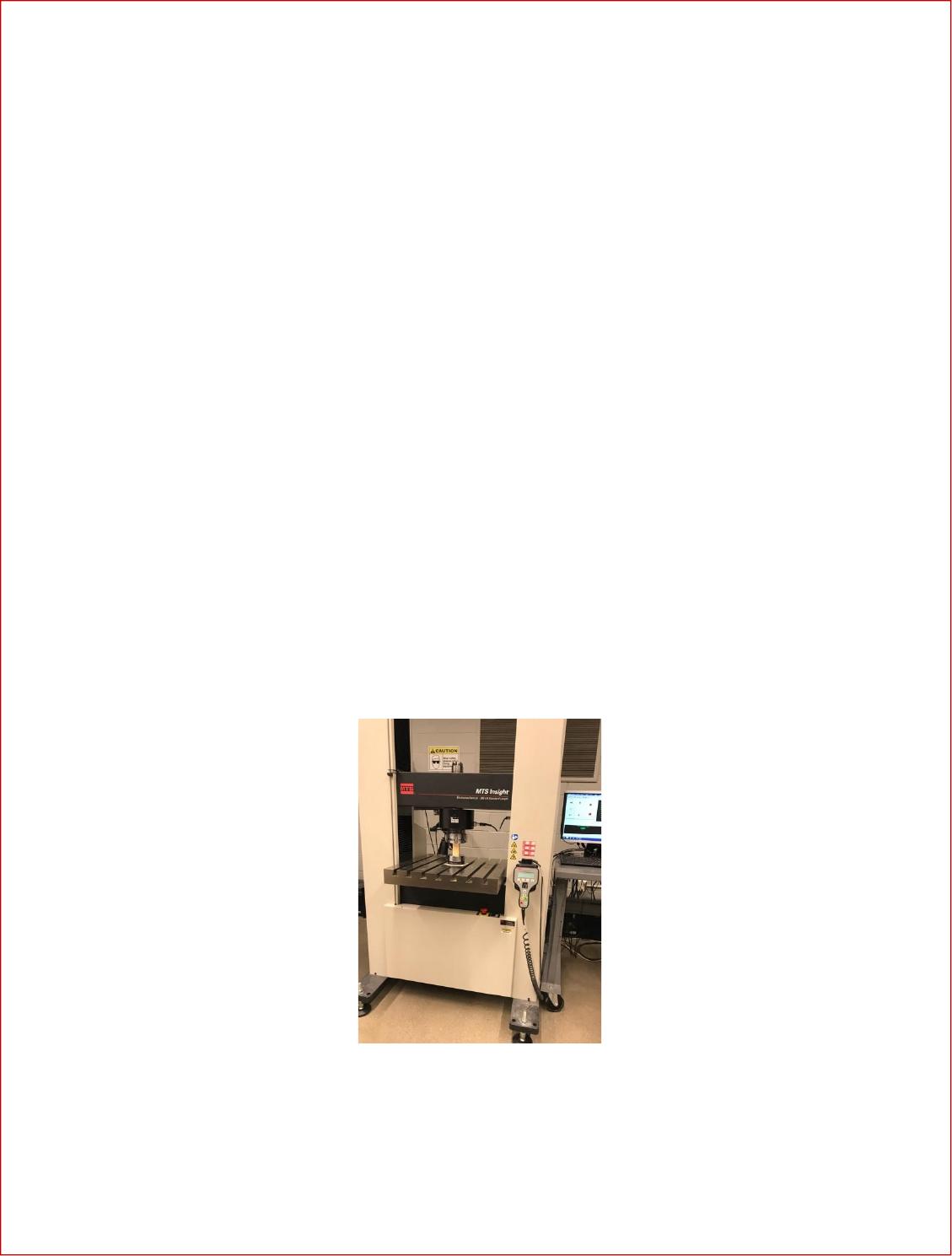
its maximum load, we can use the specimen’s dimensions to calculate its maximum strength. Fig.
1 shows the MTS testing machine performing a test on one of the wooden specimens.
Fig. 1: MTS machine performing a compression test on a wooden specimen.
Compression Testing of Wood Eduardo Hernandez
3
It is known that the strength of a material is equal to its maximum load divided by the
specimen’s cross-sectional area (width times thickness). With this in mind, we can calculate the
strength of different sizes of specimens and compare their results. In my case, the wooden
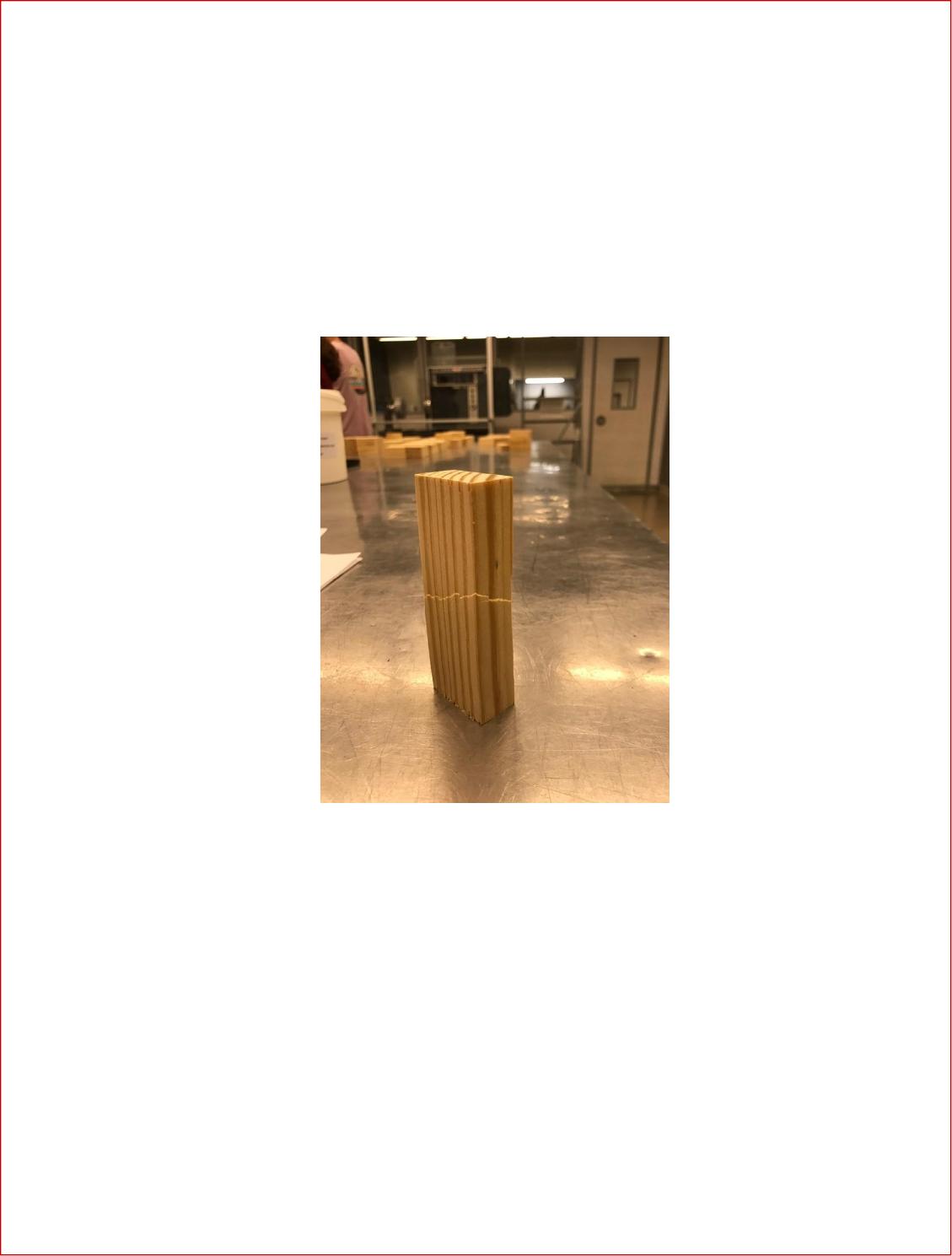
specimen measured 37.38mm (W) x 77.26mm (L) and it withheld 111.895 kN until it failed
experiencing a shearing failure as seen in Fig. 2.
Fig. 2: Wooden specimen showing a shearing failure after compression test.
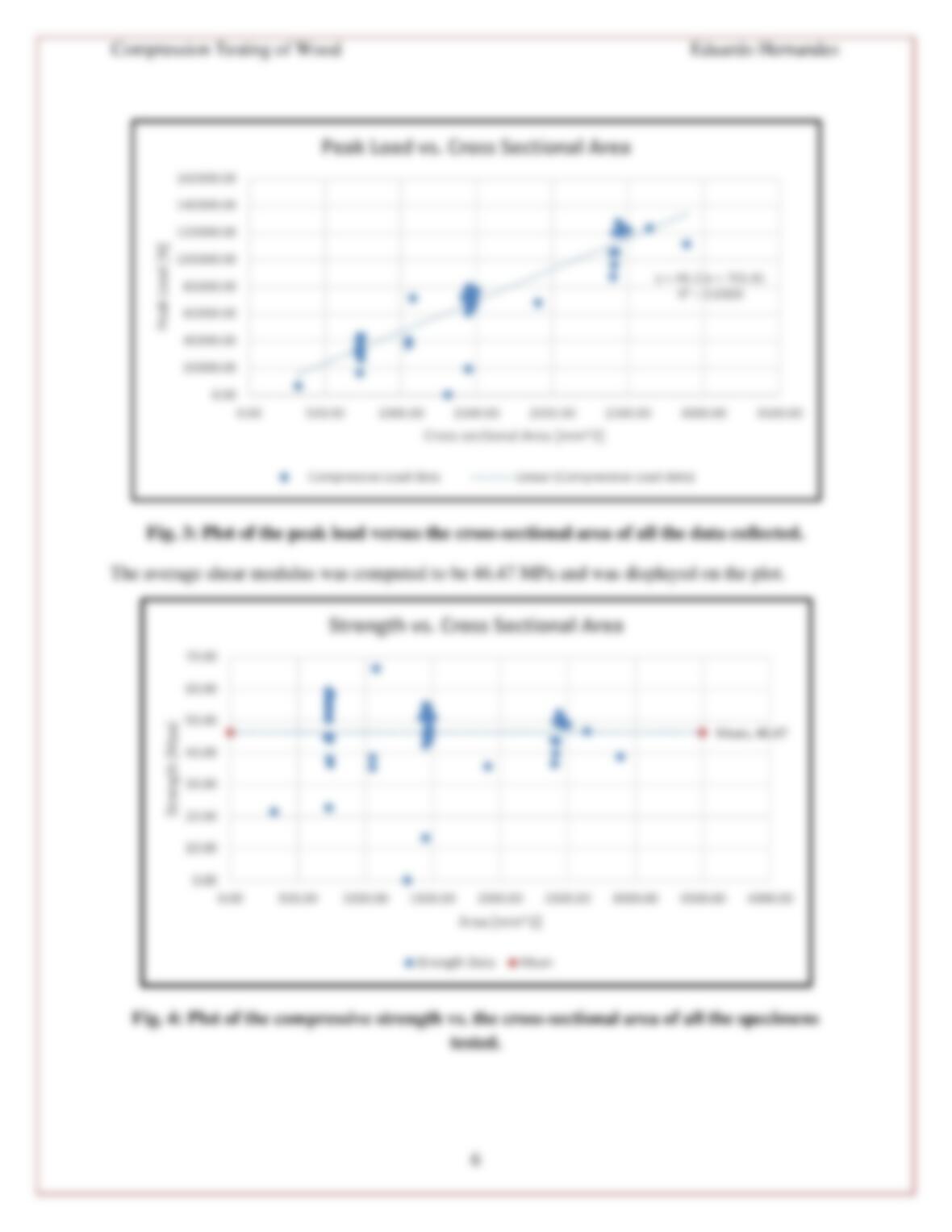
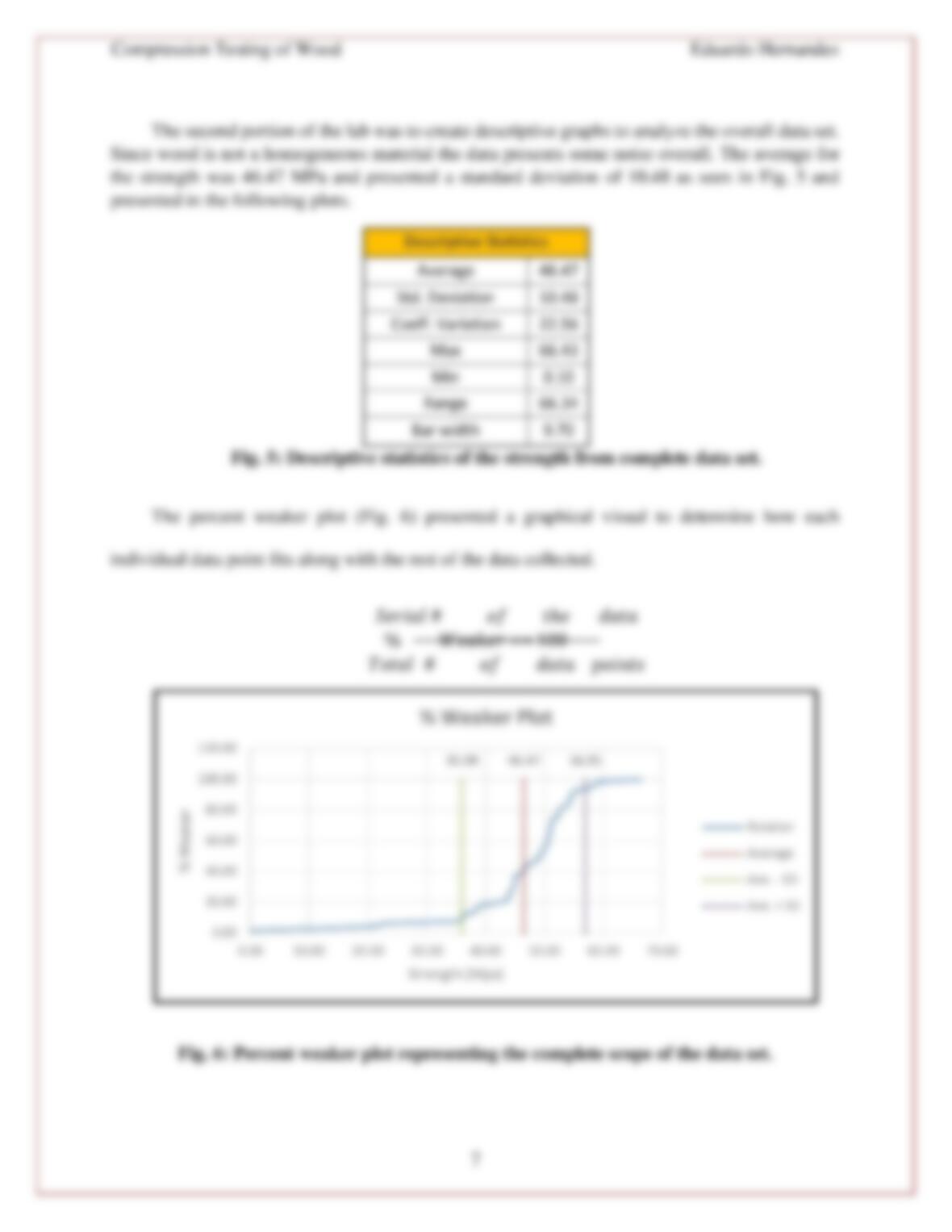
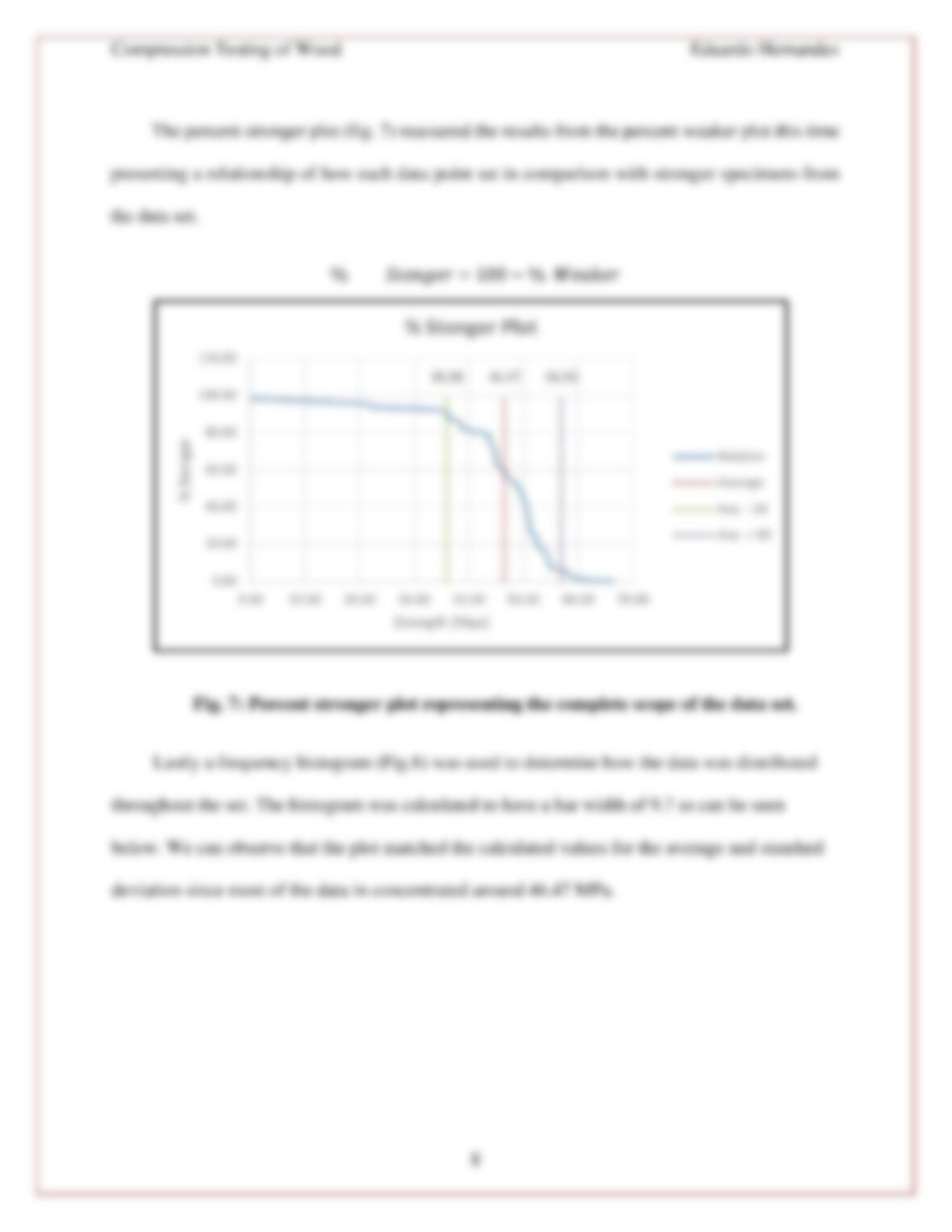
This particular specimen was calculated to have a strength of 38.75 MPa. Although the general
average strength was 46.47 MPa, and my specimen was a little off, we could see that there is still
some variability within the data although most of the variables were kept constant. On the other
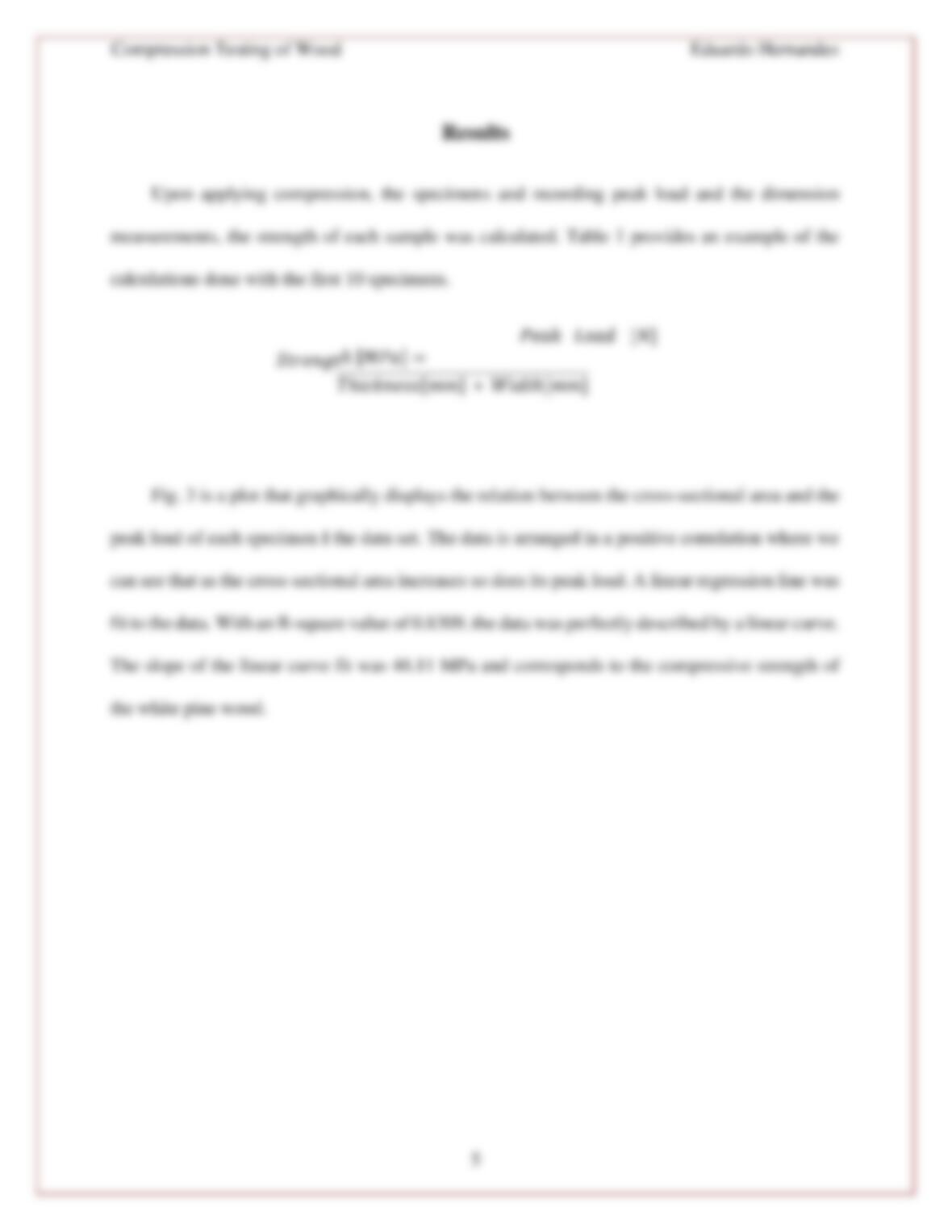
hand, we could conclude that specimens with a larger cross-sectional area carry a higher failure
load than those of a smaller one.
Compression Testing of Wood Eduardo Hernandez
Objectives
The objective was to experimentally study and analyze the compressive peak load and
crosssectional area relationship in a kiln-dried Douglas fir specimen with the MTS testing machine.
Failure modes of crushing, brooming, shearing, splitting, wedge splitting and combined shearing
and crushing specimens were also studied by allowing the material to fail.
Experimental Procedure
The lab had two different parts to the experiments. Part 1 of the lab involves three specimens