Chapter 1. The World of Project Management
An overview
Projects are temporary endeavors undertaken to create a unique product or service. It is a set of
activities, one-time, something novel or unique, and limited in time; and it has an end. Process is
non-unique and includes routine or repetitive work. Of course, there are “grey” areas where both
approaches, project and process, are relevant. Examples of projects include developing or
launching new products, investing in infrastructure, an initial public offering, constructing a
building or a bridge, creating a website, getting an MBA, staging a play, and writing a book.
Collaboration within and across a variety of projects is a growing trend. A program consists of a
set of projects, which are generally interdependent, being pursued.
Projects are the weapons of the organization to execute non-routine activities outside processes,
and thus they contribute to strategic change. The role of projects in economic activities continues
to increase with high demand for growth and innovation and with digitalization of goods where
the cost of creating a product or service is high, but the cost of manufacturing (making copies) is
very small. Many projects fail to meet time, budget, and other specific business goals. For
example, a company may miss the announced introduction of a new product.
A project has several unique characteristics.
1. The project plan drives the project’s budget, schedule, control, and evaluation. A
project usually requires a cross-functional (or inter-departmental or multidisciplinary)
team. The members of a project team often work from different locations in the same
country or across different countries.
2. A project manager in most cases does not have as much formal authority as the
manager heading a non-project activity. This requires the project manager to have
negotiation skills so that she/he can get cooperation from various departments for
getting resources or information. A win-lose negotiation can be beneficial only in the
short term, because the other side can turn the table next time around. A win-win
negotiation may involve search for an alternative that would meet the needs of both
sides.
Projects have three interrelated objectives: meet the requirements of the customer or the
client, complete the project on time, and meet the budget. Given the uncertain nature of a
one-time endeavor like a project, the project manager may have to make tradeoffs
between various goals as unexpected problems arise.
The Project Life Cycle
Commonly projects have a slow start, a busy middle and a slow end. When this pattern is
graphed as percent complete versus time, it results in the classic S-shaped life cycle curve
depicted in Figure 1-2. Other projects start slowly, but then they proceed rapidly to
completion with a J-curve depicted in Figure 1-3.
Project Selection
Projects must be consistent with the strategic goals of the organization. Other
considerations in selection of projects include profitability, ease of acquisition of
knowledge and skill needed, the need to develop competencies or capabilities, and the
1
availability of resources or capacities. Companies use a variety of models for selecting
projects from a pool of candidates:
Nonnumeric Methods
1. Sacred cow: The judgment of the boss to select a particular project.
2. The operating/competitive necessity: The project may be needed for continued
operations of a group or facility or it may be needed to maintain a competitive
position.
3. Comparative benefits: A group of individuals rank order projects individually and
each individual may use different set of criteria. A selection committee can then
combine these rank orders to prepare a composite ranking.
Numeric Methods
1. Financial assessment methods: payback period, net present value, and internal rate of
return. You need not read this part because you cover this in a course in finance.
2. Real options: This is also covered in a course in finance, and you can skip it here.
3. Scoring methods: It lists multiple criteria of significant interest to the organization.
See a list in Figure 1-5. One way to use the list to score a project is to see how many
of these criteria the project meets, and then select the project(s) that meet maximum
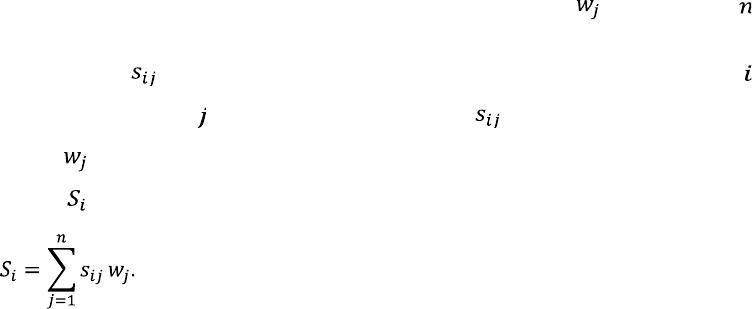
number of these criteria. Another approach is to assign weight to each of the
criteria depending on its importance such that the sum of the weights is one. Then
assign a score using, say a five-point scale, depending on how well a project
satisfies each criterion . For each project, each score is multiplied by its category
weight and the resulting multiples are added so that total weighted score of a
project, is given as
In this method, a financial criterion such as net present value can be used as one of
the criteria.
Confronting Uncertainty and the Management of Risk
Risk or uncertainty changes throughout the life cycle of a project. At the start, there is
the largest amount of uncertainty about the outcomes at the end. As time passes, the end
point can be predicted with more and more accuracy.
Recent Changes in Managing Organizations
Three major changes have made an impact on the way organizations are managed:
a) The replacement of traditional hierarchical management with more consensual
forms.
b) The increasing adoption of the “systems engineering” approach to problem
solving.
2
c) The establishment of projects as the preferred way to accomplish the
organizations goals.
Analysis under Uncertainty and the Management of Risk
A number of issues exemplify the uncertainties in managing projects: the time to
complete a project, the cost and availability of resources, the timing of solutions to
technological problems, a wide variety of macroeconomic variables (inflation, interest
rates, and economic growth), the whims of a client, and competitor’s actions.
The text distinguishes between risk and uncertainty. Risk applies to events that have a
known (or estimated) probability of occurrence. Uncertainty applies to events where
there is insufficient data to estimate the probability of occurrence. For effective project
management, decisions should be treated as risks rather than uncertainties. That is
probabilities of occurrence, if not otherwise known, should be estimated for relevant
issues and events. The techniques of risk analysis and simulation are applicable to several
areas of project management including cost, schedule and resource. Software products
make Monte Carlo simulation relatively easy to perform in conjunction with spreadsheets
developed for project selection and analysis.
You can skip the numerical example on pages 20-27. We will cover this issue again in
the Shenar and Dvir book where the authors provide an excellent managerial perspective.
Project Portfolio Process (PPP)
PPP is used to consistently and transparently select projects that match the organization’s
goals. It attempts to link the organization’s projects directly to its goals and strategy.
This occurs throughout the life cycle of the project. Thus, PPP also becomes a means for
monitoring and controlling the project and occasionally it can lead to shutting down
projects prior to their completion because their risks have become excessive, their costs
have escalated beyond their expected benefits, another or new project does a better job of
supporting the goals, or any of a variety of similar reasons. PPP has eight steps:
a) Step 1: Establish a Project Council – The council is established to articulate strategic
direction and allocate funds to projects it selects.
b) Step 2: Identify Project Categories and Criteria – Categories are established by the
Council to insure that a variety of projects are pursued. Criteria for measuring
prospective projects are established to form the framework for the selection process.
Common categories used for classifying projects are:
i) Derivative projects – Projects that are only incrementally different from
previous efforts.
ii) Platform projects – Projects that impact organization outputs or the processes
that create them.
iii) Breakthrough projects – Projects that involve implementing new, sometimes
“disruptive” technology.
iv) R&D projects – Projects used to acquire new knowledge or create new
technology.
c) Step 3: Collect Project Data – Collect relevant data and assign scores to prospective
projects.
3
d) Step 4: Assess Resource Availability – Analyze the availability of resources to
execute the prospective projects.
e) Step 5: Reduce the Project and Criteria Set – Use multiple screens to narrow down
the number of projects under consideration.
f) Step 6: Prioritize the Projects within Categories – Using the analysis developed,
prioritize the projects within the previously identified categories. This again is to
ensure that a variety of projects are pursued, not just the top few from a single,
prioritized list.
g) Step 7: Select the Projects to be Funded and Held in Reserve – The best projects
within each category are selected for implementation, holding some projects and
some resources in reserve.
h) Step 8: Implement the Process – The results of the process must be recorded, and
then widely communicated within the organization.
Project Proposals
This section introduces the documentation necessary to present a prospective project to a
selection process. The text equates the internal project selection process with that of a
prospective customer using a Request for Proposal (RFP) or Request for Quote (RFQ)
process. This is somewhat misleading, as organizations should have made a careful
internal analysis (sometimes known as a bid/no bid decision) before submitting a
proposal to a customer. In other words, the project is proposed twice: first internally to
the organization to win support, and then, if it’s a “bid,” externally to the customer to win
the job. The proposal documentation required by the customer is much different than that
needed for the internal analysis. In fact, part of the bid/no bid analysis is evaluating the
cost to prepare the RFP or RFQ knowing that the organization could lose. For large
military or space projects the preparation costs can run into the millions of dollars.
Regardless of whether it’s for internal or external consumptions, or for a technical or non-
technical project, the proposal should be prepared with care.
a) The Technical Approach – This section summarizes what the problem is and how it
will be approached by the project.
b) The Implementation Plan – This section summarizes the schedule, cost and resources
estimated to complete the project.
c) The Plan for Logistic Support and Administration – This section summarizes the
support that the project will need and how it will be administered.
4
Chapter 2: The Manager, the Organization, and the Team
2.1 The Project Manager’s (PM’s) Roles
Whereas the functional manager is a technical specialist in the area he or she manages
and that expertise is a big reason he or she is the manager, the PM, on the other hand, is a
generalist who takes the systems approach to solving problems. The PM facilitates
problem solving rather than directing solutions. A project is often beset with conflicts
between members of the project team and between the team and senior managers and
with conflicts with the client and other outsiders. The PM must manage these conflicts by
negotiating their resolutions, and the PM must have strong communication skills
2.2 The PM’s Responsibilities
The PM’s responsibilities can be divided into the following areas:
Acquiring resources: One major challenge is to acquire human resources. Project team
members are typically borrowed from functional organizations. The functional manager
does not want to loan his or her best people, who are probably overbooked already. The
loyalties of the people who are loaned to the project are complicated by the fact that the
functional manager often controls pay and promotion issues.
Fighting fires and obstacles: Since all projects are unique, the PM will always be
confronted with unique problems to solve. At the beginning, the problems will often
relate to resource issues. At the end, they will tend to be schedule and technical issues.
Leadership and making tradeoffs: The PM must make trade-offs between cost, schedule
and performance. The priority among them depends on factors having to do with the
project, the client, and the parent organization. During the project formation phase the
three criteria are usually treated as equals. When the project reaches the build-up phase,
schedule takes the dominant position. At the end, performance takes center stage
followed by schedule and then cost.
Negotiations, Conflict Resolution, and Persuasion: We covered this in Chapter 1.
2.3 Selection of a Project Manager
The organization has to find individuals who complete the tasks they are given. This not
always possible, and the project manager is often selected for the wrong reasons, chief
among them being availability. A PM should have the following characteristics;:
Credibility: The PM should have two kinds of credibility: Technical credibility requires at
least enough knowledge to be able to talk about the technical issues with the team and
describe them to senior management and the customer. Administrative credibility
includes the ability to facilitate the activities of the team, manage the plan and
communicate with the stakeholders.
Sensitivity: Successful PMs do not avoid conflict, but they must be able to handle it well.
Before conflicts can be handled they must be detected, the earlier the better. In addition,
the PM must be able to detect technical issues that the team may be trying to gloss over.
Leadership and Management Style: Leadership is hard to define, but the PM must have
it to be successful. The PM’s leadership must be invested with a strong set of ethics to
guide his or her decisions through the jungle of conflicts and personalities. I am copying
the following attributed to Professor Shenar in the book, and since he one of the authors
of the other book we will cover, we will discuss it in more details at that point, “As the
5
level of technological uncertainty of a project went from ‘low tech’ to ‘high tech,’ the
appropriate management style (while being fundamentally participative) went from ‘firm’
to ‘highly flexible.’ In addition, he found that the complexity of the project, ranked from
‘simple’ to ‘highly complex,’ called for styles varying from ‘informal’ to ‘highly
formal.’”
2.4 Project Management as a Profession
A professional organization, the Project Management Institute (PMI), has been devoted to
project management. It was founded in 1969. Its membership grew to 7,500 by 1990,
17,000 by 1995, 64,000 by 2000, and 240,000 by mid-2007. This is one indicator to
show the increasing role of projects. The PMI has published the Project Management
Body of Knowledge (PMBOK), and it publishes two professional periodicals.
2.5 Fitting Projects into the Parent Organization
More on “Why Projects”: We revisit this issue to discuss economic reasons for rapid
growth of projects:
1) Devising product development programs by integrating product design, engineering,
manufacturing, and marketing functions in one team not only improved the product,
it also allowed significant cuts in the time-to-market for the product.
2) The product development/design process requires input from different areas of
specialized knowledge. Teams of specialists can be formed, do their work, and
disband.
3) There has been explosive expansion of technical capabilities. Traditional
organizations have difficulty dealing with rapid, large-scale change, but project
organizations can.
4) Many upper-level managers lack confidence in their ability to cope with and respond
to such large-scale, rapid change in their organizations. Organizing these changes as
projects gives the managers some sense of accountability and control.
5) The rapidly globalizing world economy often involves the integration of activities
carried out by different firms located in different countries, often on different
continents. Organizing such activities into projects improves the firms; ability to
insure overall compliance with the laws and regulations of dissimilar governments as
well as with the policies of widely assorted participating firms.
All these factors fostered the expanded use of projects, but traditional ways of organizing
projects were too costly and too slow, largely because of how they linked to the parent
firm. We, therefore, discuss various forms of project organizations.
Pure Project Organization: Projects can be freestanding entities with staff assigned full
time. In this form, they have their own administrative and logistical support resources.
For large projects, the pure project organization is effective, but for small projects, it is a
very expensive way to operate. It has the following advantages:
a) The PM has full authority over the project.
b) The inverse is also true, in that the members of the project are responsible to the PM.
c) The lines of communications are shortened.
d) For organizations that repeat similar projects, a permanent cadre of experts can be formed.
6

e) The project has a strong identity, separate from the parent organization.
f) The organization supports rapid decision-making.
g) There is unity of command.
h) This type of organization is simple and flexible.
i) Pure projects support a holistic approach to the project.
This organization form also has the following disadvantages:
a) There can be considerable duplication of effort and staff.
b) The project tends to stockpile equipment and resources just in case.
c) If the project is “high technology” it may have difficulty accessing the sources of knowledge
in the functional organizations.
d) Inconsistencies in the application of policy and procedure often occur.
e) The project takes on a life of its own.
f) Team members have concerns about “life after the project”.
Functional Project Organization: Projects can be assigned to an appropriate functional
organization within the firm. The advantages of this per the text are:
a) Maximum flexibility in the use of staff.
b) Individual experts can be utilized by many different projects.
c) Specialists in the division can be grouped to share knowledge and experience.