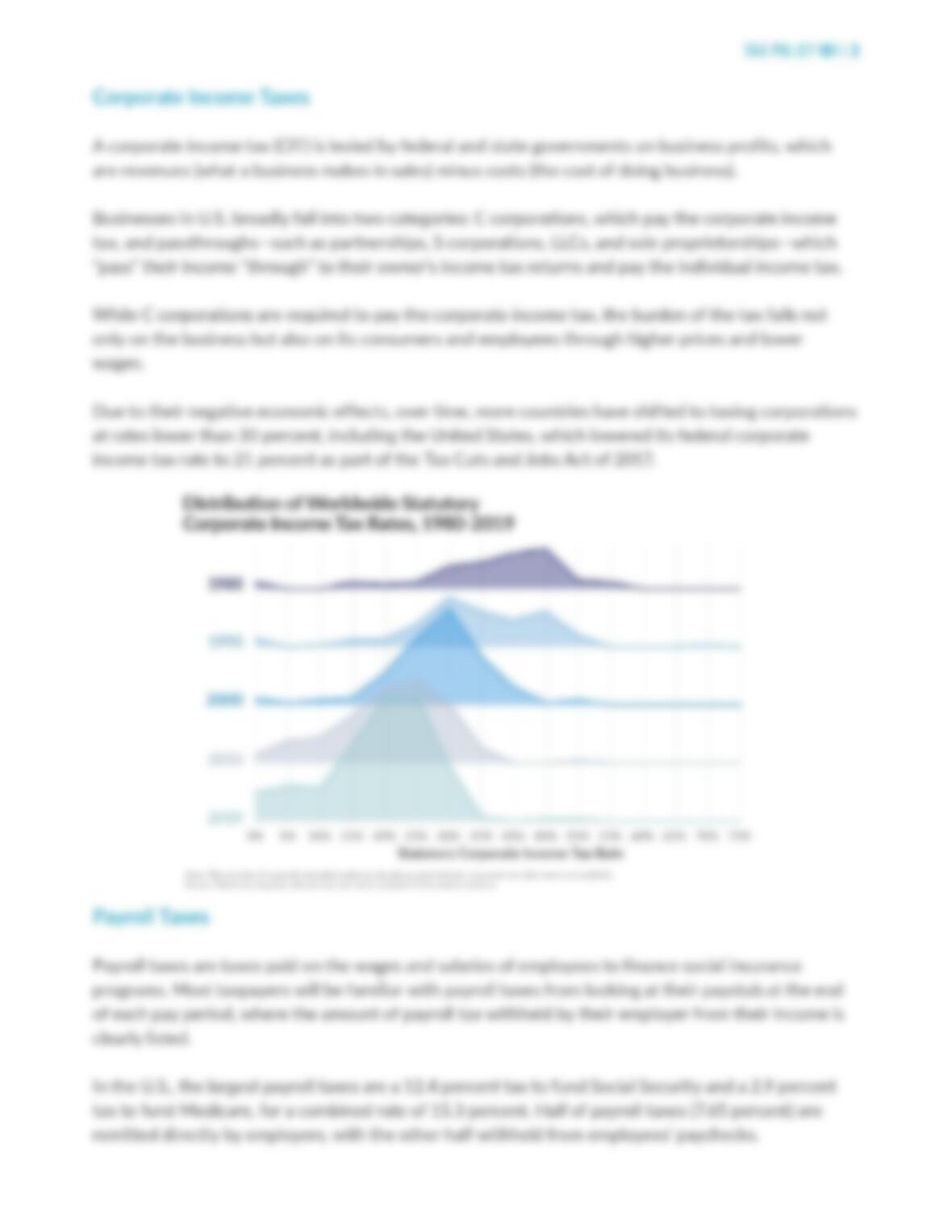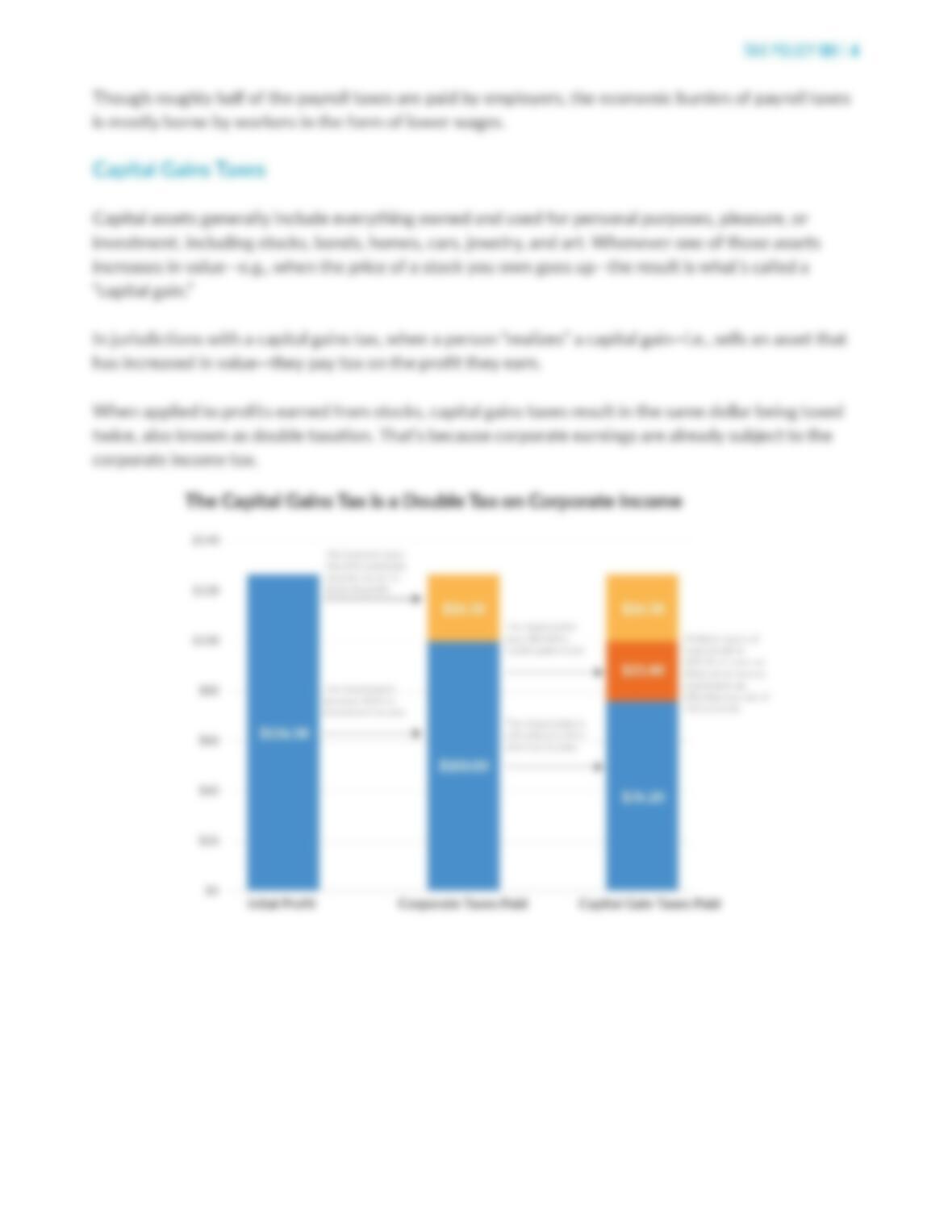
THE THREE BASIC TAX TYPES
TAX POLICY 101
WHAT YOU’LL LEARN
1. Discover the three basic tax types—taxes on what you earn, taxes on
what you buy, and taxes on what you own.
2. Learn about 12 specific taxes, four within each main category—earn:
individual income taxes, corporate income taxes, payroll taxes, and
capital gains taxes; buy: sales taxes, gross receipts taxes, value-
added taxes, and excise taxes; and own: property taxes, tangible
personal property taxes, estate and inheritance taxes, and wealth
taxes.
3. Develop a basic understanding of how these taxes fit together, how
they impact government revenues and the economy, and where you
may encounter them in your daily life.
TAX POLICY 101 | 1
INTRODUCTION
Most taxes can be divided into three buckets: taxes on what you earn, taxes on what you buy, and
taxes on what you own.
It’s important to remember that every dollar you pay in taxes starts as a dollar earned as income. One
of the main differences among the tax types outlined below is the point of collection—in other words,
when you pay the tax.
For example, if you earn $1,000 in a state with a flat income tax rate of 10%, $100 in income taxes
should be withheld from your paycheck when you earn that income.
If, a week later, you take $100 from your remaining earnings to purchase a new smartwatch in a
jurisdiction with a 5% sales tax, you’ll pay an additional $5 in taxes when you purchase that item.
Altogether, $105 of your initial $1,000 in income has been collected in taxes, just not at the same
time.
With that in mind, below is a brief overview of the main types of taxes you should know to be an
educated taxpayer.
TAX POLICY 101 | 2
TAXES ON WHAT YOU EARN
Individual Income Taxes
An individual income tax (or personal income tax) is levied on the wages, salaries, investments, or
other forms of income an individual or household earns.
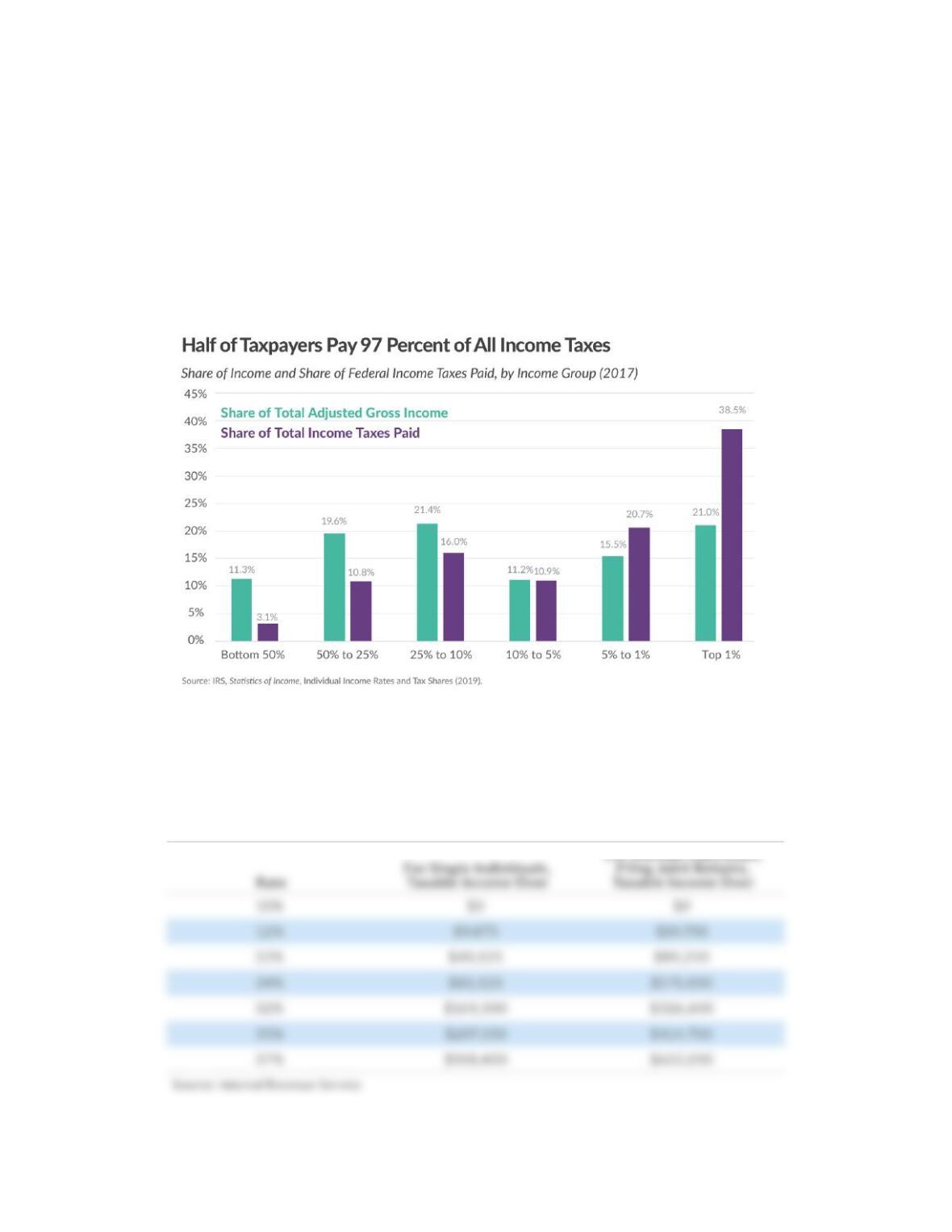
Many individual income taxes are “progressive,” meaning tax rates increase as a taxpayer’s income
increases, resulting in higher-earners paying a larger share of income taxes than lower-earners.
The U.S., for example, levies income tax rates ranging from 10 percent to 37 percent that kick in at
specific income thresholds outlined below. The income ranges for which these rates apply are called
tax brackets. All income that falls within each bracket is taxed at the corresponding rate.
2020 Tax Brackets and Rates