Halina Cathrein
The Great Recession
December 12, 2017
BUS 603 Macroeconomics
The Great Recession happened to all of us in the early 2000’s and represented a sharp
decline in economic activity with Americans in the 2000’s. The Great Recession was the largest
fall in the economy since the Great Depression in the 1930’s and lasted domestically from 2007
to 2009. The root cause of the recession was due to the burst of the housing market bubble, it
went from boom to bust, because large amounts of mortgage-backed-securities and derivatives
lost most of their value. “As the financial crisis and recession deepened, measures intended to
revive economic growth were implemented on a global basis. The United States, like many
other nations, enacted fiscal stimulus programs that used different combinations of
government spending and tax cuts. These programs included the Economic Stimulus Act of
2008 and the American Recovery and Reinvestment Act of 2009” (Rich, n.d.)
The gross domestic product (GDP) declined in an excess of 10% and the unemployment
rate reached a level of 25% in the United States. Since World War II this was the longest
recession that the United States had faced, though the unemployment rates never reached
what it did in the 1930’s, it impacted the economy significantly. “The financial effects of the
Great Recession were similarly outsized: Home prices fell approximately 30 percent, on
average, from their mid-2006 peak to mid-2009, while the S&P 500 index fell 57 percent from
its October 2007 peak to its trough in March 2009. The net worth of US households and
nonprofit organizations fell from a peak of approximately $69 trillion in 2007 to a trough of $55
trillion in 2009”. (Rich, n.d.)
One of the sole reasons believed by many that the great recession occurred is the fall of
the housing market. “The government’s encouragement of broad homeownership induced
banks to lower their rates and lending requirements, which spurred a home-buying frenzy that
drove prices up by 50% to 100% depending on the region of the country.” (Investopedia, 2017).
Most Americans at this point in 2007 were flipping houses, buying homes for cheap and selling
them for a profit, “The resulting demand bid up house prices, more so in areas where housing
was in tight supply. This induced expectations of still more house price gains, further increasing
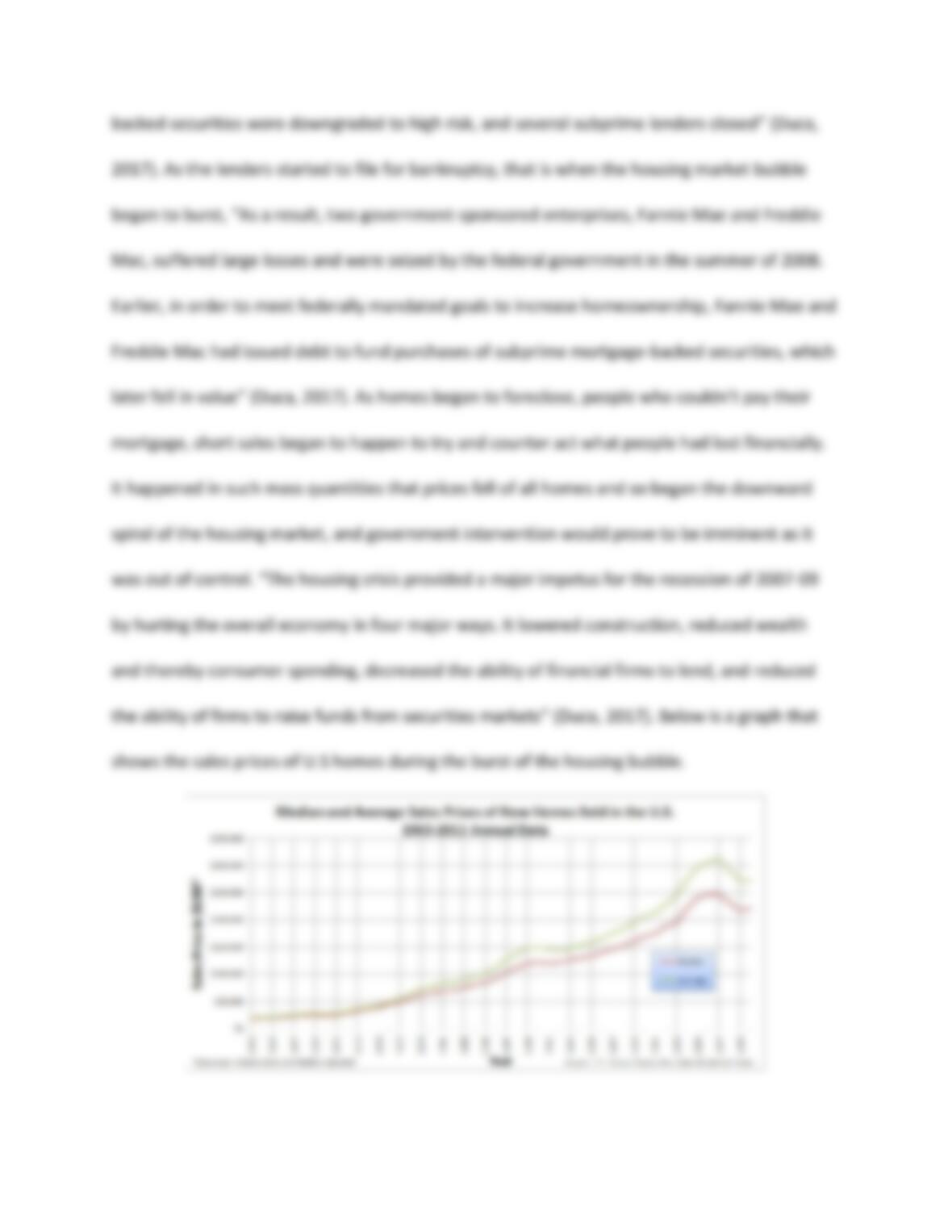
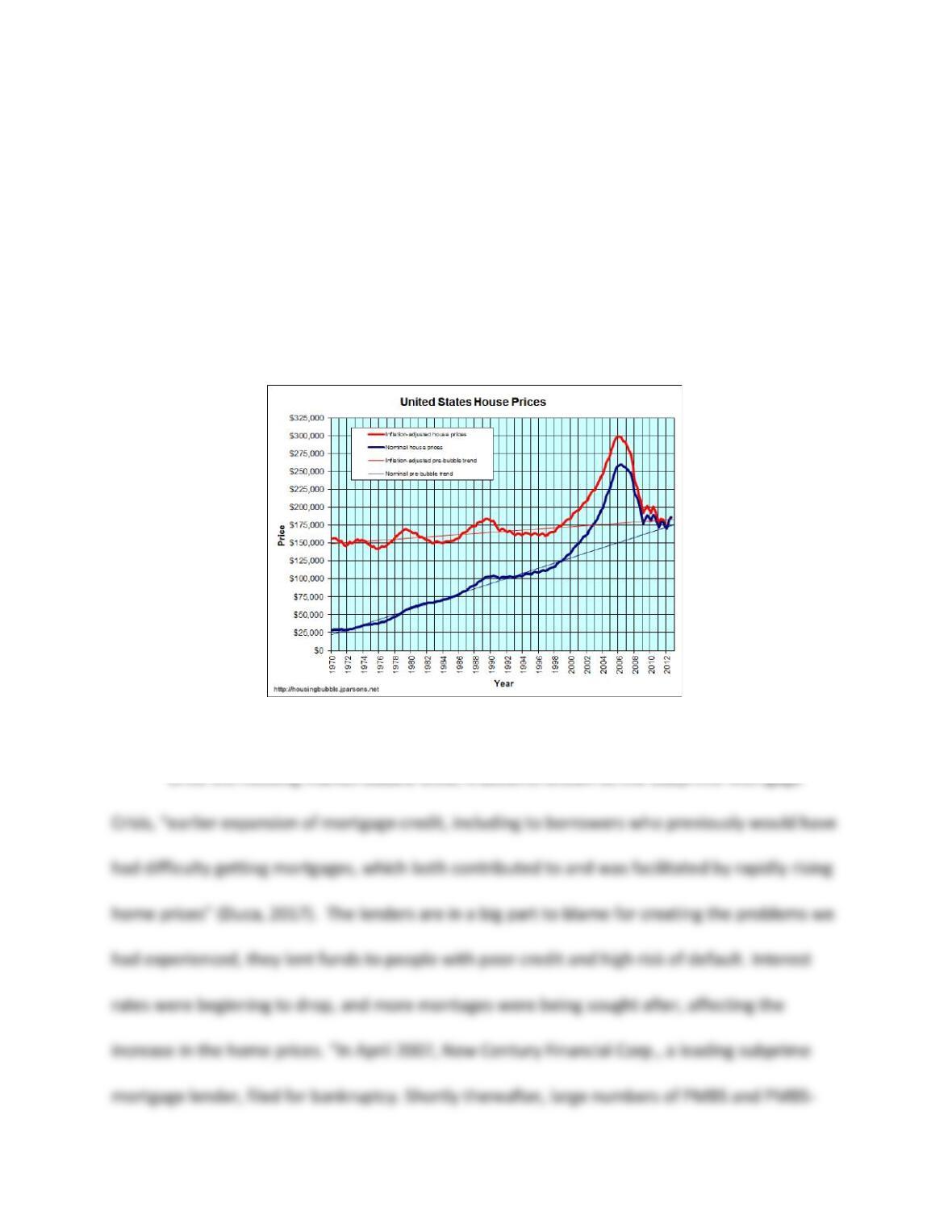
housing demand and prices” (Duca, 2017). As shown below, the housing prices of the United
States plus the inflated prices during 2007-2008 peaked during the bubble bursting.
(Doctor Housing Bubble, n.d.)