The financial crisis and corporate debt maturity: The role of
banking structure
Víctor M. González ⁎
University of Oviedo, Department of Business Administration, Avda. del Cristo s/n, 33071 Oviedo, Spain
article info abstract
Article history:
Received 24 February 2015
Received in revised form 1 October 2015
Accepted 3 October 2015
Available online 12 October 2015
This paper analyses the influence of the financial crisis on corporate debt maturity for 39 coun-
tries during the period 1995–2012. The results reveal the importance of the dependence of
firms on external finance and the banking structure of the countries on debt maturity during
the financial crisis. Corporate debt maturity was found to decline during the financial crisis.
However, only those firms that were more dependent on external finance before the onset
of the financial crisis suffered this reduction. The reduction in corporate debt maturity is the
result of a higher average increase in short-term debt than in long-term debt. The financial cri-
sis had a stronger negative effect on corporate debt maturity in countries with less bank con–
centration, while the debt maturity of larger firms decreased less as a result of the financial
crisis than the debt maturity of smaller firms in countries where banks play an important
role in the financing of the private sector.
© 2015 Elsevier B.V. All rights reserved.
JEL classification:
G18
G32
Keywords:
Financial crisis
Debt maturity
Institutions
Banking structure
1. Introduction
The global financial crisis is considered by many economists the worst financial crisis since the Great Depression of the 1930s.
The current crisis has opened up an interesting debate regarding its consequences for the real economy. Financial institutions fac-
ing losses may reduce the availability of credit and increase the cost of accessing credit. During the financial crisis, this resulted in
a credit crunch that played a crucial role in the failure of businesses, a decline in consumer wealth and a downturn in economic
activity leading to the 2008–2012 global recession and contributing to the European sovereign-debt crisis. An important strand of
papers analysing the consequences of the financial crisis has focused on its influence on the lending channel. Most papers have
shown that firm leverage and investment decreased as a consequence of the financial crisis.
In this context, the aim of this paper is to study the impact of the current crisis on one aspect of capital structure, namely
corporate debt maturity, analysing whether corporate debt maturity decreased as a result of the financial crisis in line with the
imposition of more stringent credit conditions for borrowers. The paper also considers how dependence on external finance
and country-level determinants influence the effect of the financial crisis on debt maturity.
In contrast to the majority of previous papers analysing the impact of the financial crisis on the real economy, we consider the
influence of the financial crisis within an international context.
1
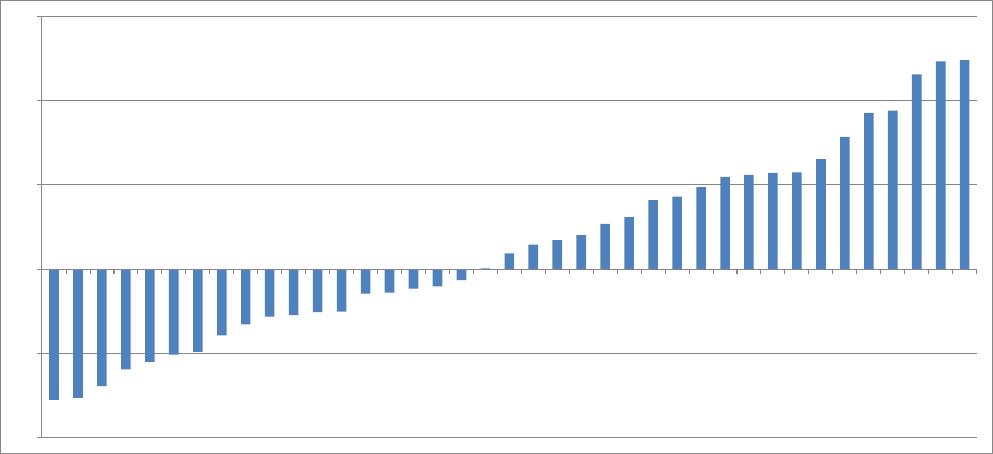
Fig. 1 shows the differences in the average ratio of long-term debt
to total debt before and during the crisis for each country. The average ratio of long-term debt to total debt is calculated for the
Journal of Corporate Finance 35 (2015) 310–328
⁎Tel.: +34 985102826; fax: +34 985103708.
E-mail address: vmendez@uniovi.es.
1
Most of this literature has focused on the influence of the financial crisis within the US context (Almeida et al., 2011; Duchin et al., 2010; Ivashina and Scharfstein,
2010;andSantos, 2011, among others). The exception are the papers by Campello et al. (2010),Carvalho et al. (forthcoming) and Lins et al. (2013), which analyse the
impact of the crisis on real decisions made by corporations in an international context.
http://dx.doi.org/10.1016/j.jcorpfin.2015.10.002
0929-1199/© 2015 Elsevier B.V. All rights reserved.
Contents lists available at ScienceDirect
Journal of Corporate Finance
journal homepage: www.elsevier.com/locate/jcorpfin
-10
-5
0
5
10
15
South Korea
US
India
Sweden
Australia
Canada
Norway
Argentina
Switzerland
Japan
Taiwan
UK
Israel
Finland
Thailand
New Zealand
Singapore
Indonesia
Denmark
South Africa
Italy
Pakistan
Turkey
Peru
Malaysia
Mexico
France
Spain
Hong Kong
Germany
Philippines
Belgium
Ireland
Netherlands
Greece
Chile
Brazil
Portugal
Austria
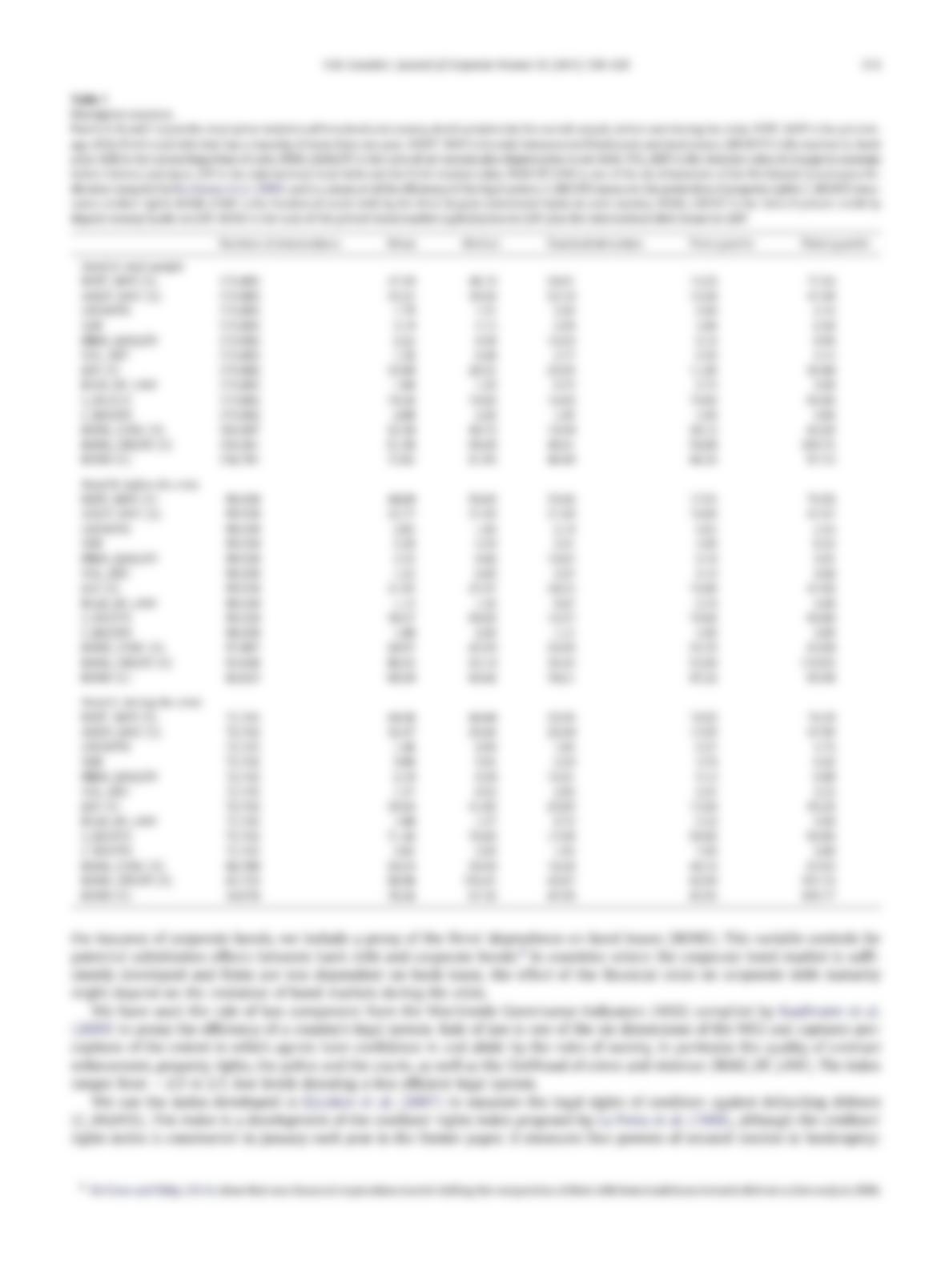
Fig. 1. Differences in debt maturity across countries during the financial crisis. This figure represents the difference between the average long-term debt to total debt ratio before (1995–2007) and during (2008–2012) the
crisis for the countries included in our sample. Long-term debt is debt with a maturity of more than one year.
Data from the Worldscope database.
311V.M. González / Journal of Corporate Finance 35 (2015) 310–328

periods 1995–2007 and 2008–2012 for each country. Differences in debt maturity can be seen to vary widely across countries. For
example, the average percentage of long-term debt for firms in South Korea, the USA and India decreased 7% during the crisis
compared to average values prior to 2008. However, the average percentage of long-term debt increased sharply as a result of
the financial crisis in countries such as Austria, Portugal and Brazil. In fact, the debt maturity of firms increased in more than
half of the countries included in the sample. This evidence thus reveals that the variation in corporate debt maturity during
the financial crisis may be affected by differences in country characteristics.
The contribution of the paper comprises the analysis of the influence of the financial crisis on debt maturity in a large cross–
country panel of data for the period 1995–2012. We also study whether the effect of the financial crisis on corporate debt matu–
rity is affected by firm- and country-level determinants of debt maturity. In particular, we investigate whether this effect exists
depending on the dependence of firms on external finance and on the banking structure of the country. First, Dell’Ariccia et al.
(2008) and Duchin et al. (2010) provide evidence consistent with the bank lending supply shock being the origin of the reduction
in performance or investment following banking crises. However, Kahle and Stulz (2013) show a decrease in borrowing and cap–
ital expenditures for US industrial firms that is not a consequence of a bank lending or credit supply shock. Within this context,
we use the changes in corporate debt maturity during the crisis to investigate whether these changes are in line with a credit
supply or a demand effect. Second, as the financial crisis had an important impact on the solvency of banks, the weight of
bank credit in the financing of the private sector and bank concentration might influence the credit standards set by banks.
We are not aware of any other study that has investigated the impact of the global financial crisis on corporate debt maturity
within an international context.
2
Almeida et al. (2011) test whether US firms with large fractions of their long-term debt maturing
at the time of the crisis present more pronounced negative outcomes than otherwise similar firms. Firms whose long–term debt
was maturing right after the onset of the crisis cut their investment rates more than other firms did. However, these authors do
not analyse the effect of financial crisis on corporate debt maturity or how firm and country characteristics influence the effect of
the financial crisis on debt maturity.
The findings of the present paper are consistent with a small reduction in corporate debt maturity as a result of the financial
crisis. However, this result conceals differences according to firm dependence on external finance and institutional features of the
countries. Our findings show that the financial crisis had a negative effect on corporate debt maturity for those firms with a great-
er dependence on external finance and in countries with lower levels of efficiency of the legal system and bank concentration. We
thus show that the variation in corporate debt maturity during the financial crisis is consistent with a credit supply shock, as only
firms that have more dependence on external finance suffered reductions in debt maturity following the onset of the crisis.
Furthermore, our results reveal that bank concentration helped to reduce the negative impact of the financial crisis on corporate
debt maturity. This result is consistent with the idea that firms in less concentrated credit markets are subject to greater financial
constraints (Berlin and Mester, 1999; Petersen and Rajan, 1995) and in keeping with the benefits of relationship banking. How-
ever, the negative effect of the financial crisis on corporate debt maturity was greater in countries where the weight of banks in
the economy is significant, affecting mainly smaller firms. Finally, our results are robust to the use of alternative measures of the
financial crisis and reveal that the effect of the crisis on corporate debt maturity was greater during the period 2010–2011. We
also provide evidence that the effect of the financial crisis on corporate debt maturity depends on the intensity of the financial
crisis. In fact, firms in those countries where the decline in economic activity or the percentage of nonperforming loans are higher
present a greater reduction in debt maturity.
The rest of the paper presents a review of the literature and discusses the implications tested in Section 2,whileSection 3 de-
scribes the database and methodology employed. Section 4 discusses the empirical results and Section 5 provides robustness tests.
Finally, Section 6 concludes the paper.
2. Literature review
The global financial crisis has opened up a debate regarding its consequences for the real economy. In this context, several pa-
pers have analysed the impact of the financial crisis on the lending channel. Chari et al. (2008) call into question the way in which
the financial crisis has affected the economy, showing that the crisis is not associated with a decline in bank lending. However,
Ivashina and Scharfstein (2010) show that syndicated lending started to decline in mid-2007 and fell sharply during the bank
panic that began in September 2008 for US firms.
3
They also highlight that there was a simultaneous run by borrowers who
drew down their lines of credit, leading to an increase in loans reported on bank balance sheets. Their paper also shows that
some banks were more adversely affected than others were. In fact, banks with more deposit financing cut their syndicated lend–
ing less than banks without access to this more stable source of funding.
Evidence has not only revealed that lending has reduced as a consequence of the crisis, but that it has also led to an increase in
borrowing costs and changes in investment decisions. Santos (2011) shows that firms paid higher loan spreads during the
2
Deesomsak et al. (2009) investigate the effects of firm-specific and country-specific characteristics and the 1997 Asian financial crisis on the debt maturity structure
of firms in the Asia Pacific region (Thailand, Malaysia, Singapore and Australia), comparing the consequences of the crisis for these four countries. Their paper reveals
that the crisis had several significant effects on both firm-specific and market-wide determinants of debt maturity, especially in Thailand and Malaysia, where the crisis
originated.
3
The bank lending survey by the European Central Bank (ECB) shows that the financial crisis also reduced the credit issued by banks in European countries. This sur–
vey is addressed to senior loan officers of a representative sample of euro area banks and is conducted four times a year. The sample group participating in the survey
comprises around 90 banks from all euro area countries and takes into account the characteristics of their respective national banking structures. Detailed information
on the survey and results are available at https://www.ecb.europa.eu/stats/money/surveys/lend/html/index.en.html.
312 V.M. González / Journal of Corporate Finance 35 (2015) 310–328

subprime crisis and that the increase in loan spreads was higher for firms which borrowed from banks that incurred greater
losses. In a survey of 1050 CFOs, Campello et al. (2010) find that more than half the respondents cancelled or postponed their
planned investments because of financial constraints during the crisis. Furthermore, their evidence indicates that constrained
firms report significantly larger planned percentage cuts compared to their peers in technology and capital spending and employ-
ment. Carvalho et al. (forthcoming) show that the 2007–2009 financial crisis is associated with equity valuation losses and invest–
ment cuts to borrower firms with the strongest lending relationships with banks. Almeida et al. (2011) reveal that US firms
whose long-term debt was largely maturating immediately after the third quarter of 2007 cut their investment-to-capital ratio
more than other similar firms whose debt was due well after the crisis. Duchin et al. (2010) also reveal that corporate investment
by US firms declined significantly following the onset of the financial crisis and this decline was greater for firms dependent on
external finance. In line with this evidence, Vermoesen et al. (2013) report that Belgium firms which, at the start of the crisis, had
a larger part of their long–term debt maturing within the next year experienced a significantly larger drop in investments in 2009.
Moreover, this effect was mainly driven by firms which are more likely to be financially constrained. Lins et al. (2013) show that
family-controlled firms underperformed significantly compared to other firms during the global financial crisis using a sample of
8584 firms from 35 countries. All the above evidence thus reveals the important effects of the financial crisis on the lending chan-
nel, providing support for the existence of significant supply constraints in terms of both quantity and the price of the credit lead-
ing to reductions in investment rates.
In this context, the present paper analyses the influence of the recent financial crisis on corporate debt maturity. Ivashina and
Scharfstein (2010) and Campello et al. (2012) reveal that credit lines became particularly important during the first quarters of
the financial crisis, as they replaced bank loans, providing the liquidity needed to invest during the crisis and ameliorating the
negative impact of scarce credit on real activities. As most credit lines have a shorter maturity than bank loans (Jiménez et al.,
2007),
4
we expect the financial crisis to be associated with a shortening of corporate debt maturity. Moreover, the imposition
of more stringent credit standards by banks, substituting long-term loans by shorter loans due to the solvency problems suffered
by banks, may also lead to a reduction in debt maturity. Consequently, our first hypothesis is as follows:
H1. The financial crisis has reduced corporate debt maturity as a result of the use of shorter debt.
However, we expect the influence of the financial crisis on corporate debt maturity not to have an equally detrimental effect
on all firms and that the observed differences in debt maturities will depend on the dependence on external finance and on the
structure of the banking system in each economy.
The influence of financial crises on corporate borrowing and investment may be explained from two alternative theories. On
the one hand, credit supply shock theory poses that the credit system does not renew loans as a response to a shock in the finan-
cial system
5
(Brunnermeier, 2009; Shleifer and Vishny, 2010). According to this view, debt issuance and corporate investment
should fall more for credit-dependent firms. On the other hand, the effect of the financial crises on the real economy could be
the result of a demand shock (Kahle and Stulz, 2013). According to this theory, increases in uncertainty and decreases in the de–
mand for products following financial crises lead to a decrease in investment and hence in demand for credit to finance invest-
ment. Dell‘Ariccia et al. (2008) offer evidence that there is a real cost to banking crises, as sectors that are more dependent on
external finance perform relatively worse during banking crises. Duchin et al. (2010) also provide evidence in line with a credit
supply shock, as the decline in corporate investment following the recent financial crisis is higher for firms that have low cash
reserves or high net short–term debt, are financially constrained or operate in industries dependent on external finance. However,
Kahle and Stulz (2013) show evidence that is not in line with the view that a bank lending supply shock or a credit supply shock
constitute predominant casual factors to explain the financial and investment policies of firms during the recent crisis. In this con-
text, our second hypothesis is the following:
H2. The reduction in debt maturity would be higher for firms with a greater dependence on external finance before the crisis if
credit supply shock is the dominant effect.
Access to external financing will partly depend on the banking structure of each economy. Banks are central to business activ-
ity, as they are the main providers of debt financing in most economies. Financial intermediaries directly influence corporate
financial structure. They have advantages in collecting information (Diamond, 1984) and incentives to use this information to
discipline borrowers due to the fact that they benefit from economies of scale in obtaining information and do not suffer from
free-rider problems.
Specifically, we consider that the banking structure of the country might influence the effect of the financial crisis on corporate
debt maturity. Fan et al. (2012) report a negative effect of the weight of banks in the economy on debt maturity as a result of
bank preferences for short-term debt. Demirgüç-Kunt and Maksimovic (1999) also stress that short-term debt allows banks to
use their advantages in monitoring borrowers. Short-term debt forces lenders to monitor corporate performance more frequently
and enables the bank to change the terms of contract or not to renew the loan (Diamond, 1991; Rajan, 1992). Large firms have
better access to domestic and international markets and are therefore usually less dependent on domestic bank credit. However,
as they are subject to more financing constraints, smaller firms will be affected to a greater extent by bank preferences. Conse-
quently, we expect a negative relationship between the weight of banks in the economy and corporate debt maturity, particularly
4
Campello et al. (2012) find that the maturity of credit lines in their sample for European and US firms is about 30 months before the crisis, while it is about
27 months during the crisis (2008–2009).
5
A more specific theory is the bank supply shock theory, in which banks are the ones that reduce the supply of loans as a result of a shock in the financial system.
313V.M. González / Journal of Corporate Finance 35 (2015) 310–328
in the case of smaller firms. We forecast that this negative relationship will be stronger during the financial crisis, as bank diffi–
culties lead banks to lend on a shorter-term basis, replacing long-term by short-term debt. In line with the above arguments, our
third hypothesis is as follows:
H3. The weight of bank credit in the financing of the private sector had a more negative effect on corporate debt maturity during
the financial crisis, especially in the case of smaller firms.
The banking literature suggests that bank concentration has two potential effects on firm leverage. In a market without asym-
metric information, there will be a negative relationship between bank concentration and firm leverage given that higher bank
market power results in a higher price for debt and less credit availability. However, in markets with asymmetric information,
higher bank market concentration may increase the incentives of banks to invest in the acquisition of soft information by estab–
lishing close relationships with borrowers over time. This will lead to greater availability of credit, thus reducing corporate finan-
cial constraints (Boot, 2000; Dell‘Ariccia and Marquez, 2004).
The importance of bank concentration has been argued by Petersen and Rajan (1995) and Berlin and Mester (1999). These authors
show that US firms in less concentrated credit markets are subject to greater financial constraints. They offer evidence from small
business data indicating that creditors are more likely to finance credit-constrained firms when credit markets are concentrated be–
cause it is easier for these creditors to internalize the benefits of assisting firms. More recently, Barath et al. (2011) show the benefits
of borrowing from relationship lenders even for large firms with a much wider choice of financing options available. The existence of a
positive relationship between bank concentration and credit availability is in line with the fact that relationship banking serves to mit-
igate information asymmetries between creditors and debtors. Given that long-term debt is subject to greater information
asymmetries than short-term debt, the positive effect of bank concentration on leverage could be concentrated in long-term debt.
Thus, a positive relationship might be assumed between bank concentration and debt maturity. From this point of view, the financial
crisis could have a weaker effect on corporate debt maturity because of the benefits of relationship banking in those countries where
bank concentration is higher, seeing as increased competition is likely to erode the benefits of relationship lending. However, given
that the financial crisis has affected the solvency of banks, it could also result in the rupture of bank–firm relationships. As both
types of relation are theoretically possible, we make no a priori forecast as to whether relationship banking has increased or decreased
as a result of the financial crisis, treating it as an empirical issue.
3. Databases, methodology and variables
Our source for firm data is the Worldscope database, which contains financial statement data and stock prices from many
314 V.M. González / Journal of Corporate Finance 35 (2015) 310–328