Hector Ronquillo The Euro 03/19/18
The Euro
The euro, which is the second most important international currency after the U.S dollar,
is the official currency of 19 out of 28 European countries, which are Spain, Austria, Belgium,
Cyprus, Estonia, Finland, France, Germany, Greece, Ireland, Italy, Latvia, Lithuania,
Luxembourg, Malta, the Netherlands, Portugal, Slovakia, and Slovenia, and they are known as
the Euro area. All the currencies in the world have a purpose and their benefits. Based on the
article of Europa.eu, “over 175 million people worldwide use currencies which are pegged to the
euro.”(Europa.eu, 2017). The euro currency has many benefits, which are eliminating fluctuating
exchange rates and exchange costs, it helps keeping the economy stable, it easier for companies
to trade with countries with the same currency, and the most important benefit is that people get
interested in the currency, and they travel to these countries to be able to use it. Based on
personal experience, I can agree with this statement because when I traveled to Europe, I was so
happy to expend money in Euros. I sometimes just wanted to see every bill and every different
coin they had, so I was willing to spend money on the different stores and services that Europe
offered.
Background
The euro initiated in 1979 with the creation of the European Currency Unit. At this time,
there were only 12 countries associated in the Eurozone. There were attempts of generating a
single currency between European countries, but it will always have failed. Each country had
their own currency and having a currency for each country would always generate problems and
differences within their currencies and the U.S dollar.
Hector Ronquillo The Euro 03/19/18
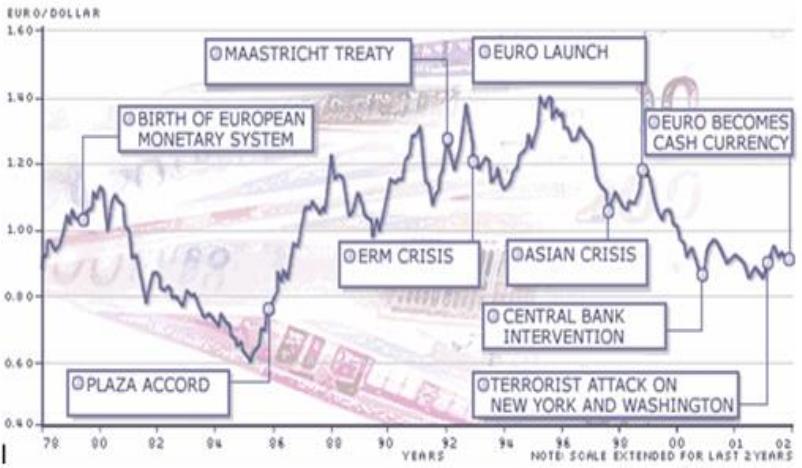
The graph demonstrates how there was an attempt to use the euro as a single currency.
Many events happened between those 20 years, but the Maastricht Treaty was the most
important one. In 1999, the euro was introduced as an accounting currency, which was only used
for unique purposes. Then, it started to be used as an electronic currency. Finally, in 2002, the
euro was launched as a currency, which people could legally use euro as cash. Based on an
article, “the German Mark, French Franc, Italian Lira, and other local currencies ceased to exist
in July 1, 2002.” (History of Euro). By doing these, all the other currencies that other countries
had started going down and after a while, they disappeared.
Problem with the euro and their economy
On August 2001, the European Central Bank revealed the first euro bills and coins. In the
first years of the euro as the monetary currency, the economy improved significantly in Europe.
Many countries started to see the success of the new currency, and they decided to join all the
other countries creating the European zone. Everything was working right. Trade increased 50%,
GDP growth was almost similar as the United States, inflation was below 2%, which was
Hector Ronquillo The Euro 03/19/18
considered one of the main priorities. Then, in 2008, the worst recession since World War II
started generating many concerns. In 2009, many problems started rising because of debt related
issues. Economies where growing, but many of this rise of the economy was related to debts.
Many of these related debts were coming from European countries and after the Dubai sovereign
crisis in 2009, many concerns started to show up because all the debt related issues many
countries from the Eurozone were having. “The Greek government admitted that its debts had
reached 300 billion euros, a debt-to-GDP ratio of 150 per cent- one of the highest in post-war
economic history.” (Shore, 2012). With all the problems and the debt related issues of the
European countries, many dilemmas started to raise like the extinction of the euro and the
separation of many countries of the Eurozone. There was a lot of uncertainty.
Countries like Greece, Ireland, Portugal, and Cyprus were forced to leave the Eurozone
because they were in huge debt. All of these countries after leaving the Eurozone were hit with
huge unemployment problems and poverty. Their economies crashed, and they began having
many problems.
Hector Ronquillo The Euro 03/19/18
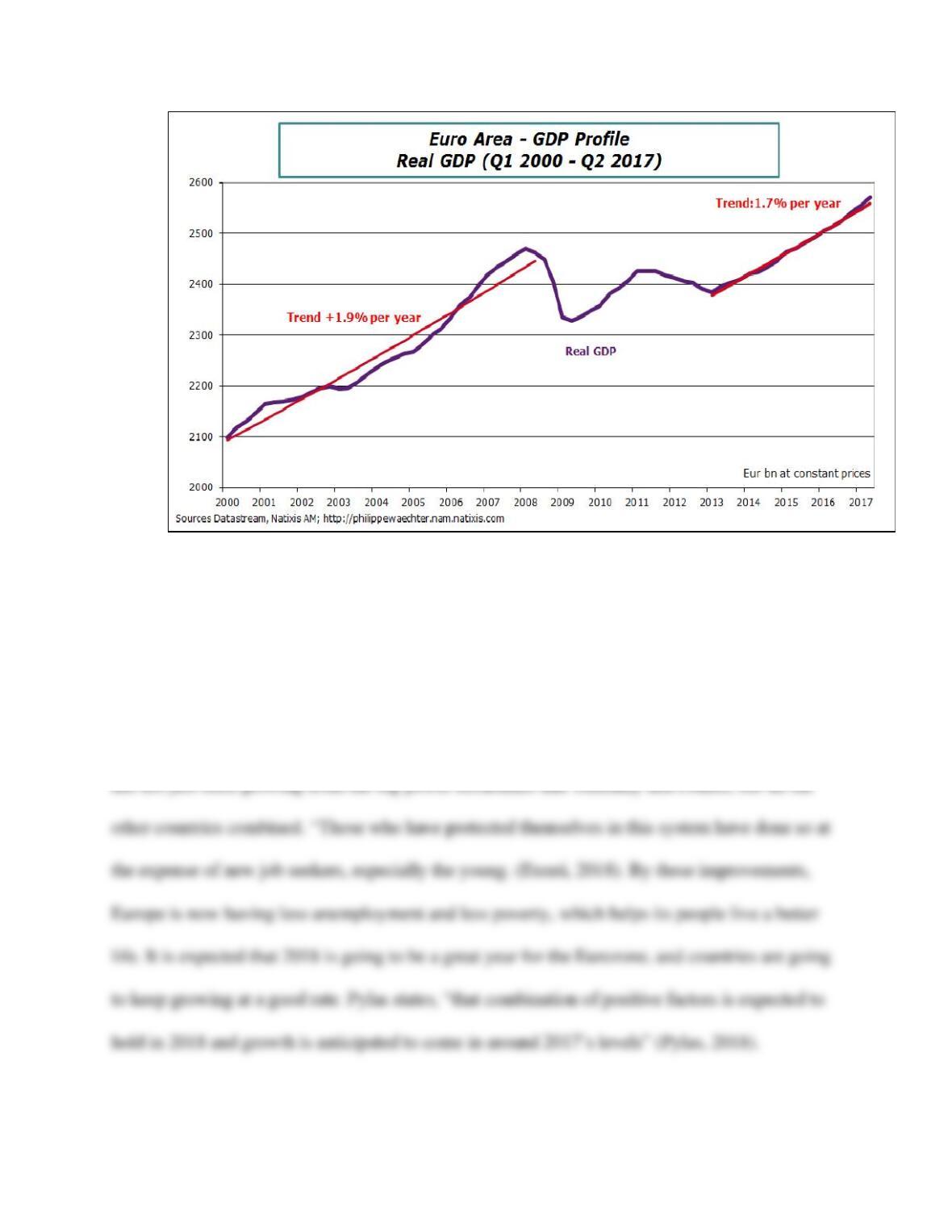
In the graph, we can see how the euro started having all the problems starting from 2008.
The euro has been recovering since then, and it has been surviving the tragic periods. Nowadays,
the euro has been improving. According to Pylas, “the eurozone economy expanded by 2.5%.
That was up from 2016 and its best performance since 2007, when it grew 3%. The eurozone
even grew faster than the United States, which expanded by 2.3” (Pylas, 2018). The economy