Corporate Finance
Fifth Edition
Chapter 1
The Corporation and Financial
Markets
Note: Slide deck edited and modified with
additions and deletions by instructor
Copyright © 2020, 2017, 2014, 2011 Pearson Education, Inc. All Rights Reserved
Slide in this Presentation Contain Hyperlinks. JAWS users
should be able to get a list of links by using INSERT+F7

Copyright © 2020, 2017, 2014, 2011 Pearson Education, Inc. All Rights Reserved
Course Overview
•Maximize shareholder wealth (stock price) subject to
sustainable and ethical business practices consistent with
long-term objectives
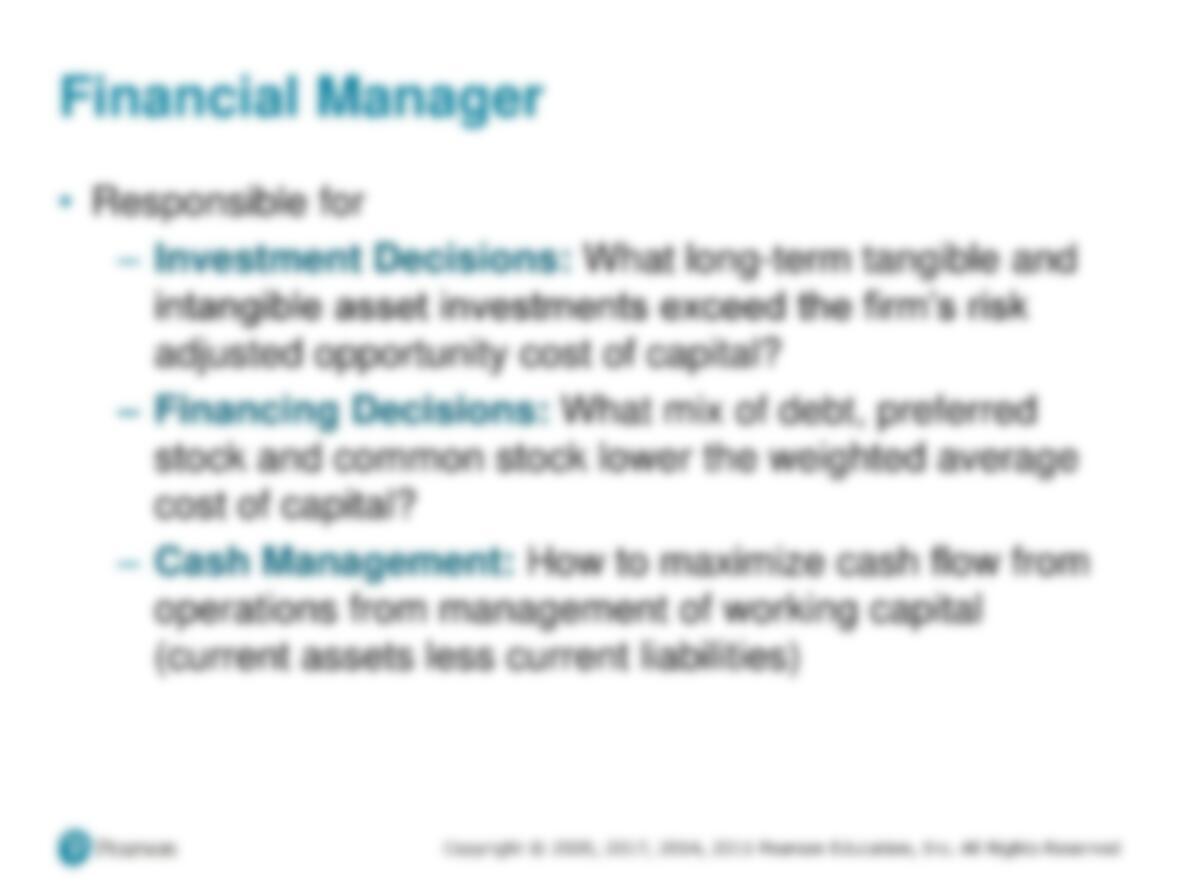
•Examine investing and financing decisions made by
financial managers to increase firm value
•Apply financial analysis tools of time value of money and
risk management to main topics of course
•Valuation of bonds and stocks based on risk-adjusted
future cash flows
•Evaluate capital projects based on future cash flows
discounted by the weighted average cost of capital

Copyright © 2020, 2017, 2014, 2011 Pearson Education, Inc. All Rights Reserved
Chapter Learning Objectives
•Discuss the division of corporate ownership into shares of
stock; evaluate the implications of that division for
corporate decision making.
•Evaluate the goal of maximizing the value of the firm
consistent with social and ethical considerations
•Identify potential conflicts of ownership vs. control issues
and the agency problem
•Compare and contrast the characteristics of shares that
are publicly traded and those that are not.
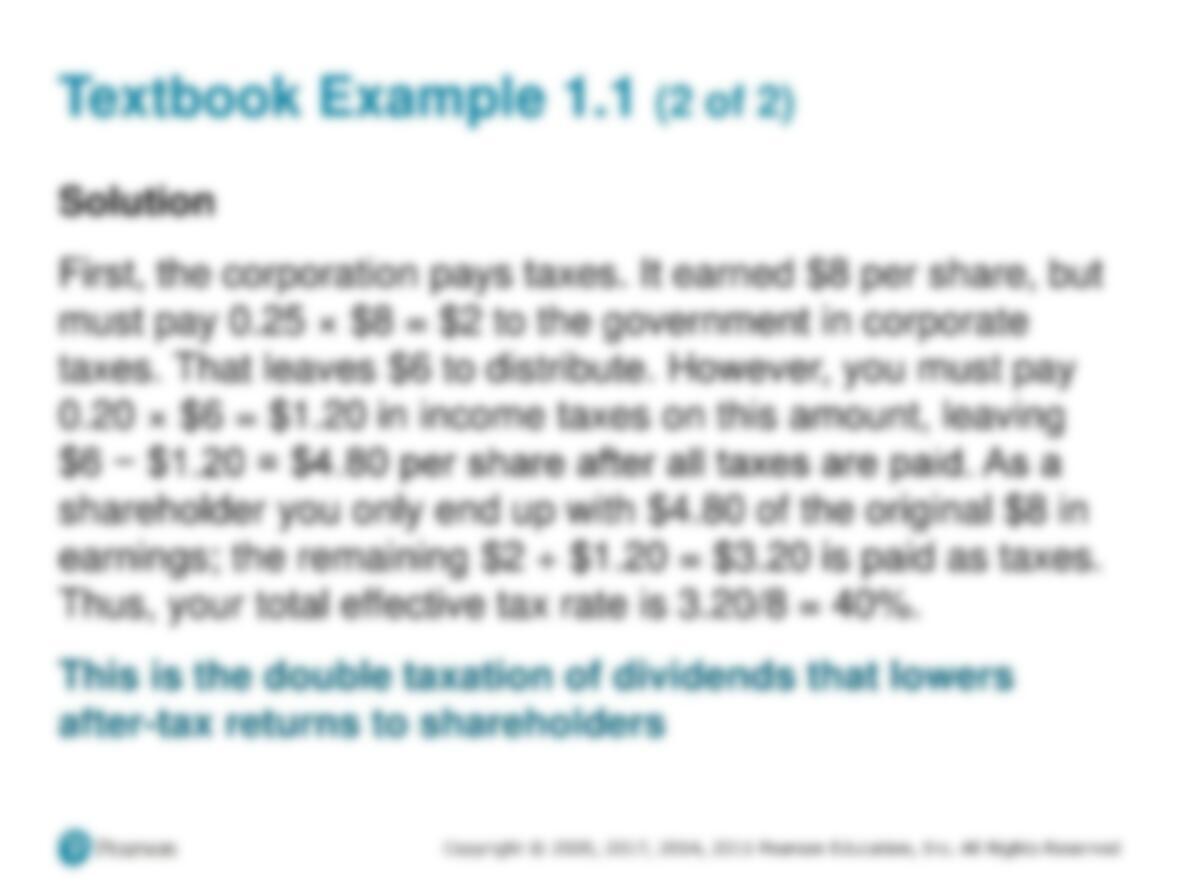
Textbook Example 1.1 (1 of 2)
Taxation of Corporate Earnings
Problem
You are a shareholder in a corporation. The corporation
earns $8 per share before taxes. After it has paid taxes, it