
Note: This text is intended to be a high-level introduction to accounting/bookkeeping. The
author will make his best effort to keep the information current and accurate; however, given
the ever-changing nature of industry regulations, no guarantee can be made as to the accuracy
of the information contained within.
Accounting Made Simple:
Accounting Explained in 100 Pages or Less
Mike Piper
Copyright © 2010 Mike Piper
No part of this publication may be reproduced or distributed without express permission of the author.
Simple Subjects, LLC
Chicago, Illinois 60626
ISBN: 978-0-9814542-2-1
www.ObliviousInvestor.com
Dedication
To you, the reader. Thank you.
Your Feedback is Appreciated.
As the author of this book, I’m very interested to hear your thoughts. If you find the book
helpful, please let me know! Alternatively, if you have any suggestions of ways to make the
book better, I’m eager to hear that too.
Finally, if you’re unsatisfied with your purchase for any reason, let me know, and I’ll be
happy to provide you with a refund of the current list price of the book.
You can reach me at: mike@simplesubjects.com.
Best Regards,
Mike Piper

Table of Contents
1. Accounting Equation
Always true, no exceptions
Owners’ Equity is just a plug
My asset is your liability
2. Balance Sheet
It’s a snapshot
Assets
Liabilities
Equity
Current assets and liabilities vs. long-term assets and liabilities
Two-period balance sheets
3. Income Statement
Shows period of time rather than point in time
Gross Profit & Cost of Goods Sold
Operating Income vs. Net Income
4. Statement of Retained Earnings
Bridge between financial statements
Dividends are not an expense!
Retained Earnings: Not the same as cash
5. Cash Flow Statement
As opposed to income statement
Cash flow from operating activities
Cash flow from investing activities
Cash flow from financing activities
6. Financial Ratios
Liquidity ratios
Profitability ratios
Financial leverage ratios
Asset turnover ratios
Part Two Generally Accepted Accounting Principles (GAAP)
7. What is GAAP?
Who has to follow GAAP?
8. Debits and Credits

Double-entry system
The general ledger
T-accounts
The trial balance
9. Cash vs. Accrual
Cash method
Accrual method
Prepaid expenses
Unearned revenue
10. Other GAAP Concepts & Assumptions
Historical cost
Materiality
Money unit assumption
Entity assumption
Matching principle
11. Depreciation of Fixed Assets
Straight-line depreciation
Accumulated Depreciation
Salvage value
Gain or loss on sale
Other depreciation methods
Expensing immaterial purchases
12. Amortization of Intangible Assets
What are intangible assets?
Straight-line amortization
Legal life vs. expected useful life
13. Inventory & CoGS
Perpetual method
Periodic method
Calculating Cost of Goods Sold
FIFO vs. LIFO
Average cost method
Conclusion: The Humble Little Journal Entry
Introduction
Like the other books in the “…in 100 Pages or Less” series, this book is designed to give
you a basic understanding of the topic (in this case, accounting), and do it as quickly as
possible.
The only way to pack a topic such as accounting into just 100 pages is to be as brief as
possible. In other words, the goal is not to turn you into an expert. With 100 pages, it’s simply
not possible to provide a comprehensive discussion of every topic in the field of accounting.
(So if that’s what you’re looking for, look for a different book.)
Now, having made that little disclaimer, I should state that I do think this book will help you
achieve a decent understanding of the most important accounting concepts.
So What Exactly Is Accounting?
Some professors like to say that accounting is “the language of business.” That definition has
always been somewhat too abstract for my tastes. That said, all those professors are right.
At its most fundamental level, accounting is the system of tracking the income, expenses,
assets, and debts of a business. When looked at with a trained eye, a business’s accounting
records truly tell the story of the business. Using nothing but a business’s “books” (accounting
records), you can learn practically anything about a business. You can learn simple things such
as whether it’s growing or declining, healthy or in trouble. Or, if you look closely, you can see
things such as potential threats to the business’s health that might not be apparent even to
people within the company.
Where We’re Going
This book is broken down into two main parts:
1. A discussion of the most important financial statements used in accounting: How to read each
one, as well as what lessons you can draw from each.
2. A look at accounting using Generally Accepted Accounting Principals (GAAP), including:
o Topics such as double-entry bookkeeping, debits and credits, and the cash vs. accrual
methods.
o How to account for some of the more complicated types of transactions, such as depreciation
expense, gains or losses on sales of property, inventory and cost of goods sold, and so on.
So let’s get started.
PART ONE
Financial Statements
CHAPTER ONE
The Accounting Equation
Before you can create financial statements, you need to first understand the single most
fundamental concept of accounting: The Accounting Equation.
The Accounting Equation states that at all times, and without exceptions, the following will
be true:
Assets = Liabilities + Owners’ Equity
So what does that mean? Let’s take a look at the equation piece by piece.
Assets: All of the property owned by the company.
Liabilities: All of the debts that the company currently has outstanding to lenders.
Owners’ Equity (a.k.a. Shareholders’ Equity):
The company’s ownership interest in its assets, after all debts have been repaid.
Let’s use a simple, everyday example: homeownership.
EXAMPLE: Lisa owns a $300,000 home. To pay for the home, she took out a mortgage, on
which she still owes $230,000. Lisa would be said to have $70,000 “equity in the home.”
Applying the Accounting Equation to Lisa’s situation would give us this:
Assets
=
Liabilities
+
Owners’ Equity
$300,000
=
$230,000
+
$70,000

In other words, owners’ equity (the part that often confuses people) is just a plug figure. It’s
simply the leftover amount after paying off the liabilities/debts. So while the Accounting
Equation is conventionally written as:
Assets = Liabilities + Owners’ Equity,
…it might be easier to think of it this way:
Assets – Liabilities = Owners’ Equity
If, one year later, Lisa had paid off $15,000 of her mortgage, her accounting equation would
now appear as follows:
Assets
=
Liabilities
+
Owners’ Equity
$300,000
=
$215,000
+
$85,000
Because her liabilities have gone down by $15,000—and her assets have not changed—her
owner’s equity has, by default, increased by $15,000.
My Asset is Your Liability
One concept that can trip up accounting novices is the idea that a liability for one person is, in
fact, an asset for somebody else. For example, if you take out a loan with your bank, the loan is
clearly a liability for you. From the perspective of your bank, however, the loan is an asset.
Similarly, the balance in your savings or checking account is, of course, an asset (to you).
For the bank, however, the balance is a liability. It’s money that they owe you, as you’re
allowed to demand full or partial payment of it at any time.
Chapter 1 Simple Summary1
A company’s assets consist of all the property that the company owns.
A company’s liabilities consist of all the debt that the company owes to
lenders.
A company’s owners’ equity is equal to the owners’ interest in the
company’s assets, after paying back all the company’s debts.
The Accounting Equation is always written as follows:
Assets = Liabilities + Owners’ Equity
However, it’s likely easier to think of the Accounting Equation this way:
Assets – Liabilities = Owners’ Equity.
CHAPTER TWO
The Balance Sheet
A company’s balance sheet shows its financial situation at a given point in time. It is, quite
simply, a formal presentation of the Accounting Equation. As you’d expect, the three sections
of a balance sheet are assets, liabilities, and owners’ equity.
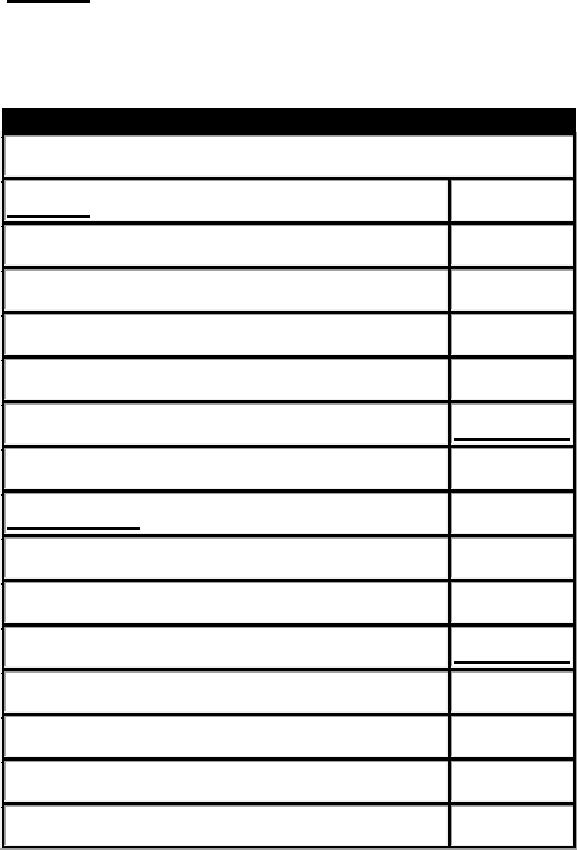
Have a look at the example of a basic balance sheet on the following page. Let’s go over
what each of the accounts refers to.
Assets
Cash and Cash Equivalents: Balances in checking and savings accounts, as well as any
investments that will mature within 3 months or less.
Balance Sheet
Assets
Cash and Cash Equivalents
$50,000
Inventory
$110,000
Accounts Receivable
$20,000
Property, Plant, and Equipment
$300,000
Total Assets:
$480,000
Liabilities
Accounts Payable
$20,000
Notes Payable
$270,000
Total Liabilities:
$290,000
Owners’ Equity
Common Stock
$50,000
Retained Earnings
$140,000
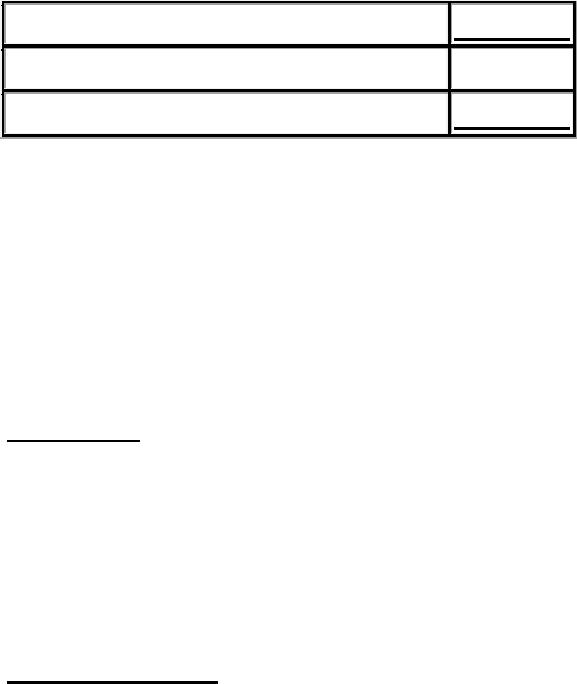
Total Owners’ Equity
$190,000
Total Liabilities + Owners’ Equity:
$480,000
Inventory: Goods kept in stock, available for sale.
Accounts Receivable: Amounts due from customers for goods or services that have already
been delivered.
Property, Plant, and Equipment: Assets that cannot readily be converted into cash—things
such as computers, manufacturing equipment, vehicles, furniture, etc.
Liabilities
Accounts Payable: Amounts due to suppliers for goods or services that have already been
received.
Notes Payable: Contractual obligations due to lenders (e.g., bank loans).
Owners’ Equity
Common Stock: Amounts invested by the owners of the company.
Retained Earnings: The sum of all net income over the life of the business that has not been
distributed to owners in the form of a dividend. (If this is confusing at the moment, don’t
worry. It will be explained in more detail in Chapter 4, which discusses the Statement of
Retained Earnings.)
Current vs. Long-Term
Often, the assets and liabilities on a balance sheet will be broken down into current assets (or
liabilities) and long-term assets (or liabilities). Current assets are those that are expected to be
converted into cash within 12 months or less. Typical current assets include Accounts
Receivable, Cash, and Inventory.
Everything that isn’t a current asset is, by default, a long-term asset. Sometimes, long-term
assets are referred to, understandably, as non-current assets. Property, Plant, and Equipment is
a long-term asset account.
Current liabilities are those that will need to be paid off within 12 months or less. The most
common example of a current liability is Accounts Payable. Notes Payable that are paid off
over a period of time are split up on the balance sheet so that the next 12 months’ payments are
shown as a current liability, while the remainder of the note is shown as a long-term liability.
Multiple-Period Balance Sheets
What you’ll often see when looking at published financial statements is a balance sheet—such
as the one on the following page—that has two columns. One column shows the balances as of
the end of the most recent accounting period, and the adjoining column shows the balances as
of the prior period-end. This is done so that a reader can see how the financial position of the
company has changed over time.
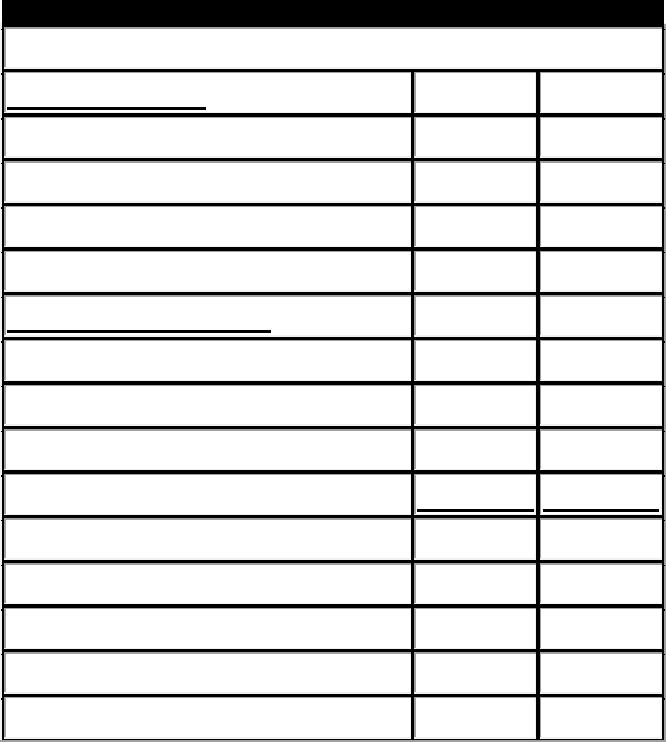
For example, looking at the balance sheet on the following page we can learn a few things
about the health of the company. Overall, it appears that things are going well. The company’s
assets are increasing while its debt is being paid down.
The only thing that might be of concern is an increase in Accounts Receivable. An increase
in Accounts Receivable could be indicative of trouble with getting clients to pay on time. On
the other hand, it’s also quite possible that it’s simply the result of an increase in sales, and
there’s nothing to worry about.
Balance Sheet
Current Assets
12/31/11
12/31/10
Cash and Cash Equivalents
$50,000
$30,000
Accounts Receivable
$20,000
$5,000
Total Current Assets
$70,000
$35,000
Non-Current Assets
Property, Plant, and Equipment
$330,000
$330,000
Total Non-Current Assets:
$330,000
$330,000
Total Assets
$400,000
$365,000
Current Liabilities
Accounts Payable
$20,000
$22,000
Current Portion of Note Payable
$12,000
$12,000
Total Current Liabilities
$32,000
$34,000
Long-Term Liabilities
Non-Current Portion of Note
$250,000
$262,000
Total Long-Term Liabilities
$250,000
$262,000
Total Liabilities:
$282,000
$296,000
Owners’ Equity
Common Stock
$30,000
$30,000
Retained Earnings
$88,000
$39,000
Total Owners’ Equity
$118,000
$69,000
Total Liabilities + Equity:
$400,000
$365,000
Chapter 2 Simple Summary2
A company’s balance sheet shows its financial position at a given point in
time. Balance sheets are formatted in accordance with the Accounting
Equation:
Assets = Liabilities + Owners’ Equity
Current assets are those that are expected to be converted into cash within
12 months or less. Any asset that is not a current asset is a non-current
(a.k.a. long-term) asset by default.
Current liabilities are those that will need to be paid off within the next 12
months. By default, any liability that is not a current liability is a long-term
liability.
CHAPTER THREE
The Income Statement
A company’s income statement shows the company’s financial performance over a period of
time (usually one year). This is in contrast to the balance sheet, which shows financial position
at a point in time. A frequently used analogy is that the balance sheet is like a photograph,
while the income statement is more akin to a video.
The income statement—sometimes referred to as a profit and loss (or P&L) statement—is
organized exactly how you’d expect. The first section details the company’s revenues, while
the second section details the company’s expenses.
Income Statement
Revenue
Sales
$300,000
Cost of Goods Sold
(100,000)3
Gross Profit
200,000
Expenses
Rent
30,000
Salaries and Wages
80,000
Advertising
15,000
Insurance
10,000
Total Expenses
135,000
Net Income
$65,000
Gross Profit and Cost of Goods Sold
Gross Profit refers to the sum of a company’s revenues, minus Cost of Goods Sold. Cost of
Goods Sold (CoGS) is the amount that the company paid for the goods that it sold over the
course of the period.
EXAMPLE: Laura runs a small business selling t-shirts with band logos on them. At the
beginning of the month, Laura ordered 100 t-shirts for $3 each. By the end of the month, she
had sold all of the t-shirts for a total of $800. For the month, Laura’s Cost of Goods Sold is
$300, and her Gross Profit is $500.4
EXAMPLE: Rich runs a small business preparing tax returns. All of his costs are overhead—
that is, each additional return he prepares adds nothing to his total costs—so he has no Cost of
Goods Sold. His Gross Profit is simply equal to his revenues.
Operating Income vs. Net Income
Sometimes, you’ll see an income statement—like the one on the following page—that
separates “Operating Expenses” from “Non–Operating Expenses.” Operating Expenses are the