S2-5 p. 91
In this problem, we are asked to journalize the transactions committed by Arkansas Sales Consultants at
the latter part of January.
But first, let us define journal entry.
Journal entry is the fundamental phase in the accounting cycle, for it serves as the primary source of
data to be presented in the financial statements. A journal entry contains information vital to a
particular business transaction, such as its date, description, amounts to be credited and debited, and
the accounts affected. The journal entries are kept in a journal book which will then be posted in the
General ledger.
Let us analyze each transaction.
On January 22, the company rendered services on account worth $9,000.00 for its customers. Since it is
on account, the journal entry should include a debit of Accounts Receivable and a credit of Service
Revenue as shown below:
DATE
Account Title
Debit ($)
Credit ($)
January 22
Account Receivable
9,000
Service Revenue
9,000
to record services rendered on account
Meanwhile, on January 30, the company received Cash from the customer’s accounts worth $7,000.00.
Since there is an increase in Cash and a decrease in Accounts Receivable, the journal entry will then
include a debit of Cash and credit of Accounts Receivable as shown below:
DATE
Account Title
Debit ($)
Credit ($)
January 30
Cash
7,000
Accounts Receivable
7,000
to record cash received from customers’ accounts
Next, the company received a utility bill of $210 on January 31, which will be paid in February. Since the
bill is to be paid next month, there shall be a recognition of an expense and a liability account. Thus, the
journal entry will include a debit of Utility expense and credit of Utilities Payable as shown below:
DATE
Account Title
Debit ($)
Credit ($)
January 31
Utilities Expense
210
Utilities Payable
210
to record utilities expense on account
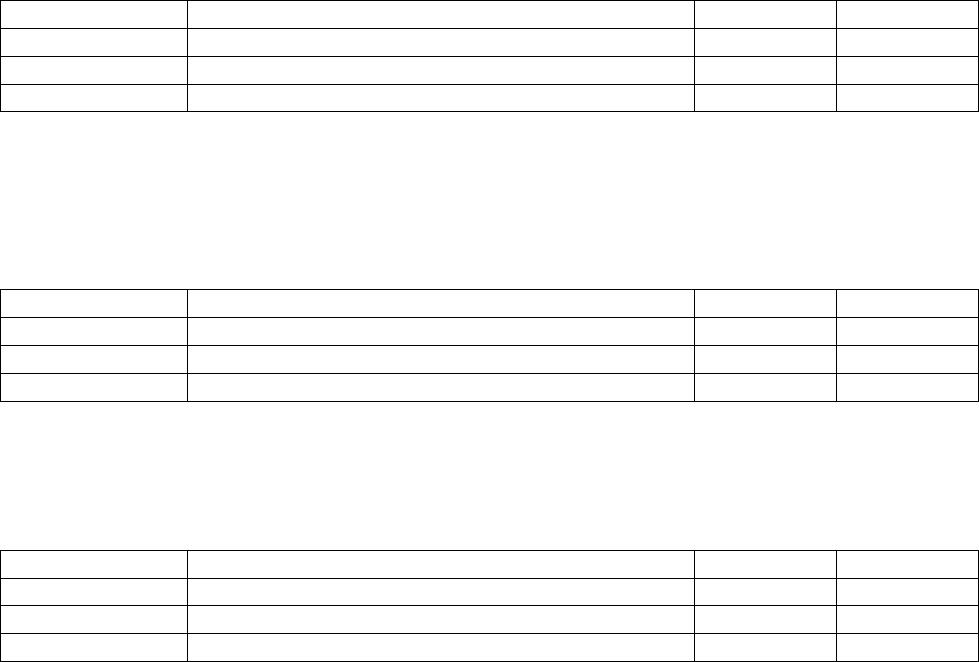
On the same date, the company paid its salesman’s monthly salary worth $2,400. There is a recognition
of an expense and a decrease in Cash; thus, the journal entry will include a debit of Salaries Expense and
a credit of Cash as shown below:
DATE
Account Title
Debit ($)
Credit ($)
January 31
Salaries Expense
2,400
Cash
2,400
to record salaries paid to salesman
Also, on January 31, the company obtained Cash amounting to $2,475 for three months of consulting
service to be rendered in February. There is an increase of Cash and recognition of a liability account;
therefore, the journal entry will include a debit of Cash and credit of Unearned Service Revenue as
shown below:
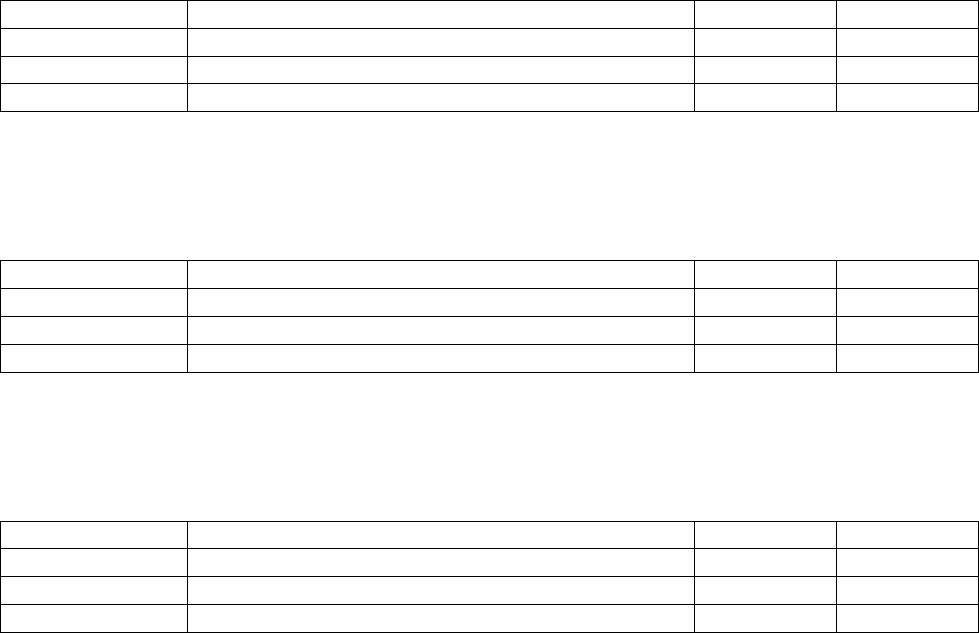
DATE
Account Title
Debit ($)
Credit ($)
January 31
Cash
2,475
Unearned Service Revenue
2,475
to record cash received for future services
Lastly, the company paid cash dividends to its stockholders for $900 on January 31. A decrease in Cash
and recognition of dividends were made; thus, the journal entry will include a debit of Dividends and a
credit of Cash as shown below.
DATE
Account Title
Debit ($)
Credit ($)
January 31
Dividends
900
Cash
900
to record cash dividends paid
To conclude, we have now performed journal entries for Arkansas Sales Consultants’ transactions for
the late part of January.
S2-6 p 92
In this problem, we are asked to solve the Accounts Payable balance from the given T-account.
First, let us know what a T-account is.
A T-account is a visual representation of double-entry bookkeeping, showing the separation of debits
and credits to comprehend better the impact of each transaction on a specific account.
To solve for the Accounts payable balance, we first need to add the amounts on the debit and the
credit sides separately.
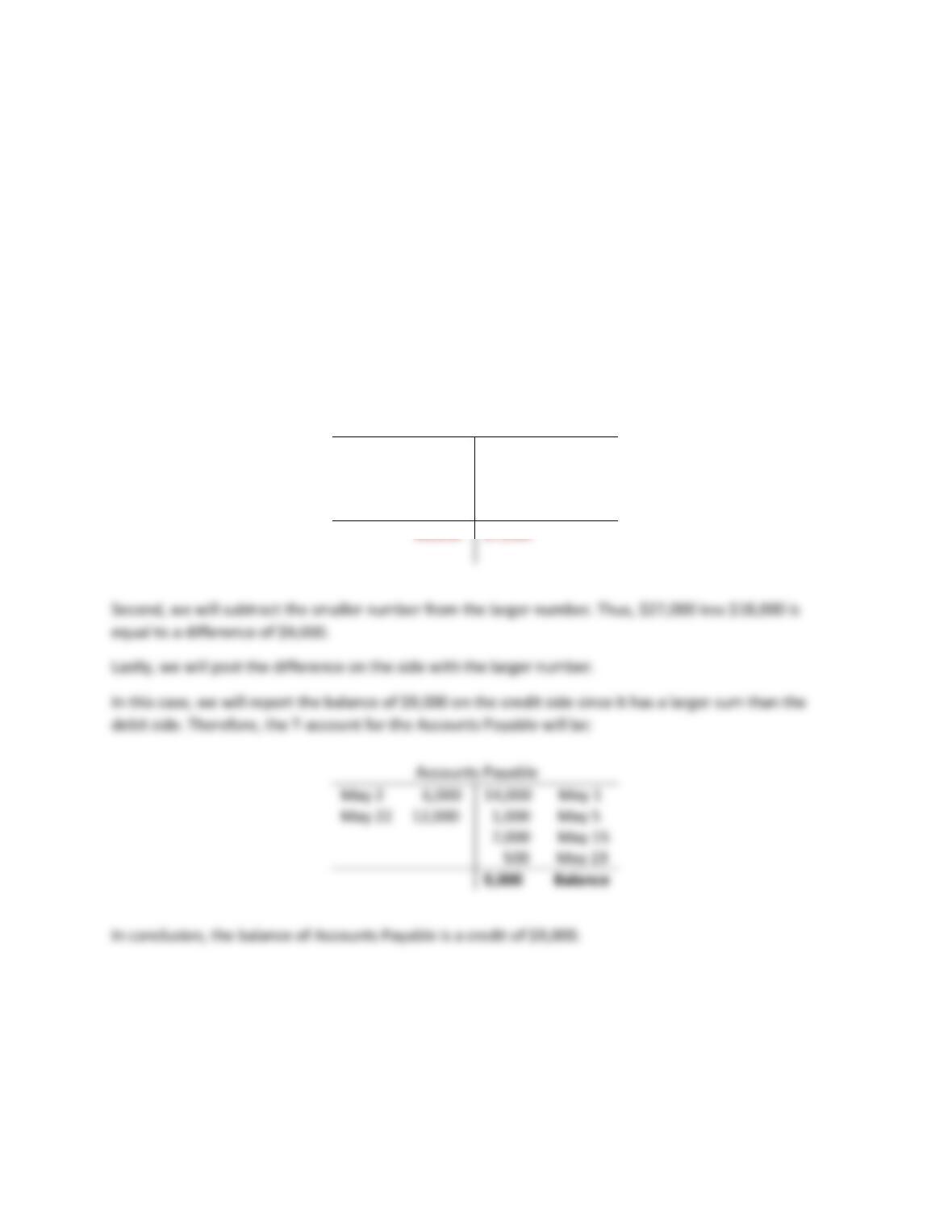
In this case, we got $18,000 for the debit side and $27,000 for the credit side, as shown below.
May 2 6,000
14,000 May 1
May 22 12,000
1,000 May 5
7,000 May 15
500 May 23
Accounts Payable
May 2 6,000
14,000 May 1
May 22 12,000
1,000 May 5
7,000 May 15
500 May 23
Accounts Payable