TERM PROJECT
BA 517 ACCOUNTING FOR DECISION MAKING
FALL 2018
GROUP MEMBERS:
Li,Hanwen
Nathan,Miles
Tsuji,Mayako
Pierron–Darbonne,Charlotte
1
Introduction:
This report is based on the second quarter 2018 SEC forms 10-Q of the Boeing
company and Apple. We will figure out and proceed with further analysis in terms
of raw information and data on companies’ liquidity, profitability, long-term
solvency, WACC and IRR, etc. Also, compared them with previous years.
REQUIRED:
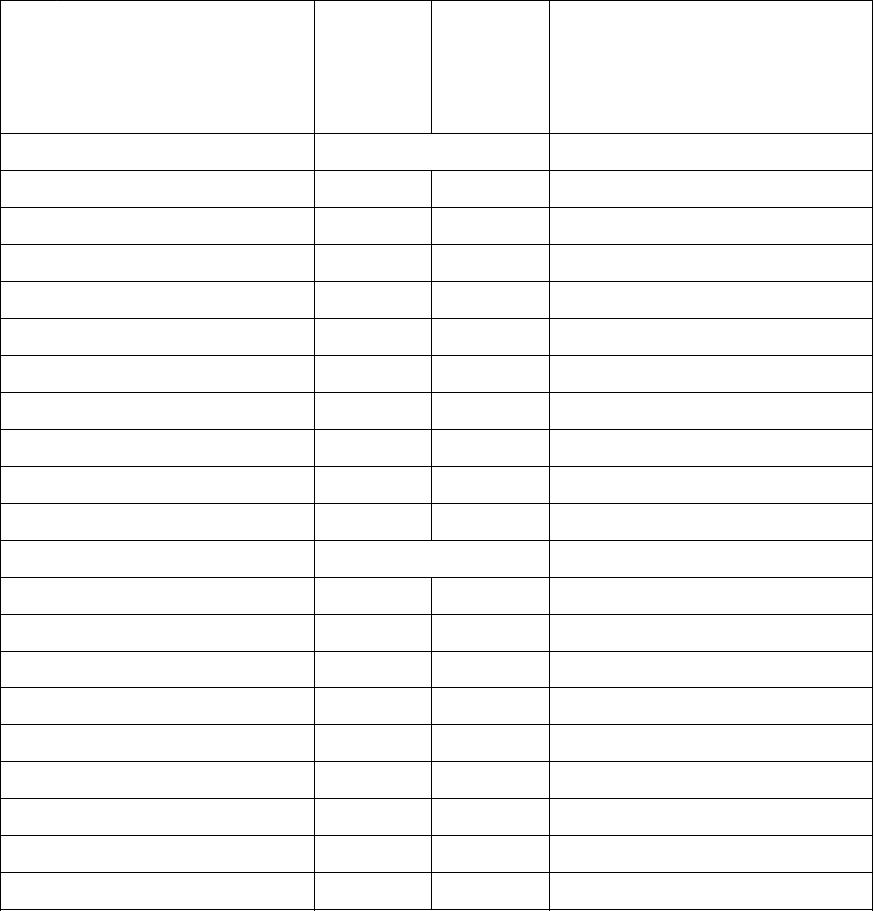
1. Perform a ratio analysis covering short-term liquidity, profitability, and
long-term solvency. Present your work by designing an Excel
spreadsheet.
The Boeing
Company
six months
ended June
30,2018
The Apple
Company
three months
ended June
30,2018
Annotations
Operating profit margin 0.12 0.25
Using the Earnings from operations plus Other income net
as Operating profit
0.19 0.38
0.10 0.22
Cash flow margin 0.16 1.09
0.04 0.03
27.57 0.09
Cash return on assets 0.07 0.17
Return on investment 0.05 0.04
$7.97 $2.36
Price earnings ratio 42.10 78.44
Using the market value per share of June 30 for both
comapanies:$335.51 for Boeing and $185.11 for Apple
1.11 1.31
0.32 1.24
Use the formula:(Current assets less inventory)/current
liabilities
16.67 3.33
Working captial turnover 4.96 1.94
10.67 23.83
Boeing using 180 days and Apple using 90 days
Days of payables outstanding 58.90 120.00
Boeing using 180 days and Apple using 90 days
Cash conversion cycle 239.30 -81.50
0.63 6.09
287.73 14.78
Boeing using 180 days and Apple using 90 days
Gross margin ratio
Profit margin ratio
Return on asset
Earning per share
Short-Term Liquidity Measures
Current ratio
Quick ratio
Receivables turnover ratio
Average collection period
Inventory turnover ratio
Average sale period
Return on common shareholders’ equity
Profitability Measures
2
2. Calculate the Altman Z-Score for both companies.
Z-Score = 1.2A + 1.4B + 3.3C + 0.6D + 1.0E
Where:
A = working capital / total assets
B = retained earnings / total assets
C = earnings before interest and tax / total assets
D = market value of equity / total liabilities
E = sales / total assets
As for Boeing Company: (Dollars in millions)
A=(Current assets-Current liabilities)/ total assets=($86,401-
$77,725)/$113,195=0.077
B= retained earnings / total assets=$52,303/$113,195=0.462
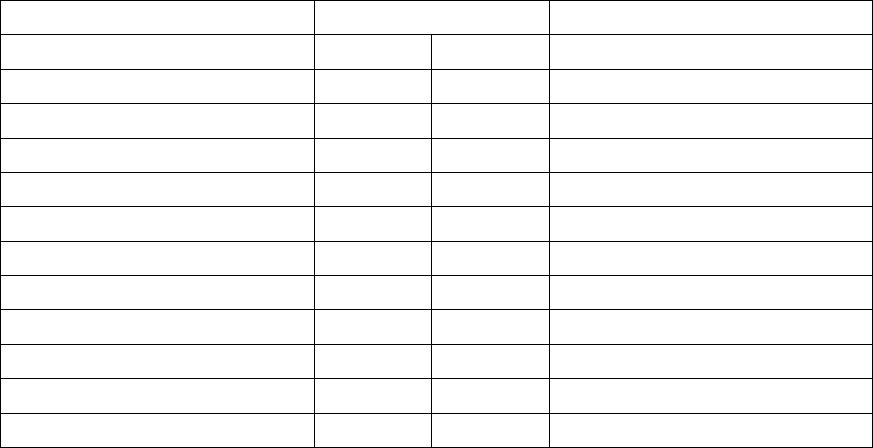
1.01 0.67
Long-term debt to total capitalization 1.15 0.46
83.38 2.04
26.71 15.70
Using the Earnings from operations plus Other income net
as EBIT
Cash interest coverage 39.32 43.93
No Interest paid on Boeing report, so we use interest and
debt expense from balance sheet to replace it
1.44 2.15
Using Purchase of property, plant and equipment as
Capital expenditures
1003.78 2.71
43.47 0.09
0.04 0.03
248.74 1364.97
10.72 5.64
Using Purchase of property, plant and equipment as
Capital expenditures
0.05 0.04
Tax rate for Boeing is 0.139 and 0.133 for Apple
Cash expenditure coverage ratio
Return on invested capital
Cash flow adequacy
Financial leverage index
Return on common equity
Modified return on assets
EBIDA to interest coverage ratio
Times interest earned
Long-Team Solvency Measues
Debt to assets
Debt to equity
3
C = earnings before interest and tax / total assets=($5585+$51)/ $113,195=0.0498
D = market value of equity / total liabilities=$195,460/$114,569=1.706 (Using the
market value of equity $195,460 on June 30,2018 for Boeing)
E= sales / total assets=$47,640/$113,195=0.421
Z-Score=1.2*0.077+1.4*0.462+3.3*0.0498+0.6*1.706+0.421=2.348
So the Z-Score for Boeing is 2.348
As for Apple Company: (Dollars in millions)
A=(Current assets-Current liabilities)/ total assets=($115,761-
$88,548)/$349,197=0.0779
B= retained earnings / total assets=$79,436/$349,197=0.227
C = earnings before interest and tax / total assets=($12,612+$672)/
$349,197=0.0380
D = market value of equity / total liabilities=$909,840/$234,248=3.884 (Using the
market value of equity $909,840 on June 30,2018 for Apple)
E= sales / total assets=$53,265/$349,197=0.153
Z-Score=1.2*0.0779+1.4*0.227+3.3*0.0380+0.6*3.884+0.153=2.994
So the Z-Score for Apple is 2.994
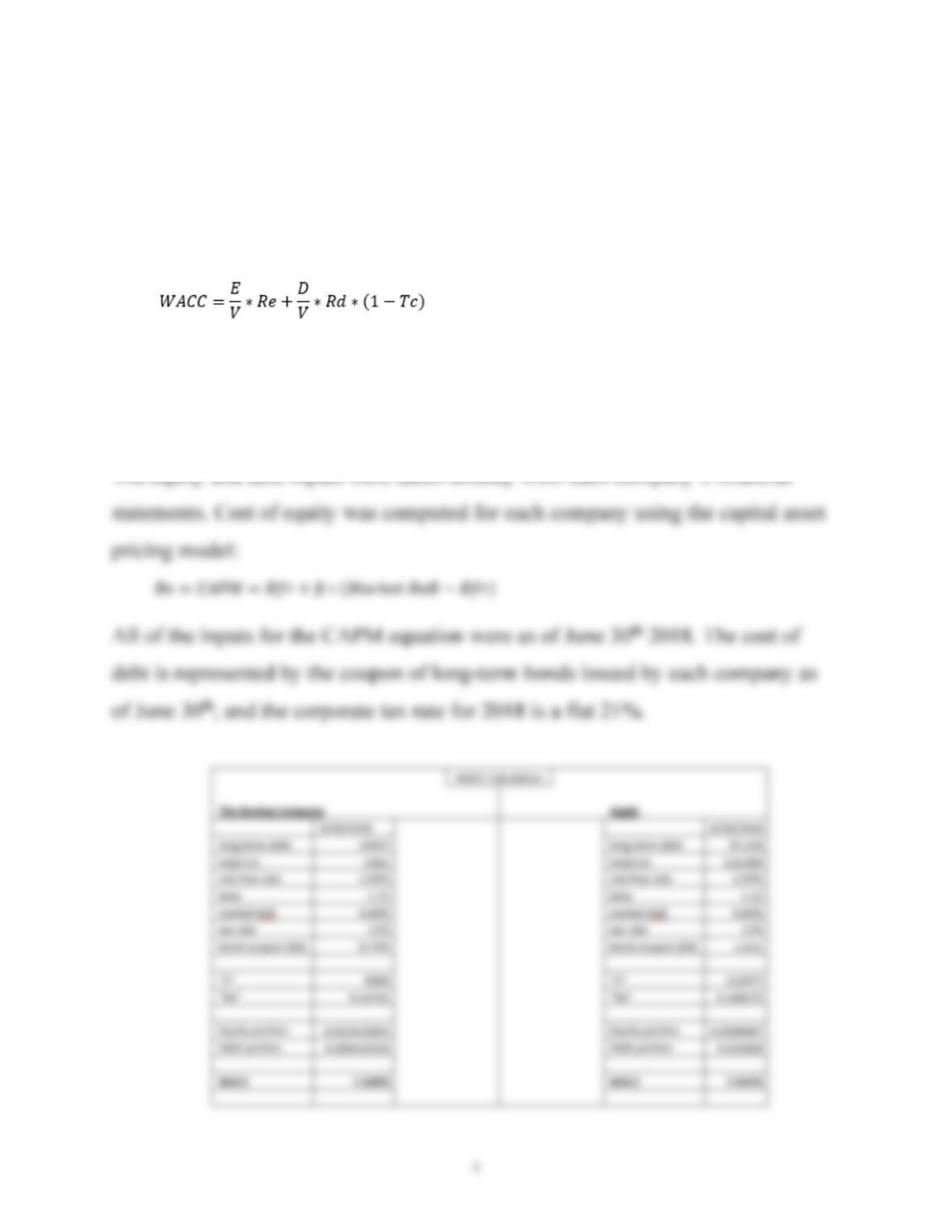
3. Calculate the Weighted Average Cost of Capital (WACC) for both
companies.
WACC
The calculation for the weighted average cost of capital is as follows
Where:
E= total equity D= Long term debt V= Total of debt and equity
Re=cost of equity Rd= Cost of debt Tc= Corporate tax rate