Tax on Sugary Soft Drinks
Sugary soft drinks pose an immediate problem on society, causing a third of the children
aged 2 to 15 to be overweight in Britain. Soft drinks are a demerit good; they are perceived to be
1
bad for consumers and are overproduced. This is a result of the negative externality created from
consuming the soft drink. Negative externalities of consumption are the costs from consuming a
good that fall on any party other than the consumer. In the case of soft drinks, the cost of
providing obesity and diabetic treatments for the government are an example negative of
externalities of consumption. This negative externality creates market failure (when there is
inefficiency) as overallocation exists. The government has decided to use an indirect tax on
producers to fix this overallocation and help the market achieve the socially optimal quantity.
The socially optimal quantity is the optimal quantity with externalities taken into account.
1 The Associated Press, Britain’s plan to fight child obesity with soft drink tax lacks muscle,
critics say (CBC, 2016)
1
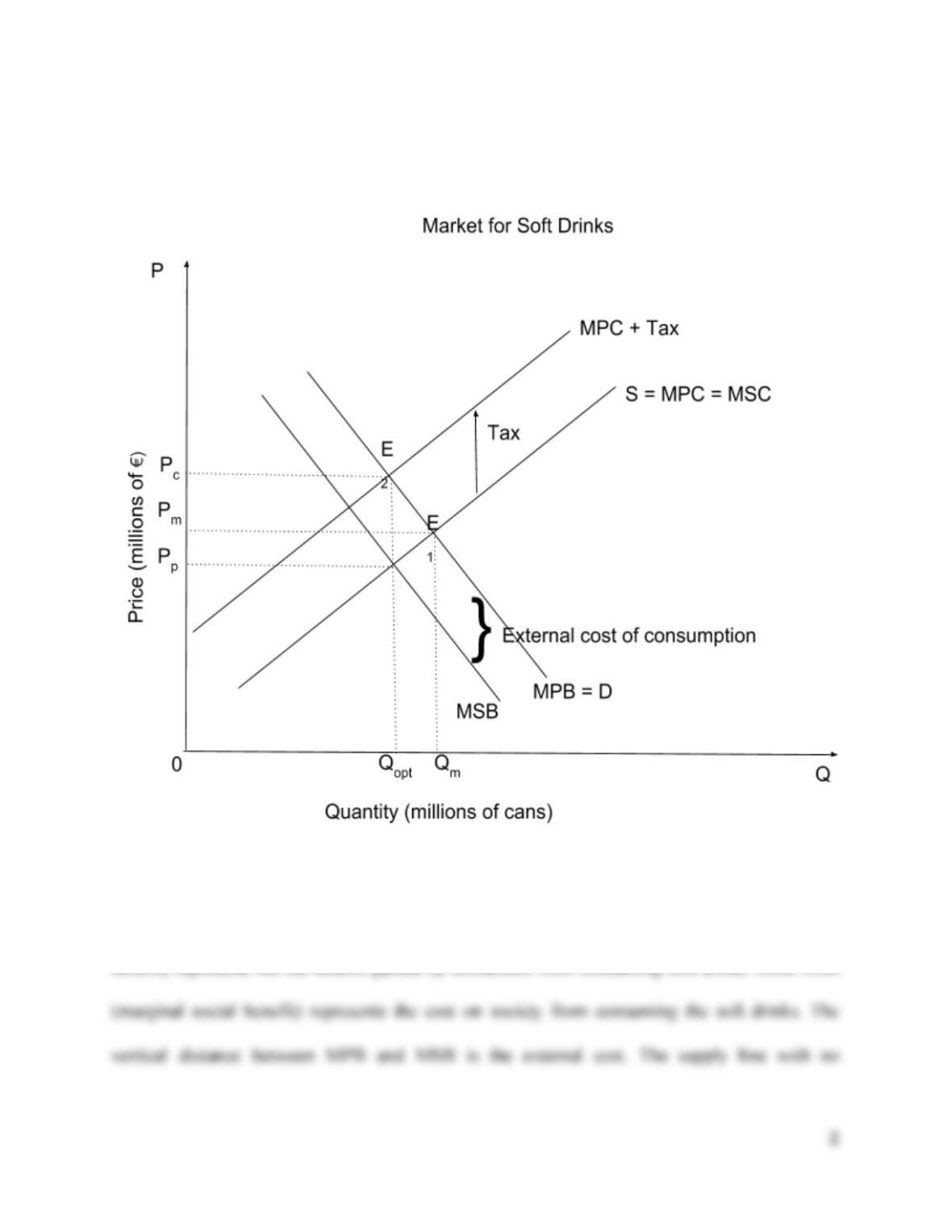
Graph 1:
Graph 1 shows what the British government is attempting to do right now: correct the
negative externality of consumption by taxing producers. On graph 1, MPB (marginal private