SYSTEMS INETGRATION & ARCHITECTURE – LECTURE NOTE 1
Computer Science & Information Technology Department Page 1
CHAPTER 1
Introduction to Enterprise Systems for Management
This course is to teach the underlying technology of implementing such enterprise systems as
ERP, CRM and SCM, as well as to discuss their implications to organizations.
The main focus is on the ERP implementation process, which is covered from the development
lifecycle and implementation strategy to post implementation stabilization and production support as
shown in four-area ERP implementation framework (i.e., technology, life cycle, people and
organizations, and application extensions) to simplify the understanding of introducing ERP in
organizations.
Students are exposed at each stage to technical as well as managerial issues and solutions
adopted by real-world organizations to solve these problems
COURSE LEANING OUTCOME
At the end of the module, the students are expected to:
Understand the information systems evolution and its historical role in the organization leading
to systems integration and Enterprise Resource Planning (ERP).
Identify the ERP systems and evolution, components, and architecture.
Analyzethe benefits and drawbacks of implementing ERP systems and how they can help an
organization improve its efficiency and worker productivity.
CONTENTS OF THE MODULE
This module contains the following lessons:
Lesson 1: Enterprise systems in Organization
Lesson 2: Enterprise Resource Planning Systems
Lesson 3: ERP Implementation
DIRECTIONS ON HOW TO USE THE MODULE PROPERLY
In order to benefit profoundly from this module, please be guided by all the key points
presented below.
1. This module contains two (2) lessons. Each lesson is explained substantively. Read the
explanations thoroughly so that you could understand the lesson fully.
2. On the first page of each lesson, you will find the specific learning outcomes (SLOs) of each
lesson. SLOs are knowledge and skills you are expected to acquire at the end of the lesson.
Read them heartily.
3. You must answer the Learning Activities/Exercises (LAEs). The LAEs are designed to help
you acquire the SLOs.
4. Feel free to chat, call, text or send an email message me if you have questions, reactions,
or reflections about the contents or activities in the module.
5. The Practice Task/Assessment and the Assignment shall be checked by me.
LESSON 1: Enterprise Systems in Organizations
• Business organizations have become very complex and their business needs can no longer be
supported by one single information system.
• Information Systems are a critical component of a successful organization today.
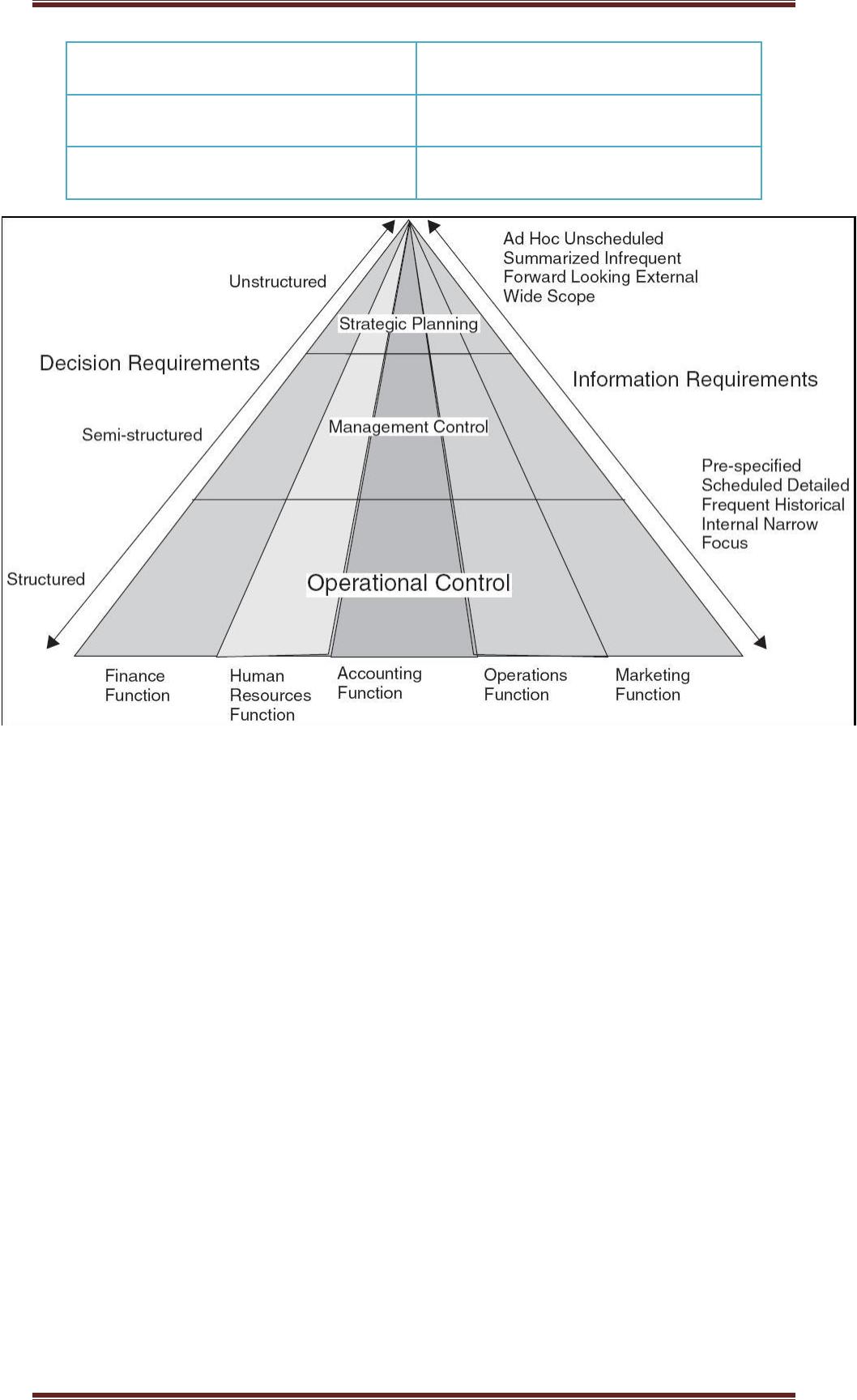
• Management is generally categorized into three levels: Strategic, Mid-Management and
Operational.
• Information Systems provide a high level of computer automation to support business functions
such as:
SYSTEMS INETGRATION & ARCHITECTURE – LECTURE NOTE 1
Computer Science & Information Technology Department Page 2
1. Accounting
2. Finance
3. Human Resource
Management
4. Customer Service
5. Marketing
6. Operations
Figure 1-1 Management Pyramid with Information Requirements
Information Silos and Systems Integration
• Over time, Information Systems create a hodgepodge of independent nonintegrated systems
ultimately creating bottlenecks and interfering with productivity.
• Organizations need to be agile and flexible and will require their information systems to have
integrated data, applications, and resources from across the organization.
• To compete effectively, organizations have to be customer focused.
– This requires cross-functional integration among the accounting, marketing and other
departments of the organization.
LESSON 2: Enterprise Resource Planning (ERP) Systems
WHAT IS AN ERP SYSTEM?
• Enterprise Resource Planning Systems are the first generation of enterprise systems meant to
integrate data and support all the major functions of organizations.
• ERP systems integrate various functional aspects of the organization as well as systems within
the organization of its partners and suppliers.
SYSTEMS INETGRATION & ARCHITECTURE – LECTURE NOTE 1
Computer Science & Information Technology Department Page 3
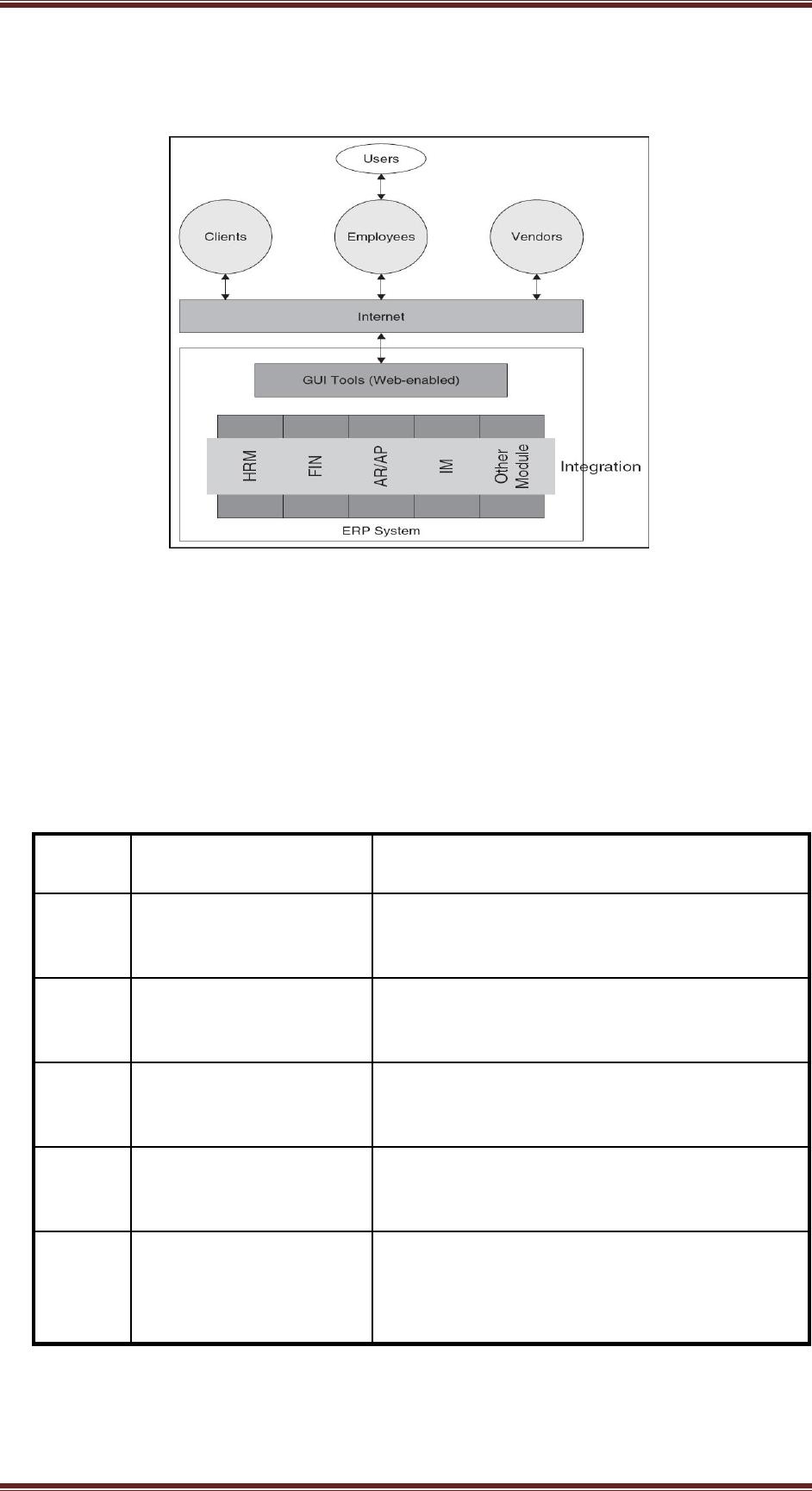
• The goal of an ERP system is to make the information flow dynamic and immediate, therefore,
increasing its usefulness and value.
Figure 1-2 Integrated Systems – ERP
• Another goal of ERP is to integrate departments and functions across an organization into a
single infrastructure that serves the needs of each department.
• ERP systems replace an assortment of systems that typically existed in organizations.
(Accounting, HR, Materials Planning, Transaction Processing, etc.).
• ERP solves the critical problem of integrating information from different sources and makes it
available in real-time.
Evolution of ERP
Timeline
System
Platform
1960s
Inventory Management &
Control
Mainframe legacy systems using third generation
software-(Cobol, Fortran)
1970s
Materials Requirements
Planning (MRP)
Mainframe legacy systems using third generation
software-(Cobol, Fortran)
1980s
Materials Requirements
Planning (MRP-II)
Mainframe legacy systems using fourth generation
database software and manufacturing applications.
1990s
Enterprise Resource
Planning
Mainframe client-server systems using fourth
generation database software and package software.
2000s
Extended ERP or ERP-II
Client-server systems using Web platform, open
source with integration to fifth generation
applications like SCM, CRM, SFA.
SYSTEMS INETGRATION & ARCHITECTURE – LECTURE NOTE 1
Business Processes and ERP
• A crucial role of ERP in business is to better position the organization to change its business
processes.
• ERP software has hundreds of business processes built into the logic of the system which may or
may not agree with current processes of an organization.
• When implementing an ERP system, organizations have two choices:
– Change business processes to match the software functionality.