Chapter 11
The SWOT ANALYSIS: Process
and Basic Components
Presented by: Kamelia Gulam
1

Chapter Outline
•What is SWOT analysis?
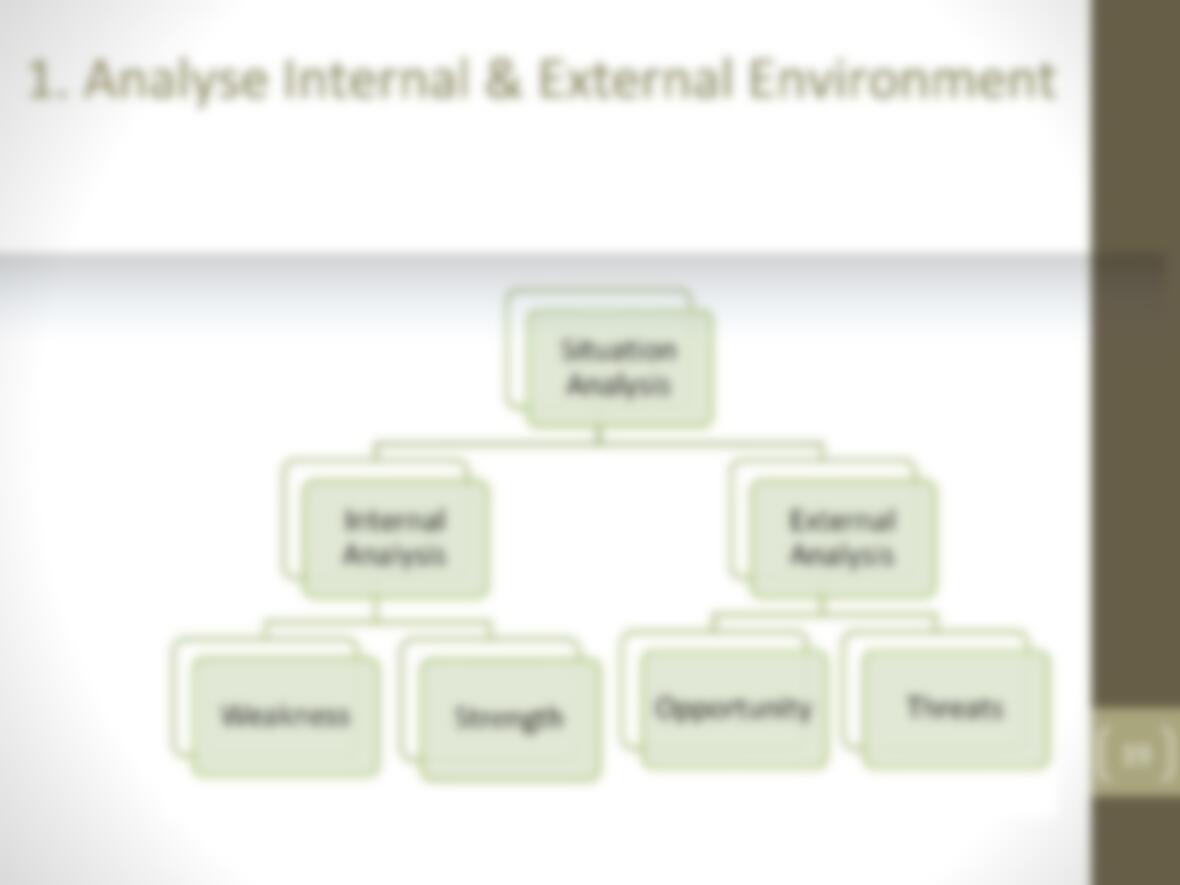
•Basic Elements of The SWOT Analysis
•Aim of SWOT analysis.
•Who need SWOT analysis?
•SWOT Analysis for Individuals
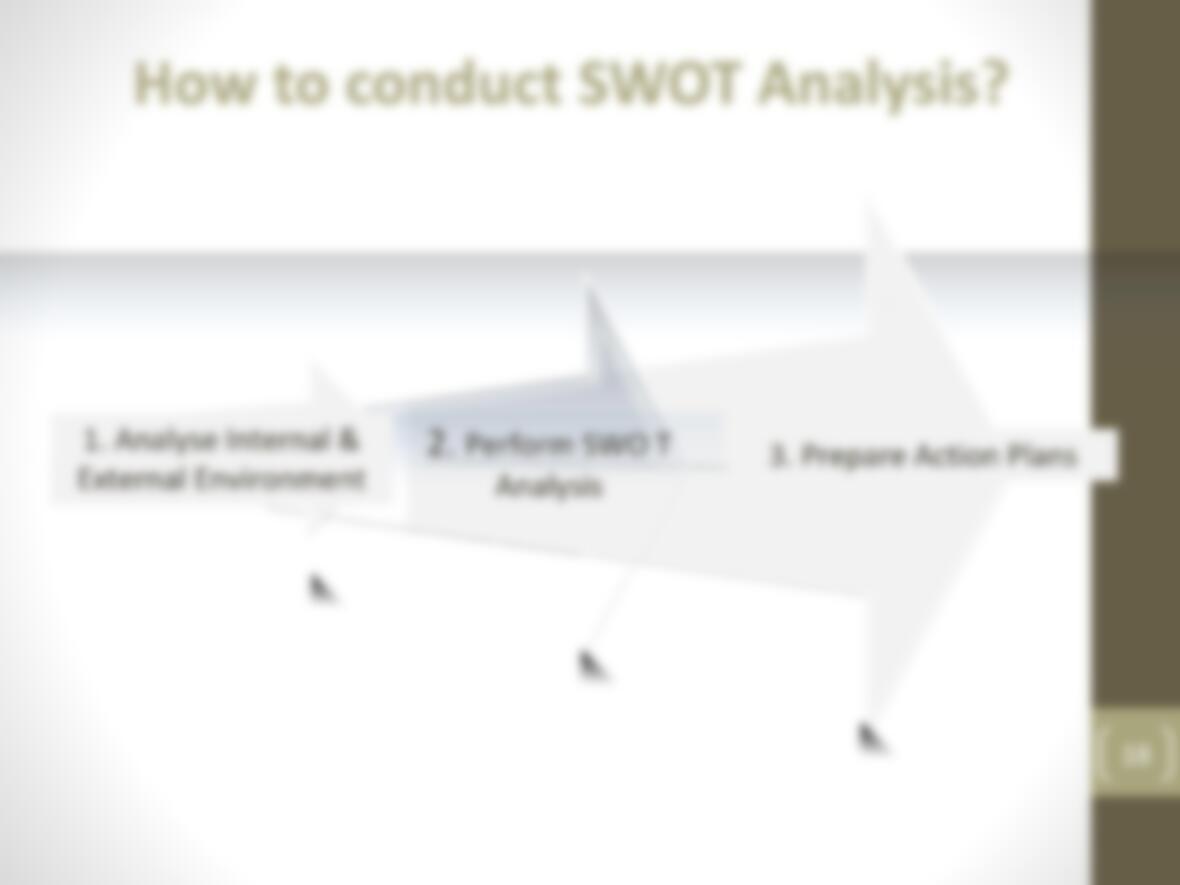
•How to conduct SWOT analysis?
•Pitfalls of SWOT analysis.
•Tips for SWOT analysis.
2

What is SWOT analysis
A technique that enables organisations or individual
to move from everyday problems and traditional
strategies to a fresh prospective.
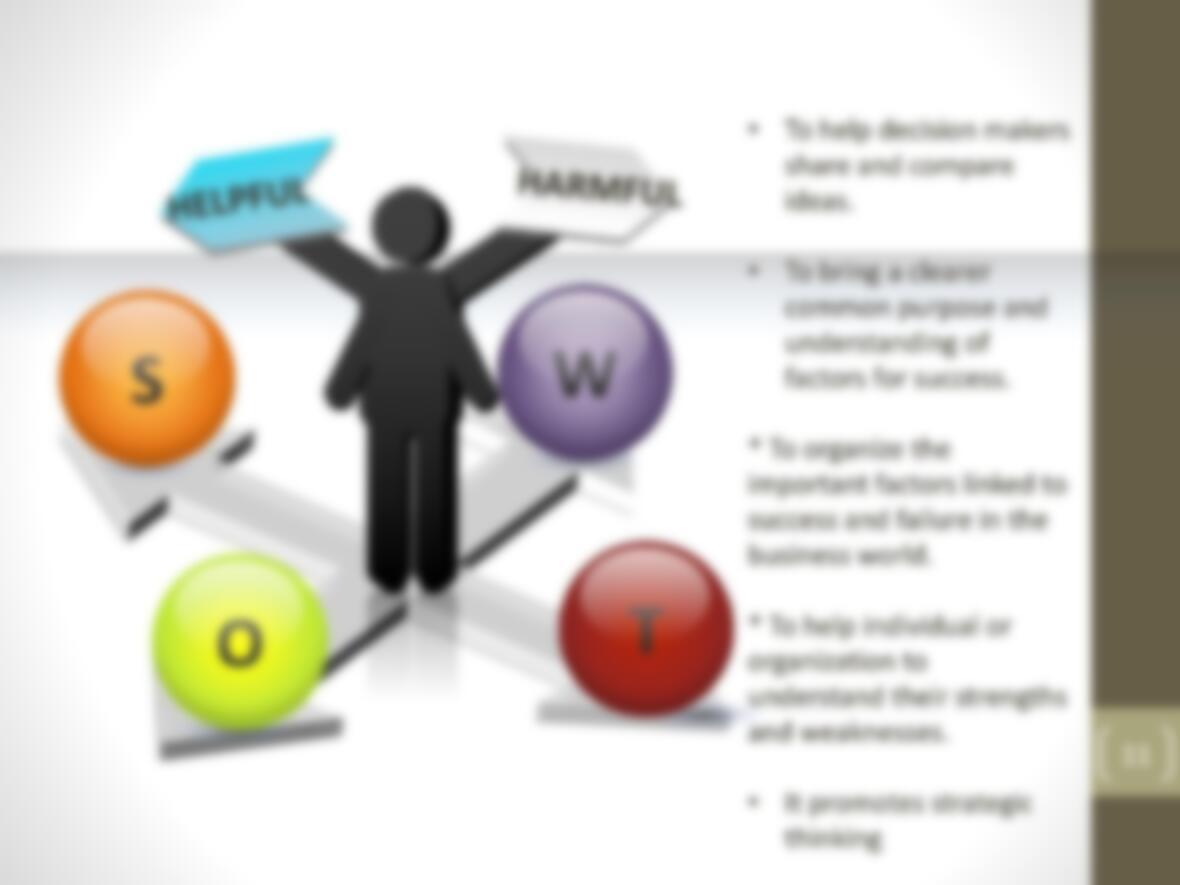
SWOT analysis looks at your strengths and
weaknesses, and the opportunities and threats your
business faces. SWOT can help your company face
its greatest challenges and find its most promising
new markets.
3

The SWOT Analysis framework is a very important
and useful tool to use in marketing Management
and other business applications
A clear understanding of SWOT is required for
business majors.
4
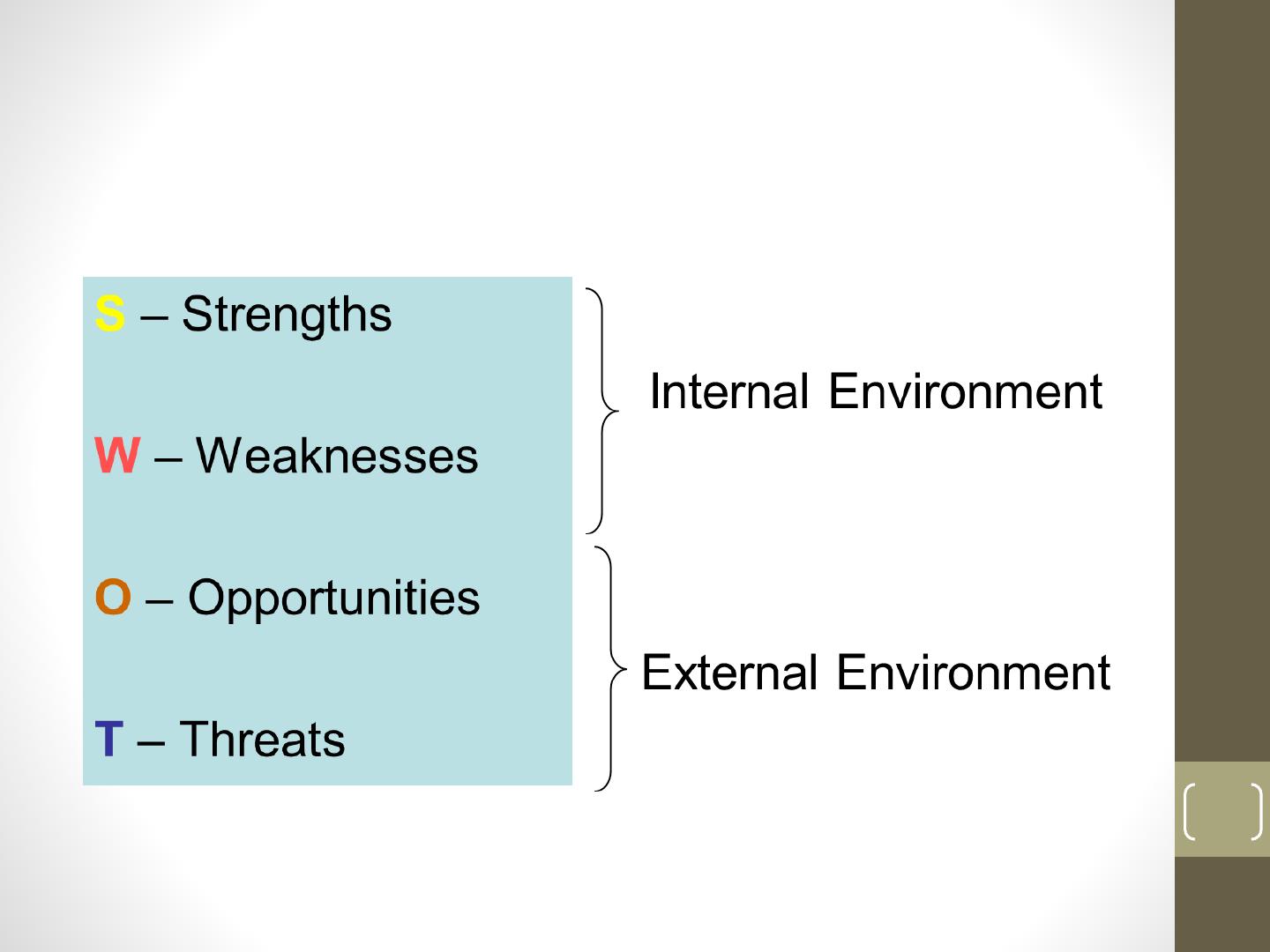
Basic Elements of The SWOT Analysis
5

Strengths (internal, positive factors)
•* Characteristics of the business or individual that give it an
advantage over others in the industry.
•* Positive tangible and intangible attributes, internal to an
organization or individual.
•* Beneficial aspects of the organization or the capabilities of an
organization, process capabilities, financial resources, products
and services, customer goodwill and brand loyalty.
•Examples – Abundant financial resources, Well-known brand
name, Lower costs [raw materials or processes], Superior
management talent, Better marketing skills, Good distribution
skills, Committed employees.
6
Weaknesses (internal, negative factors)
•Characteristics that place the firm or individual at a disadvantage
relative to others.
•* Detract the organization from its ability to attain the core goal
and influence its growth.
•* Weaknesses are the factors which do not meet the standards