Individual & Group Dynamics
Project Report on
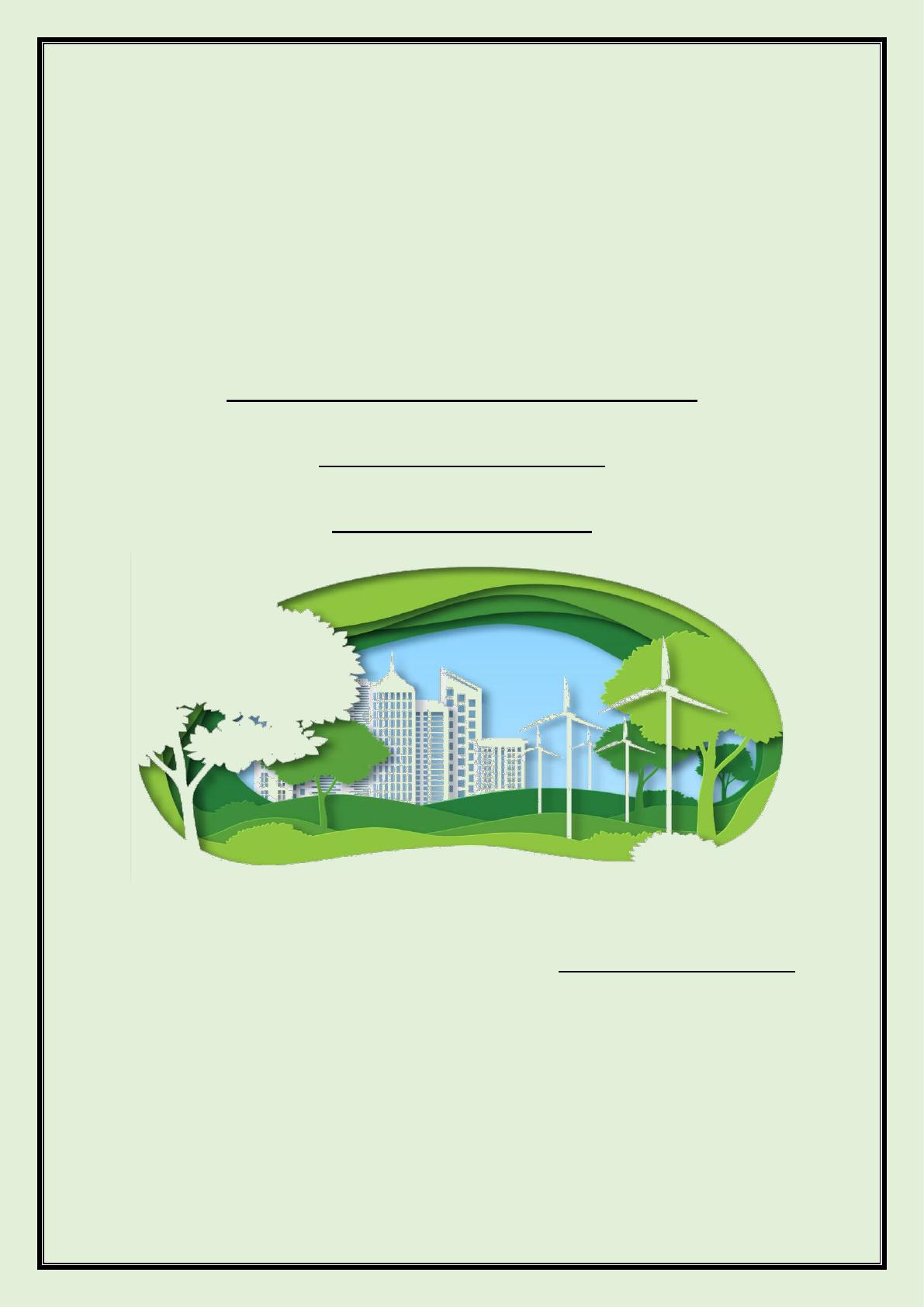
SUSTAINABILITY
Submitted by Group– 2:
• Vaibhav Misra
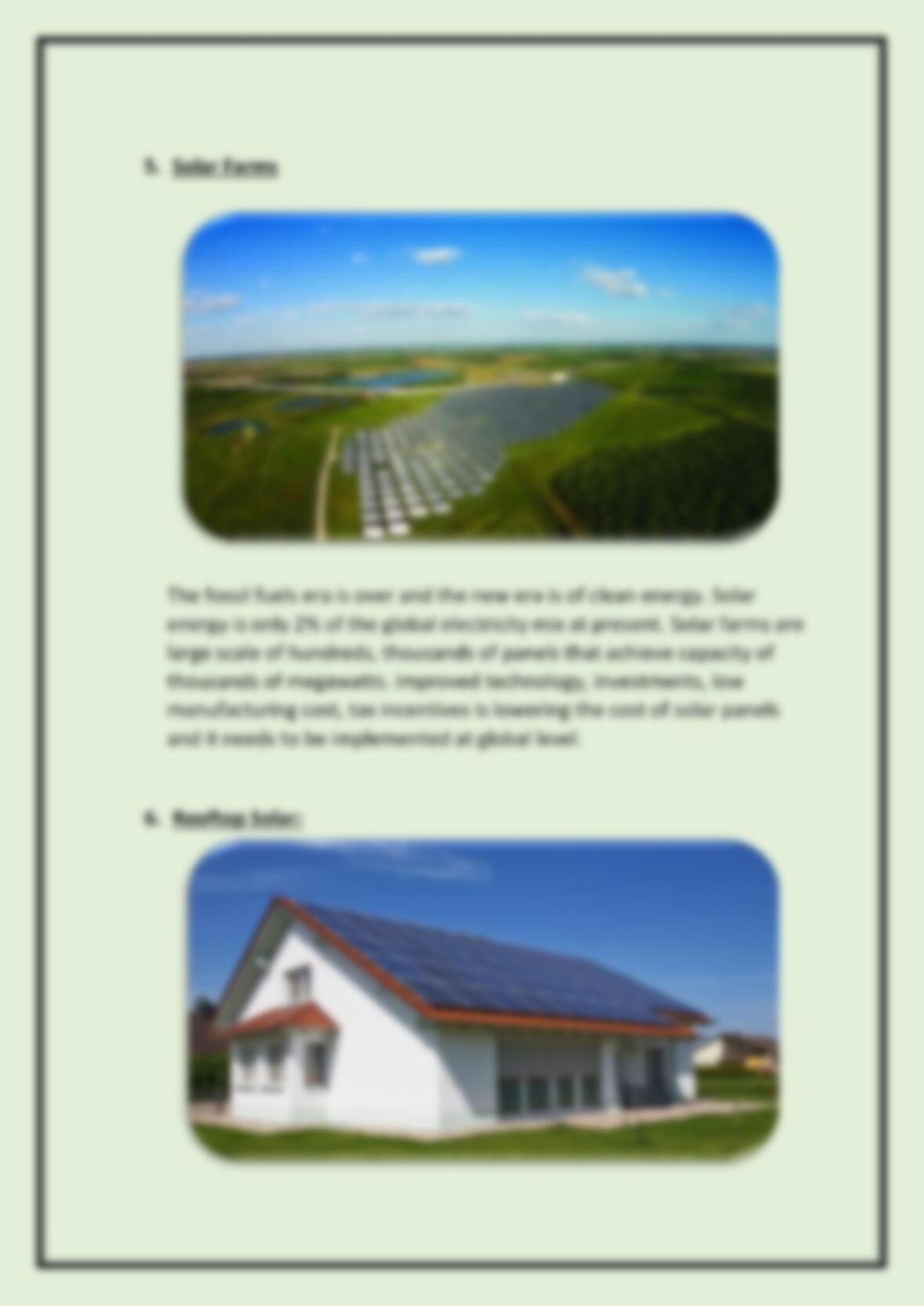
• Tarun Chandna
• Rahul Chaudhary
• Rahul Chauhan
• Gagandeep Kaur

Acknowledgment
During this project we took help and guidance of some respected people who
deserve our deepest gratitude. We would really like to thank and also convey
our gratitude to (Prof.) Dr. Seeta Gupta and Mr. Anirudh Gupta (Director-
Susmafia.org) for guiding us through our project.
We hope that the habits of adopting sustainability solutions accelerate across
the globe.
Introduction
Sustainability is a word that we hear all the time. It’s almost a cliché nowadays
when someone or something identifies itself as being sustainable. We listen to
companies, organizations, and governments being called out to be more
sustainable. But do we really understand the term ‘Sustainability and what it
actually means?
When one tries to find out the meaning of the term Sustainability, we get
many different answers which are unique in terms of the purpose and the
essence of the word. There is no universally accepted definition of this
concept. So, it is of utmost importance to have a simple and easy-to–
understand definition that encompasses all of its facets, spirit, and ethos.
We define Sustainability as actions we need to carry out in order to develop
and perpetuate conditions under which both the earthlings and the earth can
coexist in synergy, which enables us to attain the social, economic, and
environmental needs of present and future generations.
Sustainable practices bolster environmental, societal, and economic well-being
and vibrancy. The concept of Sustainability rightly assumes that resources are
limited and must be consumed wisely with a long-term view of priorities and
consequences. In simplest terms, we can say that Sustainability is about our
children and their children, and the world we will leave behind for them.
Sustainability and Sustainable Development
Unlike Sustainability, Sustainable Development has a universally accepted
definition which was first described in the final report of Brundtland
Commission called ‘Our Common Future’. Sustainable Development is defined
as: “meeting the present needs without compromising on our future
generations to meet their own needs.”
Keeping this definition and the prosperity of our future generations in mind, a
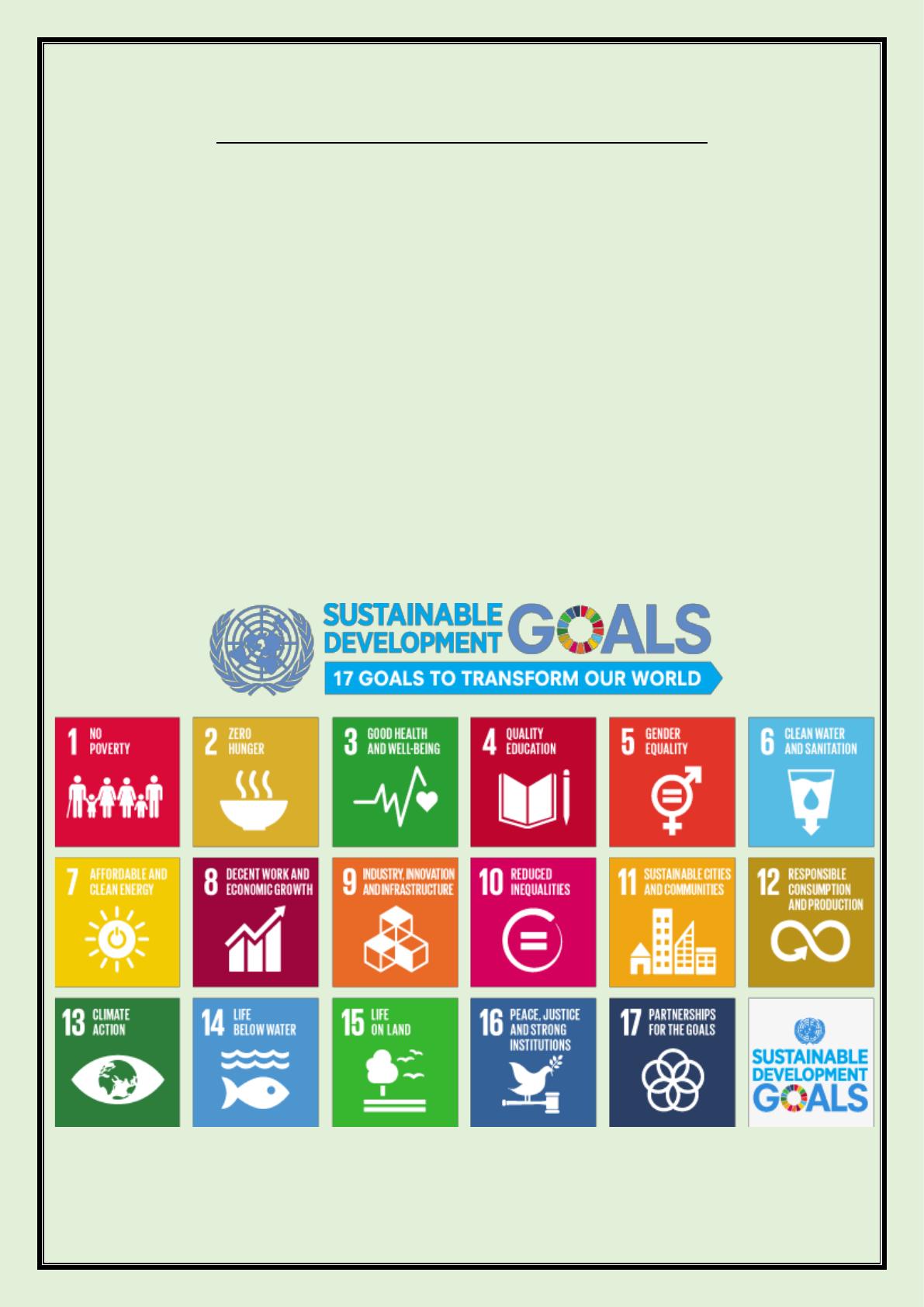
global sustainability agenda was proposed by United Nations in 2015 and all
the member states adopted it. It comprises of 17 Sustainable Development
Goals (SDGs), ranging from removing poverty and hunger to clean water, clean
energy, and climate action.
Importance of Sustainability
There are several short- and long-term advantages to sustainability. If we do
not make more sustainable decisions, we will not be able to protect our Earth’s
habitats or continue to work as we do now. There is need of sustainability
because, we are observing many harmful effects of burning fossil fuels like rise
in surface air temperature causing the frequency of summer heat waves over
India may be 3 to 4 times higher, changes in rainfall pattern , the area affected
by floods and drought has also increased, Sea-level rise threatening the life’s of
people living in coastal areas, the frequency of very severe cyclonic storms has
increased significantly , melting of the glaciers , a large number of animal species
will become extinct, and the environment will be irreversibly harmed.
The significance of sustainability can be observed from the following
dimensions:
1. It satisfies basic human requirements
People would have to compete for scarce life necessities such as food, shelter,