Introduction
An efficient supply chain management system aims to minimize supply chain costs
and increase the efficiency of flows and processes (Blanchard, 2010). To achieve
goals and sustain growth, basic supply chain flows are necessary to be properly
developed and managed. Thus, the make process and demand forecasting become
the significant aspect in supply chain for companies to emphasize on. The purpose
of this essay is to focus on IKEA’s supply chain management through examining the
effectiveness of three primary aspects, which are supply chain key flows, production
scheduling & material requirement planning, and supply chain forecasting.
IKEA, a Sweden home furnishing brand established in 1941 by Ingvar Kamprad, is
the largest furniture manufacturer and retailer in the world (IKEA, 2017). Focused on
making a better lifestyle for all people influenced by their business, it has composed
of several factors in manufacturing of their products such as low-cost, well-design,
and function. As of today, more than 400 retail stores across 30 countries is owned
and operated by IKEA Group, making about €35 billion of total revenue in fiscal 2016
(IKEA, 2017). It has over 9000 items in the product range such as office series, bed
room series, kitchen series, lightning series, textiles, dinning series, bathroom series,
and children’s items series. Ready–to-assemble furniture is the most popular and
biggest selling flat pack invented by IKEA, since all furniture components are
packaged in flat pack and required only simple assembly, consumers can save the
cost of furniture purchases and delivery (Kara, 2015). Moreover, IKEA home
furnishing products are designed in Sweden headquarter, manufacturing has been
subcontracted to OEMs in China and other countries of Asia (Loeb, 2012). To
facilitate the sustainable process and reduce the environmental impact, the company
has a sustainability plan for all the raw materials sourced (IKEA, 2017). Needless to
say, improvements in its supply chain management are required to further guarantee
its success.
The Key Flows in Supply Chain
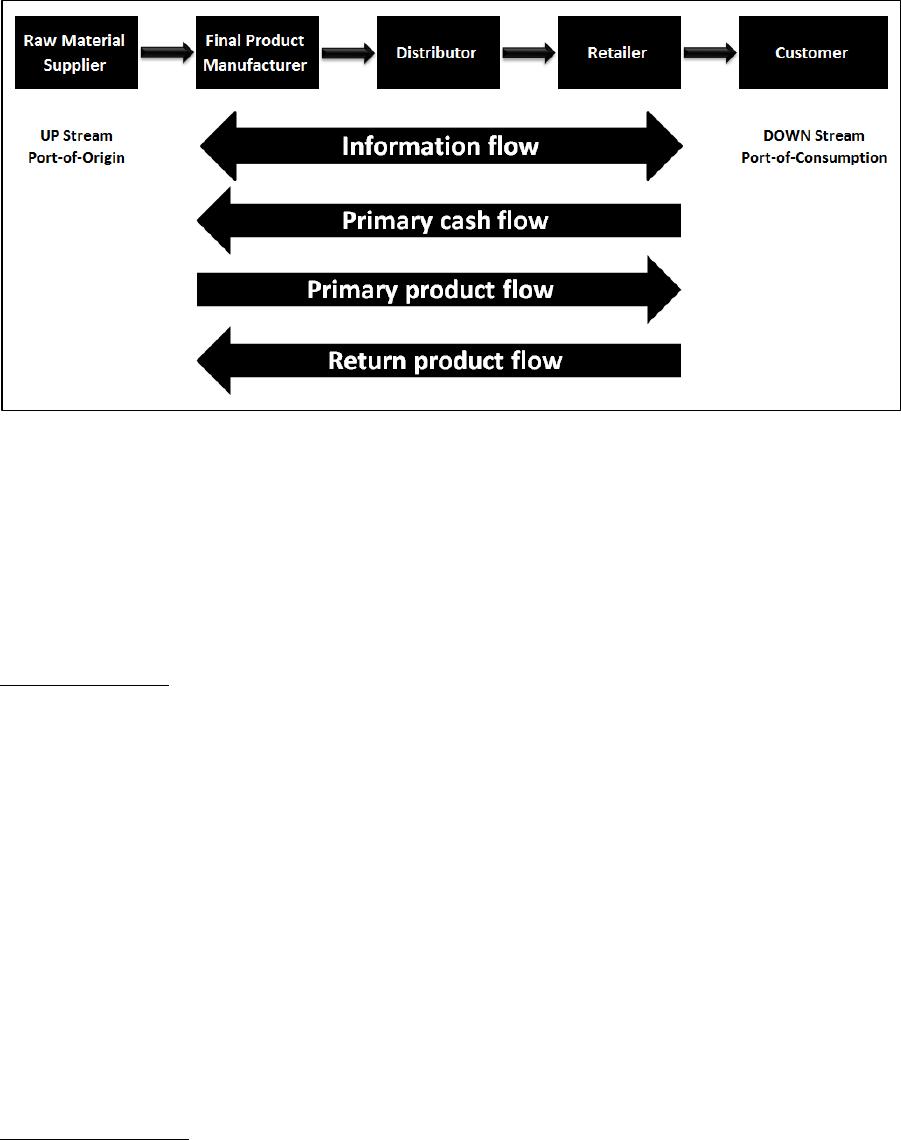
(Threadpunter.com, 2017)
The diagram above illustrates the basic key flows of IKEA’s supply chain with
respective entities, which are raw material supplier, final product manufacturer,
distributor, retailer, and customer (Scm-institute.org, n.d.). The four key flows to
connect the supply chain entities together are as follows:
Information flow
The centralized supply chain of IKEA transfers all types of information and operating
instruction from the headquarters in Sweden to over their hundreds of retail units, for
example, stores layout, product catalogs styling, shopping bags color, and staff
uniforms (Grant & Jordan, 2015). The company also completes sharing of integrated
information for team building and planning across corporate boundaries, including
supplier and suppliers’ suppliers, and customers and customers’ customers.
Internally, each department carries out their functions with great collaboration
between various divisions. Externally, there is also the partnership formed with
customers and suppliers for decisions making.
Primary cash flow
Financial flow of IKEA between parties of raw material suppliers (creditors) and
customers (debtors), performing the functions of customer payment, transaction
accounting, and supplier settlement (Ikea.com, 2017). Primary cash flow comprises
of cash inflows and cash outflows. Cash inflows include normal cash sales, credit

sales, and interest from investments. Cash outflows include payments for supplies,
payment for operating & non-operating expenses (e.g., labor wages and insurances).
Primary product flow
IKEA designs and sells a variety of home furnishing product at a low costs. The
suppliers provide IKEA with the primary resources for all kinds of furniture, such as
wood board, metal product, finished leather, oil and minerals. The company sources
raw materials worldwide from over thousand suppliers; as for instance, Baosteel Co.
Ltd – stainless steel, Steel Stone Co. Ltd – nuts, bolts and screws, Royal Leather Ind.
Ltd – finished leathers, Parallel Ltd – polyurethane foam, and Solrac Coatings –
liquid coatings. Moreover, IKEA’s subsidiary Swedwood supplies timber and timber
products for its own furniture production (Woodworkingnetwork.com, 2008). IKEA is
the final product manufacturer who turns the primary resources into a variety of
furniture. It has over forty distribution centers in 18 countries, and all are attached to
retail stores for directly selling the furniture products to the end customer
(Natgeotv.com, n.d.).
Return product flow
IKEA creates a product returns management system to recall back the faulty
products from end customers and perform repair or replacement services. The retail
stores typically collect the dissatisfied products from customers and the returned
products is further sent to their Sweden headquarters which can recycle the product
and redistribute it again through the supply chain (Ikea.com, 2017). A recall is often
held for safety reasons over a manufacturing defect or design defect in a product
that can possibly result in death and injuries to user. In 2016, IKEA was actually
demanded a global recall for over millions of MALM dressers (Dailymail.co.uk, 2016).
This is due to the unstable furniture problem that caused the fatal accidents in
children.
Recommendation
Information flow can be improved by running CPFR model to coordinate all aspects
of supply chain information to the relevant entities. Collaborative Planning,
Forecasting and Replenishment (CPFR) make extensive use of internet to transmit
the real time information from downstream to the upstream, including inventory
status, sales forecasting, order planning, and information on retail sales (Seifert,
2003). CPFR is also a solution to the bullwhip effect which happened as a result of
information distortion. For instance, the retailer can share an access host database
with their distributor and manufacturer in other countries on a 24/7 basis. Therefore
all decisions for planning and forecasting can be able to come from the upstream
side, and to perform replenishment based on the agreement between supply chain
entities.
Primary cash flow can be improved through effective management of working capital,
which is the money a business uses within their daily trading operation (JPMorgan,
2014). The key to managing working capital is the timing of cash movements, for
instance, to delay cash outflows for as long as possible and or to receive cash
inflows as quickly as possible (Macpas.com, n.d.). This can be done through supplier
negotiation to request for longer trading credit period. Another way is to reduce the
credit offered to customers and or to shorten the length of credit period offered to
customers.
Primary product flow can be improved by developing the appropriate supply chain
strategies. The Effective Reactive supply chain strategy is most suitable for IKEA as
he delivers the low cost flat pack all the way of their centralized business chain
(Threadpunter.com, 2015). Another benefit of this strategy is the effectual
management of total delivered cost (TDC), which include all cost related to handing
over a final product to the end customers (Joc.com, 2009). Efficient Reactive supply
chain strategy also requires integrated connectivity technology to enhance the
overall flow efficiency. For instance, all supply chain entities include supplier,
manufacturer, distributor, and logistics service provider can work together to perform
replenishment with new stocks for retail outlets within a day.
Return product flow can be improved with the application of reverse logistics
software solution, such as Optoro and Genco (Softwareplatform.net, 2016). Reverse
logistics software help retailers to manage returns and recover their value with
technology tools in a streamlined process (Forbes.com, 2017). For example, the
reverse logistics provider carefully test and screen the returned product according to
manufacturing specifications. Non-faulty returns are considered as reusable
inventory because they are still perfectly good, and as a result, the defective ones
will be properly recycled by following all security data and environmental regulations
(Industryweek.com, 2013).
The Make Process
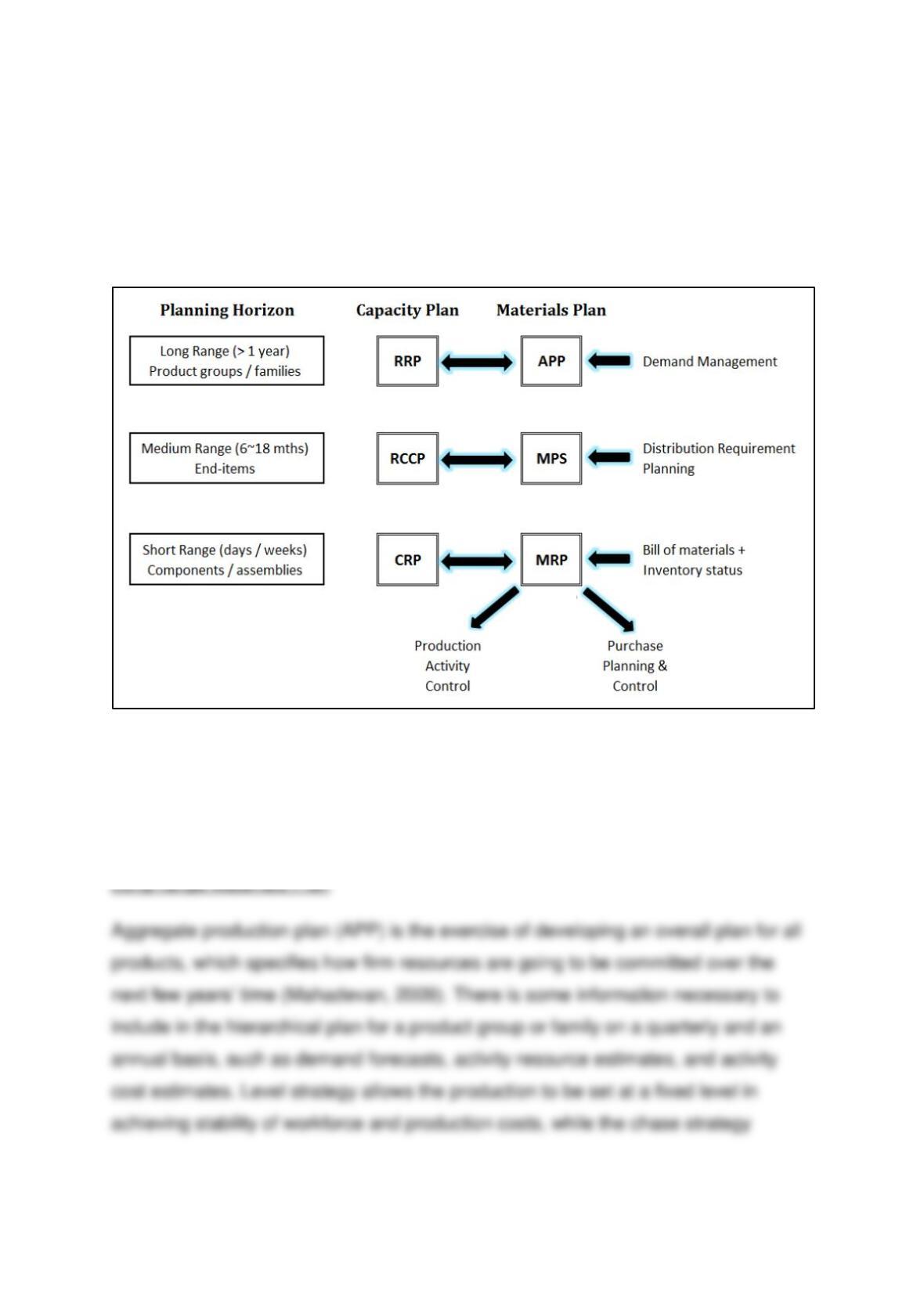
(Wisner, Tan, Leong, 2014)
The diagram above illustrates the production overview of IKEA with detailed process
mapping: aggregate production plan (APP), master production schedule (MPS), and
material requirement plan (MRP).