MAD Final Report
PGP 2017-19
“Supplemental education to the primary school students
along with the on-ground activities”
Group Mentor Submitted By: Group 17
Prof. Alka Chadha Krishna Singh Martolia (1701030)
Riddhi R Kalra (1701042)
Rutul Ashish Shah (1701044)
Sondagar Bhavesh Chandrakant (1701048)
Ashish Kumar (1701073)
Akshay Thoolkar (1701122)
1

Page | 2
Introduction ……………………………………………………………………………………………………………….3
Personal Hygiene ………………………………………………………………………………………………………..3
Inspiration ………………………………………………………………………………………………………………3
Challenges ………………………………………………………………………………………………………………4
Effective Learning Techniques ………………………………………………………………………………………5
Inspiration ………………………………………………………………………………………………………………5
Module Details ………………………………………………………………………………………………………..5
Continuity ……………………………………………………………………………………………………………….6
Pronunciation ……………………………………………………………………………………………………………..7
Inspiration ………………………………………………………………………………………………………………7
Challenges ………………………………………………………………………………………………………………7
Field Visit ……………………………………………………………………………………………………………………8
Day 1 – Monday, July 9, 2018 ……………………………………………………………………………………8
Day 2 – Tuesday, July 10, 2018 ………………………………………………………………………………….9
Day 3 – Wednesday, July 11, 2018 ……………………………………………………………………………..9
Observations & Findings ……………………………………………………………………………………………. 13
Difference ………………………………………………………………………………………………………………... 14
Learnings …………………………………………………………………………………………………………………. 15
Appendix …………………………………………………………………………………………………………………. 16
Completion Certificate …………………………………………………………………………………………… 16
Modules ………………………………………………………………………………………………………………. 17
Table of Contents

Page | 3
Personal Hygiene
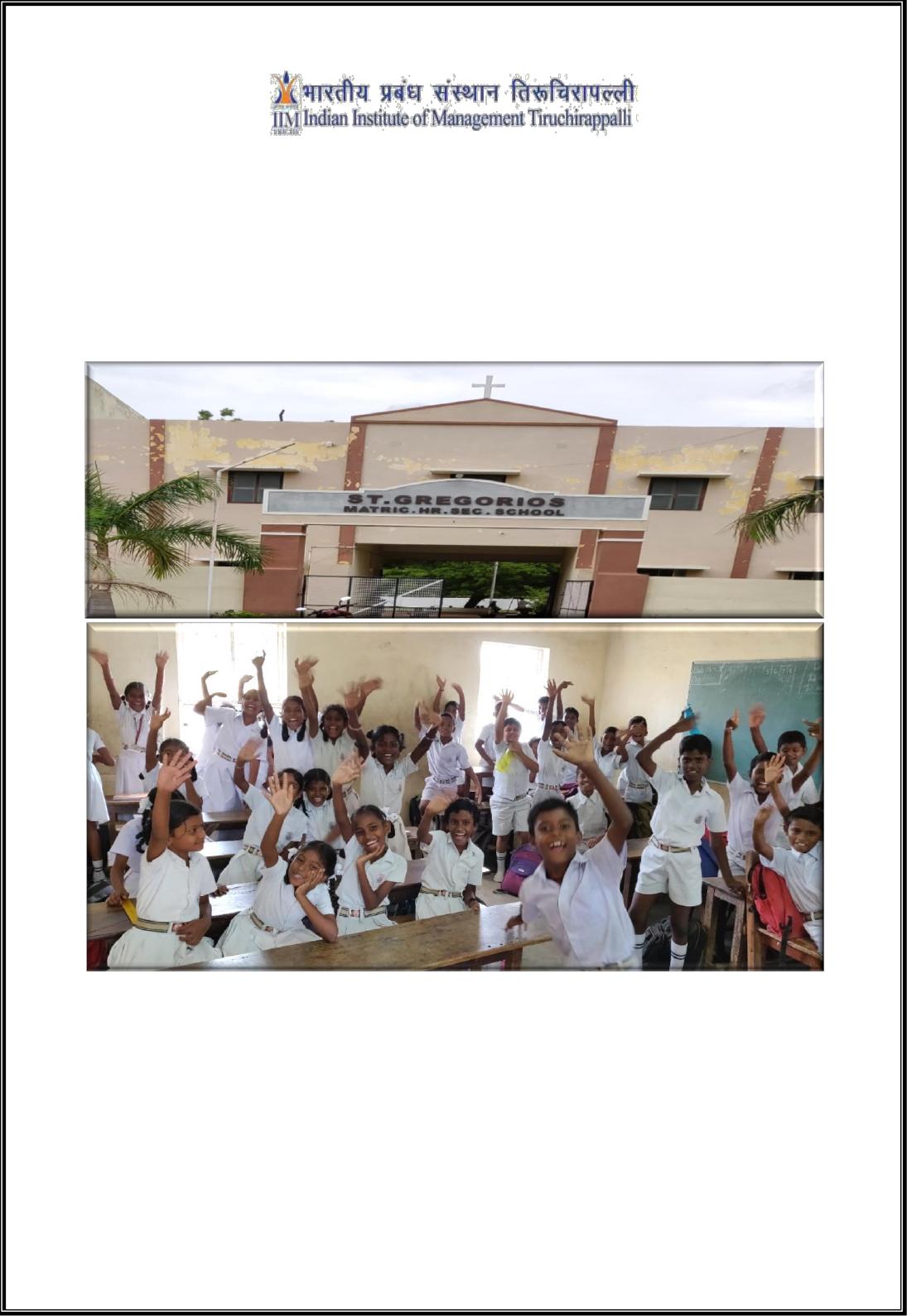
In our attempt to make a contribution towards Parumala St. Gregorious Matric Hr. Sec
School, we conducted supplementary educational sessions which will be helpful to them
over the long term. While working with the students of class 5, we addressed their concerns
regarding spoken English by have sessions with them on the same. We also demonstrated
the importance of personal hygiene and good habits for sustainable development in a
manner that was interactive in nature to facilitate effective learning. This was followed by
an environmental awareness program.
To sustain the learning imparted to the students, the course modules designed by the team
was shared with the school to be displayed prominently such that it could be referred to the
wider audience of the school and served as reinforcement.
Inspiration
Most health problems are directly or indirectly associated with personal hygiene. Most
illnesses could be associated with personal hygiene and sanitation of the pupils.1 It plays a
major role to promote healthy life. A study was performed to assess the current level of
knowledge and practicing behaviour regarding hand washing, bathing, tooth brushing, and
taking care of nail and hair. A cross-sectional descriptive study was conducted on 800
students of Lucknow district. Overall trend of knowledge and practice about personal
hygiene was in poor condition among students at the time of pre-test. Post-test results were
highly satisfactory.2
Safe hygiene practices are fundamental for ensuring good health and well-being for
everyone (SDG 3). This is especially important for children who are more vulnerable than
adults to infections. Infectious diseases, such as diarrhoea and pneumonia, threaten the
lives of millions of children every year. Simple handwashing with soap removes 90% of
contaminants, and safe hand hygiene could spare one out of three children who get sick
with diarrhoea,3 and almost one out of five who get respiratory infections like pneumonia.4
1 American Journal of Public Health
2 Journal of Family Medicine and Primary Care
3 American Journal of Public Health
4 Tropical Medicine and International Health
Introduction

Page | 4
Better hand hygiene also has a large impact in situations where infections are not life–
threatening. Fewer infections among young children means fewer visits to the doctor,
reduced need for antibiotics, and decreased absenteeism among parents. Depending on the
initial hygiene standard, studies on hygiene interventions show reductions in absence rates
among children, with numbers ranging from 7% up to 54%.5
Challenges
A hygienic lifestyle encompasses both physical and emotional health. For children, good
health and hygiene practices go together with effective learning. Equally, learning about
having a healthy and hygienic lifestyle helps give children the independence and confidence
to make well-informed decisions about their health, which have life-long implications.
Dental defects, worms, night blindness, skin and eye ailments were among the commonest
health problems found in schoolchildren, according to findings of the state’s economic
survey for 2013-14. One of the main reasons for increasing health problems among children
was poor personal hygiene.6
A child with poor personal hygiene may feel ostracized from school by the reactions of their
peers, and often teaching staff are unsure of how to address the issue. For this child, the
school environment can quickly become a very negative place, with their learning
experiences becoming tainted by their social interactions. Lack of proper hygiene in children
can also make them more susceptible to contracting illnesses such as stomach bugs, causing
absences from school. They can become withdrawn and lose a great deal of confidence. This
then affects their motivation and stimulation to learn.
A focus on hygiene is important in all arenas of a child’s life and is especially important in
situations where many children are brought closely together. One such place is preschools
and schools, as they can easily become playgrounds for infections. Interventions to raise the
hygiene standards can prevent many infections and improve children’s health and school
participation.
5 The American Journal of Tropical Medicine and Hygiene
6 State Health Department, Government of India
Inspiration
Students generally struggle with learning. A lot of time and effort is wasted in trying to find
out the best way to learn and make it stay longer in the memory. But unfortunately, lack of
proper guidance, illusion of mastery and illusion of familiarity towards a text are some of the
factors which sway students away from practicing the best methods.
Module Details
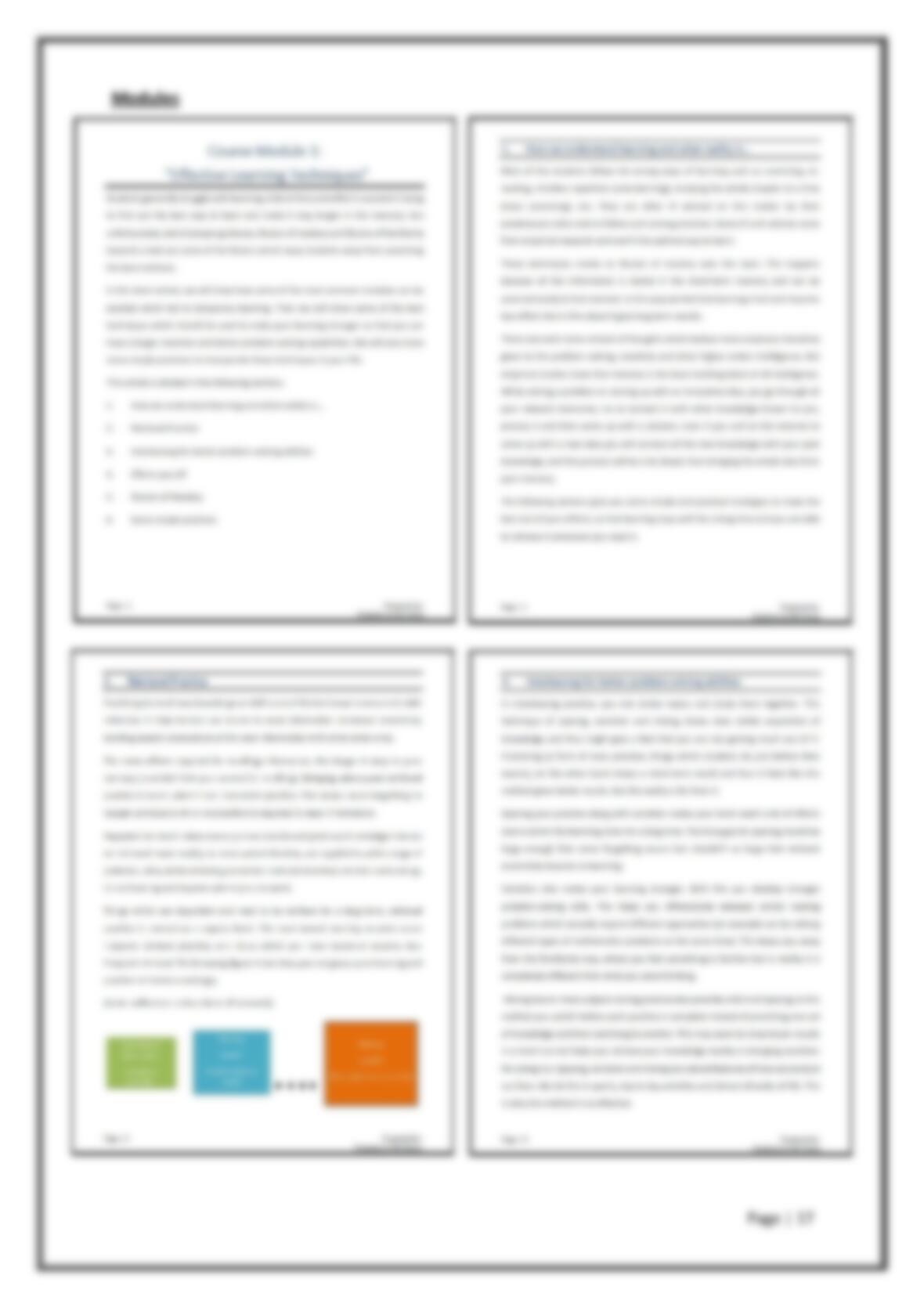
In this module, we showed how some of the most common mistakes can be avoided which
led to temporary learning. We shared some of the best techniques which should be used to
make your learning stronger so that you can have a longer retention and better problem
solving capabilities. We also shared some simple practices to incorporate these techniques
in your life. These practices are as suggested by Peter C. Brown, Henry L. Roediger III and
Mark A. McDaniel in their book “make it stick” (ISBN: 978-0-674-72901-8). This module was
a simplified shorter version of the original book which students could follow easily.
The module was divided in following sections.
Effective Learning Techniques