Strategy Implementation Project Report
FMCG Sector
Group members:
Khaja Zubair Ahmed (19/206)
Noel Roychoudhary (19/211)
Rahul Kumar (19/217)
Sohom Karmakar (19/231)
Soumya Barman (19/348)

INDEX
Contents
1. Hindustan Unilever Limited ………………………………………………………………………………………………………………………….. 2
1.1 BUSINESS STRATEGY ………………………………………………………………………………………………………………………. 2
1.2 ORGANIZATION STRUCTURE ………………………………………………………………………………………………………….. 5
1.3 LEADERSHIP STYLE OF CEO ……………………………………………………………………………………………………………. 6
1.4 CAUSAL RELATIONSHIP BETWEEN STRATEGY, STRUCTURE AND LEADERSHIP IN STRATEGY
IMPLEMENTATION ……………………………………………………………………………………………………………………………………… 6
2. Patanjali ……………………………………………………………………………………………………………………………………………………… 8
2.1 BUSINESS STRATEGY ………………………………………………………………………………………………………………………. 8
2.2 ORGANIZATIONAL STRUCTURE ……………………………………………………………………………………………………. 11
2.3 LEADERSHIP …………………………………………………………………………………………………………………………………… 11
2.4 CAUSAL RELATIONSHIP BETWEEN STRATEGY, STRUCTURE AND LEADERSHIP IN STRATEGY
IMPLEMENTATION ……………………………………………………………………………………………………………………………………. 12
3. ITC ………………………………………………………………………………………………………………………………………………………….. 13
3.1 BUSINESS LEVEL STRATEGY ………………………………………………………………………………………………………… 13
3.2 ITC ORGNISATIONAL STRUCTURE ……………………………………………………………………………………………….. 15
3.3 LEADERSHIP STYLE OF ITC’S EXECUTIVE CHAIRMAN ……………………………………………………………….. 15
3.4 CAUSAL RELATIONSHIP BETWEEN STRATEGY, STRUCTURE AND LEADERSHIP IN STRATEGY
IMPLEMENTATION ……………………………………………………………………………………………………………………………………. 16
4. REFERENCES: ………………………………………………………………………………………………………………………………………… 18
1. Hindustan Unilever Limited
The key to HUL’s outstanding performance lies in “the ‘brilliant basics’ of quality, service, execution and cash
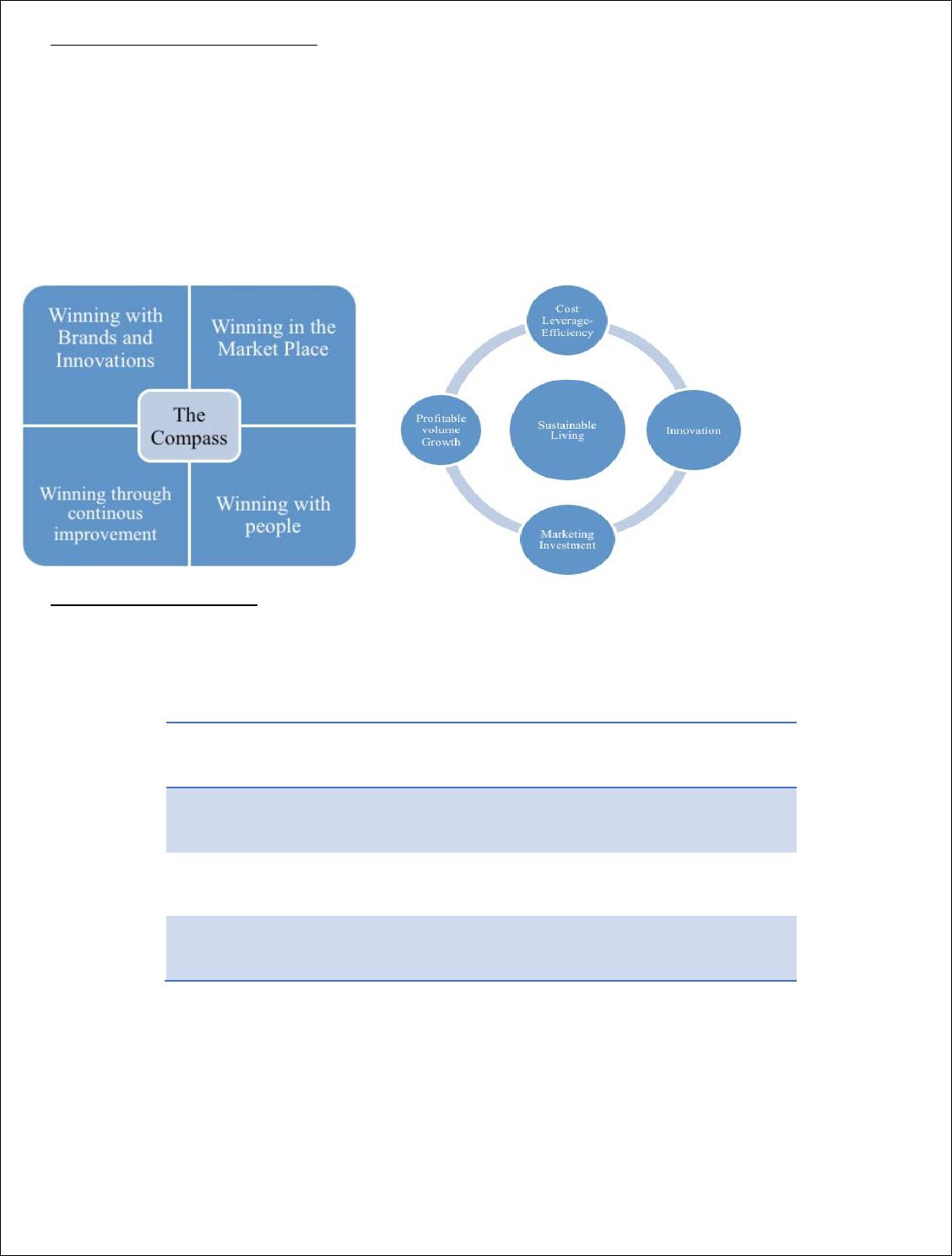
generation” according to its Annual Report published for FY 2015-16. Unilever Sustainability Plan (USLP) is the
blue print of their strategy to achieve their vision
Unilever Sustainable Living Plan
Winning Decisively USLP Model
1.1 BUSINESS STRATEGY
1.1.1 HUL’s Growth Strategy
Competitive
Growth
Beating the industry growth rate
Consistent
Growth
Maintaining healthy growth rate over the period of time
Profitable
Growth
Widening the margin and at the same time maintaining
competitive investment
Responsible
Growth
Maintaining continued progress in sustainability priorities
1.1.2 HUL Competitive Strategy
Integrated Cost Leadership/Differentiation
HUL addresses each and every cluster in both urban and rural area through micromarketing, delivering product
mix addressing different customer segments, increased throughput from retails outlets, building emerging
channels and develop new market across the categories.
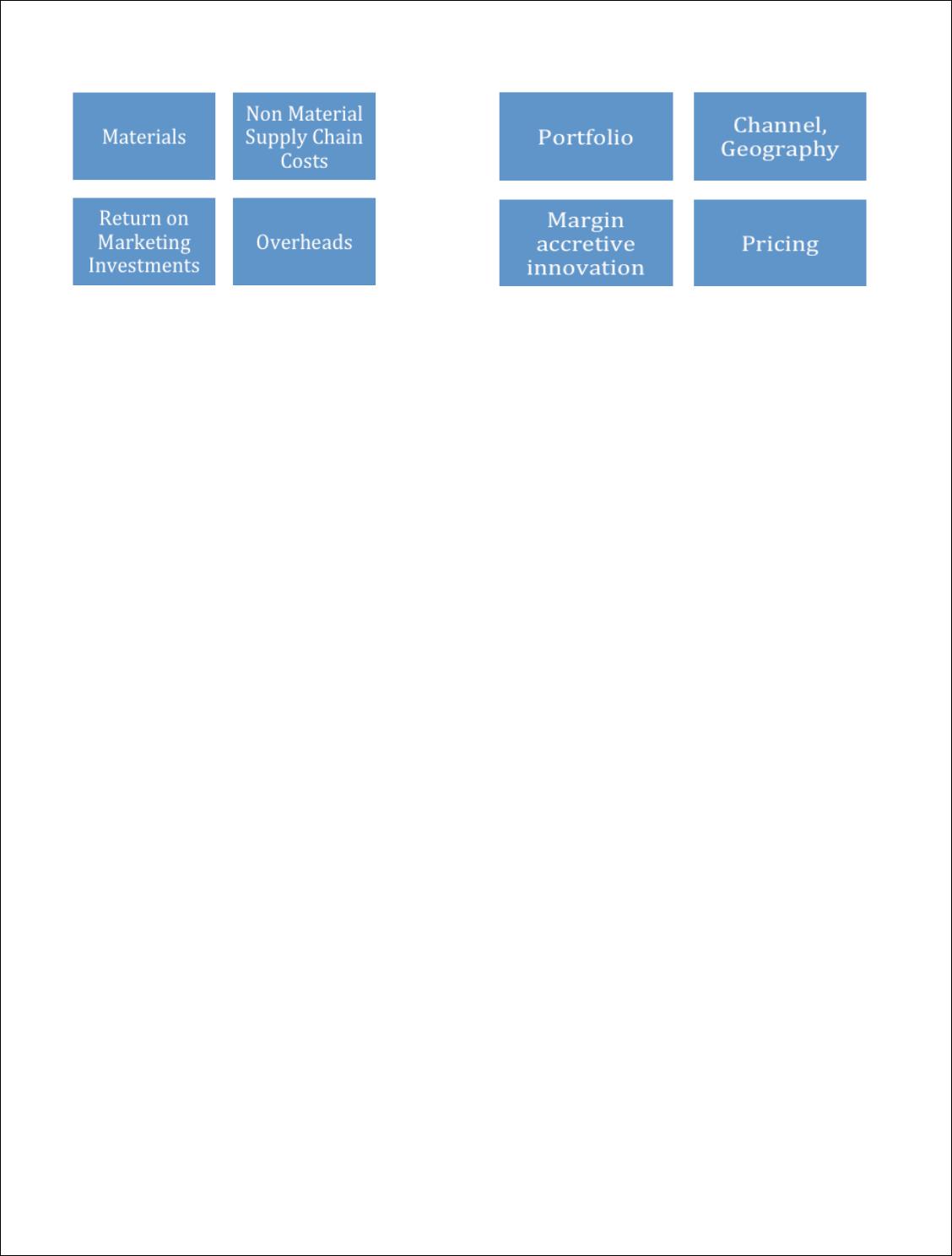
Cost Leadership
Maximizing the mix End–to-end cost focus
Manufacturing Efficiency: HUL applies its long-term manufacturing capability relying on efficient capacity
creation and new technological implementation that supports volume flexibility. Using their World Class
Manufacturing Principles which indulges in RCA (Root Cause Analysis) and elimination of non–value adding
activities. This enables improvement in efficiency as well as enhancement of cost performance.
Supply Chain Efficiency: HUL employs Project Symphony, to look into end–to–end value chain in aspects of
optimum pricing, materials, supply chain cost, trade spends, taxation, treasury, insurance and overheads. Using a
new IT tool they have been able to achieve significant inventory reduction which helped in releasing substantial
cash flow for the business. The fiscal witnessed 5% saving in end–to-end supply chain cost.
Economies of Scale: HUL leverages on the efficiency of the value chain network to achieve significant economies
of scale.
Differentiation
HUL employs innovation to create new products, and to achieve enhanced customer engagement. On top of that,
its varied social benefitting programs and community development programs helps it in distinguishing itself from
other top peers.
Service Delivery Standards: They focus on reducing consumer complaints and improving product quality
standards. This results in improved customer service as well as overall customer experience. The customer
engagement was up by 67% and the customer complaints went down by 20% as compared to the last fiscal.
Innovation: Continuous innovation across the product portfolio, driving the core brand through innovation and
premiumisation, building the craftsmanship in the marketing, building brand with purpose, harnessing non TV
platforms, ecommerce for advertisement and making use of big data to tap into customer insights. 40 innovation
networks have been executed during the last fiscal amounting to about 60% of the entire product portfolio. The
company is focused on bigger and faster innovations and capability development in order to get future ready
under all circumstances.
Analytical Intervention: HUL launched an analytical platform to utilize the potential of big data in analysis of
business operations. This one, with successful integration platform specific external data and internal data
provides holistic view of the business which help in driving operations, by increasing controls and providing new
technological abilities to support business growth.
Offering Social and Environment Friendly Benefits:
Social: HUL employs social initiatives like Project Shakti which motivated women entrepreneurs across rural
India as well as mass contact programs for developing healthy habits for selling and distributing HUL products
across markets. Also Prabhat is an initiative launched by HUL that contributes to the development of local
communities around their manufacturing sites. All these help in improving reach and accessibility of the company