Producon/ Operaons Management
MGMT 36000
Answer Sheet– Review 3
Name:_______________________
1. ____B______
2. ____B______
3. _____D_____
4. ___period 1, 20 units_______
5. _______18,000___
6. ______1,600____
7. ______20,200_
8. __A________
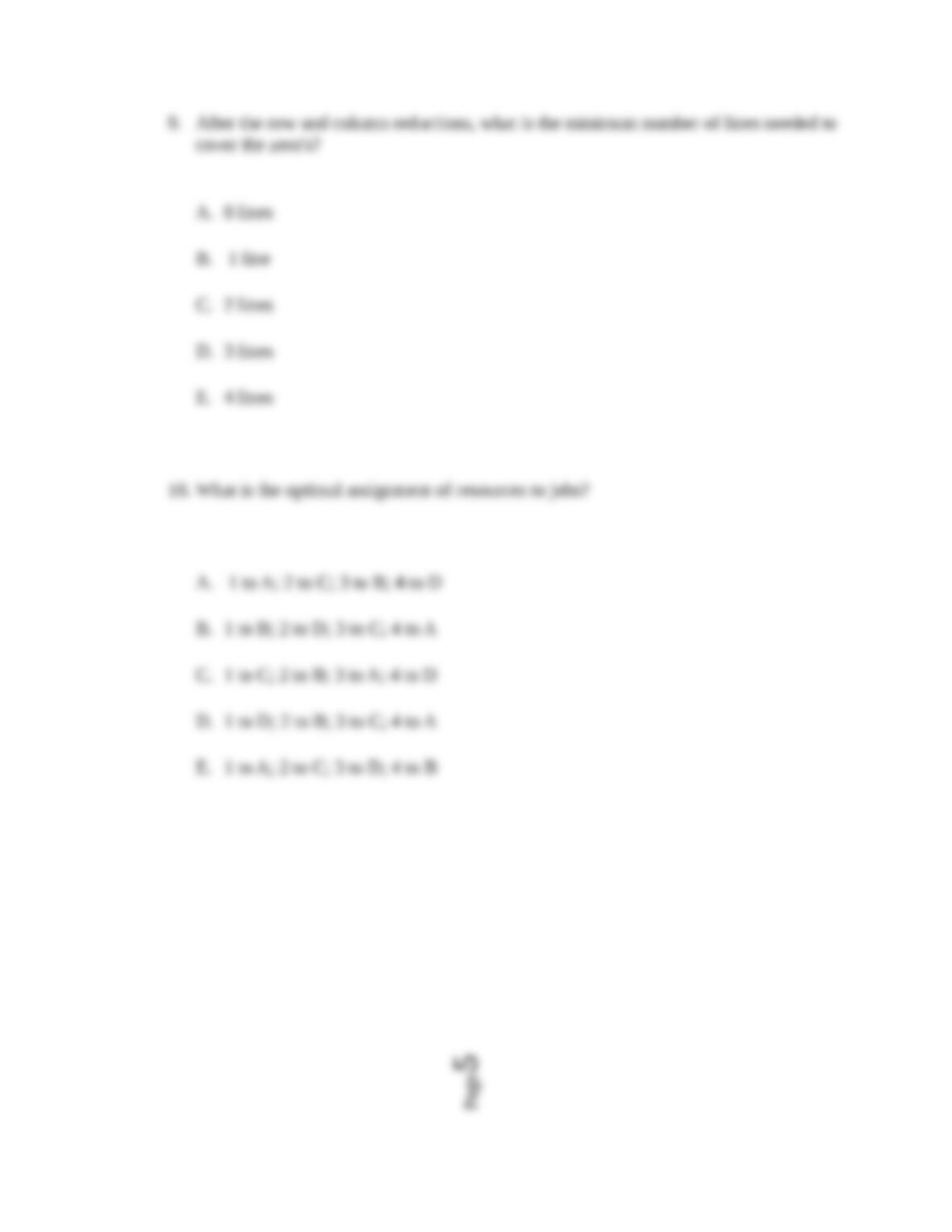
9. __________
10. __________
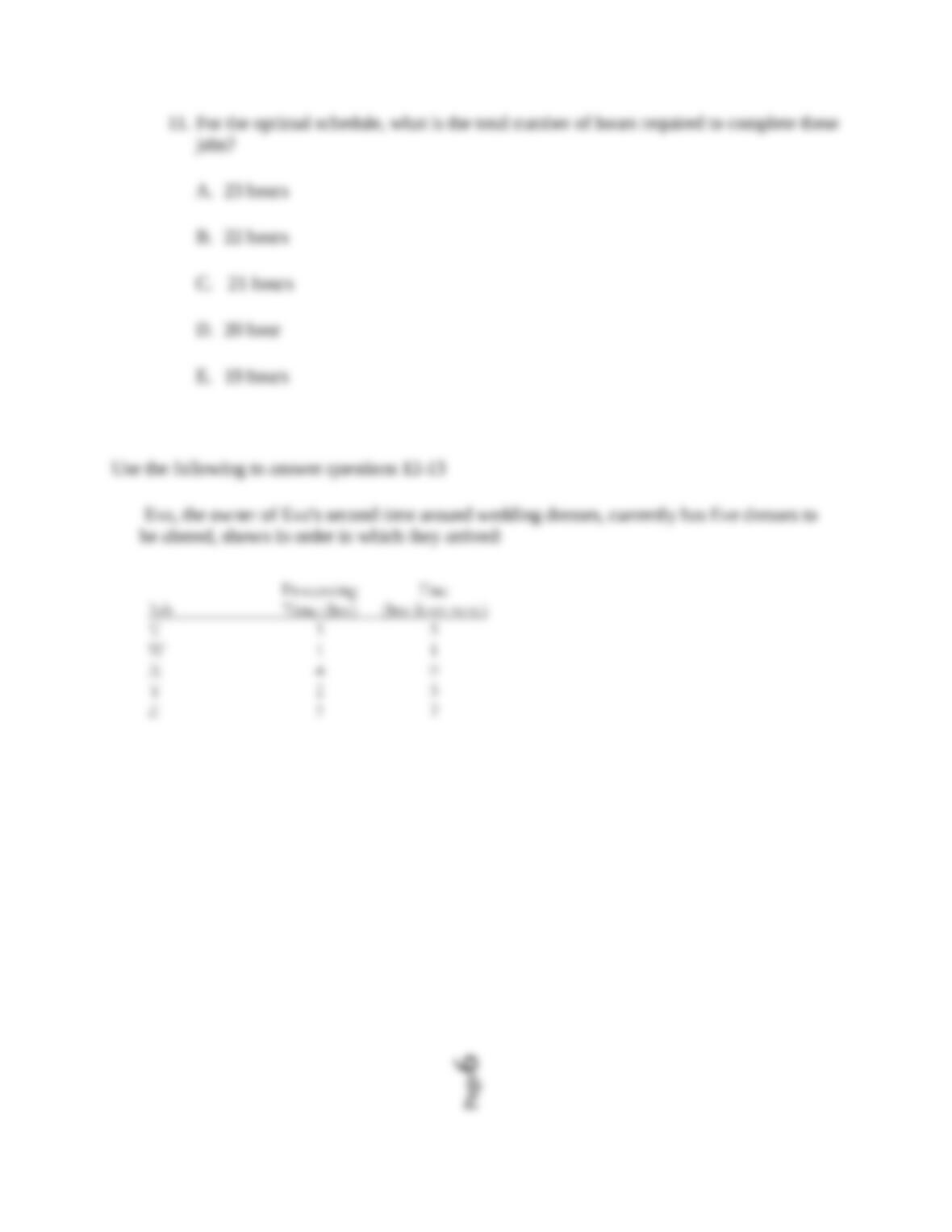
11. __________
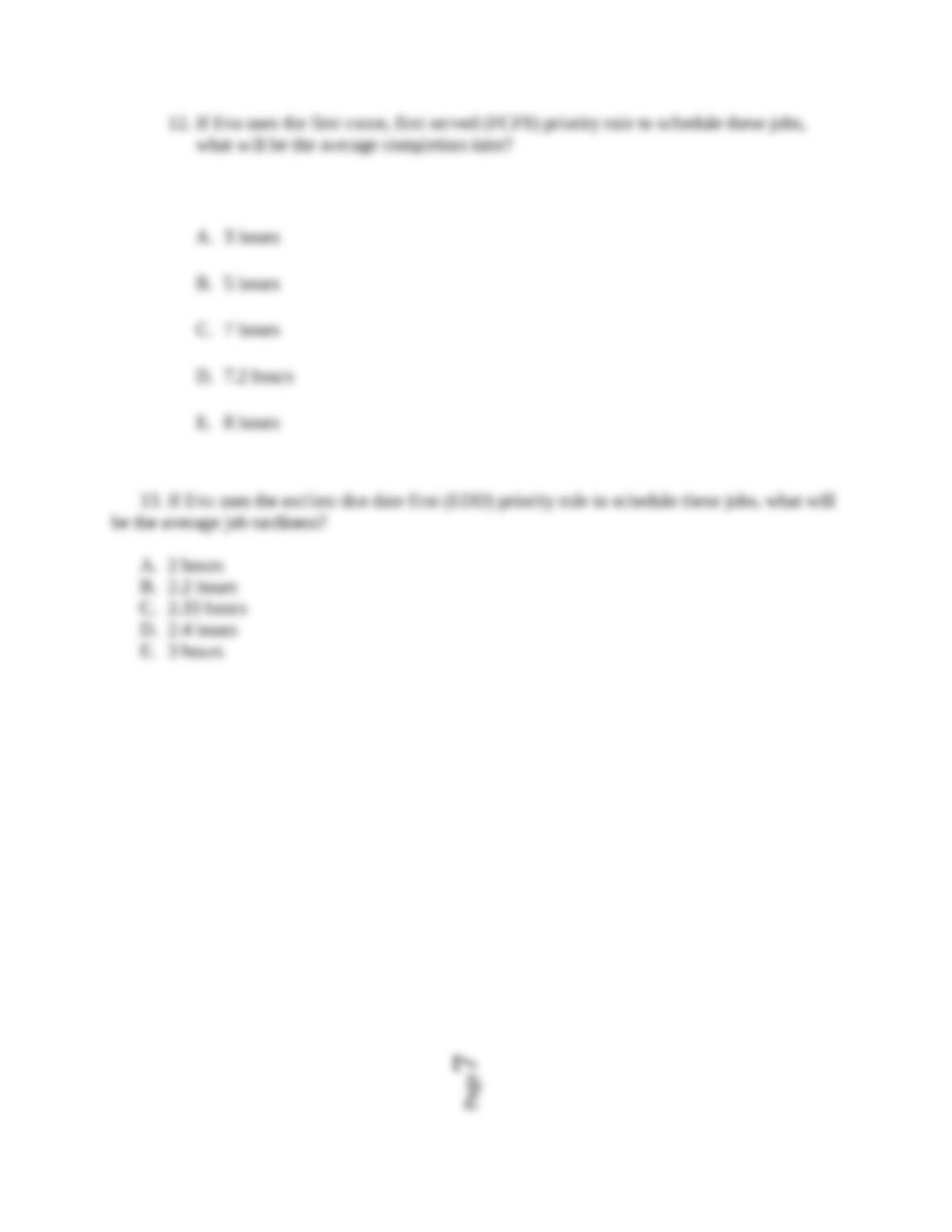
12. __________
13. __________
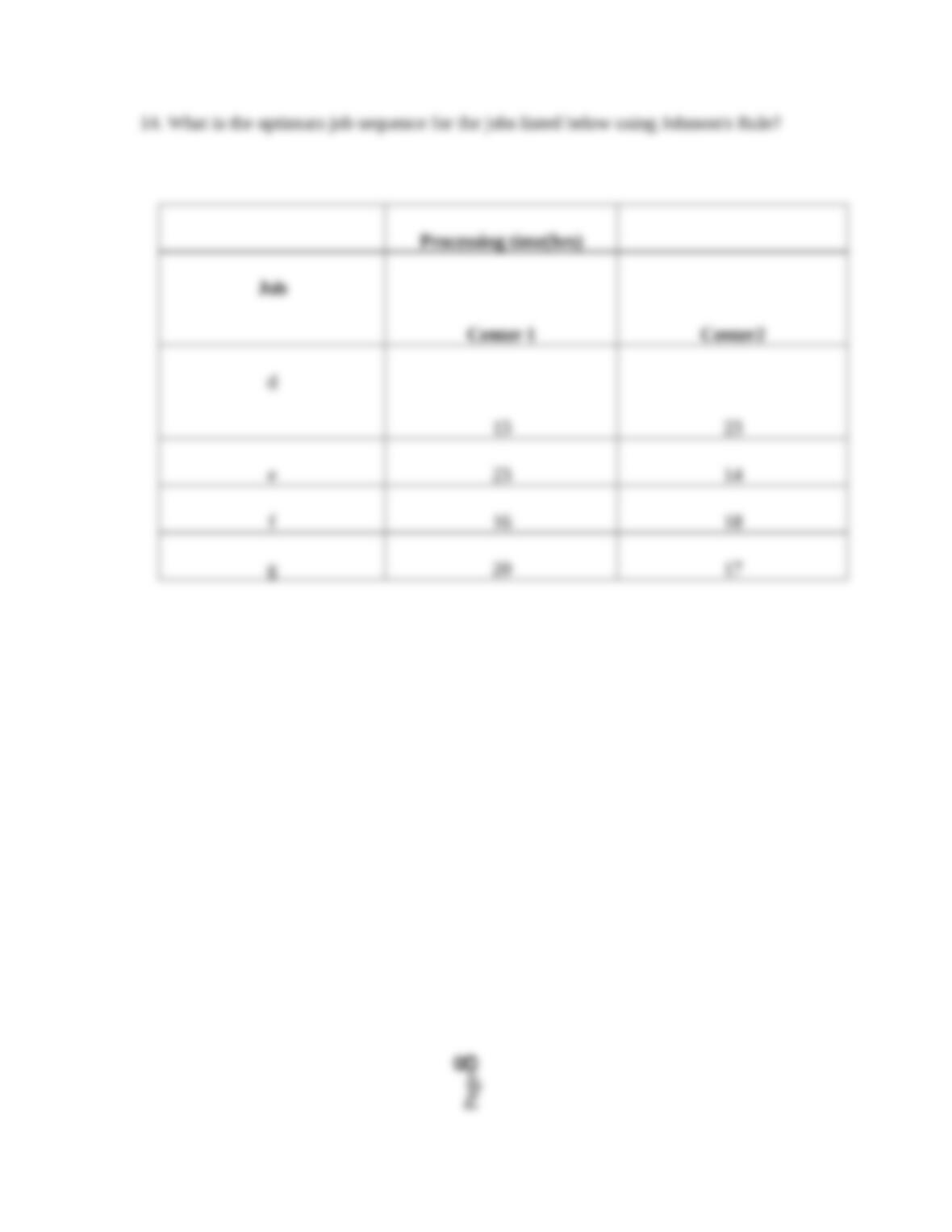
14. __________
15. __________
16. __________
17. ____D______
18. ___A_______
19. __________
20. __________
Page1
MGMT 36000
Production / Operations Management
Review 3
1. In using the “chase strategy” variations in demand could be met by:
A. varying output during regular time without changing employment level.
B. varying output during regular time by changing employment levels
C. (a) and (b)
D. varying inventory levels
E. price increases
Use the following to answer questions 2 and 3
A firm has 43 units of a certain product on hand. Forecasts for the first two planning periods are
20 units each. A production quantity of 80 units is planned to be available in period 3. Customer
orders are 22 for period 1 and 17 for period 2.
2. What is the projected on-hand inventory at the end of period 2?
A. 21
B. 1
C. 12
D. 20
E. impossible to say without more information
Page2
3. What quantity is available for commitment to new customers in either of the first two
periods?
A. 21
B. 1
C. 20
D. 4
E. impossible to say without more information
Use the following to answer questions 4-7
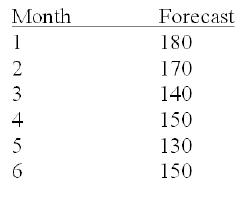
Given the projected demands for the next six months, prepare an aggregate plan that uses
inventory, regular time and overtime, and backorders. The plan must wind up with no units in
ending inventory in Period 6. Regular time capacity is 150 units per month. Overtime capacity is
20 units per month. Overtime cost is $30 per unit, backorder cost is $20 per unit, inventory
holding cost is $5 per unit, regular time cost of $20 per unit, and beginning inventory is zero.
Page3
4. How should overtime capacity be utilized? (In what period, and how many units)
5. What are the total regular time costs?
6. What are the total backorder costs?
7. What is the total cost for this plan?
8. The priority rule where jobs are processed according to the smallest ratio of due date
to processing time is: