P a g e | 1
SPORTS BETTING AS AN INDUSTRY
BY TADEO MONTALVO
FOR DR. JONES
MICROENCONICS: SP17-BUS206231
MOHAVE COMMUNITY COLLEGE
SPRING 2017

P a g e | 2
Introduction
It’s Sunday, February 5th, 2017 and in NRG Stadium in Houston, Texas, Super Bowl LI
is being played and watch by millions across the world. At halftime the score stands Falcons 21 –
Patriots 3. If you had a wager on the Patriots at -3 you were probably ready to accept your losses.
If you had a Falcons bet then you were probably thinking about how you might be spending your
winnings. The start of the 3rd quarter didn’t do much to change these feelings as the Falcons
came out and scored another quick touchdown to go up 28-3. I must admit that I almost changed
the channel at that point, but if I had I would have missed the biggest comeback in Super Bowl
history as the game ended in overtime with the Patriots beating the Falcons 34-28. My wife and I
were ecstatic as the parlay ticket she had placed hit with that final result and payed 13 to 5 on her
wager. I am not a fan of either team but betting on the game made it exciting for me and this is
the reason I chose this topic to analyze.
Sports’ betting is big business around the globe and yet here in the USA it is mainly
corralled to only legal betting in Nevada. There is a huge untapped market that exists illegally in
the USA but the walls are crumbling and I suspect that the legal sports betting ban will be lifted
and left to the individual states to decide whether or not to legalize sports betting. I will attempt
to address the history, complexity, ethical and economic pros and cons to legal sports betting and
show why this industry is ripe for expansion.
History of sports betting
It’s no secret that betting in all forms can be traced back far into human history but
specifically in the United States of America we know gaming existed as far back as the 1600’s
with games of chance and lotteries. Most of the wagering early on was mostly unregulated.

P a g e | 3
Horse racing became a very popular form of betting across the nation and many states began
with regulating the sport. It wasn’t until 1931 that Nevada officially legalized sports betting .
Then congress officially stepped in and in 1951 they imposed a 10% tax on sports betting and
instated a rule that all sports books had to purchase a license. (Wolohan 2014)
After congress lowered the tax to 2% in 1974 more states began looking into making
some form of sports wagers legal. Montana, Delaware, and Oregon legalized sports betting in
some manner but mostly as part of the state lottery system. Another big difference was you
couldn’t wager on single games like in Nevada but had to pick multiple teams or propositions to
fill the lottery card. (Wolohan 2014)
In 1992 Congress passed the Professional and Amateur Sports Protection Act. This act
effectively made wagering on all forms of sports illegal with the only exception being the 4
states that had already had systems in place. These states were grandfathered in and allowed to
continue their forms of sports betting. It’s a bit ironic now but New Jersey was given an option to
also become exempt from the ban but they weren’t able to meet the requirements in the time
given. (Wolohan 2014).
New Jersey in 2015 passed a bill to legalize sports betting in the state but was
immediately challenged by the four big sports leagues: NBA, NFL, NHL, and MLB. New Jersey
lost their court battles and sports’ betting is still illegal in 46 of the 50 states in the US. This is in
contrast to the fact that there is legal gambling of some sort in 48 of the 50. That and the fact that
other services that linger in a grey legal area such as sports pools have exploded in popularity
seems to be screaming for the downfall of PASPA. (Gregory 2015)
Sports betting industry growth
P a g e | 4
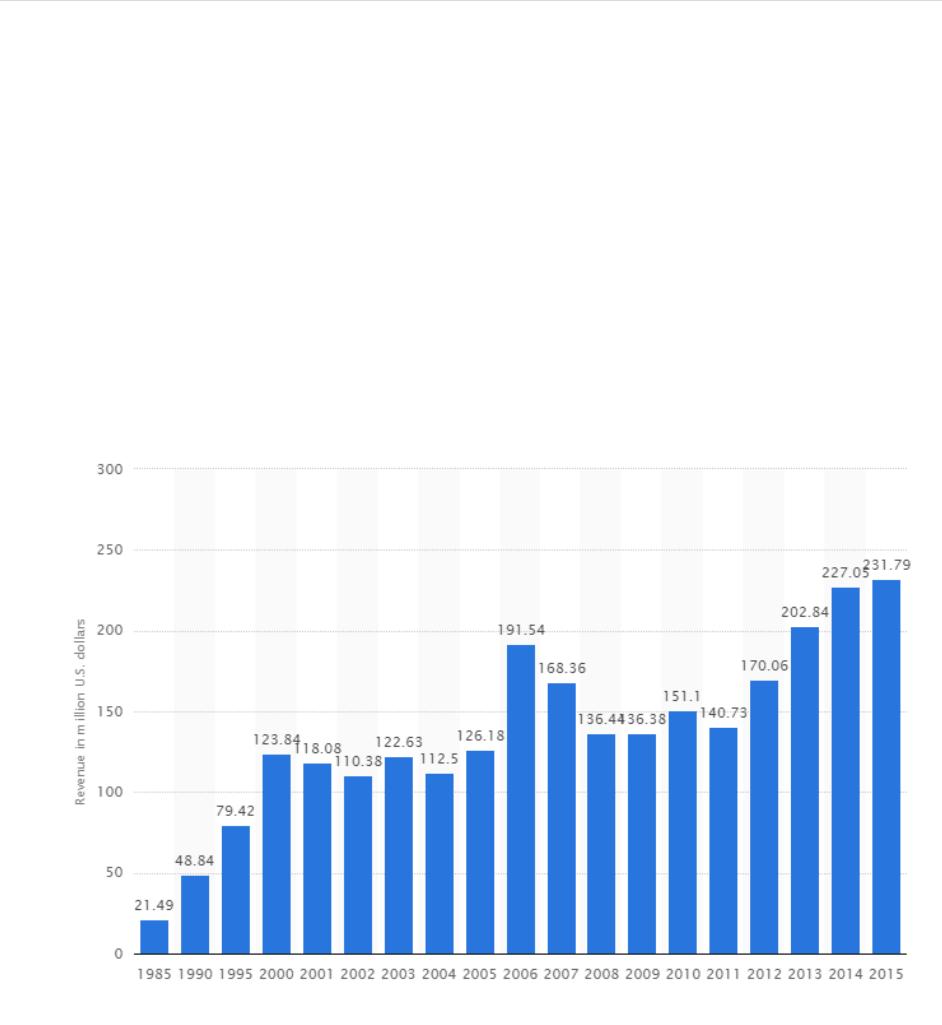
Nevada’s sports books are currently either owned by the casino themselves or operate
under an independent corporation that leases space in the casino and arranges to run their
proprietary sports book within the casino. Nevada gaming regulations has made it so that
offering sports betting must be done with a casino gaming license and this is why you won’t find
a bet kiosk at every corner in Las Vegas. These sports books are mandated to provide yearly
revenue numbers to the Gaming Control Board of Nevada though they are not required to
provide bottom line statistics. (Sports Betting 2015)
As you can see from the numbers shown, there was a dip in yearly revenues during the
last recession, but by 2013, it had rebounded to past the 2006 pre-recession high and is trending
upward year over year. There are various estimates that put modern day sports gambling in
Nevada at about $4 billion dollars annually. Therefore you are seeing a yearly win of about 5%.
Illegal sports gambling across the rest of the country is estimated at about $140 billion dollars
P a g e | 5
annually. Nevada only accounts for a 3% total of all sports wagering. (Chen 2015) (Sports
Betting 2015).
Congressional ban on sports betting
The Professional and Amateur Sports Protection Act or PASPA for short was passed
through congress in 1992 after decades of worry about the integrity of US collegiate and
professional sports after many high profile cases of alleged sports games point shaving and
fixing. 1914 saw an alleged world series fix in which the Philadelphia A’s threw the series to the
Boston Red Sox. Then again in 1919 there was the infamous scandal concerning eight players of
the Chicago White Sox accepting bribes to make sure that Cincinnati won the world series that
year. In 1989 there was also the Pete Rose debacle in which Mr. Rose was accused of betting on