15–1
CHAPTER 15
ALLOCATION OF SUPPORT–DEPARTMENT COSTS,
COMMON COSTS, AND REVENUES
15–1 The single–rate (cost–allocation) method makes no distinction between fixed costs and
variable costs in the cost pool. It allocates costs in each cost pool to cost objects using the same
rate per unit of the single allocation base. The dual–rate (cost–allocation) method classifies costs
in each cost pool into two pools—a variable–cost pool and a fixed–cost pool—with each pool
using a different cost–allocation base.
15–2 The dual–rate method provides information to division managers about cost behavior.
Knowing how fixed costs and variable costs behave differently is useful in decision making.
15–3 Budgeted cost rates motivate the manager of the support department to improve
efficiency because the support department bears the risk of any unfavorable cost variances.
15–4 Examples of bases used to allocate support department cost pools to operating
departments include the number of employees, square feet of space, number of direct labor
hours, and machine–hours.
15–5 The use of budgeted indirect cost allocation rates rather than actual indirect rates has
several attractive features to the manager of a user department:
a. the user knows the costs in advance and can factor them into ongoing operating
choices,
b. the cost allocated to a particular user department does not depend on the amount of
resources used by other user departments, and
c. inefficiencies at the department providing the service do not affect the costs allocated
to the user department.
15–6 Disagree. Allocating costs on ―the basis of estimated long–run use by user department
managers‖ means department managers can lower their cost allocations by deliberately
underestimating their long–run use (assuming all other managers do not similarly underestimate
their usage).
15–7 The three methods differ in how they recognize reciprocal services among support
departments:
a. The direct (allocation) method ignores any services rendered by one support
department to another; it allocates each support department’s costs directly to the
operating departments.
b. The step-down (allocation) method allocates support–department costs to other
support departments and to operating departments in a sequential manner that
partially recognizes the mutual services provided among all support departments.
c. The reciprocal (allocation) method allocates support–department costs to operating
departments by fully recognizing the mutual services provided among all support
departments.
© 2012 Pearson Education, Inc. Publishing as Prentice Hall. SM Cost Accounting 14/e by Horngren
15–2
15–8 The reciprocal method is theoretically the most defensible method because it fully
recognizes the mutual services provided among all departments, irrespective of whether those
departments are operating or support departments.
15–9 The stand–alone cost–allocation method uses information pertaining to each user of a cost
object as a separate entity to determine the cost–allocation weights.
The incremental cost–allocation method ranks the individual users of a cost object in the
order of users most responsible for the common costs and then uses this ranking to allocate costs
among those users. The first–ranked user of the cost object is the primary user and is allocated
costs up to the costs of the primary user as a stand–alone user. The second–ranked user is the first
incremental user and is allocated the additional cost that arises from two users instead of only the
primary user. The third–ranked user is the second incremental user and is allocated the additional
cost that arises from three users instead of two users, and so on.
The Shapley Value method calculates an average cost based on the costs allocated to each
user as first the primary user, the second–ranked user, the third–ranked user, and so on.
15–10 All contracts with U.S. government agencies must comply with cost accounting standards
issued by the Cost Accounting Standards Board (CASB).
15–11 Areas of dispute between contracting parties can be reduced by making the ―rules of the
game‖ explicit and in writing at the time the contract is signed.
15–12 Companies increasingly are selling packages of products or services for a single price.
Revenue allocation is required when managers in charge of developing or marketing individual
products in a bundle are evaluated using product–specific revenues.
15–13 The stand–alone revenue–allocation method uses product–specific information on the
products in the bundle as weights for allocating the bundled revenues to the individual products.
The incremental revenue allocation method ranks individual products in a bundle
according to criteria determined by management—such as the product in the bundle with the
most sales—and then uses this ranking to allocate bundled revenues to the individual products.
The first–ranked product is the primary product in the bundle. The second–ranked product is the
first incremental product, the third–ranked product is the second incremental product, and so on.
15–14 Managers typically will argue that their individual product is the prime reason why
consumers buy a bundle of products. Evidence on this argument could come from the sales of the
products when sold as individual products. Other pieces of evidence include surveys of users of
each product and surveys of people who purchase the bundle of products.
15–15 A dispute over allocation of revenues of a bundled product could be resolved by (a)
having an agreement that outlines the preferred method in the case of a dispute, or (b) having a
third party (such as the company president or an independent arbitrator) make a decision.
© 2012 Pearson Education, Inc. Publishing as Prentice Hall. SM Cost Accounting 14/e by Horngren

15–3
15–16 (20 min.) Single–rate versus dual–rate methods, support department.
Bases available (kilowatt hours):
Rockford
Peoria
Hammond
Kankakee
Total
Practical capacity
Expected monthly usage
10,000
8,000
20,000
9,000
12,000
7,000
8,000
6,000
50,000
30,000
1a. Single–rate method based on practical capacity:
Total costs in pool = $6,000 + $9,000 = $15,000
Practical capacity = 50,000 kilowatt hours
Allocation rate = $15,000 ÷ 50,000 = $0.30 per hour of capacity
Rockford
Peoria
Hammond
Kankakee
Total
Practical capacity in hours
Costs allocated at $0.30 per hour
10,000
$3,000
20,000
$6,000
12,000
$3,600
8,000
$2,400
50,000
$15,000
1b. Single–rate method based on expected monthly usage:
Total costs in pool = $6,000 + $9,000 = $15,000
Expected usage = 30,000 kilowatt hours
Allocation rate = $15,000 ÷ 30,000 = $0.50 per hour of expected usage
Rockford
Peoria
Hammond
Kankakee
Total
Expected monthly usage in hours
Costs allocated at $0.50 per hour
8,000
$4,000
9,000
$4,500
7,000
$3,500
6,000
$3,000
30,000
$15,000
2. Variable–Cost Pool:
Total costs in pool = $6,000
Expected usage = 30,000 kilowatt hours
Allocation rate = $6,000 ÷ 30,000 = $0.20 per hour of expected usage
Fixed–Cost Pool:
Total costs in pool = $9,000
Practical capacity = 50,000 kilowatt hours
Allocation rate = $9,000 ÷ 50,000 = $0.18 per hour of capacity
Rockford
Peoria
Hammond
Kankakee
Total
Variable-cost pool
$0.20 × 8,000; 9,000; 7,000, 6,000
Fixed-cost pool
$0.18 × 10,000; 20,000; 12,000, 8,000
Total
$1,600
1,800
$3,400
$1,800
3,600
$5,400
$1,400
2,160
$3,560
$1,200
1,440
$2,640
$ 6,000
9,000
$15,000
The dual–rate method permits a more refined allocation of the power department costs; it permits
the use of different allocation bases for different cost pools. The fixed costs result from decisions
most likely associated with the scale of the facility, or the practical capacity level. The variable
costs result from decisions most likely associated with monthly usage.
© 2012 Pearson Education, Inc. Publishing as Prentice Hall. SM Cost Accounting 14/e by Horngren
15–4
15–17 (20–25 min.) Single–rate method, budgeted versus actual costs and quantities.
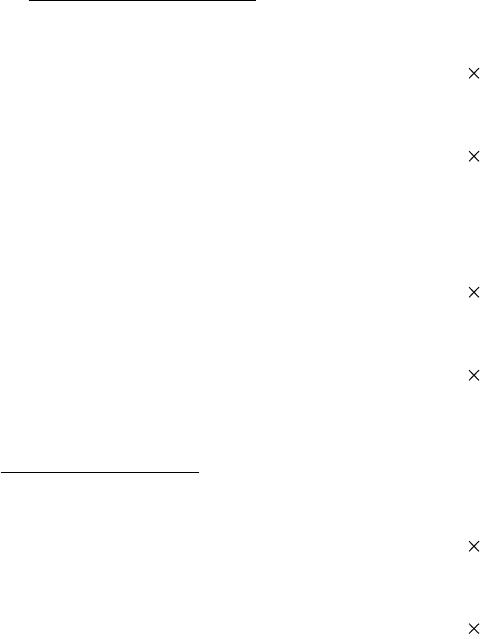
1. a. Budgeted rate =
Budgeted indirect costs
Budgeted trips
= $115,000/50 trips = $2,300 per round–trip
Indirect costs allocated to Dark C. Division = $2,300 per round–trip 30 budgeted round trips
= $69,000
Indirect costs allocated to Milk C. Division = $2,300 per round–trip 20 budgeted round trips
= $46,000
b. Budgeted rate = $2,300 per round–trip
Indirect costs allocated to Dark C. Division = $2,300 per round–trip 30 actual round trips
= $69,000
Indirect costs allocated to Milk C. Division = $2,300 per round–trip 15 actual round trips
= $34,500
c. Actual rate =
Actual indirect costs
Actual trips
= $96,750/ 45 trips = $2,150 per round–trip
Indirect costs allocated to Dark C. Division = $2,150 per round–trip 30 actual round trips
= $64,500
Indirect costs allocated to Milk C. Division = $2,150 per round–trip 15 actual round trips
= $32,250
2. When budgeted rates/budgeted quantities are used, the Dark Chocolate and Milk
Chocolate Divisions know at the start of 2012 that they will be charged a total of $69,000 and
$46,000 respectively for transportation. In effect, the fleet resource becomes a fixed cost for each
division. Then, each may be motivated to over–use the trucking fleet, knowing that their 2012
transportation costs will not change.
When budgeted rates/actual quantities are used, the Dark Chocolate and Milk Chocolate
Divisions know at the start of 2012 that they will be charged a rate of $2,300 per round trip, i.e.,
they know the price per unit of this resource. This enables them to make operating decisions
knowing the rate they will have to pay for transportation. Each can still control its total
transportation costs by minimizing the number of round trips it uses. Assuming that the budgeted
rate was based on honest estimates of their annual usage, this method will also provide an
estimate of the excess trucking capacity (the portion of fleet costs not charged to either division).
In contrast, when actual costs/actual quantities are used, the two divisions must wait until year–
end to know their transportation charges.
The use of actual costs/actual quantities makes the costs allocated to one division a
function of the actual demand of other users. In 2012, the actual usage was 45 trips, which is 5
trips below the 50 trips budgeted. The Dark Chocolate Division used all the 30 trips it had
budgeted. The Milk Chocolate Division used only 15 of the 20 trips budgeted. When costs are
allocated based on actual costs and actual quantities, the same fixed costs are spread over fewer
© 2012 Pearson Education, Inc. Publishing as Prentice Hall. SM Cost Accounting 14/e by Horngren
15–5
trips resulting in a higher rate than if the Milk Chocolate Division had used its budgeted 20 trips.
As a result, the Dark Chocolate Division bears a proportionately higher share of the fixed costs.
Using actual costs/actual rates also means that any efficiencies or inefficiencies of the
trucking fleet get passed along to the user divisions. In general, this will have the effect of
making the truck fleet less careful about its costs, although in 2012, it appears to have managed
its costs well, leading to a lower actual cost per roundtrip relative to the budgeted cost per round
trip.
For the reasons stated above, of the three single–rate methods suggested in this problem,
the budgeted rate and actual quantity may be the best one to use. (The management of Chocolat
would have to ensure that the managers of the Dark Chocolate and Milk Chocolate divisions do
not systematically overestimate their budgeted use of the fleet division in an effort to drive down
the budgeted rate).
15–18 (20 min.) Dual–rate method, budgeted versus actual costs, and practical capacity
versus actual quantities (continuation of 15–17).
1. Charges with dual rate method.
Variable indirect cost rate = $1,350 per trip
Fixed indirect cost rate = $47,500 budgeted costs/ 50 round trips budgeted
= $950 per trip
Dark Chocolate Division
Variable indirect costs, $1,350 × 30 $40,500
Fixed indirect costs, $950 × 30 28,500
$69,000
Milk Chocolate Division
Variable indirect costs, $1,350 × 15 $20,250
Fixed indirect costs, $950 × 20 19,000
$39,250
2. The dual rate changes how the fixed indirect cost component is treated. By using
budgeted trips made, the Dark Chocolate Division is unaffected by changes from its own
budgeted usage or that of other divisions. When budgeted rates and actual trips are used for
allocation (see requirement 1.b. of problem 15–17), the Dark Chocolate Division is assigned the
same $28,500 for fixed costs as under the dual–rate method because it made the same number of
trips as budgeted. However, note that the Milk Chocolate Division is allocated $19,000 in fixed
trucking costs under the dual–rate system, compared to $950 15 actual trips = $14,250 when
actual trips are used for allocation. As such, the Dark Chocolate Division is not made to appear
disproportionately more expensive than the Milk Chocolate Division simply because the latter
did not make the number of trips it budgeted at the start of the year.
© 2012 Pearson Education, Inc. Publishing as Prentice Hall. SM Cost Accounting 14/e by Horngren

15–6
15–19 (30 min.) Support department cost allocation; direct and step–down methods.
1. AS IS GOVT CORP
a. Direct method costs $600,000 $2,400,000
Alloc. of AS costs
(40/75, 35/75) (600,000) $ 320,000 $ 280,000
Alloc. of IS costs
(30/90, 60/90) (2,400,000) 800,000 1,600,000
$ 0 $ 0 $1,120,000 $1,880,000
b. Step–down (AS first) costs $600,000 $2,400,000
Alloc. of AS costs
(0.25, 0.40, 0.35) (600,000) 150,000 $ 240,000 $ 210,000
Alloc. of IS costs
(30/90, 60/90) (2,550,000) 850,000 1,700,000
$ 0 $ 0 $1,090,000 $1,910,000
c. Step–down (IS first) costs $600,000 $2,400,000
Alloc. of IS costs
(0.10, 0.30, 0.60) 240,000 (2,400,000)$ 720,000 $1,440,000
Alloc. of AS costs
(40/75, 35/75) (840,000) 448,000 392,000
$ 0 $ 0 $1,168,000 $1,832,000
2. GOVT CORP
Direct method $1,120,000 $1,880,000
Step–down (AS first) 1,090,000 1,910,000
Step–down (IS first) 1,168,000 1,832,000
The direct method ignores any services to other support departments. The step–down method
partially recognizes services to other support departments. The information systems support
group (with total budget of $2,400,000) provides 10% of its services to the AS group. The AS
support group (with total budget of $600,000) provides 25% of its services to the information
systems support group. When the AS group is allocated first, a total of $2,550,000 is then
assigned out from the IS group. Given CORP’s disproportionate (2:1) usage of the services of
IS, this method then results in the highest overall allocation of costs to CORP. By contrast,
GOVT’s usage of the AS group exceeds that of CORP (by a ratio of 8:7), and so GOVT is
assigned relatively more in support costs when AS costs are assigned second, after they have
already been incremented by the AS share of IS costs as well.
© 2012 Pearson Education, Inc. Publishing as Prentice Hall. SM Cost Accounting 14/e by Horngren
3. Three criteria that could determine the sequence in the step–down method are:
a. Allocate support departments on a ranking of the percentage of their total services
provided to other support departments.
1. Administrative Services 25%
2. Information Systems 10%
b. Allocate support departments on a ranking of the total dollar amount in the support
departments.
1. Information Systems $2,400,000
2. Administrative Services $ 600,000
c. Allocate support departments on a ranking of the dollar amounts of service provided
to other support departments
1. Information Systems
(0.10 $2,400,000) = $240,000
2. Administrative Services
(0.25 $600,000) = $150,000
The approach in (a) above typically better approximates the theoretically preferred
reciprocal method. It results in a higher percentage of support–department costs provided to other
support departments being incorporated into the step–down process than does (b) or (c), above.
15–20 (50 min.) Support–department cost allocation, reciprocal method (continuation of 15–19).
1a.