Simulation analysis
•There are some complex problems that can not
easily be formulated mathematically.
•Simulation helps us to model such problems.
•It is a trial and error movement towards the
optimal solution.
•It is a quantitative technique developed for
studying alternative courses of action by building
a model of that system and then conducting a
series of repeated trial and error experiments to
predict the behavior of the system over a period
of time.

Monte Carlo Simulation
•It is the earliest method of simulation.
•It employs random numbers and it is used to solve problems
involving probability.
•Any realistic business situation involves probabilistic or
random features. For example, the service rate of patients in
a hospital may be an average of 12 patients per hour. But in
reality, the service rate may be lower if the kind of sickness
requires more examination. The service rate can also be
higher if the sickness is more routine.
•In order to use the Monte Carlo simulation method, the
probability distribution of the variable under consideration is
determined.
•A set of random numbers are then used to generate a set of
values that have same distributional characteristics as the
actual distribution being simulated.

Random selection
•To carry out a realistic simulation involving
probabilistic elements, selection bias should
be avoided.
•This can be done by selecting the values to
use in a random manner.
•The random numbers can be generated using
a number of methods:

Random number generation
•Random number tables- This is a table of
randomly selected numbers in which bias
does not exist.
•Random number generation by the computer
•Lottery selection- put all numbers in a basket,
shake and choose a number.
•Roulette wheel –a wheel is spun and a ball
dropped in to select a number.

•The repeated random selection of input values
and the logging in of resultant output is the
essence of simulation.

Random selection using the random
number table
•An extract of random numbers can be given
as:
50532254969565241457735477695221496304
165579018342724517484022756986458416
Example 1
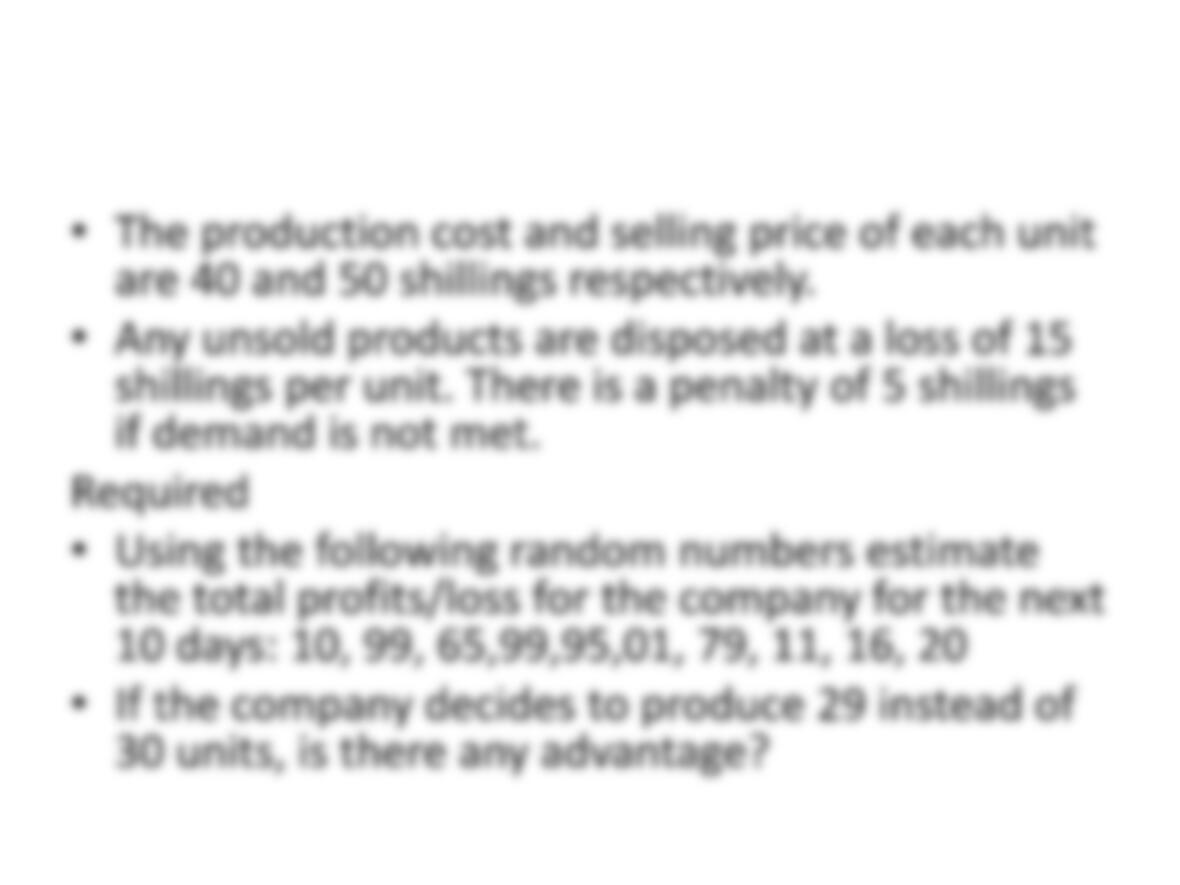
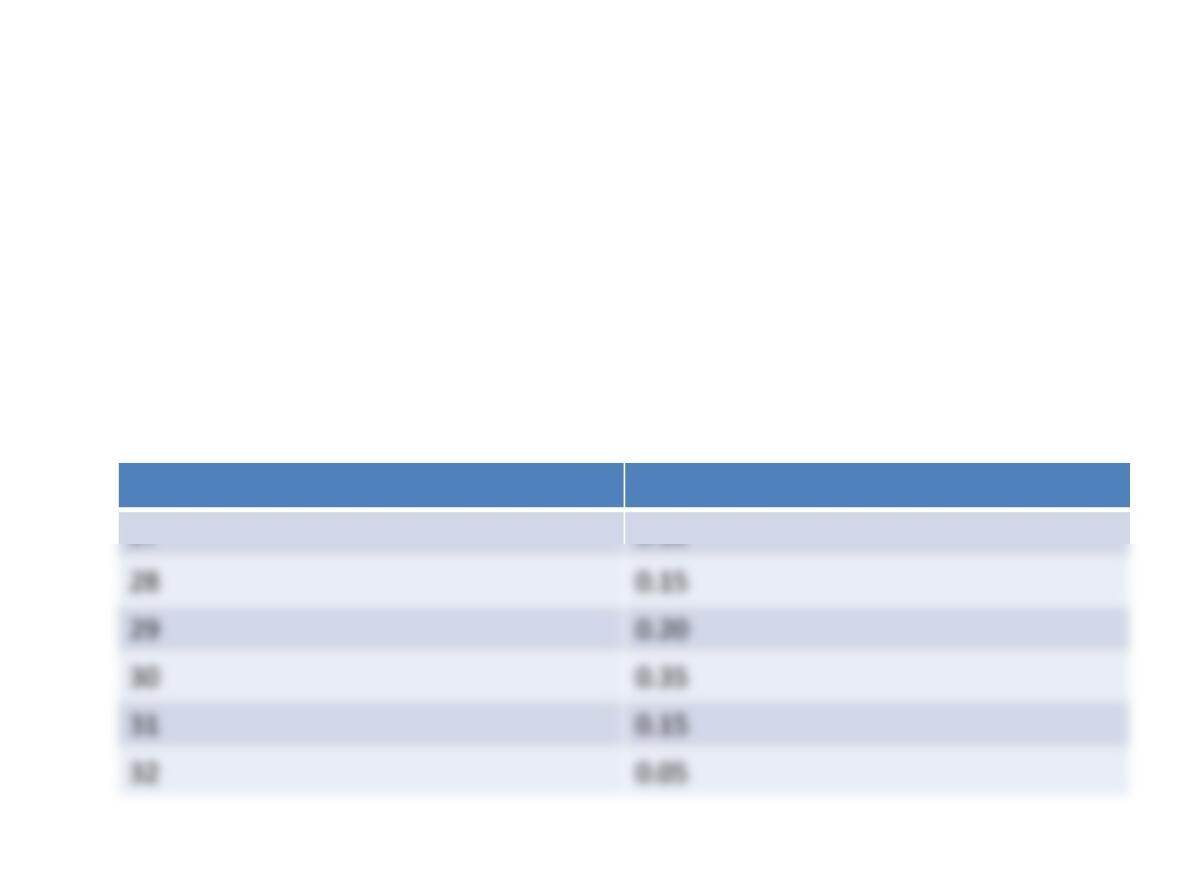
•A company manufactures 30 items per day.
The sale of these items depends upon
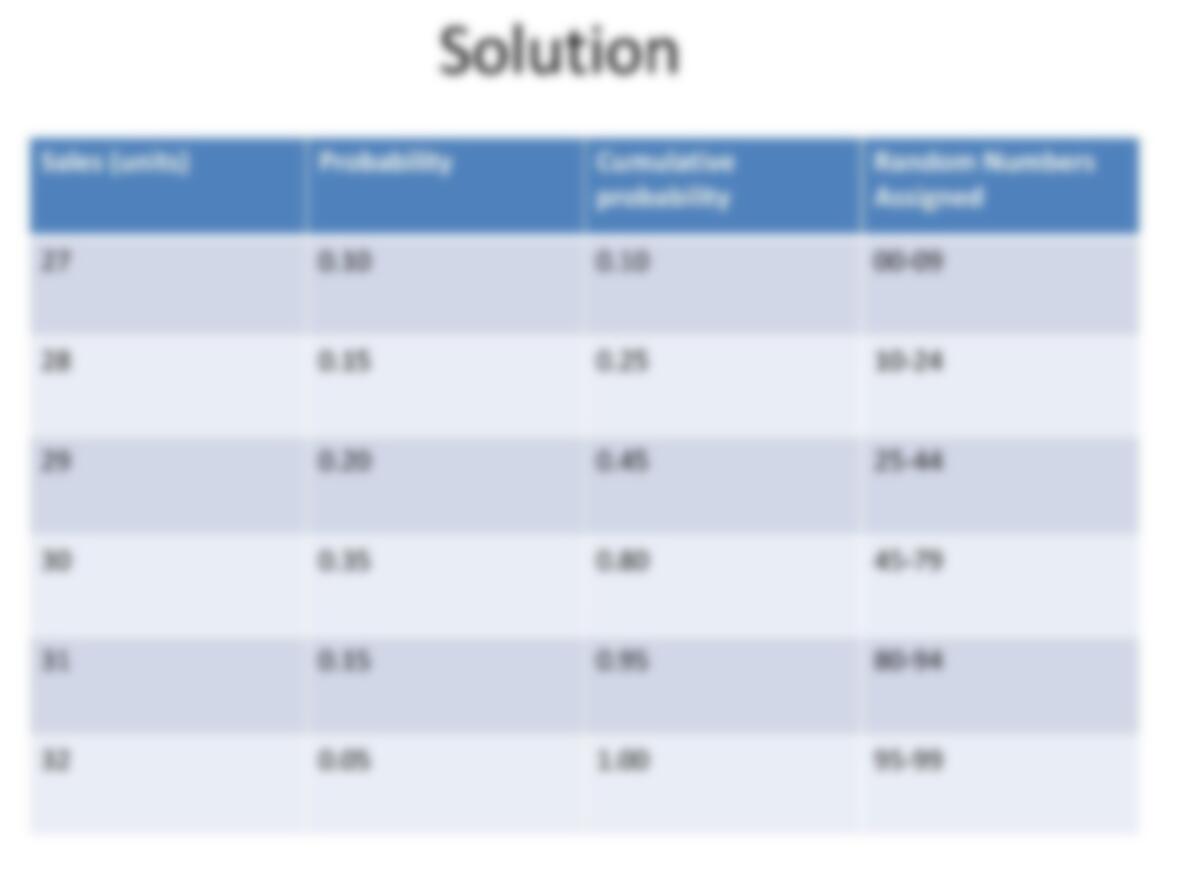
demand which has the following distribution:
Sales (units)
Probability