Economics | Preview Reading Notes
Chapter 13 | Week 9 | The Cost of Produc on
By Sherman Hu
1. General view
Brief summary of this chapter
1) The goal of firm is to maximize pro)t, which equals total revenue minus total cost.
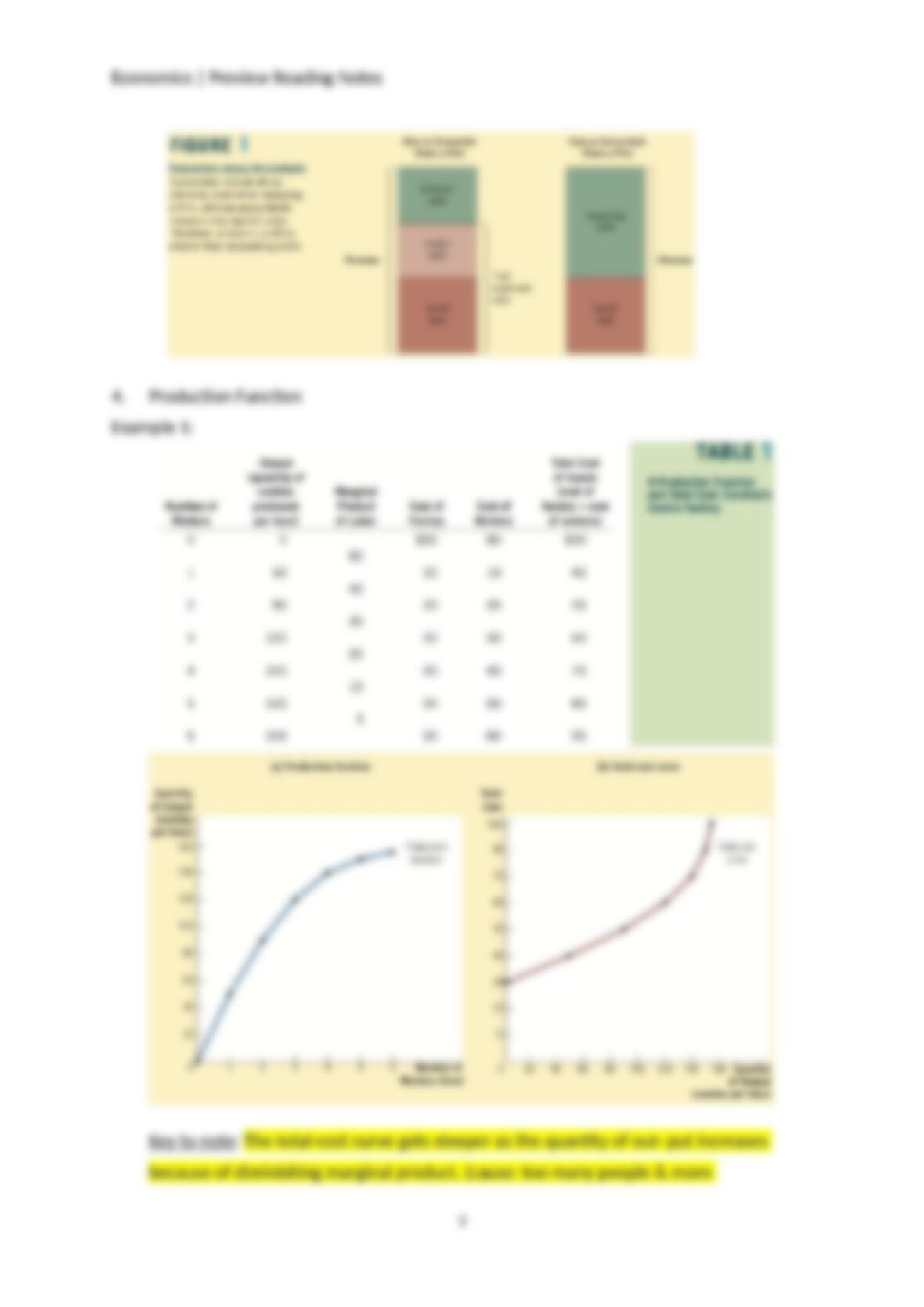
2) When analyzing a )rm’s behavior, it is important to include all the opportunity costs
of produc on. Some of the opportunity costs, such as the wages a )rm pays its
workers, are explicit. Other opportunity costs, such as the wages the )rm owner
gives up by working at the )rm rather than taking another job, are implicit. Economic
profit takes both explicit and implicit costs into account, whereas accoun ng profit
considers only explicit costs.
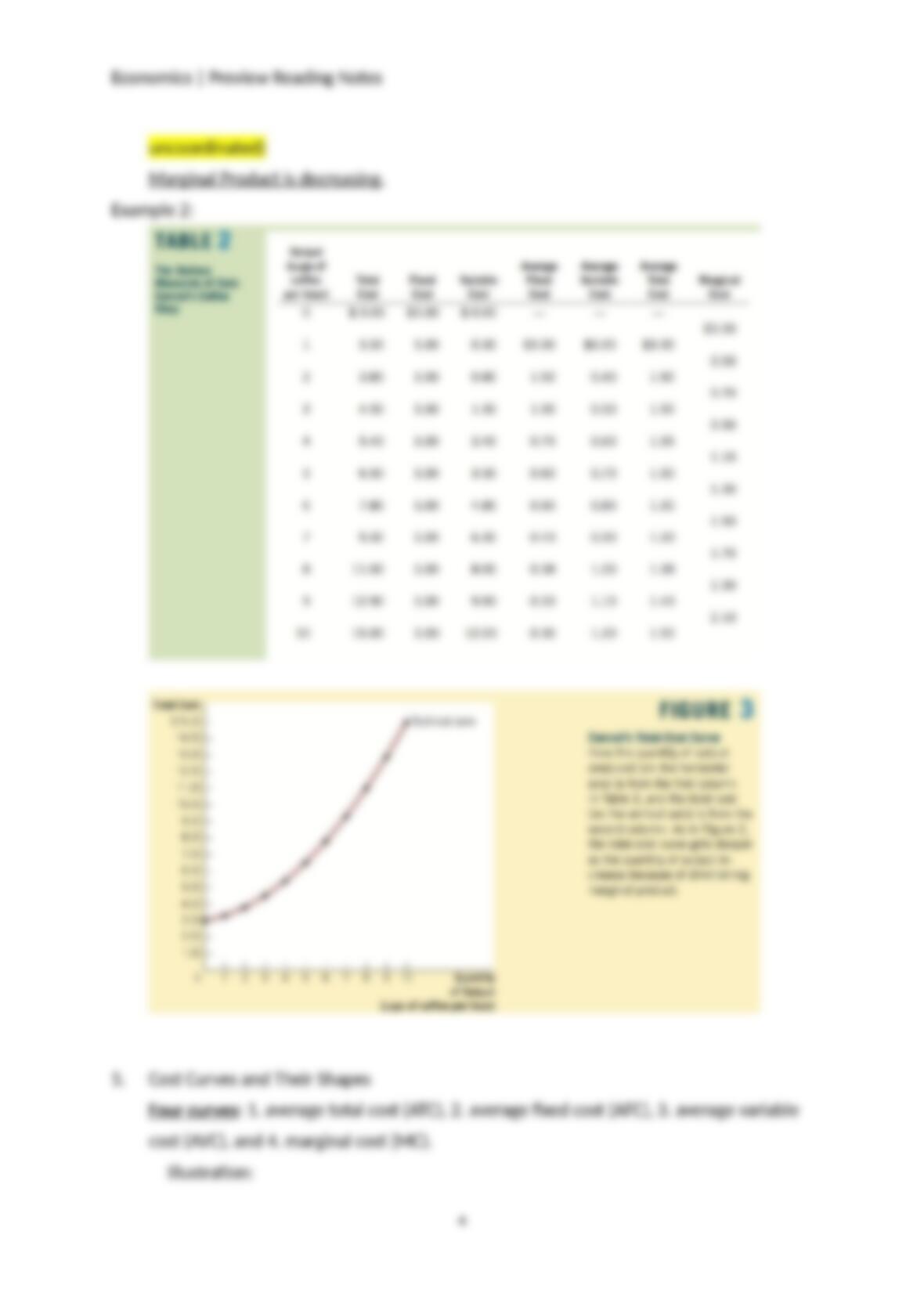
3) A )rm’s costs reffect its produc on process. A typical )rm’s produc on func on gets
4a5er as the quan ty of an input increases, displaying the property of diminishing
marginal product. As a result, a )rm’s total-cost curve gets steeper as the quan ty
produced rises.
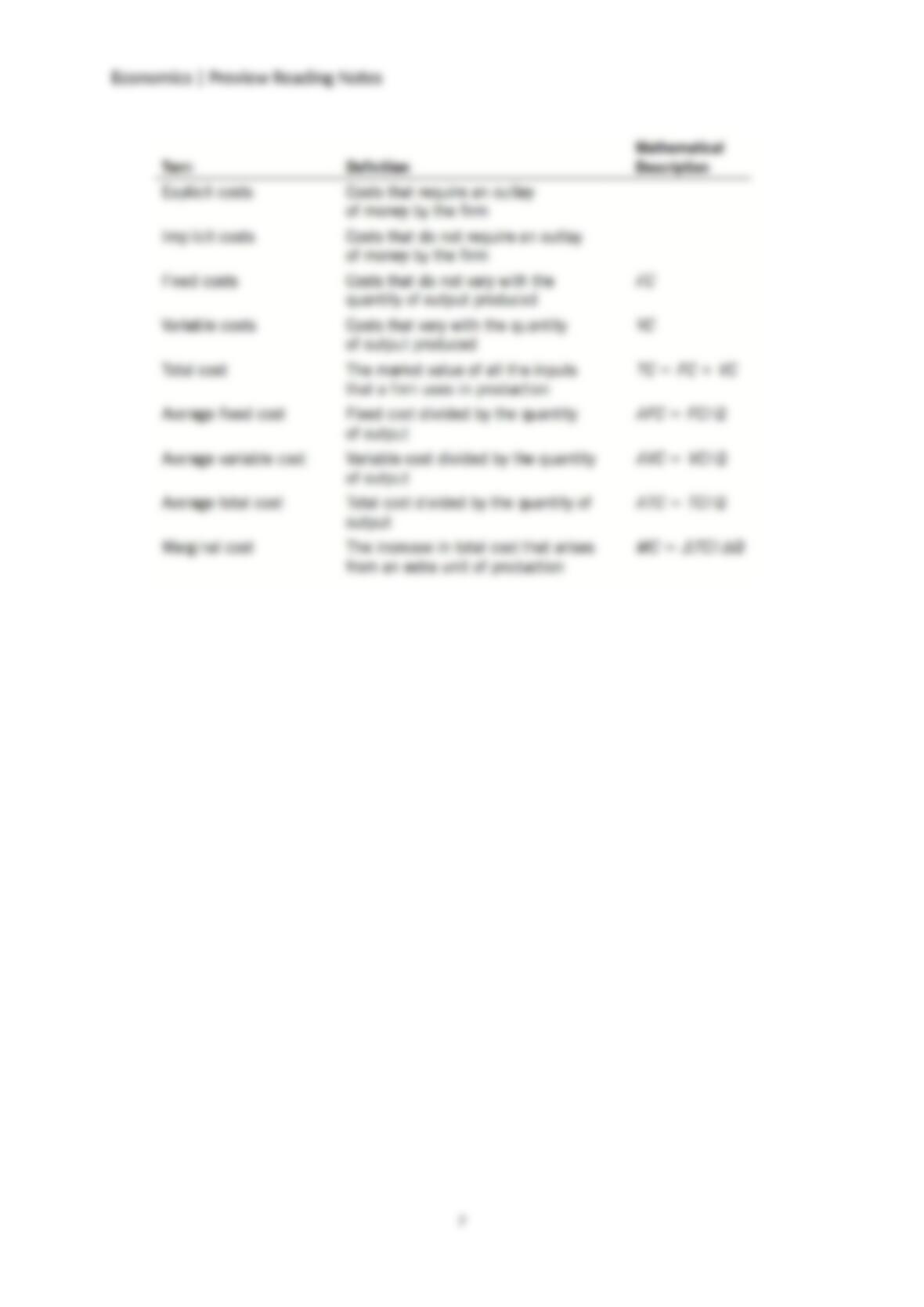
4) A )rm’s total costs can be divided between )xed costs and variable costs. Fixed costs
are costs that do not change when the )rm alters the quan ty of output produced.
Variable costs are costs that change when the )rm alters the quan ty of output
produced.
5) From a )rm’s total cost, two related measures of cost are derived. Average total cost
is total cost divided by the quan ty of output. Marginal cost is the amount by which
total cost rises if output increases by 1 unit.
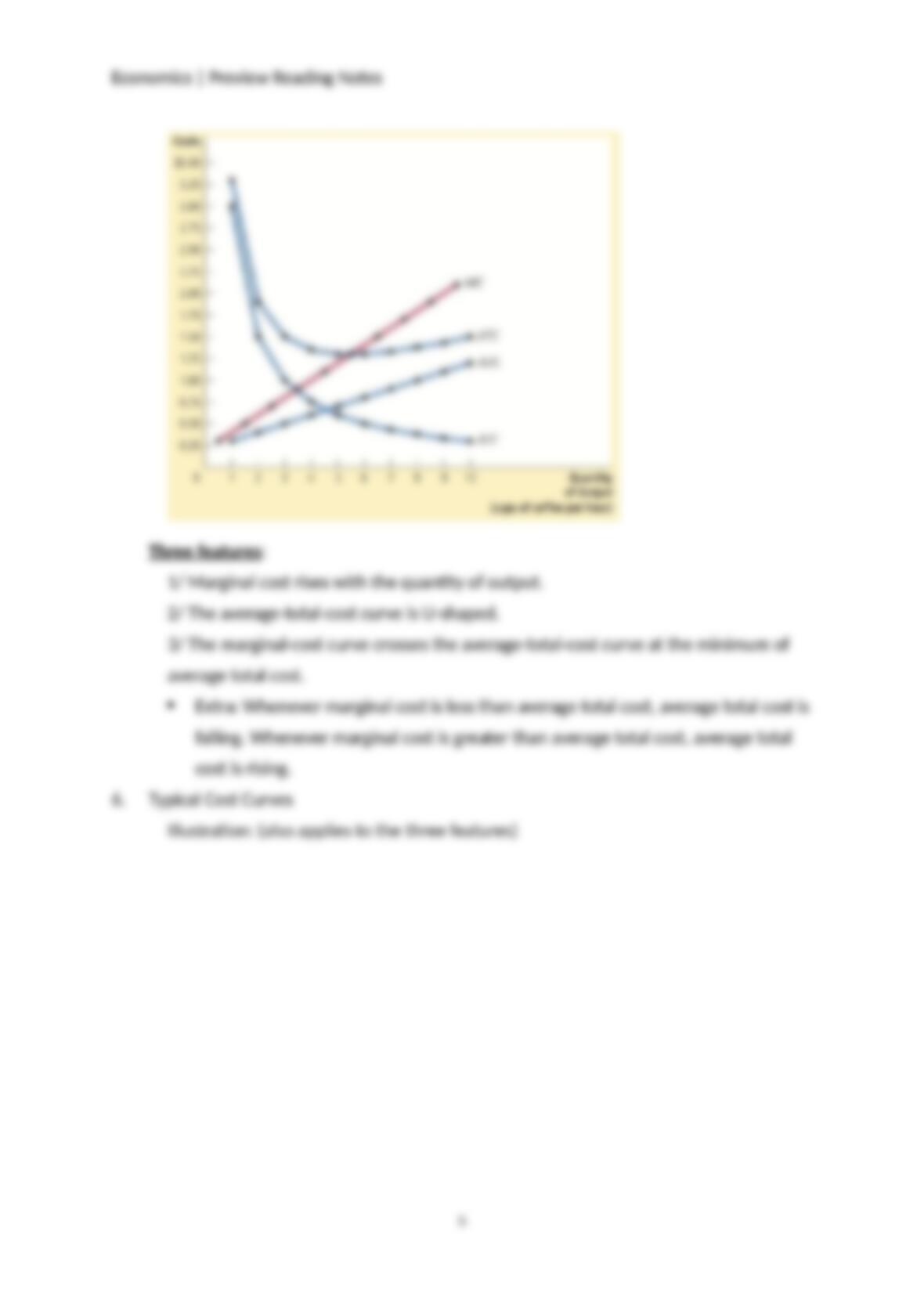
6) When analyzing )rm behavior, it is often useful to graph average total cost and
marginal cost. For a typical )rm, marginal cost rises with the quan ty of output.
Average total cost )rst falls as output increases and then rises as output increases
further. The marginal-cost curve always crosses the average-total- cost curve at the
minimum of average total cost.
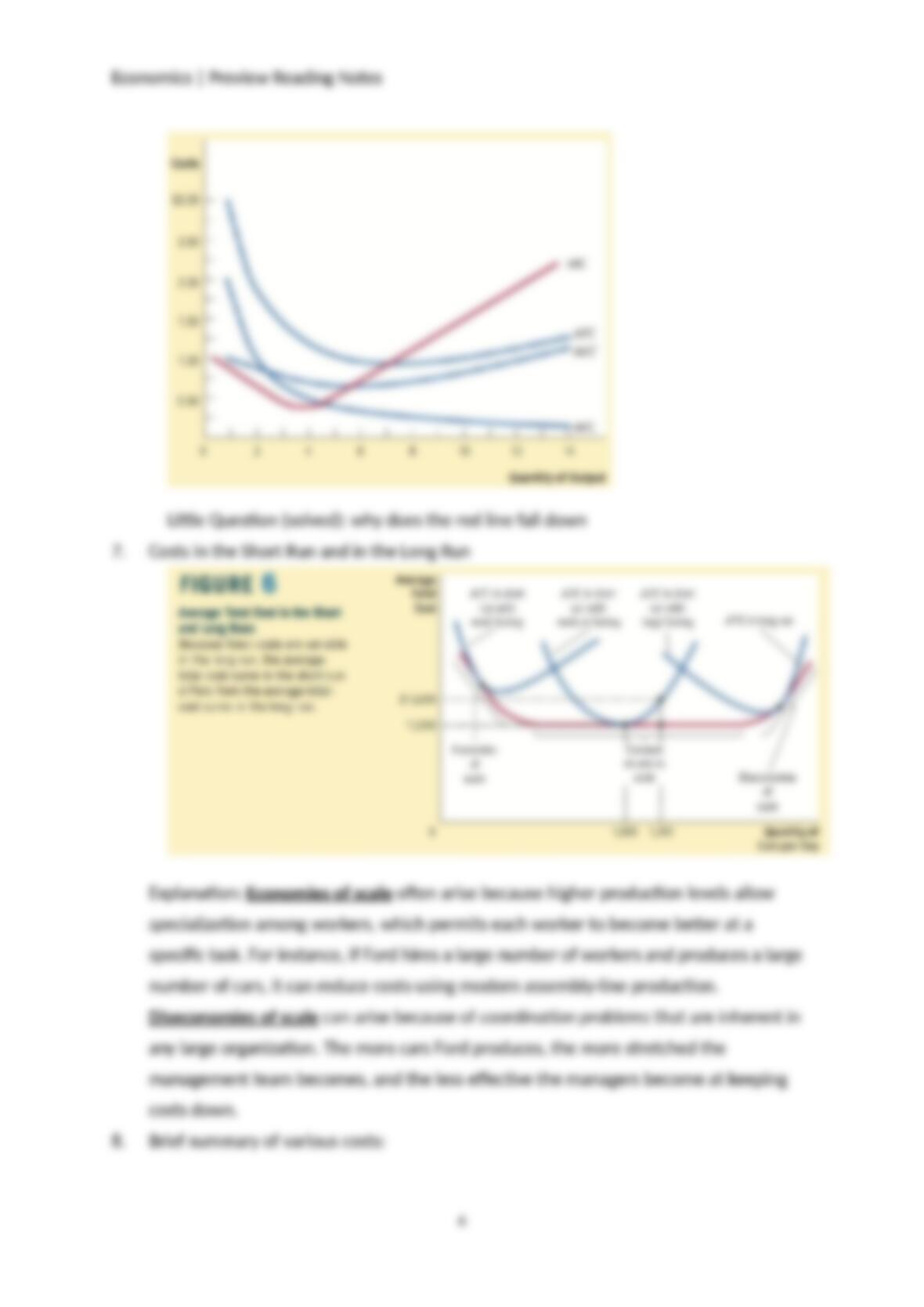
7) A )rm’s costs o=en depend on the me horizon considered. In par cular, many costs
are )xed in the short run but variable in the long run. As a result, when the )rm
changes its level of produc on, average total cost may rise more in the short run
than in the long run.
2. Concepts
1) total revenue: the amount a )rm receives for the sale of its output
1
Economics | Preview Reading Notes
2) total cost: the market value of the inputs a )rm uses in produc on
3) prot: = Total revenue − Total cost
4) explicit costs: input costs that require an outlay of money by the )rm
5) implicit costs: input costs that do not require an outlay of money by the )rm
6) economic prot: total revenue minus total cost, including both explicit and implicit
costs
7) accounting prot: total revenue minus total explicit cost
8) production function: the rela onship between quan ty of inputs used to make a
good and the quan ty of output of that good
9) marginal product: the increase in output that arises from an addi onal unit of input
10) diminishing marginal product: the property whereby the marginal product of an
input declines as the quan ty of the input increases
11) xed costs: costs that do not vary with the quan ty of output produced
12) variable costs: costs that vary with the quan ty of output produced