3-1
Adjusting The Accounts
3
Learning Objectives
Explain the accrual basis of accounting and the
reasons for adjusting entries.
Prepare adjusting entries for deferrals.
Prepare adjusting entries for accruals.
3
Describe the nature and purpose of an adjusted
trial balance.
2
1
4
3-2
Generally a
◆month,
◆quarter, or
◆year.
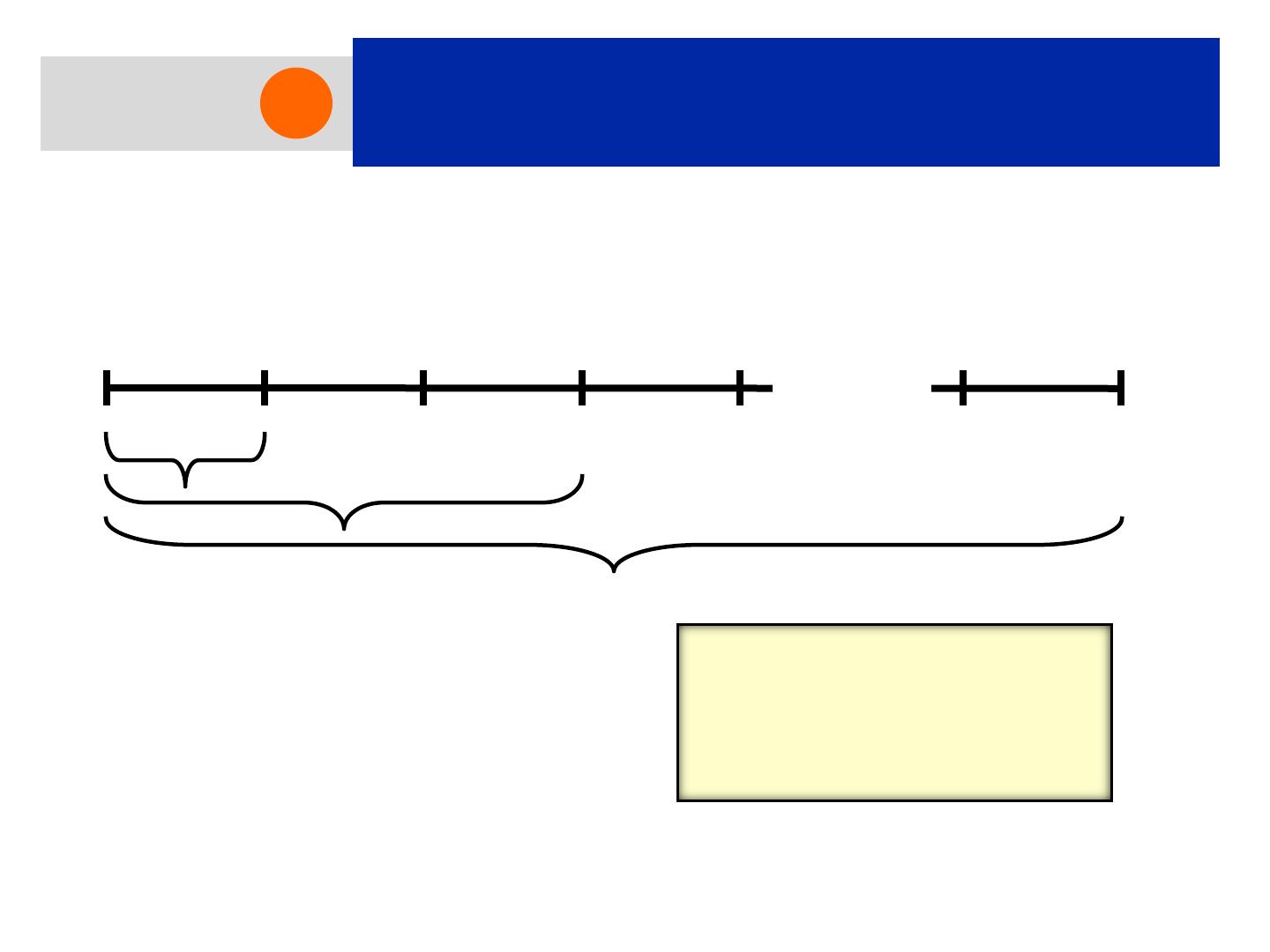
Accountants divide the economic life of a business into
artificial time periods (Time Period Assumption).
Jan. Feb. Mar. Apr. Dec.
. . . . .
Alternative Terminology
The time period assumption
is also called the
periodicity assumption.
LEARNING
OBJECTIVE Explain the accrual basis of accounting
and the reasons for adjusting entries.
1
LO 1

3-3
◆Monthly and quarterly time periods are called interim
periods.
◆Most large companies must prepare both quarterly
and annual financial statements.
◆Fiscal/Financial Year = Accounting time period that is
one year in length.
◆Calendar Year = January 1 to December 31.
Fiscal and Calendar Years
LO 1

3-4
The time period assumption states that:
a. revenue should be recognized in the accounting
period in which it is earned.
b. expenses should be matched with revenues.
c. the economic life of a business can be divided into
artificial time periods.
d. the fiscal year should correspond with the calendar
year.
Question
Fiscal and Calendar Years
LO 1

3-5
Accrual-Basis Accounting
◆Transactions recorded in the periods in which the
events occur.
◆Companies recognize revenues when they perform
services/deliver goods (rather than when they
receive cash).
◆Expenses are recognized when incurred (rather than
when paid).
◆In accordance with generally accepted accounting
principles (GAAP).
Accrual- versus Cash-Basis Accounting
LO 1

3-6
Cash-Basis Accounting
◆Revenues recognized when cash is received.
◆Expenses recognized when cash is paid.
◆Cash-basis accounting is not in accordance with
generally accepted accounting principles (GAAP).
Accrual- versus Cash-Basis Accounting
LO 1
3-7
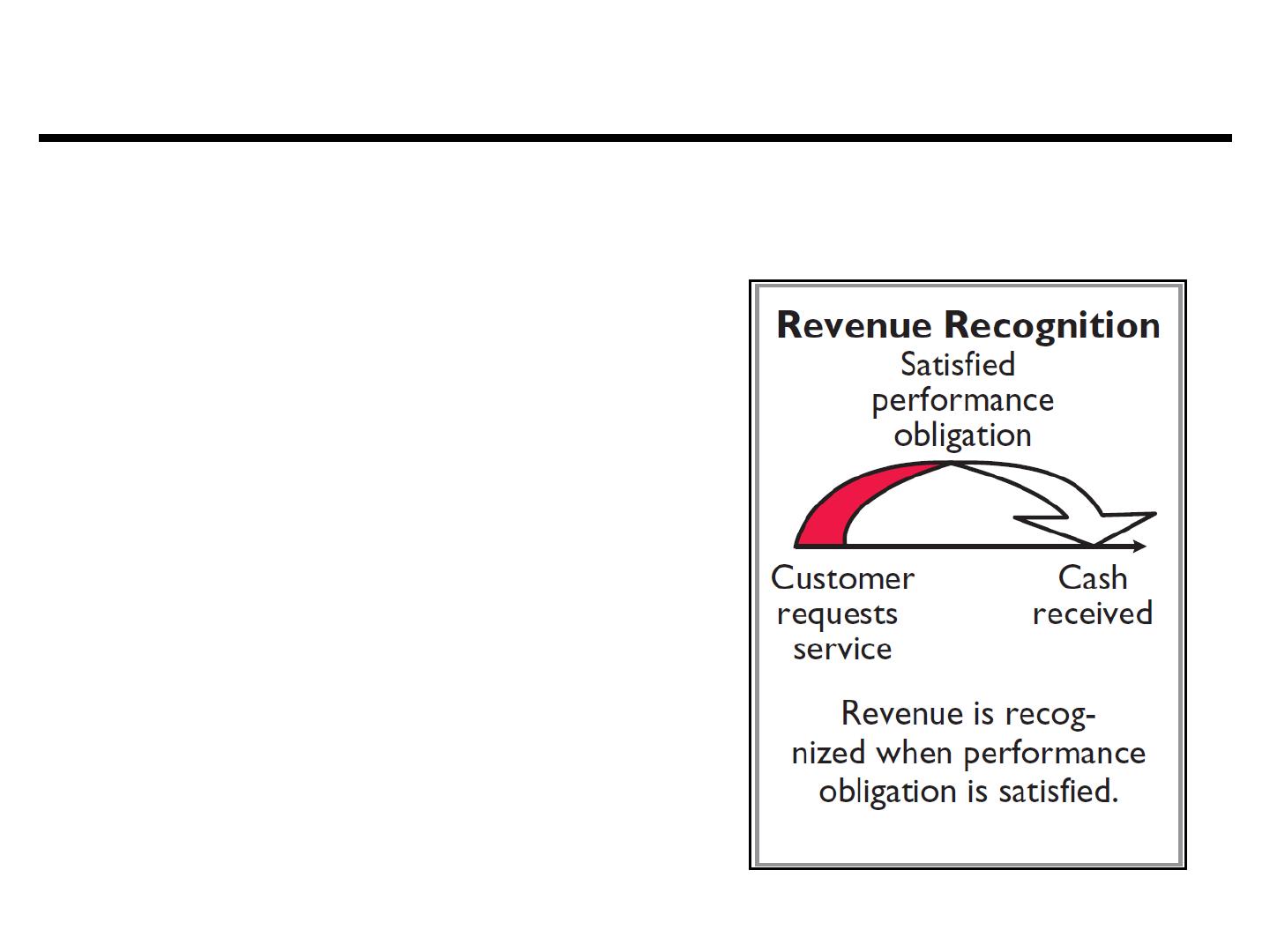
REVENUE RECOGNITION PRINCIPLE
Recognize revenue in the
accounting period in which the
performance obligation is
satisfied.
Recognizing Revenues and Expenses
LO 1
3-8
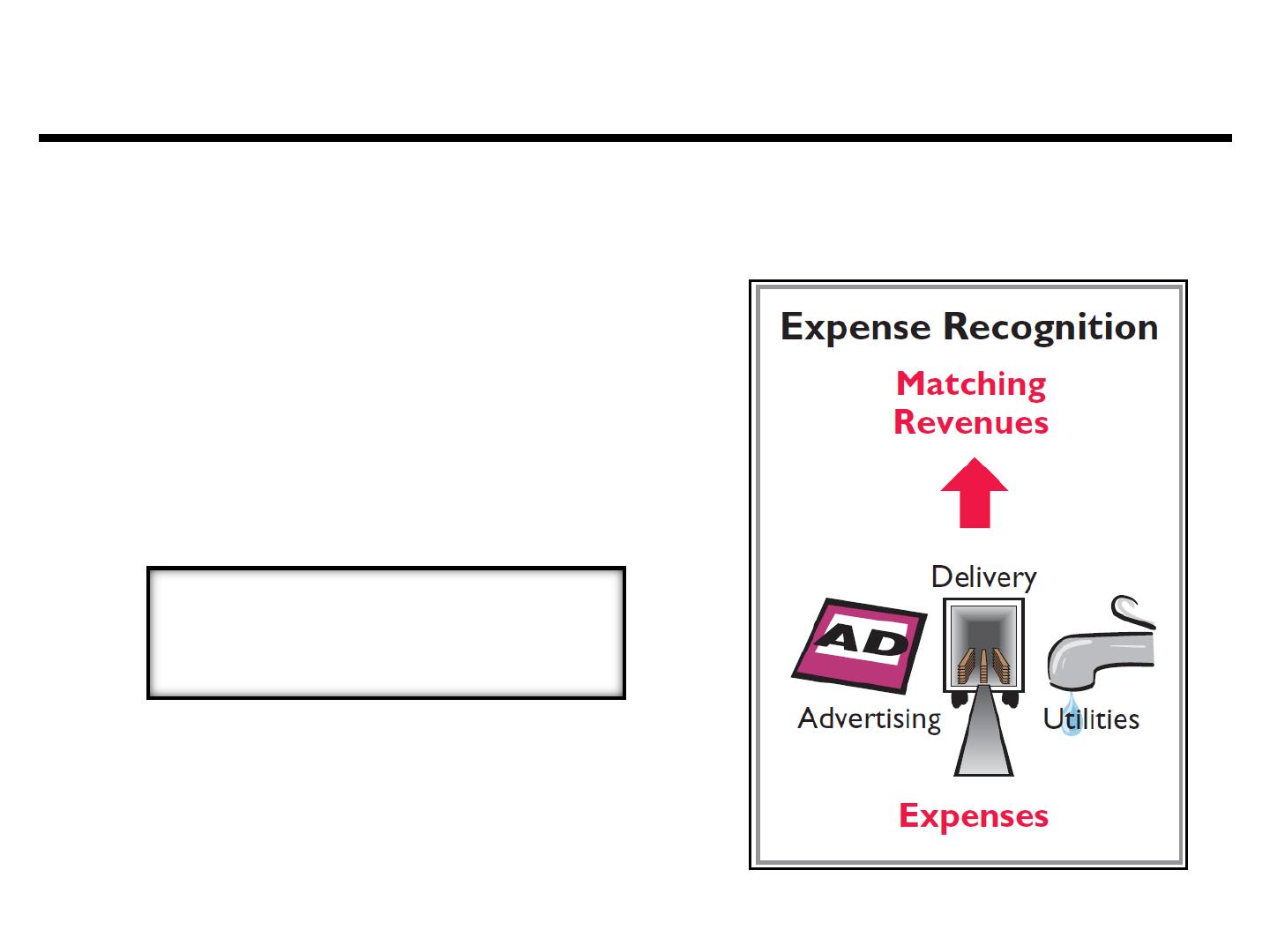
EXPENSE RECOGNITION PRINCIPLE
Match expenses with revenues
in the period when the company
makes efforts that generate
those revenues.
Recognizing Revenues and Expenses
LO 1
“Let the expenses
follow the revenues.”
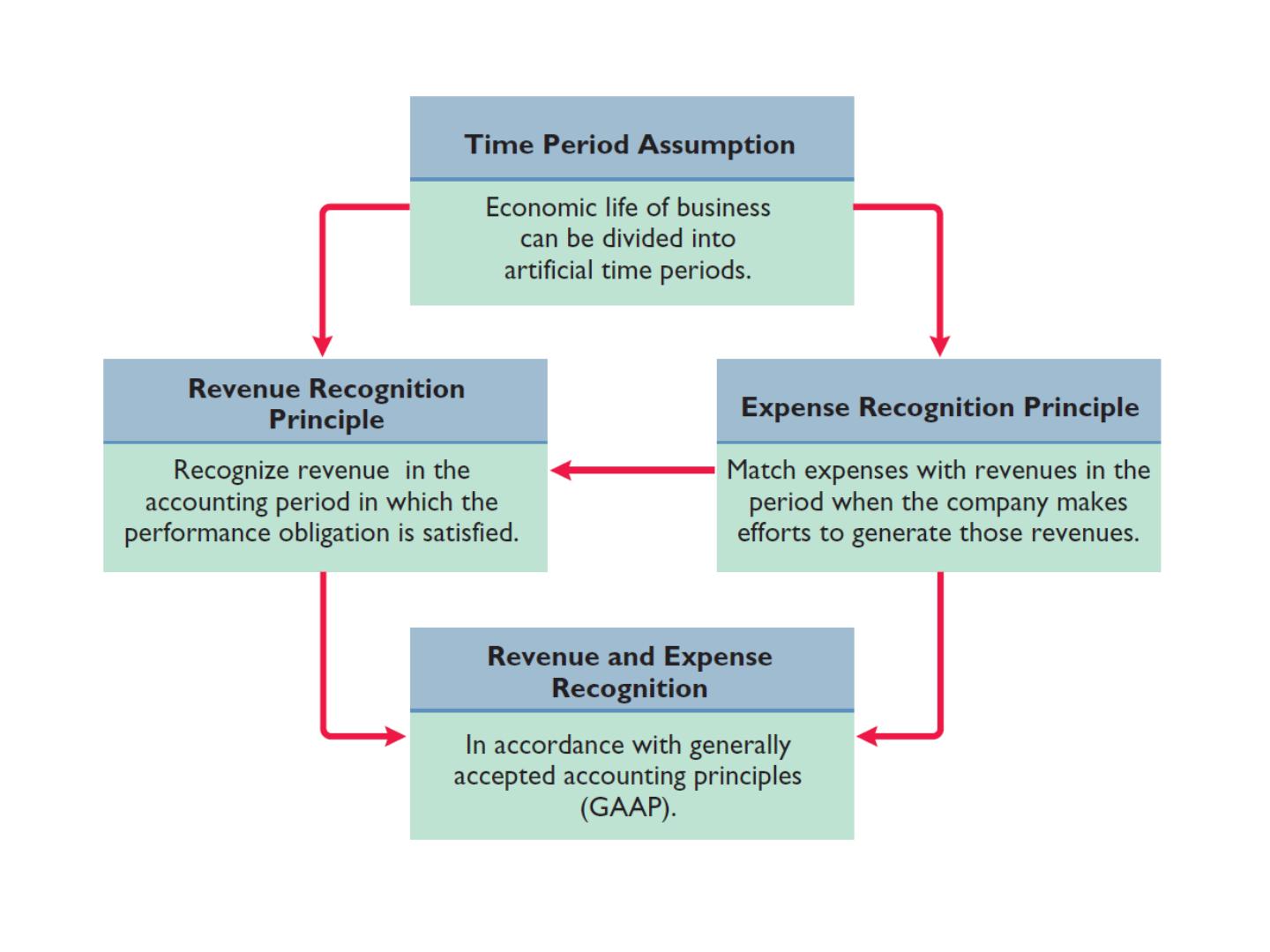
3-9
Illustration 3–1
GAAP relationships in
revenue and expense
recognition
LO 1

3-10
One of the following statements about the accrual basis of
accounting is false? That statement is:
a. Events that change a company’s financial statements are
recorded in the periods in which the events occur.
b. Revenue is recognized in the period in which the performance
obligation is satisfied.
c. The accrual basis of accounting is in accord with generally
accepted accounting principles.
d. Revenue is recorded only when cash is received, and
expenses are recorded only when cash is paid.
Question
Recognizing Revenues and Expenses
LO 1
3-11 LO 1
Adjusting Entries
◆Ensure that the revenue recognition and expense
recognition principles are followed.
◆Necessary because the trial balance may not contain
up–to-date and complete data.
The Need for Adjusting Entries