SAVEMART
By Group 2:-
Ashish Bansal
Mayank Gaur
Abhishek Saraogi
Ishan Goel
Pulak Gupta
Sanchay Tyagi
180201061
180201076
180201103
180201115
180201133
180201137

Modern retailing
began in the year
2000. Until then it
was largely
unorganised and
fragmented
Between 2000-2008
India’s GPD grew at a
rate of 7%. Consumer
demanded a better
shopping experience, self
service. Electronic
checkouts etc fuelled by
their rising income and
quality consciousness
The first Savemart
store was opened in
Bangalore in 2004
The company had 154
hypermarkets in the
year 2014
It has 10 warehouses across the
country that service between 10–
20 hypermarkets.
Each handle multiple product
categories ranging from fmcg,
plastics, kitchenware etc.
The warehouses are a huge cost
centre and face several issues
CASE SUMMARY

ISSUES AT WAREHOUSE
•Digestion problem –Warehouses took long time to inward the goods and even longer time to dispatch them.
•Unable to match demand –Stores experienced frequent stock outs despite goods being available at the warehouses. Problem even
more rampant during festive seasons.
•Late delivery by Vendors – Warehouses accepted even delayed consignments which was against the company’s stated policy.
•Planning issues –Since the vendors sent multiple shipments against single purchase orders, that too without any advance intimation,
warehouse could not plan its receiving process well.
•GRN process not followed –GRNs sometimes took 3-4 days which was against the company policy. Conformance to the company
policy was not very high.
•Consignment issues –Warehouses sometimes used to file wrong timing of receiving consignments which led to lack of clarity on
conformance to policies. Some consignments also had problems of wrong barcodes.
•Inventory issues –Actual inventory in the warehouses exceeded the target by 50 to 100%. Focus was to avoid stock outs rather
than avoiding excess inventory.
•Space Management –Company could not maintain keeping the items in their earmarked places. There was inventory in every
available spot in the warehouse.
•Inefficient picking process –Pickers spent a lot of time in completing the pick list because of the inventory being scattered at
different places.
•Error in system inventory –System would show item in stock despite no physical stock and vice versa.
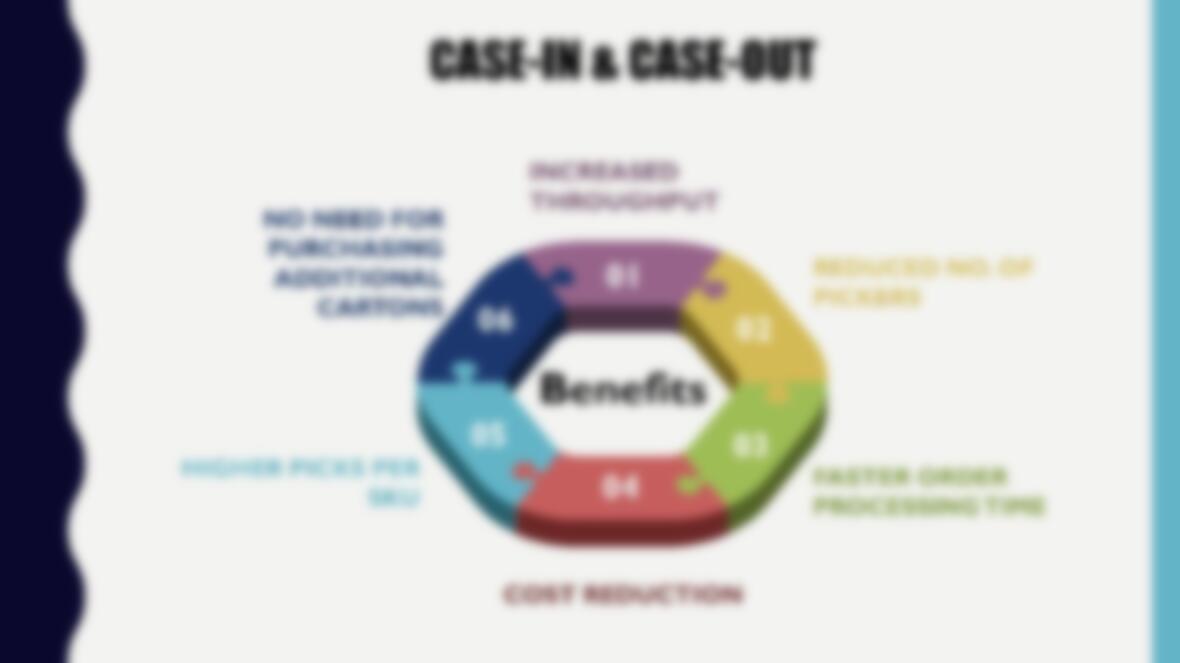
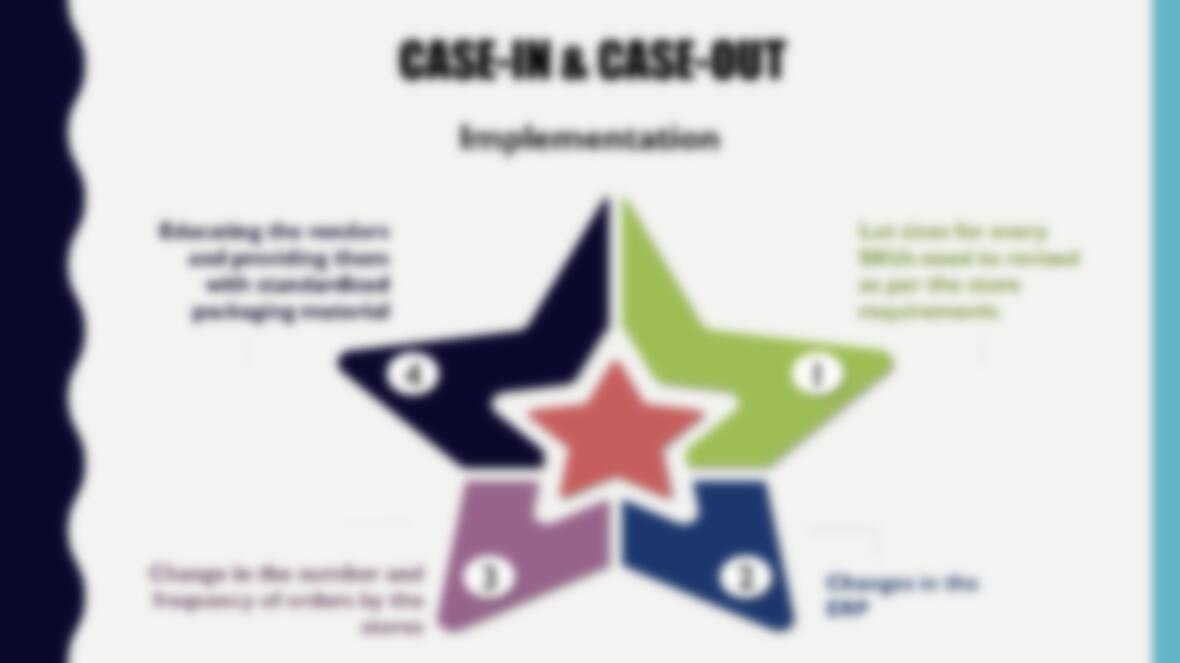
•Low throughput –Company followed a piece-in and piece-out model because of which they had low throughput.
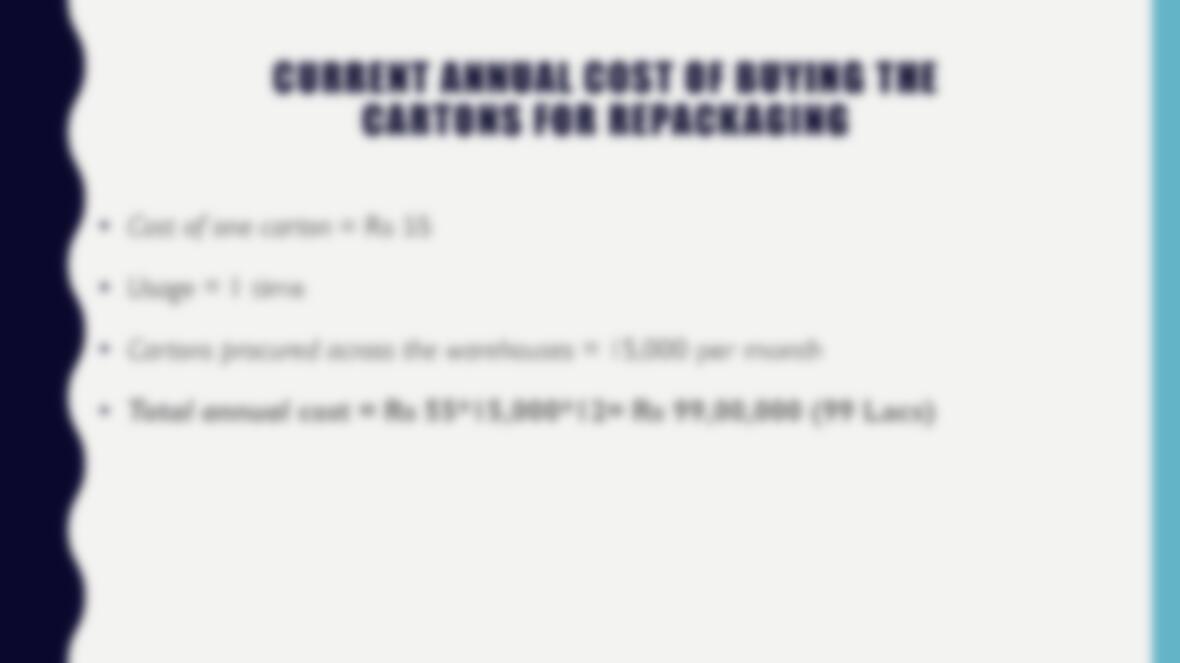
•High Packaging costs –Warehouses bought new cartons to send the goods to the stores which reduced the already thin margins of
the stores.

INITIATIVES
Receiving Issues
External
•Move to Supply chain orientation
•Weed out incompetent vendors and maintain
close relationships with trusted vendors.
•Empower vendors with technology such as
GPRS tracking system to monitor incoming
Excess Inventory
•Introduce penalty schemes for category
managers in case of stock out and excess
inventory
•Close internal working relationship and
communication with warehouses and stores in
order to avoid excess inventory when store
Throughput Issues
•Eliminate the lag in the system i.e. the delay
between the physical movement of inventory
and the ERP update.
•Reorganise the floor plan in order to allocate
space to goods according to their demand and
clustering frequently ordered items together.