Part 1: Revising a Message
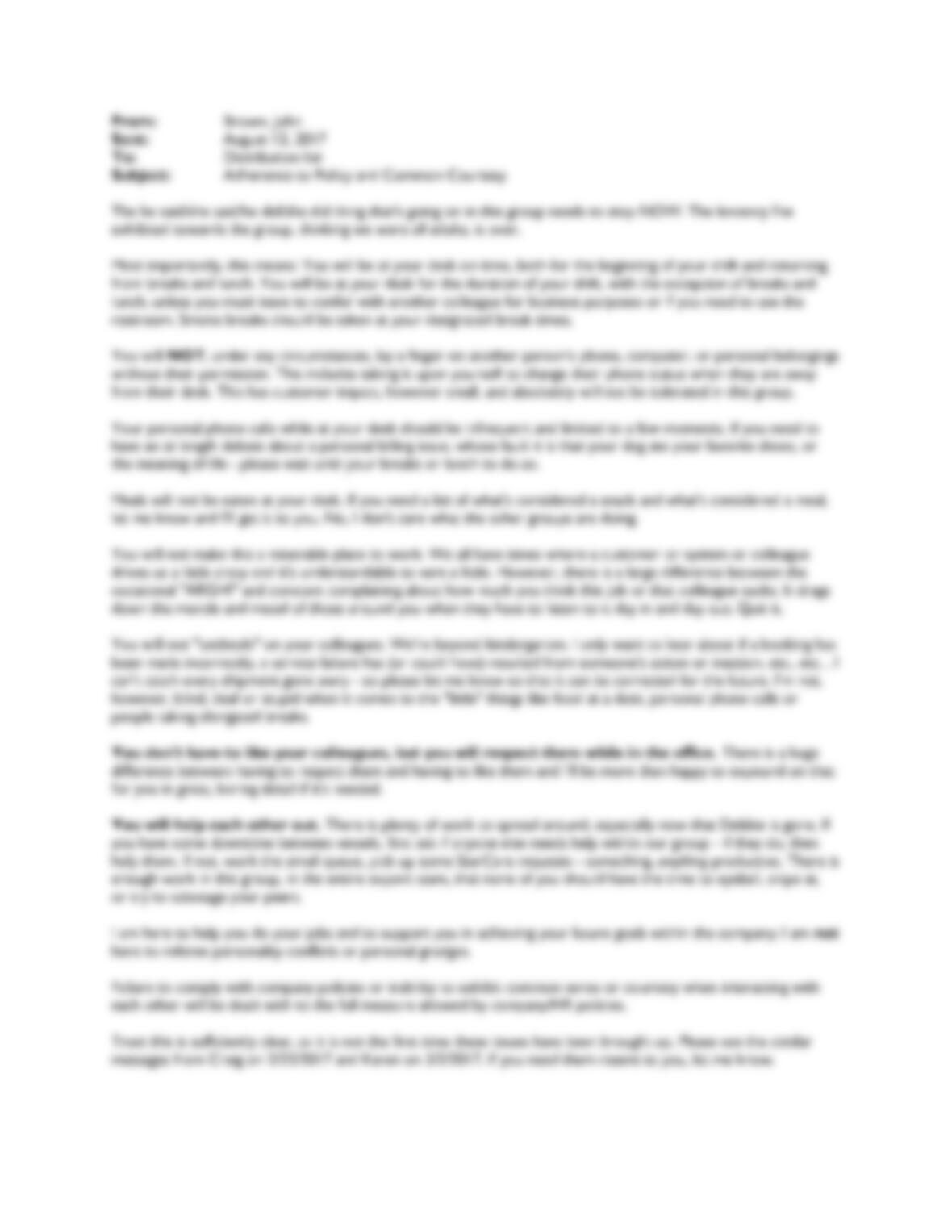
As you will see when you read the message on the following page, the tone is negative; in fact,
it sounds like the writer is scolding the readers, thereby reducing the likelihood of getting what
the writer wants.
Your job is to make this message more effective; in other words, when a reader is finished with
“your” version, he or she will be willing (and maybe even happy) to comply with your
instructions. To achieve this goal, you will need to follow the principles you have studied so far
in this class. Among these are the direct (routine or good news) strategy (Chapter 7), “you”
perspective (Chapter 7), audience benefits (Chapter 7), positive language (Chapter 6), and clear
and concise wording (Chapter 6).
Some grammatical errors and awkward sentences also need correction.
The Scenario:
You have seen the attached message from a fellow manager. While some of the information is
important for employees to know, the presentation is terrible—it is negative and full of
“griping.” Any employee reading this will not be inspired to be a more productive and