CLASSIC THEORIES OF ECONOMIC GROWTH
AND DEVELOPMENT
ROSTOW’S DEVELOPMENT STAGES
In 1960 Walt Whitman Rostow wrote: Economic Growth
– a non-communist manifesto
5 Development Stages
1) Traditional Society
2) Precondition for take-off
3) Take off
4) Drive to Maturity
5) High Mass Consumption

Traditional Society
-Dominated by subsistence agriculture
– Agricultural based economy
– Mainly use subsistence farming and have little surplus output to sell
– People heavily rely on a manual labor and self-sufficiently
– There is limited ability for growth due to lack of modern technology
– Trade is done locally

Precondition for take-off
-Rostow believed that this stage could only be reached by a great
achievement of surplus wealth
– Industrial/manufacturing society begins
– Levels of technology develop
– Trade expands overseas creating an international market
– This stage is preparation for take-off
– Agriculture becomes commercialized and mechanized due to
technological improvements
– Country advances to a more complex economy
– Beginning of economy development
– Development of transport system – TRADE

Take off
-Short period of intensive growth
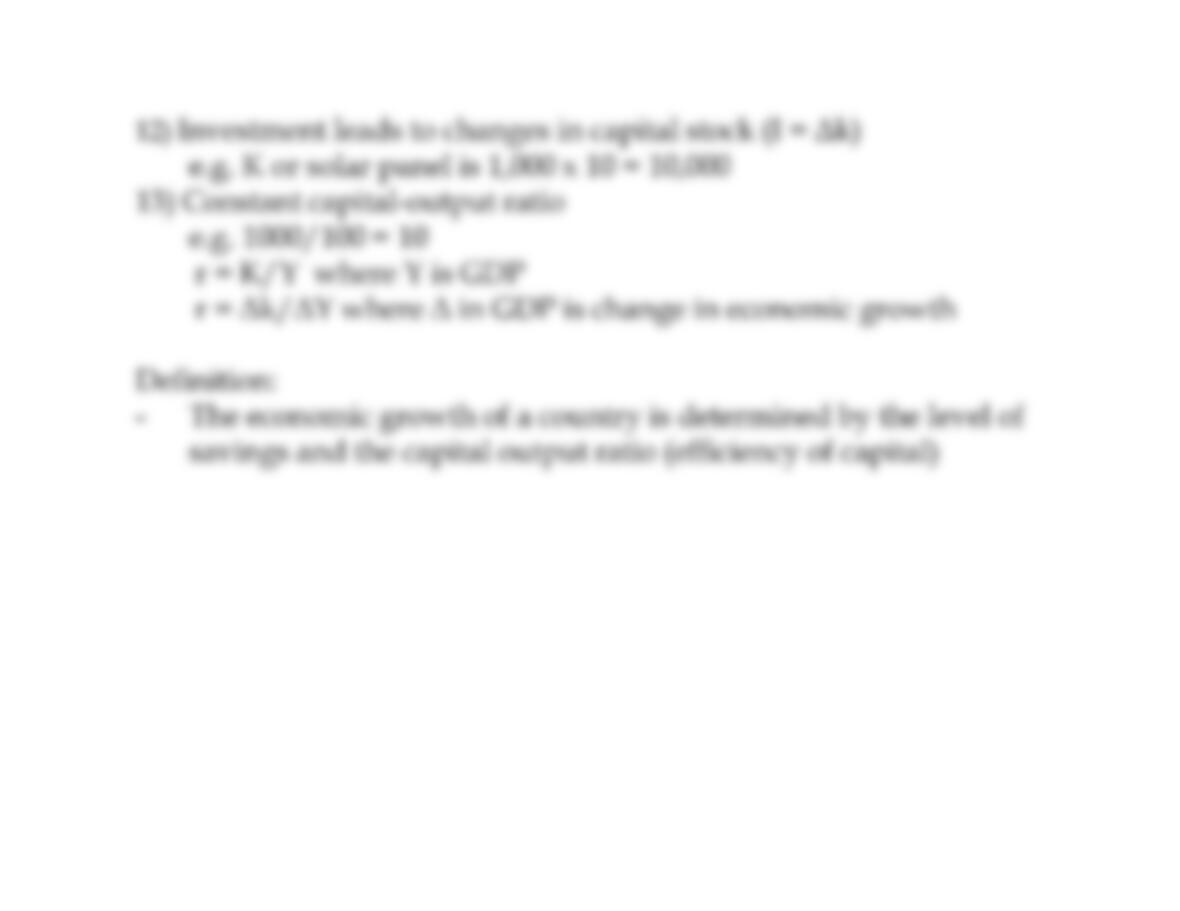
– Productive investment rises 5% – 10% of national income
– Industrialization begins
– Manufacturing more important part of economy
– Substantial manufacturing sectors become developed so there is
high rate of growth
– Introduction to technical innovations – economic rise
– Technological breakthrough occur (e.g. Great Britain industrial
revolution and the Agriculture/Green Revolution)
– Agriculture progressed to commercial rather than subsistence

Country Take-off Period
Great Britain 1732 – 1802
Russia 1890 – 1914
United States 1843 – 1860
Germany 1850 – 1873
Canada 1862 – 1914
China 1952
India 1952

Drive to Maturity
-Takes place over a long period of time – standard of living rise
– Rostow define “as the period when a society has affectively applied
the range of modern technology to the bulk of its resources
– Use of technology increases
– Steadily growing economy and modern technology
– Agriculture workers decrease dramatically
– Workers acquire greater skills and paid higher wages
– National economy grows and diversifies
– Increased percentage of nation’s wealth invested into developing its
economy

Country Maturity Year
Great Britain 1850
Russia 1950